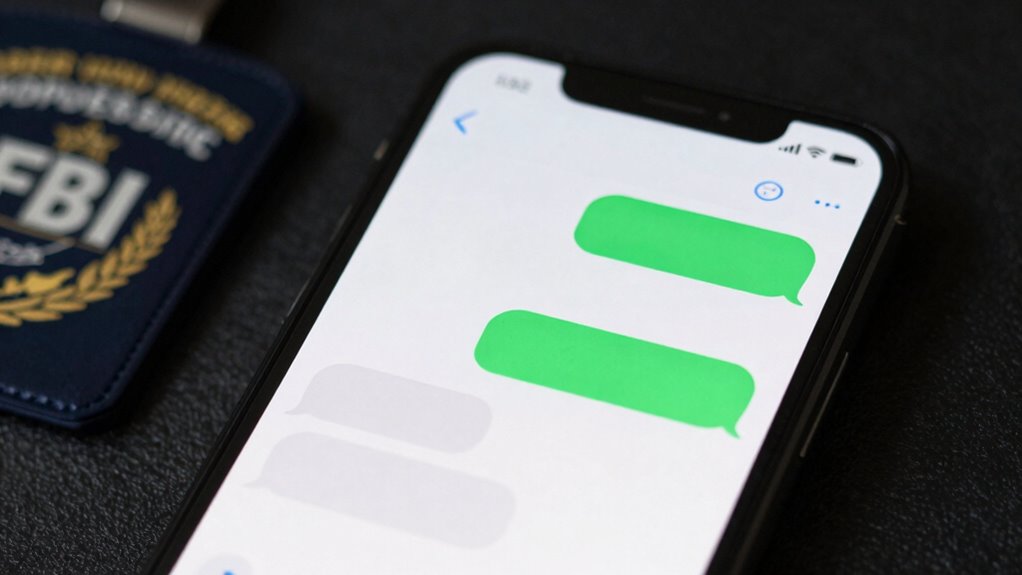

The FBI’s big sting involved creating a fake encrypted chat app called ANOM, designed to look like a regular messaging platform. Criminals worldwide trusted it and used it to coordinate illegal activities, not knowing law enforcement was secretly inside. By copying messages in real time and monitoring conversations, authorities identified and arrested hundreds of offenders, seizing drugs, weapons, and cash. Curious about how they pulled off this sophisticated operation? Keep going to uncover the full story behind this undercover success.
Key Takeaways
- The FBI created a fake encrypted chat app called ANOM, pretending to be secure communication for criminals.
- ANOM was designed with a backdoor, allowing law enforcement to access messages without seizing devices.
- The app’s messages were secretly copied to FBI-controlled servers, enabling covert surveillance worldwide.
- Criminals believed they were using unbreakable encryption, but law enforcement monitored and decrypted their communications.
- The operation led to over 800 arrests, large drug, firearm seizures, and disrupted major organized crime activities globally.

Law enforcement agencies worldwide have successfully infiltrated a clandestine criminal communication network through the FBI’s operation against a fake encrypted chat app called ANOM. This operation, known as Trojan Shield, involved collaboration with the Australian Federal Police, Europol, and agencies from over 16 countries. It led to more than 800 arrests across multiple continents, targeting drug traffickers, organized crime groups, and money launderers. The operation’s success hinged on the creation of a sophisticated platform that appeared to be a secure messaging app but was secretly engineered for law enforcement access.
Law enforcement infiltrated a fake encrypted chat app, leading to over 800 arrests worldwide.
ANOM was developed as a next-generation communication platform after the Phantom Secure takedown in 2018. Recruited by the FBI, a developer designed it with a backdoor that allowed authorities to access messages without seizing devices. The app was cleverly hidden behind a calculator interface, requiring users to perform a specific calculation to open it. Devices resembled ordinary Android phones but lacked features like calls or web browsing, emphasizing its focus on secure messaging. Features mimicked legitimate secure apps with self-expiring messages, pixelated photos, voice-altered push-to-talk, and encrypted file storage, making it attractive to criminals seeking privacy.
The technical architecture was key to the operation’s success. Every message sent through ANOM was copied in real time to FBI-controlled servers outside U.S. jurisdiction, ensuring authorities could decrypt and analyze communications without triggering Fourth Amendment concerns. These messages, along with metadata such as GPS location and usernames, were processed by “iBot” servers that decrypted the data using private keys. Then, the messages were re-encrypted and routed to law enforcement agencies worldwide via proxy servers, allowing synchronized monitoring. Each device was linked to fixed identifiers, enabling investigators to trace the activity of individual users and map entire networks. This architecture was instrumental in allowing law enforcement to conduct large-scale surveillance without alerting users. Additionally, the app’s design incorporated advanced encryption methods that further complicated efforts to detect its true purpose, demonstrating the importance of encryption technology in modern law enforcement operations.
The app gained rapid adoption, especially after the dismantling of Sky in 2021, with around 3,000 active users, including high-level figures within mafia groups, Albanian crime syndicates, motorcycle clubs, and drug cartels. Australian authorities alone reported over 19 million messages on ANOM devices. Law enforcement monitored these communications to uncover drug shipments, murder plots, and money laundering schemes. The intelligence gathered facilitated coordinated operations, resulting in large seizures of drugs, firearms, cash, and assets, along with hundreds of arrests during a two-day global takedown.
This sting not only disrupted numerous criminal operations but also challenged the perception of encrypted communication security. It demonstrated law enforcement’s ability to penetrate supposedly secure platforms, prompting shifts in the underground market and debates over privacy, encryption, and lawful access. Although the operation’s success was celebrated, it also sparked concerns about civil liberties, jurisdictional issues, and the ethics of covertly copying messages stored on foreign servers. Despite these debates, the FBI’s infiltration of ANOM marked a significant milestone in the fight against organized crime.
Top picks for "fake chat fool"
Open Amazon search results for this keyword.
As an affiliate, we earn on qualifying purchases.
Frequently Asked Questions
How Was the Fake App Initially Distributed to Criminals?
You received the fake app through underground channels, social media, or illicit forums where it was marketed as a secure, encrypted messaging platform. Criminal networks trusted the platform because it appeared legitimate, with features tailored for illicit activities like self-expiring messages and secure file sharing. Law enforcement agents also helped distribute it by offering devices preloaded with the app, making it easier for users to adopt and integrate into their criminal operations.
Were Any Innocent Users Accidentally Targeted or Affected?
Imagine you’re using what seems like a legitimate encrypted messaging app, but law enforcement accidentally targets innocent users too. Yes, some innocent people were affected, especially those unaware of the app’s covert monitoring. Despite efforts to limit impact, the widespread deployment meant a few non-criminal users were caught in the crossfire, raising ethical questions about privacy and the risks of undercover operations that blur the line between justice and civil liberties.
How Did Law Enforcement Ensure Operational Security During the Sting?
You might wonder how law enforcement kept the operation secure. They used multiple layers of security, including routing messages through servers outside U.S. jurisdiction to avoid Fourth Amendment issues. They also carefully controlled access to the servers, monitored activity to prevent leaks, and limited information sharing. Additionally, they designed the app to mimic legitimate features, reducing suspicion and ensuring the operation remained covert while gathering intelligence effectively.
What Measures Were Taken to Prevent the App From Being Reverse-Engineered?
You might think they just kept the code secret, but law enforcement took extra steps to prevent reverse-engineering. They used obfuscation techniques, making the app’s code complex and hard to analyze. They also integrated dynamic encryption, changing keys frequently, and employed layered security measures to protect server communications. These tactics made it difficult for criminals or hackers to decipher how the app worked, securing the operation from being easily reverse-engineered.
Will Similar Tactics Be Used in Future Criminal Investigations?
Yes, similar tactics will likely be used in future investigations. Law enforcement will continue developing covert infiltration methods, like creating fake platforms or bypassing encryption, to target criminal networks. As criminals adapt, authorities will leverage technological advances and international cooperation to stay ahead. Expect more undercover operations utilizing deception, fake apps, and advanced monitoring to gather intelligence, make arrests, and disrupt illicit activities while balancing legal and ethical considerations.
Conclusion
You might find it surprising that over 800 suspects worldwide were caught thanks to the FBI’s fake chat app. This operation shows how technology can be a powerful tool against crime, turning digital deception into justice. By creating a convincing fake platform, the FBI effectively baited criminals and uncovered their plans. It’s a reminder that in today’s digital age, innovation can outsmart even the most cunning offenders, protecting innocent lives and disrupting illegal networks.