

Mullvad VPN and Proton VPN are often compared by people who want stronger online privacy without choosing an obscure provider. Both publish privacy policies, offer modern VPN protocols, and commission independent security reviews, but they take different routes. Mullvad keeps account creation unusually spare and offers a straightforward paid service; Proton VPN provides a larger feature set, a free tier, and integration with Proton’s other privacy tools.

Get privacy and security gear delivered free with Prime
- Fast, free delivery on millions of items
- Prime Video, Amazon Music and more included
- Member-only deals all year
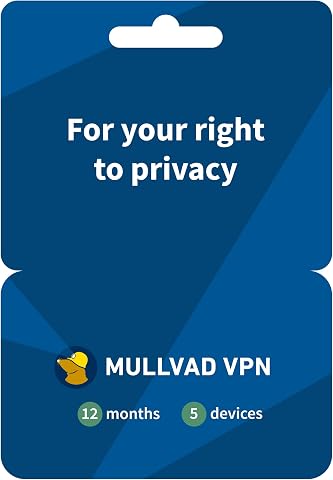
Mullvad VPN 12-Month Subscription for 5 Devices
- ✔ Subscription duration: 12 months
- ✔ Simultaneous devices: Up to 5
- ✔ VPN protocol: WireGuard

NordVPN Standard 1-Year Subscription for 10 Devices
- ✔ Subscription term: 1 year
- ✔ Device limit: Up to 10 devices
- ✔ Supported platforms: Windows, macOS, iOS, Android, Linux, Amazon Fire TV, web browsers

Malwarebytes Premium Security and Privacy VPN, 1-Year Subscription for 2 Devices
- ✔ Subscription: 1 year
- ✔ Device limit: 2 devices
- ✔ Supported platforms: Windows, macOS, Android, iOS, iPadOS, Chromebook
The practical choice is whether minimizing account data and keeping the service simple matters more than having more locations, plan options, and connected features. Mullvad is the sharper fit for users who want a low-profile VPN account and do not need a broad bundle. Proton VPN is more compelling for people who want a capable free option or value features such as Secure Core and the Proton ecosystem. Neither VPN makes a person anonymous by itself, and the better choice depends on what information and online activity a user is trying to protect.
At a Glance
| Criteria | Mullvad VPN | Proton VPN | Winner |
|---|---|---|---|
| Account data and payments | Numbered account, no email required; supports several less conventional payment methods, subject to availability | Email-based Proton account; multiple payment methods, with availability varying by region and plan | A |
| Independent scrutiny | Publishes audits and security information; check the latest reports for scope and date | Publishes independent audits and security information; check the latest reports for scope and date | Tie |
| Network and locations | Smaller network than Proton VPN, with coverage across multiple countries | Larger network, with many locations and broader plan-dependent options | B |
| Privacy features | Simple privacy-focused VPN service with modern protocols and a kill switch | Includes features such as Secure Core, NetShield, and a kill switch; availability can vary by platform and plan | B |
| Free access and plan flexibility | Paid service with a flat, straightforward subscription model | Has a free tier and several paid plans, with feature access varying by plan | B |
| Ease of use and ecosystem | Focused VPN apps with fewer connected services | Works with Proton Mail and other Proton services, with a broader feature set | B |
| Value | Strong value for users who want a simple, paid privacy tool | Better value for users who benefit from the free tier or Proton bundle | Depends |
Mullvad VPN 12-Month Subscription for 5 Devices
Mullvad earns our top position because its account setup minimizes the personal information a buyer needs to hand over: access uses an activation code, with no email address required. For readers who see account identity as part of the privacy equation, that is a meaningful distinction from a more conventional signup. The service supports up to five simultaneous devices and uses WireGuard, so it can cover a small set of phones and computers across major desktop and mobile platforms.Compared with NordVPN, Mullvad makes a more focused case for privacy through account design, while NordVPN offers more simultaneous devices and a wider bundle of connection protections. Against Malwarebytes, Mullvad is the more VPN-centered option; Malwarebytes is more compelling when antivirus and threat blocking matter alongside encrypted browsing. Mullvad also lists regular independent audits, which provide an additional form of scrutiny, though audits do not guarantee that every user risk is addressed.The tradeoffs are practical. The subscription is for a fixed 12-month period, and the listed Linux support names Debian, Ubuntu, and Fedora rather than every distribution. Buyers should also distinguish encrypted VPN traffic from full anonymity: the VPN does not secure accounts at websites or prevent tracking through information users share. For a privacy-first buyer who wants minimal signup details and coverage for a handful of devices, Mullvad has the most directly aligned feature set in this comparison.
Pros:
- Activation-code account setup does not require an email address.
- Supports up to five simultaneous devices across major mobile and desktop platforms.
- Uses WireGuard and lists regular independent security audits.
- A focused VPN choice for buyers prioritizing account privacy over a larger security bundle.
Cons:
- The subscription covers a fixed 12-month period.
- Listed Linux compatibility is limited to Debian, Ubuntu, and Fedora.
- Does not bundle the malware scanning and phishing protections described for Malwarebytes and NordVPN.
Best for: Privacy-conscious individuals or small households who value email-free account setup and need VPN coverage for up to five devices.
Not ideal for: Buyers who need more than five connections, broad Linux distribution coverage, or antivirus and malware protection bundled with the VPN.
Bottom line: Choose Mullvad for the strongest privacy-centered account setup in this lineup, provided five devices and the listed platforms are enough.
“Choose Mullvad for the strongest privacy-centered account setup in this lineup, provided five devices and the listed platforms are enough.”
NordVPN Standard 1-Year Subscription for 10 Devices
NordVPN Standard takes the second spot by pairing a 10-device limit with a broad set of connection and browsing protections. That allowance makes it easier to cover a household’s phones, computers, and Fire TV devices under one subscription than with Mullvad’s five-device cap or Malwarebytes’ two-device limit. Its listed Kill Switch can cut internet access if the VPN connection drops, while Double VPN routes traffic through two VPN servers for an additional layer of routing.The package also includes malware scanning, phishing protection, and ad and tracker blocking. These features make NordVPN a more expansive everyday privacy toolkit than Mullvad, whose supplied description focuses on the VPN itself. Still, feature breadth is not the same as the low-information account setup that distinguishes Mullvad. Buyers who prioritize signing up without an email address may prefer Mullvad; buyers seeking bundled endpoint protection may find Malwarebytes more relevant, although that service covers fewer devices.NordVPN lists apps for desktop and mobile systems, Linux, Fire TV, and web browsers, along with thousands of servers in 224+ locations. The Dark Web Monitor is a notification feature: it alerts users when listed email addresses or card details are found, but it does not secure the affected accounts. As with any VPN, the extra routing and blocking features do not prevent every form of tracking or replace strong passwords and multifactor authentication. This pick is best for buyers who want broad device coverage and several extra safeguards, and who are comfortable managing a one-year digital subscription.
Pros:
- Supports up to 10 devices under one subscription.
- Works across desktop, mobile, Linux, Fire TV, and web browser platforms.
- Includes a Kill Switch and Double VPN servers.
- Adds malware and phishing protection plus ad and tracker blocking.
Cons:
- The subscription term is limited to one year.
- Dark Web Monitor alerts about found details but does not secure affected accounts.
- Its broader feature bundle does not offer the email-free account setup highlighted by Mullvad.
Best for: Households or individuals with many devices who want VPN access plus a Kill Switch, Double VPN, and ad and tracker blocking.
Not ideal for: Buyers who prioritize an email-free account setup, need more than a one-year term, or want the VPN included with a dedicated malware protection suite.
Bottom line: Pick NordVPN Standard when device coverage and bundled safeguards matter more than Mullvad’s email-free account approach.
“Pick NordVPN Standard when device coverage and bundled safeguards matter more than Mullvad’s email-free account approach.”
Malwarebytes Premium Security and Privacy VPN, 1-Year Subscription for 2 Devices
Malwarebytes is the outlier in this roundup: its main distinction is combining a no-log VPN with real-time protection against malware, phishing, ransomware, and other online threats. That makes it a reasonable fit for buyers who want endpoint security and encrypted public Wi-Fi connections from one subscription. Browser Guard adds ad, tracker, and malicious-page blocking in supported browsers, giving the bundle a broader security role than Mullvad’s VPN-focused offering.That breadth comes with a small device allowance. Malwarebytes covers two devices, compared with five for Mullvad and 10 for NordVPN. If VPN coverage across a family’s devices is the priority, NordVPN is the clearer choice; if minimizing signup information is central, Mullvad provides a more specific account privacy feature. Malwarebytes makes most sense when its real-time security tools are the reason to choose it and the VPN is a useful companion.Platform details deserve attention before choosing. The listing supports Windows, Mac, iOS, Android, iPadOS, and Chromebook, but some protections, including ransomware and zero-day exploit protection, are Windows-only. Real-time protection and updates also require an active internet connection, and the subscription cannot be combined with an existing subscription. Its listed VPN server network spans 40+ countries, which is narrower in stated geographic coverage than NordVPN’s listing. We would choose this bundle for security coverage first, rather than for maximum VPN device flexibility or the most privacy-focused account arrangement.
Pros:
- Bundles a no-log VPN with real-time malware, phishing, and ransomware protection.
- Browser Guard blocks ads, trackers, malicious pages, and online scams.
- Encrypts connections on public Wi-Fi.
- Supports several desktop and mobile operating systems, plus Chromebook.
Cons:
- The subscription covers only two devices.
- Some protections, including ransomware and zero-day exploit protection, are Windows-only.
- Real-time protection and updates require an active internet connection, and the subscription cannot be combined with an existing subscription.
Best for: Buyers who want a VPN bundled with real-time malware, phishing, and ransomware protection for two devices.
Not ideal for: Households needing more than two VPN connections, buyers seeking email-free signup, or users who need every security feature on non-Windows devices.
Bottom line: Choose Malwarebytes when bundled device security is your priority and two covered devices are sufficient.
“Choose Malwarebytes when bundled device security is your priority and two covered devices are sufficient.”
As an Amazon Associate we earn from qualifying purchases.
Key Differences
The clearest difference is how much information each service asks for to establish an account. Mullvad assigns a numbered account and does not require an email address, which can reduce the personal information attached to the VPN account. It also accepts payment methods that can offer more separation from a conventional card payment, though options and availability may change. Proton VPN uses a Proton account, typically tied to an email address. That creates a more identifiable account relationship, while enabling convenient access to Proton’s broader services.
Proton VPN has the advantage in breadth. It offers a free tier, a larger location network, and features such as Secure Core, which routes traffic through multiple servers, and NetShield, a filtering feature. These can be useful for people who want options beyond a basic encrypted tunnel. Mullvad’s appeal is focus: its simpler paid service and account model can suit people who would rather avoid an ecosystem and keep account details sparse. Both providers’ policies, audits, and technical controls deserve scrutiny; no single feature or audit guarantees that every future build or user configuration is safe.
For most people choosing a general-purpose privacy VPN, Proton VPN is the more versatile starting point, particularly if its free plan meets their needs. Mullvad is the more distinctive choice for buyers who place unusually high value on minimizing account information and prefer a focused service. Paying for Proton’s plan makes sense when the added features, locations, or bundle are useful. Paying for any VPN will not conceal activity from every party: websites can identify logged-in users, and VPN providers become part of the trust chain.
Detailed Comparison
Account data and payments (Mullvad VPN wins — major)
Mullvad wins this criterion by asking for less information at signup: users can create a numbered account without supplying an email address. It also supports payment approaches beyond ordinary card billing, depending on availability. Proton VPN’s account system is more conventional and links VPN access to a Proton account, commonly associated with an email address. The gap is major for users who want to limit identifying details attached to their VPN account; it is minor for those comfortable with a standard account and payment trail. A numbered account does not make online activity anonymous, but it reduces one direct link between identity and service access.
Independent scrutiny (moderate difference)
Both providers publish independent security assessments and describe privacy protections, so neither has a decisive general advantage here. The useful distinction is the specific report: its date, scope, tested apps, and whether it examined infrastructure or only a particular component. Treat an audit as evidence about the systems and period it covered, not as a permanent guarantee. This is a tie of moderate significance; readers who need assurance for a particular platform should read the latest relevant report from each provider.
Network and locations (Proton VPN wins — moderate)
Proton VPN wins on breadth, with a larger network and more locations than Mullvad. That can improve the odds of finding a nearby server, a location useful for travel, or a server that works with a particular service. Actual speeds depend on distance, congestion, device, and connection, so a larger network does not promise faster performance in every home or country. The gap is moderate for travelers and people who need location choice, and minor for users who mainly connect to a nearby server.
Privacy features (Proton VPN wins — moderate)
Proton VPN wins on the range of privacy-related controls, including Secure Core and NetShield, with feature access varying by plan and platform. Secure Core can add routing protection for users worried about a server’s physical location or network exposure; it can also add latency. NetShield offers filtering, though it should not replace browser security or careful link handling. Mullvad covers core VPN use with a simpler set of controls. This is a moderate advantage for Proton users who will use the extras, but a minor one for people who only need encrypted traffic between their device and a VPN server.
Free access and plan flexibility (Proton VPN wins — major)
Proton VPN wins clearly because it offers a free tier alongside paid plans. That gives cautious users a way to try the service without an initial subscription and can meet basic needs, subject to the free plan’s limits. Mullvad is a paid service with a more straightforward subscription approach and no equivalent free tier. The gap is major for people with no VPN budget or those who want to evaluate a provider before paying; users who want a predictable paid service and do not need plan choices may prefer Mullvad’s simplicity.
Ease of use and ecosystem (moderate difference)
Proton VPN is the better fit for people who want VPN access alongside Proton Mail and other Proton services, since one account can connect them. Its wider range of features can also mean more choices to learn. Mullvad keeps the proposition narrower, which can make the decision and ongoing use feel simpler for someone who only wants a VPN. This is a moderate, preference-driven difference: Proton wins for ecosystem convenience, while Mullvad suits users who value a focused tool and fewer bundled services.
Value (moderate difference)
There is no universal price winner because plans, promotions, taxes, and payment terms can change. Proton VPN offers the stronger entry value when its free plan is sufficient, and a paid Proton plan can be worthwhile for users who will use its extra locations or features. Mullvad’s value comes from a simpler paid proposition and a low-data signup model. The difference is moderate: pay more for Proton only when its added capabilities matter to your use; choose Mullvad when the account model itself is worth the subscription to you.
Mullvad VPN: Pros and Cons
Pros:
- Numbered account can be created without an email address
- Supports multiple payment methods, including options that may add separation from card billing
- Focused service with a straightforward paid model
- Privacy controls and security information are publicly documented
Cons:
- No free tier
- Smaller network and fewer location choices than Proton VPN
- Fewer extras and less integration with other privacy services
- Less suitable for users who want a broad set of plan options
Proton VPN: Pros and Cons
Pros:
- Free tier offers a no-subscription starting point
- Larger network and broader location choice
- Includes features such as Secure Core and NetShield, subject to plan and platform
- Connects with Proton Mail and other Proton services
Cons:
- Account setup generally involves a Proton account and email address
- Some features and locations depend on the paid plan
- A broader feature set can add choices and complexity
- Secure Core routing may add latency
Who Should Choose What
Choose Mullvad VPN if:
- You want to minimize personal details attached to a VPN account and value signup without an email address.
- You prefer a focused paid VPN and do not need a free tier or a large location network.
- You are willing to pay for a simpler service and value its account model more than bundled extras.
Choose Proton VPN if:
- You want to start with a free VPN plan or need a lower-cost way to try the service.
- You travel often or need a broader choice of server locations.
- You will use features such as Secure Core, NetShield, or other Proton services.
Skip both if: You need guaranteed anonymity, protection from every kind of tracking, or a substitute for secure device settings and careful account use. A VPN alone cannot provide those.
Value for Money
Proton VPN offers better value for users who can use its free tier, need a broad network, or will use the additional features and Proton services. A paid Proton plan is worth more when those capabilities solve a real need, such as frequent travel or a preference for Secure Core routing. Mullvad can be the better value for someone who wants one focused VPN and places a high value on an account that does not require an email address. Compare current plan terms before buying, since prices and included features can change. Paying more for features that stay unused does not improve privacy by itself.
Final Verdict
For most users who want a versatile privacy VPN, choose Proton VPN: its free tier, larger network, and wider feature set make it the more flexible recommendation. Choose Mullvad if minimizing account information is your leading priority and you are content with a focused paid service. The deciding factor is whether you value a spare account model more than broader access and features. Pay extra for Proton’s paid capabilities only if you will use them; otherwise, Mullvad’s straightforward offer or Proton’s free plan may be the better fit.
Frequently Asked Questions
Which is more private, Mullvad or Proton VPN?
Mullvad asks for less information to create an account, so it has an advantage if your concern is linking a VPN account to personal details. Both providers publish privacy and security information. Privacy depends on more than signup: review current policies, audit scope, app settings, and the online accounts you use through the VPN.
Is Proton VPN’s free plan enough?
It can be enough for basic VPN use if its current limits and available locations meet your needs. Check the provider’s current terms for device, speed, server, and feature restrictions. Choose a paid plan if you need the broader location selection or features reserved for subscribers.
Does Mullvad require an email address?
Mullvad lets users create a numbered account without providing an email address. That reduces the personal information tied to account creation, though payment records or activity on websites can still identify a user.
Is a VPN enough to make me anonymous?
No. A VPN changes the network path and can hide your traffic from some local observers, but websites may identify you through logins, cookies, or browser fingerprints. It also shifts trust to the VPN provider. Use a VPN as one privacy measure, not a guarantee of anonymity.