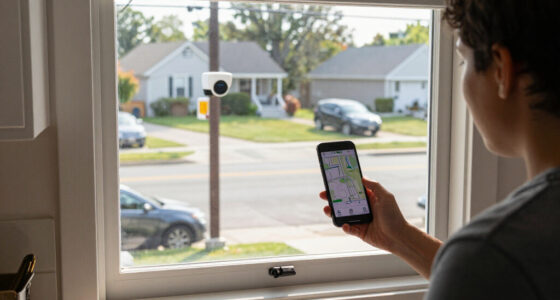

Cybersecurity and privacy are no longer concerns reserved for governments, corporations or technical specialists. Phones hold intimate conversations, laptops contain financial records, cameras fit inside everyday objects and portable drives can carry years of sensitive information. Understanding how these technologies work—and how they can be abused—helps you make safer choices without becoming overwhelmed or unnecessarily suspicious.

Get privacy and security gear delivered free with Prime
- Fast, free delivery on millions of items
- Prime Video, Amazon Music and more included
- Member-only deals all year
This hub is an orientation to digital security, encrypted communication, data storage, surveillance technology and responsible investigation. It is designed for individuals, families, educators, journalists, business owners and anyone who wants more control over personal information. Use it to identify your risks, establish sensible protections and find the right deep-dive guide for your needs.
Start With Your Personal Threat Model
A threat model is simply a structured answer to four questions: What do you want to protect? Who might want it? How could they obtain it? What consequences would matter most? You do not need intelligence-agency defenses if your main risks are a stolen phone, reused passwords and fraudulent messages. Conversely, someone handling confidential sources or commercially sensitive files may need stronger safeguards than the average household.
Identify what matters
- Account credentials, recovery codes and authentication devices
- Financial, medical, legal or employment records
- Private messages, photographs and location history
- Customer information and confidential business documents
- Recordings or research that could expose another person
- Physical safety, identity and home-address information
Next, consider realistic adversaries. These may include opportunistic thieves, scammers, abusive acquaintances, dishonest insiders, data brokers or malware operators. Rank risks by likelihood and potential harm. This keeps your security plan practical: resolve common, high-impact weaknesses first, then address specialized threats where circumstances justify the effort.
hardware security key for two-factor authentication
As an affiliate, we earn on qualifying purchases.
As an affiliate, we earn on qualifying purchases.
Build a Strong Cybersecurity Foundation
Most effective protection comes from consistent basics rather than exotic equipment. Keep operating systems, browsers, applications and device firmware current. Use unique passwords stored in a reputable password manager, and enable multifactor authentication—preferably an authenticator app, passkey or hardware security key—wherever it is available. Protect email especially carefully because it often controls password resets for other accounts.
Backups are equally important. Maintain more than one copy of valuable data, with at least one copy separated from the device you use every day. Periodically confirm that important files can actually be restored. Encryption protects confidentiality, while backups protect availability; neither substitutes for the other.
Choose devices with security in mind
Computers and tablets form the center of many personal security systems. Before buying one, consider how long it is likely to receive software updates, whether storage encryption is supported, how account recovery works and whether the hardware fits your actual workload. Repairability, physical ports and accessory compatibility may also affect how safely and conveniently you can use it. The guide to the best computers, tablets and components offers a useful starting point for comparing current categories without treating the purchase itself as a complete security solution.
Once a device is configured, use automatic locking, a strong login credential and full-disk encryption where appropriate. Avoid leaving an unlocked machine unattended, and create separate user accounts when several people share a computer. Remove software you no longer use, review browser extensions and download applications from sources you trust.
encrypted USB flash drive for data backup
As an affiliate, we earn on qualifying purchases.
As an affiliate, we earn on qualifying purchases.
Protect Messages, Calls and Shared Information
Communication security involves more than choosing an app labeled “encrypted.” End-to-end encryption is intended to keep message content readable only on participating devices, but the surrounding devices, backups, notifications and account-recovery methods still matter. A confidential message displayed on a locked-screen notification is not very confidential to someone holding the phone.
Review who can access each conversation, verify important contacts through a separate channel when impersonation is a concern and be cautious about cloud backups that may receive different protection from live messages. For higher-risk work, keep sensitive and routine activity separate and establish clear procedures with everyone involved. Security weakens when one participant screenshots, forwards or carelessly stores material.
Dedicated hardware may be relevant for specialized situations, but suitability depends on the communications system, maintenance model and users’ ability to operate it correctly. Explore the guide to encrypted communication devices to understand the available device category and the questions worth asking before selecting equipment.
password manager with biometric login
As an affiliate, we earn on qualifying purchases.
As an affiliate, we earn on qualifying purchases.
Secure Portable Files and Removable Media
USB drives are convenient precisely because they are easy to carry—and easy to misplace. Sensitive portable storage should be protected against both unauthorized access and accidental loss. Encryption can make captured data harder to read, while an inventory and backup plan help you respond when a drive disappears.
Before using removable media, decide whether the files need to travel at all. Transfer only what is necessary, keep another authorized copy and safely remove the drive after use to reduce the risk of corruption. Do not plug unknown drives into important systems; removable media can be used to distribute malicious software. Organizations should also define who may use external storage and how it is scanned, documented and retired.
Hardware-encrypted drives can provide controls that differ from ordinary software-encrypted storage, though their interfaces and operating requirements vary. The roundup of encrypted USB flash drives can help you survey the options and compare them against your compatibility, capacity and workflow needs.
full disk encryption software for Windows/Mac
As an affiliate, we earn on qualifying purchases.
As an affiliate, we earn on qualifying purchases.
Understand Cameras, Recorders and Surveillance Risks
Miniature cameras and voice recorders can serve legitimate purposes in journalism, authorized security, documentation and creative work. They can also cause serious privacy violations. A device’s small size does not eliminate consent requirements, property rules or restrictions on recording conversations. Laws vary by location and context, so confirm the applicable rules before capturing, storing or sharing audio or video.
Use recording equipment responsibly
Begin with a lawful purpose and collect the minimum material required. Avoid private spaces and do not record people covertly merely because the technology makes it possible. Where consent is required—or where openness is simply the ethical choice—obtain it clearly. Secure recordings after capture, restrict access, establish a deletion schedule and consider the potential harm of publication.
Pen-shaped cameras combine an ordinary writing form with compact imaging hardware. Anyone considering this format should evaluate legality, storage handling and the possibility of misuse alongside ordinary technical factors. The guide to spy camera pens provides a focused overview of the category.
Audio presents its own concerns because recording-consent rules may differ from rules governing photography. Battery life, controls and file transfer matter, but lawful operation matters first. Review the guide to discreet portable voice recorders as a category reference, then verify local legal requirements for the particular setting.
Recognize signs of unwanted surveillance
Unexpected account alerts, unfamiliar device sessions, unusual sharing permissions or unknown apps can indicate a compromised digital environment. Physical warning signs may include unfamiliar objects, unexplained wiring or devices placed where private activity occurs. These signs are not proof by themselves; ordinary technical faults can produce similar symptoms.
If you suspect stalking, intimate-partner surveillance or another safety threat, avoid confronting the suspected person from a device they may monitor. Use a safer device to contact an appropriate support organization, attorney or law-enforcement agency, depending on your circumstances. Preserve relevant evidence without distributing sensitive material, and seek qualified technical assistance when inspection could affect your safety or an investigation.
Teach Security Through Curiosity and Hands-On Learning
Privacy education works best when it develops judgment rather than fear. Children and beginners can learn how information travels, why permissions matter and how models differ from reality. Activities that involve maps, physical models or simple systems thinking can introduce concepts such as scale, observation, evidence and uncertainty before moving into networks and encryption.
For example, comparing a representation with the real system it describes is a useful lesson in threat modeling: every model simplifies, and the omitted details can change a conclusion. The guide to solar system models for educational fun and accurate representation may seem adjacent to cybersecurity, but it supports this broader habit of examining scale, structure and the limits of a model—skills that transfer naturally to technical literacy.
For family security, teach people to pause before opening links, sharing personal details or approving login prompts. Discuss scams without shaming mistakes. Create a recovery plan that explains whom to tell, how to change compromised credentials and how to preserve suspicious messages. A calm reporting culture limits damage more effectively than punishment or secrecy.
Create a Privacy Routine That Lasts
Privacy is an ongoing practice, not a one-time configuration. Once each month or quarter, review important account sessions, application permissions, browser extensions and devices connected to your home network. Remove obsolete access and confirm that recovery email addresses and phone numbers are current. Check whether sensitive documents still need to remain in cloud folders or on portable media.
A practical priority order
- Secure email and financial accounts with unique credentials and strong authentication.
- Update frequently used devices and remove unsupported software.
- Enable device locking, encryption and dependable backups.
- Reduce unnecessary permissions, sharing links and stored personal data.
- Set clear rules for cameras, microphones and workplace recording.
- Prepare a written response plan for lost devices and compromised accounts.
When something goes wrong, contain the problem before trying to understand every detail. Disconnect a potentially infected device from networks if doing so is safe, change critical credentials from a trusted device and notify relevant providers. Document dates, alerts and actions. For serious financial loss, threats, stalking or exposure of regulated information, involve appropriate professionals promptly.
Choose Tools Without Losing Sight of the Goal
Security products are useful only when they address a defined risk and can be operated consistently. Before purchasing anything, ask what failure it prevents, what information it collects, how it receives updates and what happens if it is lost or the vendor’s service becomes unavailable. Also consider whether a simpler configuration change solves the same problem.
The strongest privacy posture combines sound habits, suitable technology and respect for other people’s rights. Start with the fundamentals, add encrypted or specialized equipment when your threat model supports it and reassess as your work, relationships and devices change. The aim is not perfect secrecy. It is informed control: knowing what you hold, where it goes, who can access it and what you will do when protection fails.
Fall Picks
fall essentials
As an affiliate, we earn on qualifying purchases.