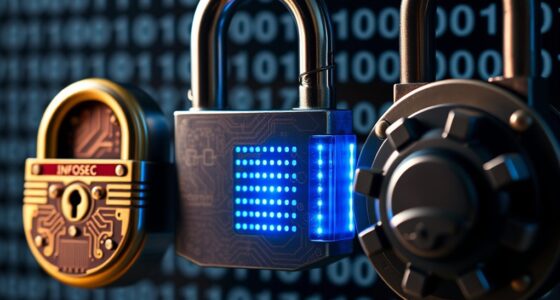
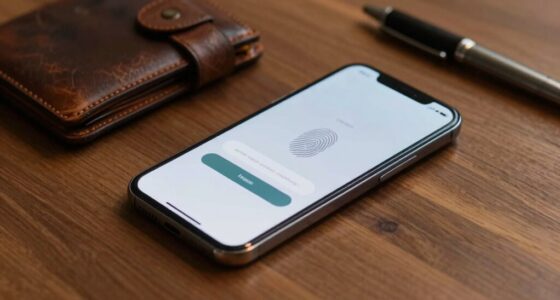
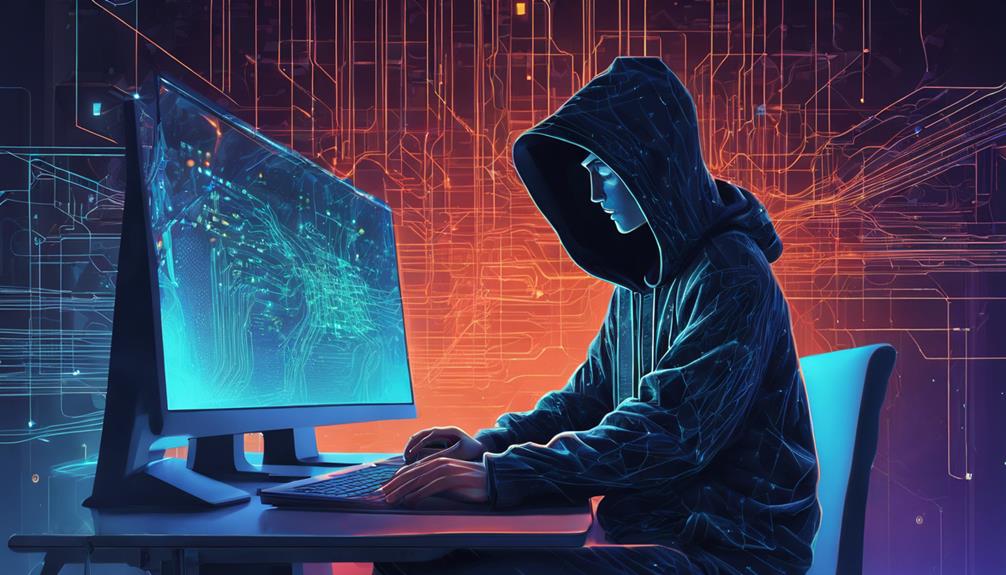
Email security mainly depends on your vigilance because technology alone can’t catch every threat. Your actions, like recognizing phishing scams or using strong, unique passwords, are essential to prevent breaches. Attackers exploit human error, so maintaining good habits and staying alert makes a big difference. Building awareness and practicing proactive security can protect you and your organization. Keep exploring these strategies to strengthen your defenses even more, as understanding your role is key to staying secure.

Get privacy and security gear delivered free with Prime
- Fast, free delivery on millions of items
- Prime Video, Amazon Music and more included
- Member-only deals all year
Key Takeaways
- Human behavior often bypasses technical security measures, making user vigilance critical.
- Phishing exploits human error, requiring constant awareness to identify and avoid scams.
- Weak, reused passwords and lack of multi-factor authentication increase vulnerability.
- Building a security-conscious culture encourages proactive habits and reduces complacency.
- Attackers leverage social engineering, emphasizing the need for user verification and skepticism.

Despite advances in technology, email security remains fundamentally a human problem. No matter how sophisticated your email filters or encryption methods are, if you don’t practice good habits, those protections can be easily bypassed. You’re often the last line of defense, and your actions—or inactions—can open the door to security breaches. That’s why phishing awareness is crucial. Phishing scams prey on human error, tricking you into revealing sensitive information or clicking malicious links. Recognizing these tactics requires constant vigilance and a skeptical mindset. You should always pause before opening unexpected attachments or clicking on unfamiliar links, even if they seem legitimate. Training yourself to identify signs of phishing—such as urgent language, misspellings, or unusual sender addresses—can make all the difference.
Stay vigilant: pause before opening links or attachments, and learn to spot signs of phishing scams.
Alongside phishing awareness, maintaining excellent password hygiene is equally vital. Weak or reused passwords are like an open invitation for cybercriminals to access your accounts. You need to create strong, unique passwords for each platform, avoiding common words or predictable sequences. Consider using a reliable password manager to keep track of your credentials securely. Regularly updating passwords adds another layer of protection, especially if you suspect an account compromise. It’s tempting to choose simple passwords for convenience, but the risks far outweigh the ease. Strong passwords, combined with multi-factor authentication where possible, significantly reduce your vulnerability to email-based attacks. Additionally, understanding the importance of biodiversity in digital ecosystems highlights how diverse and resilient security practices can better protect users and organizations from evolving threats. This concept underscores how employing a variety of security measures can create a more robust defense against cyberattacks. Recognizing that security is an ongoing process rather than a one-time setup emphasizes the need for continuous vigilance and adaptation. Building a culture of security awareness within your organization can also foster better practices across teams, preventing complacency.
You might think that security is mostly about technology, but the truth is that your awareness and habits form the foundation of email security. Every email you open, every link you click, and every password you create impacts your overall safety. Training yourself to stay cautious and informed isn’t a one-time effort—it’s an ongoing process. Employers often provide security awareness programs, but it’s up to you to stay engaged and apply what you learn daily. By practicing good phishing awareness techniques and maintaining strict password hygiene, you actively prevent cyber threats from exploiting human vulnerabilities.
You also need to be mindful of social engineering tactics that go beyond typical phishing emails. Attackers often impersonate colleagues or trusted contacts to gain access or steal information. Staying alert and verifying requests—especially those involving sensitive data—can prevent many of these scams. Remember, no security system is foolproof, but your awareness and proactive behavior are your best defenses. Making security a daily habit is essential because, ultimately, email security is still a human problem that only you can solve through vigilance and smart practices.
password manager for secure passwords
As an affiliate, we earn on qualifying purchases.
As an affiliate, we earn on qualifying purchases.
Frequently Asked Questions
How Do Human Errors Compare to Technical Vulnerabilities in Email Security?
You’re more likely to face risks from human errors than technical vulnerabilities in email security. User awareness plays a vital role, as simple mistakes like clicking malicious links or sharing passwords can lead to breaches. Focusing on error prevention through training helps reduce these mistakes. While technical vulnerabilities are important, empowering yourself with knowledge and vigilance makes a significant difference in protecting your email environment.
What Training Methods Are Most Effective for Improving Email Security Awareness?
You should focus on interactive training methods like simulated phishing attacks and real-world scenarios to boost employee engagement. Incorporate behavioral incentives, such as recognition or rewards, to motivate staff to stay vigilant. Regularly updating training content keeps awareness high, while fostering a culture of security encourages proactive behavior. These strategies make employees more attentive to email security, reducing human errors and strengthening your overall defenses.
How Can Organizations Measure Human-Related Email Security Risks?
You can measure human-related email security risks by analyzing user behavior and evaluating risk perception through simulated phishing tests. Tracking click rates, reporting frequency, and response times helps identify vulnerabilities. Additionally, surveys gauge employees’ understanding of threats. Regularly reviewing these metrics enables you to evaluate how well users recognize risks, adapt training accordingly, and foster a security-aware culture that reduces human error in email security.
What Role Do Organizational Culture and Policies Play in Email Security?
You shape your organization’s email security through its culture and policies. By establishing strong organizational norms that prioritize security, you foster a security mindset among employees. Clear policies guide behaviors, making everyone aware of best practices and potential threats. This proactive approach encourages vigilance, reduces risky behaviors, and creates a collective responsibility for safeguarding sensitive information, ultimately strengthening your overall email security posture.
How Do Phishing Tactics Evolve to Exploit Human Vulnerabilities?
Phishing tactics evolve through social engineering and psychological manipulation, making them more convincing. Attackers adapt by mimicking trusted sources, exploiting emotions like fear or greed, and creating urgent scenarios to prompt quick actions. They leverage human vulnerabilities, such as curiosity or authority, to deceive you into revealing sensitive info or clicking malicious links. Staying alert and skeptical helps you recognize these tactics and protect yourself from falling victim.
multi-factor authentication device
As an affiliate, we earn on qualifying purchases.
As an affiliate, we earn on qualifying purchases.
Conclusion
Remember, even the best technology can’t replace human vigilance. No matter how advanced your email security tools are, a single click on a phishing email can compromise everything. Stay alert, question suspicious messages, and keep training yourself to recognize threats. As the saying goes, “A chain is only as strong as its weakest link.” By staying proactive and aware, you play an essential role in keeping your digital world safe.
phishing awareness training course
As an affiliate, we earn on qualifying purchases.
As an affiliate, we earn on qualifying purchases.
As an affiliate, we earn on qualifying purchases.
Halloween Picks
halloween
As an affiliate, we earn on qualifying purchases.