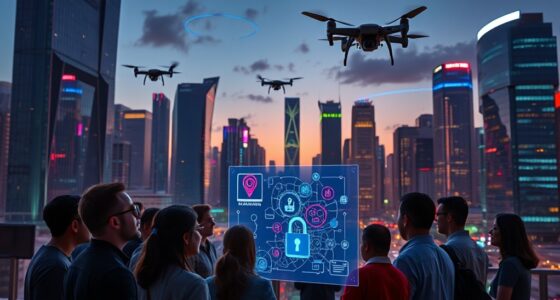

Securing hybrid work environments is challenging because you must balance employee flexibility with strong cybersecurity measures. You need to guarantee staff are properly trained, access controls are strict, and cloud-based identity management is in place. Monitoring and updating security protocols constantly is essential to adapt to evolving threats. If you want to understand how to maintain both productivity and security in such setups, you’ll find that implementing ongoing, all-encompassing strategies is key.

Get privacy and security gear delivered free with Prime
- Fast, free delivery on millions of items
- Prime Video, Amazon Music and more included
- Member-only deals all year
Key Takeaways
- Balancing robust security measures with employee productivity across diverse remote and on-site locations.
- Managing inconsistent device security and varying network vulnerabilities in hybrid setups.
- Ensuring continuous awareness and training to adapt to evolving cyber threats.
- Implementing scalable access controls that adjust to dynamic role changes and remote access needs.
- Maintaining real-time monitoring and quick incident response amidst complex, distributed environments.

As more organizations adopt hybrid work models, securing these environments has become a complex challenge. With employees working from various locations, often on different devices and networks, you need a strategic approach to protect sensitive information and maintain operational integrity. One of the first steps you should take is emphasizing employee training. You can’t rely solely on technology to block every threat; your staff needs to recognize potential risks like phishing scams, malware, or insecure Wi-Fi connections. Regular, targeted training sessions help employees understand best practices, such as avoiding suspicious links, creating strong passwords, and understanding the importance of updating software. When your team is aware of cybersecurity threats, they become the first line of defense, making your overall security posture more robust. Incorporating security awareness into your training programs ensures that employees stay vigilant against evolving threats.
Employee training is vital to recognize threats and strengthen your hybrid work security.
Alongside training, implementing strict access controls becomes essential. You want to guarantee that employees only access the information necessary for their roles, limiting the potential damage if an account gets compromised. Using multi-factor authentication, role-based permissions, and secure VPNs makes it harder for unauthorized individuals to gain entry. Access controls also help in tracking user activity, so you can quickly identify and respond to suspicious behavior. As employees move between home and office, you must continuously evaluate and adjust these controls to reflect changing roles and access needs. This dynamic approach prevents lax security and reduces the risk of data leaks or breaches. Staying updated on cybersecurity trends can help inform your access management strategies and adapt them to new threats. Additionally, fostering a culture of security-minded employees encourages everyone to prioritize safety and report potential issues promptly. Regular assessments of your security protocols can further ensure they remain effective in an evolving threat landscape. Incorporating cloud-based identity management tools can further streamline permission management and bolster your overall security posture.
You’ll also need to contemplate how technology supports your access control policies. Cloud-based identity management tools allow you to centrally manage permissions and enforce security policies across all devices and locations. These tools make it easier to revoke access swiftly if an employee leaves or if a device shows signs of compromise. Furthermore, they enable seamless, secure access for remote workers, keeping productivity high without sacrificing security. Training staff on these tools ensures they understand how to use them correctly, reducing accidental vulnerabilities. Incorporating security best practices into your technology deployment guarantees that your security measures are robust and aligned with industry standards.
Security isn’t a one-and-done task; it’s an ongoing process that demands vigilance. Regularly updating training programs keeps your team alert to emerging threats, while continuous monitoring of access logs helps catch anomalies early. As your organization evolves, so should your access controls, adapting to new roles, technologies, and risks. By combining focused employee training with rigorous access controls, you create a layered defense that makes it far more difficult for cybercriminals to exploit your hybrid work environment. Ultimately, this proactive approach helps protect your organization’s data, reputation, and operational stability in an increasingly remote world.
multi-factor authentication security key
As an affiliate, we earn on qualifying purchases.
As an affiliate, we earn on qualifying purchases.
Frequently Asked Questions
How Do You Measure the Effectiveness of Hybrid Security Measures?
You measure the effectiveness of hybrid security measures by monitoring user awareness and threat detection capabilities. Regularly conduct security training to evaluate how well users recognize risks, and analyze threat detection metrics to identify gaps. Use simulated attacks and incident response times to gauge preparedness. Consistent feedback and reporting help you refine strategies, ensuring your security measures adapt effectively to the evolving hybrid work landscape.
What Are the Costs Associated With Implementing Hybrid Security Solutions?
Implementing hybrid security solutions involves costs like purchasing software, hardware upgrades, and ongoing maintenance, which you should include in your cost analysis. You’ll also need to take into account expenses for staff training and potential consulting services. Effective budget planning helps you allocate resources wisely, balancing security needs with financial constraints. Remember, investing in robust security measures can prevent costly breaches and downtime, ultimately saving you money in the long run.
How Can Small Businesses Ensure Hybrid Security Without Extensive Resources?
Imagine your small business as a fortress, with employees as vigilant guards. You can guarantee hybrid security by boosting employee awareness—training everyone to spot threats—and implementing robust access controls that lock down sensitive data. Use affordable cloud-based tools to monitor activity and restrict access based on roles. This approach creates a layered defense, making it harder for cyber threats to breach your defenses, even with limited resources.
What Are the Legal Implications of Security Breaches in Hybrid Setups?
When a security breach occurs in your hybrid setup, you face legal liabilities that can result in hefty fines or lawsuits, especially if you neglect data compliance regulations. You’re responsible for protecting sensitive information across all environments, which means failing to do so could lead to legal actions and damage your reputation. To avoid this, make certain your security measures meet legal standards and maintain thorough records of compliance efforts.
How Does User Training Impact Hybrid Security Effectiveness?
User awareness and well-designed training programs are crucial for hybrid security effectiveness. When you educate users about potential threats and best practices, they become your first line of defense. Regular training keeps everyone vigilant about risks like phishing and insecure connections. By fostering a culture of security awareness, you reduce vulnerabilities, ensuring that your hybrid environment remains protected, even as threats evolve.
cloud-based identity management software
As an affiliate, we earn on qualifying purchases.
As an affiliate, we earn on qualifying purchases.
Conclusion
Just as a seasoned sailor navigates shifting tides and unpredictable storms, securing a hybrid work environment demands vigilance and adaptability. You must steer carefully through the fog of evolving threats, trusting your compass of robust policies and technology. Remember, the true challenge isn’t just keeping the ship afloat, but mastering the art of balancing risk and resilience in uncharted waters. With steady hands, you can chart a course toward a safer, more resilient future.
As an affiliate, we earn on qualifying purchases.
employee cybersecurity training courses
As an affiliate, we earn on qualifying purchases.
As an affiliate, we earn on qualifying purchases.
Halloween Picks
halloween
As an affiliate, we earn on qualifying purchases.