Neural interfaces are transforming how you interact with technology, enabling you to control devices using just your thoughts. They bridge the gap between your brain and machines, opening up new possibilities for communication and navigation without physical inputs. However, you’ll want to contemplate the ethical implications, accessibility issues, and technological challenges that come with this advancement. There’s a lot more to explore about how these innovations can shape your future interaction with tech.
Key Takeaways
- Neural interfaces enable direct communication between the brain and machines, allowing for control through thought alone.
- Ongoing advancements aim to improve accuracy and reliability in decoding complex brain signals for seamless interaction.
- Ethical considerations involve ensuring user privacy, consent, and preventing misuse of neural data for personal gain.
- Accessibility remains a concern, as equitable distribution of technology is necessary to prevent societal inequality in cognitive enhancements.
- Future developments will focus on user experience, minimizing invasiveness, and addressing technical challenges like signal interference for broader adoption.
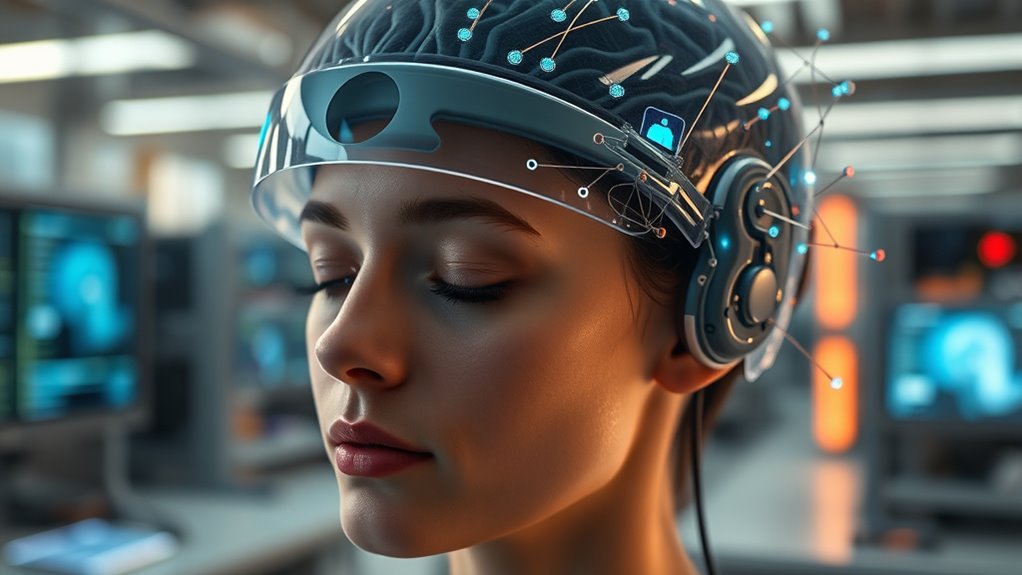
Neural interfaces are revolutionizing the way we interact with technology, bridging the gap between the human brain and machines. These remarkable devices allow you to control devices using just your thoughts, opening up a world of possibilities. Imagine being able to type, communicate, or even navigate your environment without the need for physical inputs. However, as this field progresses, you need to consider the ethical implications and technological challenges that accompany these advancements.
One of the most pressing ethical implications involves privacy and consent. When you think about it, the idea of a machine reading your thoughts can be unsettling. How do you ensure that your private thoughts remain private? Companies developing these technologies need to establish robust frameworks to protect user data and prevent unauthorized access to your brain’s information. You wouldn’t want your innermost thoughts exploited or misused, would you? As neural interfaces become more widespread, society must engage in conversations about what constitutes acceptable use and the boundaries that shouldn’t be crossed.
Another ethical aspect revolves around accessibility and inequality. If these technologies become available but are too expensive, what happens to those who can’t afford them? You might experience a world where only the wealthy can enhance their cognitive abilities or communicate seamlessly with machines, leading to a deeper divide in society. It’s essential to advocate for equitable access to these technologies so everyone can benefit from their potential.
The risk of inequality looms large as neural interfaces may only benefit the wealthy, highlighting the need for equitable access for all.
On the technological side, the challenges are significant. Developing neural interfaces that can accurately decode brain signals without causing harm is no small feat. You might wonder how researchers ensure that these devices are safe and effective. They’re working tirelessly to improve the reliability and precision of readings while minimizing invasive procedures. As you explore this field, you’ll see that there’s still much to learn about the brain, and breakthroughs in neuroscience are necessary for the advancement of neural interfaces. Additionally, the need for emotional impact of music in engaging users could provide insights into enhancing user experiences with these devices.
Moreover, achieving seamless integration between the brain and machines requires overcoming hurdles related to signal interference and noise. As you explore this exciting frontier, keep in mind that overcoming these technological challenges is essential for making neural interfaces practical and user-friendly.

Dell 24 All-in-One Desktop ec24250-23.8-inch FHD Display, Intel Core 3 Processor 100U, Intel Graphics, 8GB DDR5 RAM, 512GB SSD, Windows 11 Home, Onsite Service+6 Months Retail Migrate - White
Immersive visuals: The FHD IPS display features 99% sRGB and 50% higher contrast* within a narrow border so...
As an affiliate, we earn on qualifying purchases.
Frequently Asked Questions
How Do Neural Interfaces Impact Mental Health Treatment?
Neural interfaces can markedly enhance mental health treatment by promoting mindfulness integration and improving emotional regulation. You’ll find that these technologies enable you to monitor your brain activity, allowing for real-time feedback. This empowers you to develop better coping strategies and mindfulness practices tailored to your unique needs. As you engage with these tools, you might notice a greater ability to manage stress and anxiety, ultimately leading to improved mental well-being.
What Are the Ethical Concerns Surrounding Neural Interfaces?
Imagine opening a door to your mind, but what if someone else holds the key? Ethical concerns surrounding neural interfaces mainly revolve around privacy and informed consent. You’ve got to consider who has access to your thoughts and data. If you’re not fully informed about the risks, you’re fundamentally giving away pieces of yourself without realizing it. Balancing innovation with ethical responsibility is vital to ensure everyone’s mental privacy remains intact.
Can Neural Interfaces Enhance Cognitive Abilities?
Yes, neural interfaces can enhance cognitive abilities. They’re designed to boost memory enhancement and accelerate learning. By directly interacting with your brain, these devices can optimize information processing and help you retain knowledge more effectively. Imagine being able to learn new skills faster or recall memories with ease. As technology advances, you could experience significant improvements in how you think, learn, and remember, making everyday tasks and challenges more manageable.
How Secure Is the Data Transmitted Through Neural Interfaces?
You wouldn’t want your thoughts to wander into the wrong hands, right? Data transmitted through neural interfaces can be secure, but it heavily depends on data encryption protocols. Strong encryption can protect against privacy breaches, ensuring your information stays safe. However, vulnerabilities can still exist, so staying informed about the technology’s security measures is vital. Prioritizing security in neural interfaces helps keep your cognitive data private and protected from unauthorized access.
Will Neural Interfaces Be Accessible to Everyone?
Yes, neural interfaces are expected to become accessible to everyone over time. As technology advances, costs will likely decrease, making these innovations more affordable. You’ll find that increased competition among developers will drive prices down, and more people will benefit from the technology. Efforts to improve accessibility will guarantee that even those with limited financial means can access these life-changing tools, ultimately enhancing quality of life for many.

Dell OptiPlex 7070 SFF Desktop Computer PC, Intel 8 Core i7-9700 3.0GHz up to 4.70GHz,32GB DDR4 Ram New 1TB NVMe M.2 SSD,AX210 Built-in WiFi 6E,Windows 11 Pro, Wireless Keyboard & Mouse (Renewed)
Powerful 9th Gen Processor - The Dell OptiPlex 7070 desktop computer driven by the Intel 8 Core 9th...
As an affiliate, we earn on qualifying purchases.
Conclusion
As we stand at the crossroads of technology and humanity, neural interfaces symbolize a bridge to our future. These connections, like threads weaving through the fabric of our minds, promise to *uncover* untapped potential and reshape our interactions. Embracing this evolution isn’t just about merging circuits with thoughts; it’s about illuminating the path to understanding ourselves and each other. So, let’s take this leap together, transforming dreams into reality, and ignite the spark of innovation that awaits us.

Dell Tower Desktop ECT1250 - Intel Core Ultra 7-265 Processor, UHD Graphics, 32GB Memory, 1TB M.2 SSD, 3.0 SD Card Reader, Wired Keyboard and Mouse, Windows 11 Home, Basic Onsite Service
Speed up your tasks with AI: Unlock new levels of productivity and creativity by upgrading to Intel Core...
As an affiliate, we earn on qualifying purchases.

iBUYPOWER Y40 PRO Black Gaming PC Desktop Computer AMD Ryzen 9 7900X CPU, NVIDIA GeForce RTX 5070Ti 16GB GPU, 32GB DDR5 RGB 5200MHz RAM, 2TB NVMe SSD, Windows 11 Home, Keyboard, Mouse - Y40BA9N57T01
AMD Ryzen 9 7900X, NVIDIA GeForce RTX 5070Ti 16GB, 32GB DDR5 RGB 5200MHz 16x2 2TB NVMe SSD, WIFI...
As an affiliate, we earn on qualifying purchases.