
You’ll get a better home theater experience by focusing on planning than just adding more devices. Proper soundproofing, seating placement, and room acoustics make everything clearer and more immersive. When you optimize your space, sound spills less and views stay unobstructed. Balancing these factors creates a relaxing environment where each device works seamlessly. Keep exploring to discover how thoughtful planning transforms your home theater into a true entertainment haven.

Get privacy and security gear delivered free with Prime
- Fast, free delivery on millions of items
- Prime Video, Amazon Music and more included
- Member-only deals all year
Key Takeaways
- Proper planning ensures optimal seating, acoustics, and soundproofing, creating a more immersive experience than simply increasing devices.
- Effective room design minimizes sound reflections and noise transfer, enhancing audio clarity regardless of device quantity.
- Prioritizing soundproofing and layout reduces distractions, resulting in better sound quality than adding more equipment.
- Thoughtful placement and acoustic treatments improve audio performance more than relying solely on device specifications.
- A well-designed environment balances comfort, sound, and visuals, leading to a superior home theater experience over device count.
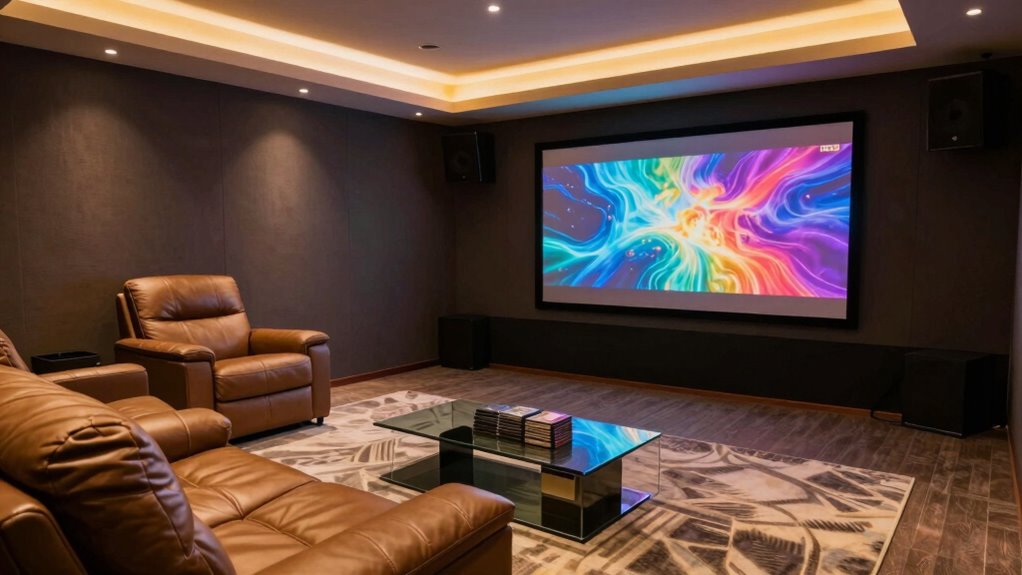
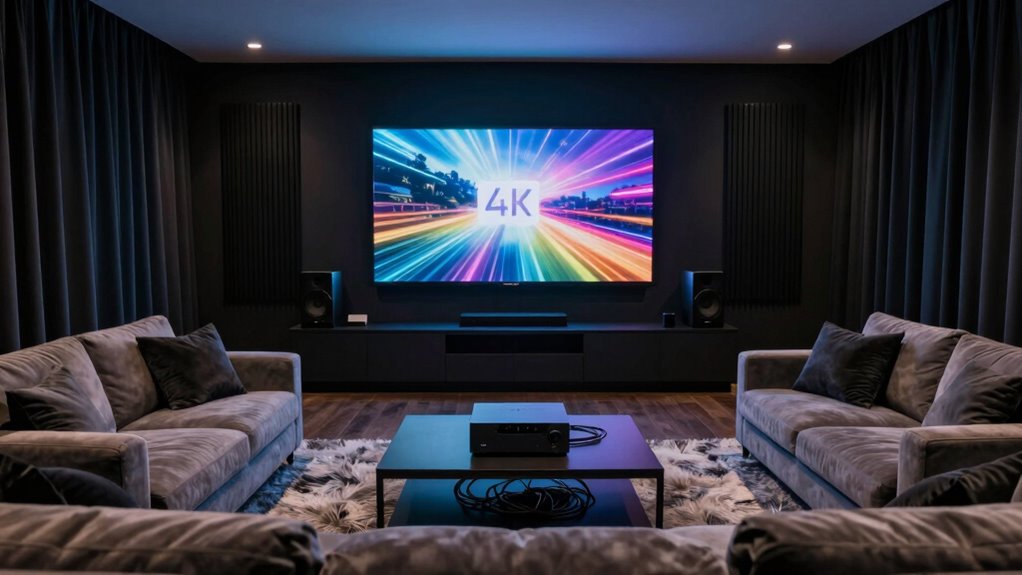
Creating the perfect home theater begins with careful planning. While it might seem tempting to focus solely on device count—adding more screens, speakers, or gadgets—you’ll find that the quality of your viewing experience depends far more on thoughtful layout and sound management. One of the most essential aspects of this planning is implementing effective soundproofing solutions. Without proper soundproofing, external noise can interrupt your movie nights, and sound from your theater can disturb other parts of your home. This means investing in acoustic panels, insulation, and sealing gaps around doors and windows to create a controlled listening environment. Soundproofing isn’t just about muffling noise; it’s about guaranteeing clear, immersive audio that makes you feel like you’re in the middle of the action, not in a noisy household. Ensuring proper soundproofing is crucial for achieving a truly immersive experience. Equally important is how you arrange your seating. Your seating arrangements directly influence your comfort, viewing angles, and overall experience. You should position seats to maximize sightlines to screens and speakers, avoiding awkward angles that diminish picture quality or sound clarity. Consider the size and shape of your room—placing seats too close to walls can cause sound reflections, while too far back might diminish the impact of your audio system. You also want to think about the height and spacing of seats to guarantee everyone has an unobstructed view and can enjoy the audio without straining or feeling cramped. Proper seating arrangements help you maximize the benefits of your devices, making each component work together seamlessly rather than competing for attention. Additionally, room acoustics play a significant role in how sound behaves within your home theater, affecting clarity and depth. To optimize your setup, it’s beneficial to assess sound reflections and how they influence audio quality, which can be addressed through strategic placement of furnishings and acoustic treatments. Incorporating sound absorption materials can significantly improve overall audio clarity and reduce echoes. Creating a balanced environment also involves considering sound insulation to prevent noise transfer between rooms, which enhances the overall experience for everyone. Instead, prioritize creating a balanced environment where soundproofing solutions minimize noise distractions, and your seating arrangements support ideal viewing angles and comfort. When these elements are carefully planned, the technical specs of your devices become secondary. Your home theater becomes a true escape—an environment where every sound and sight feels just right, and where you can truly relax and enjoy your favorite movies or shows. In the end, it’s about quality, not quantity.
Products Worth Considering

Jackery Explorer 2000 v2 Portable Power Station with Two 200W Solar Panels

Jackery Solar Generator 1000 V2 with 200W Solar Panel

LG UltraGear 32GX850A-B 32-Inch 4K UHD Glossy OLED Gaming Monitor
As an affiliate, we earn on qualifying purchases.
Frequently Asked Questions
How Does Room Size Affect Home Theater Planning?
Room size directly impacts your home theater setup, as larger rooms offer more flexibility for ideal sound and image quality. You should consider room dimensions carefully to determine the best furniture arrangement, guaranteeing clear sightlines and proper acoustics. Smaller rooms may require space-saving furniture and soundproofing, while larger spaces allow for more elaborate setups. Proper planning ensures your equipment fits comfortably and creates an immersive experience tailored to your room size.
What Are the Best Acoustical Treatments for Home Theaters?
Did you know that proper acoustical treatments can improve sound clarity by up to 50%? The best options for your home theater are acoustic panels, which absorb sound and reduce echo, and effective soundproofing techniques that prevent noise leakage. Use bass traps to control low frequencies and diffusers to scatter sound evenly. These treatments create an immersive experience, ensuring you hear every detail with crystal clarity.
How Should Lighting Be Integrated Into the Design?
You should integrate lighting by incorporating ambient lighting that creates a comfortable environment without glare on screens. Use smart illumination systems to control brightness and color, allowing you to adjust lighting easily for different scenes or moods. Place dimmable fixtures around the room and consider cove lighting or wall sconces for subtle effects. This enhances your viewing experience, prevents eye strain, and complements your home theater’s overall design.
What Are Common Mistakes to Avoid When Planning?
Ever wondered what can go wrong in your home theater setup? Avoid common mistakes like improper screen placement and poor seating arrangements. Make certain your screen is at eye level and centered for ideal viewing, and plan your seating to minimize glare and guarantee everyone has a clear view. Neglecting these details can ruin the experience, so take your time during planning to create a comfortable, immersive space.
How Do You Budget Effectively for a Home Theater?
To budget effectively for your home theater, start with clear budget allocation, deciding how much you’re willing to spend overall. Prioritize essential equipment like a quality display and sound system, then allocate funds accordingly. Avoid overspending on gadgets you don’t need; instead, focus on high-quality core components. Research prices, compare options, and consider future upgrades. This approach guarantees you get the best experience without overspending or sacrificing key features.
Conclusion
Remember, thorough home theater planning is your best bet for a cinematic experience that truly wows. It’s not just about stacking devices; it’s about creating a harmonious space where everything works together seamlessly. When you plan wisely, you avoid the pitfall of spreading yourself too thin—like trying to fix a leaky faucet with a sledgehammer. Focus on the big picture, and you’ll enjoy a setup that’s both impressive and enjoyable, right from the first movie you watch.