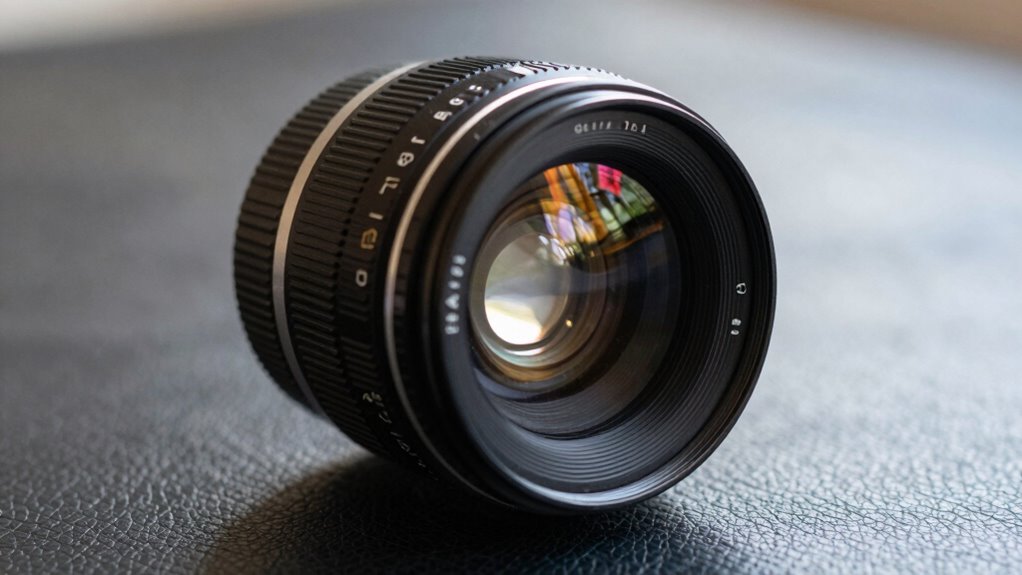

Your lens choice has a greater impact on your photos than the camera body itself because it shapes perspective, depth, and mood. Wide-angle lenses exaggerate details and create a sense of depth, while telephoto lenses bring a refined, intimate feel. Fast lenses with wide apertures allow you to isolate subjects and add cinematic effects. Understanding these lens characteristics helps you craft images with emotion and style—if you keep exploring, you’ll discover how to use lenses to transform your photography creatively.

Get privacy and security gear delivered free with Prime
- Fast, free delivery on millions of items
- Prime Video, Amazon Music and more included
- Member-only deals all year
Key Takeaways
- Lens selection influences perspective distortion, affecting how viewers perceive depth, scale, and spatial relationships in an image.
- Focal length and aperture shape the photographic style, mood, and depth of field, more than the camera body itself.
- Wide-angle lenses exaggerate close objects and create a sense of depth, while telephoto lenses compress distance for intimacy.
- Lens characteristics like coatings, aberrations, and distortion are used creatively to evoke emotion and enhance storytelling.
- The physical properties of lenses enable unique compositions, vintage looks, and cinematic effects that camera bodies alone cannot achieve.
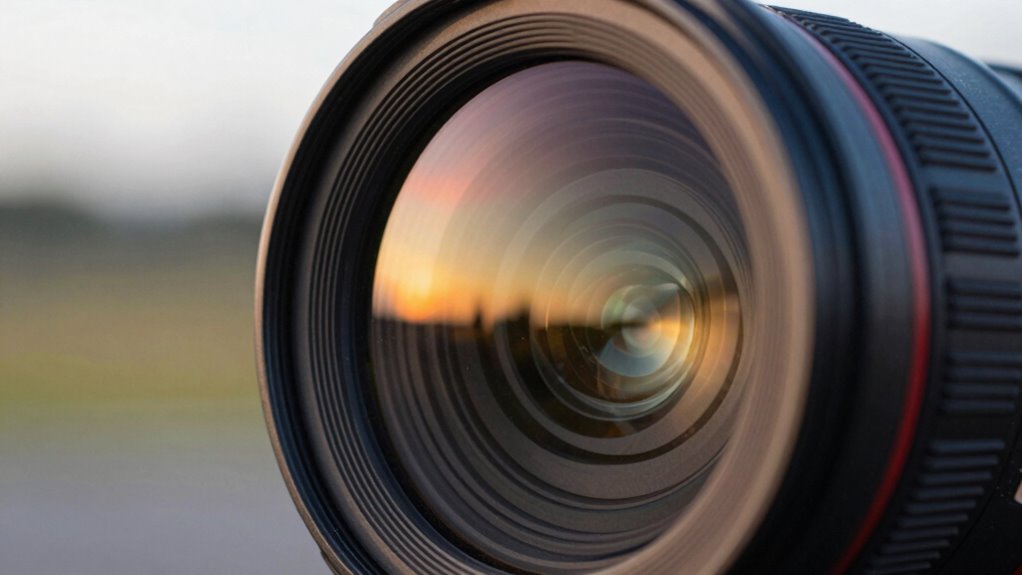
When it comes to capturing stunning images, your choice of lens often has a more profound impact than the camera body itself. The lens you select influences not only how your photo looks but also the emotional tone and storytelling potential of your shot. For instance, using a lens that emphasizes film aesthetics can give your images a nostalgic, textured quality reminiscent of classic film photography, adding depth and character that digital sensors sometimes lack. This choice shapes the mood and feel of your photographs, allowing you to evoke specific sensations in viewers that go beyond simple documentation.
Your lens also determines the perspective distortion present in your images, which can dramatically alter the viewer’s perception. Wide-angle lenses, for example, exaggerate the size of objects close to the camera, creating a sense of depth and scale that’s perfect for immersive landscapes or dynamic street scenes. Conversely, telephoto lenses compress distances, making subjects appear closer together and often producing a more refined, intimate look. By intentionally choosing a lens with particular perspective distortion, you control how viewers interpret spatial relationships within your photo, guiding their emotional response and understanding of the scene.
Choosing wide-angle or telephoto lenses shapes perception, guiding viewers’ emotional response through intentional perspective distortion.
Beyond perspective, the physical characteristics of your lens—such as focal length and aperture—shape your photographic style. A fast, wide-aperture lens allows for a shallow depth of field, isolating your subject from the background and adding a cinematic quality. This effect enhances the film aesthetics you aim for, giving your images a lush, tactile feel. On the other hand, a zoom lens offers versatility, enabling you to quickly adapt to changing scenes without sacrificing image quality or perspective. The choice of lens influences not just technical outcomes but also your creative approach, dictating how you frame and interpret each moment.
Ultimately, your lens selection is about more than just optical specifications; it’s a tool to craft mood, highlight details, and manipulate perception. While camera bodies are important, it’s the lens that truly shapes the visual language of your photography. Whether you’re aiming for a vintage film look, emphasizing perspective distortion, or experimenting with unique compositions, your lens choice empowers you to tell stories with clarity, emotion, and style. It’s this power to influence how your images are perceived that makes lens selection one of the most critical decisions in your creative process. Exploring optical characteristics can help you better understand how to leverage your lens to achieve your artistic vision. Additionally, understanding lens aberrations can enable you to make more intentional choices that enhance or creatively distort your images. Recognizing the sensor size and its interaction with lens choices can further refine your control over image quality and composition. Being aware of lens coatings can also help reduce unwanted reflections and flare, improving overall image clarity.
wide-angle camera lens for landscape photography
As an affiliate, we earn on qualifying purchases.
As an affiliate, we earn on qualifying purchases.
Frequently Asked Questions
How Do Lenses Affect Depth of Field in Photography?
Lenses greatly influence depth of field in your photos. A wide aperture creates a shallow depth of field, making your subject stand out with beautiful Bokeh effects, while smaller apertures increase depth, keeping more in focus. Your lens choice also affects lens flare, which can add artistic flair or unwanted glare. Using telephoto lenses compresses the scene, enhancing background blur, whereas wide-angle lenses increase depth, capturing more of the environment.
What Lens Characteristics Influence Image Distortion?
Did you know that wide-angle lenses can cause up to 10% more lens distortion? Your lens characteristics, like focal length and optical design, influence image distortion. Chromatic aberration, where colors fringe around objects, also varies with lens quality. To minimize distortion, choose lenses with low distortion ratings and good optical coatings. Understanding these features helps you capture sharper, more accurate images, especially in architecture and landscape photography.
How Does Lens Aperture Impact Photo Sharpness?
Your lens aperture impacts photo sharpness by controlling the depth of field and light intake. A wider aperture (smaller f-number) creates a shallow depth of field, which might blur the background but can diminish overall sharpness if not focused well. Lens coating reduces glare and flare, improving clarity, while autofocus speed ensures precise focus, maximizing sharpness. Adjusting aperture thoughtfully helps you balance sharpness, exposure, and creative effects.
What Are the Best Lens Options for Low-Light Photography?
Looking to capture stunning images in dim conditions? Opt for fast prime lenses with wide apertures, like f/1.4 or f/1.8. Larger sensor sizes enhance low-light performance, while advanced lens coatings reduce flare and ghosting. These choices allow more light to reach your sensor, improving clarity and detail. Combine them with steady hands or a tripod, and you’ll see your low-light shots become remarkably sharper and richer in detail.
How Do Lens Focal Lengths Change Perspective?
Focal length variations markedly influence perspective, making subjects appear closer or farther apart. A wide-angle lens (short focal length) exaggerates perspective, creating more distortion and making foreground objects look larger. Conversely, a telephoto lens (long focal length) compresses space, reducing perspective distortion and making distant elements seem nearer. By choosing different focal lengths, you control the scene’s depth and perspective, shaping how viewers perceive spatial relationships in your photos.
telephoto lens for portrait photography
As an affiliate, we earn on qualifying purchases.
As an affiliate, we earn on qualifying purchases.
Conclusion
While your camera body might be the engine, it’s your lens that paints the picture’s soul. Just as a painter’s brush defines their artwork more than the canvas, your lens choice shapes your style, mood, and focus. Don’t overlook the power of your glass—it’s the tool that transforms your vision into reality. Remember, in photography, it’s not just the gear but the perspective you bring that truly makes the image.
fast prime lens with wide aperture
As an affiliate, we earn on qualifying purchases.
As an affiliate, we earn on qualifying purchases.
zoom lens for versatile photography
As an affiliate, we earn on qualifying purchases.
As an affiliate, we earn on qualifying purchases.
Halloween Picks
halloween
As an affiliate, we earn on qualifying purchases.