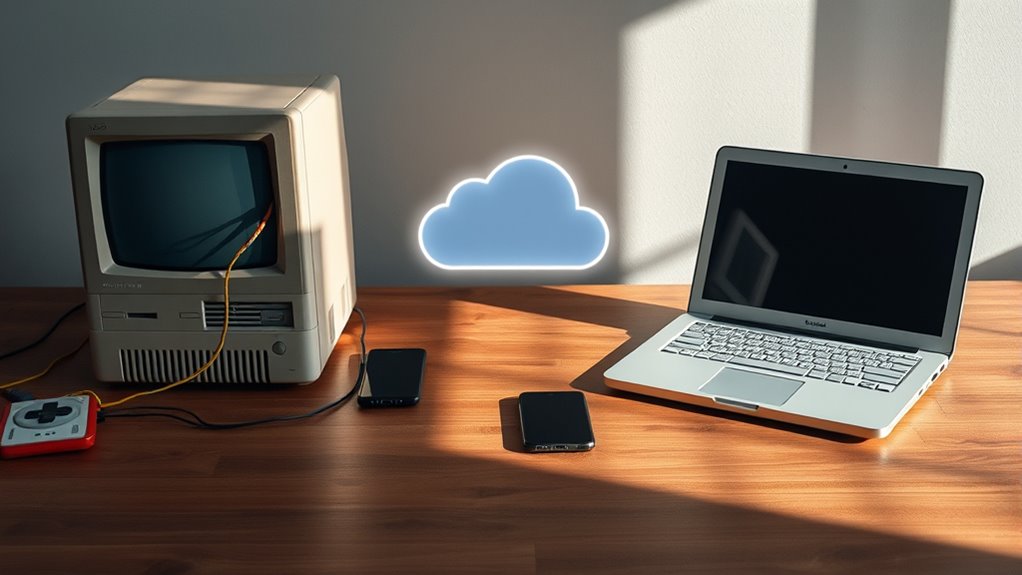

The evolution of personal computing has shifted dramatically from bulky desktops to cloud PCs. You can now access powerful computing resources from any device and location. Portable devices like laptops and tablets have taken center stage, making it easier to work and play on the go. Cloud services enhance this experience, allowing seamless access to files and applications. If you’re curious about how this evolution continues to reshape personal computing, there’s much more to explore.
Key Takeaways
- Personal computing has shifted from bulky desktops to sleek, portable devices, enhancing user mobility and convenience.
- Cloud integration has revolutionized storage and accessibility, allowing seamless access to files and applications from any location.
- Communication has evolved with video conferencing tools like Zoom, enabling high-quality virtual interactions for both personal and professional use.
- Streaming services have transformed entertainment consumption, providing on-demand access to vast content libraries without the need for physical media.
- Advancements in technology and air quality awareness have improved the overall comfort and efficiency of computing environments.
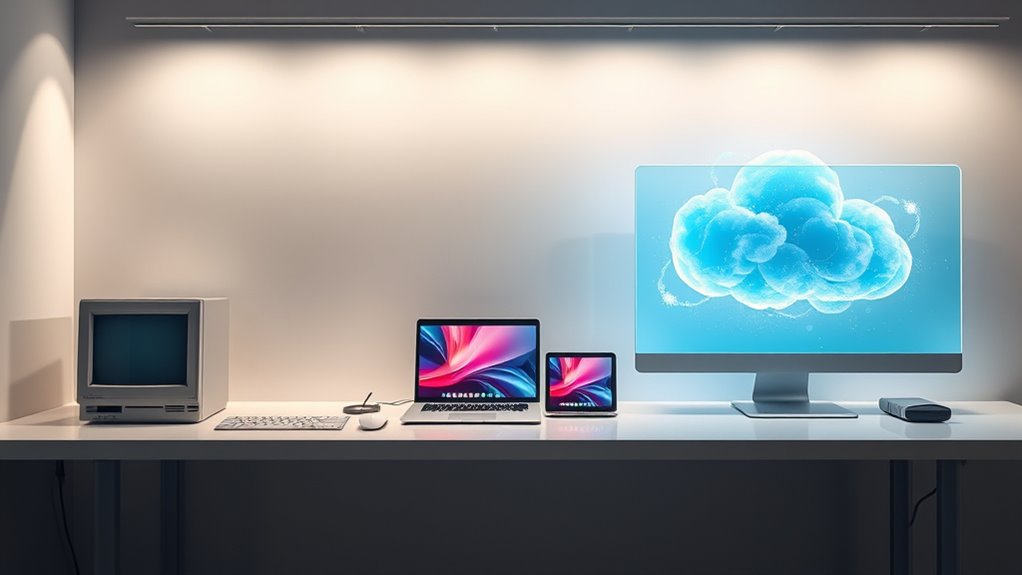
As technology rapidly advances, the evolution of personal computing has transformed how you work, communicate, and entertain yourself. Once upon a time, desktops were the centerpiece of your home or office, with bulky monitors and clunky hardware dominating your workspace. These early systems set the stage for remarkable shifts in how you interact with technology. Now, with the rise of laptops, tablets, and cloud integration, the landscape of personal computing has changed dramatically.
The evolution of personal computing has transformed our work, communication, and entertainment, moving from bulky desktops to sleek, portable devices.
You might remember the days when upgrading your hardware meant investing in new components or entire systems. Manufacturers raced to enhance CPU speeds and boost RAM capacities, delivering impressive performance gains. Today, hardware advancements have reached a point where you can enjoy powerful computing experiences in ultra-thin laptops or even smartphones. You no longer need to be tethered to a desk; the computing power you once required a dedicated space for now fits in your pocket.
Cloud integration has played a significant role in this transformation. Instead of worrying about storage limitations on your devices, you can now access your files and applications from anywhere, anytime, thanks to the cloud. Services like Google Drive, Dropbox, and Microsoft OneDrive allow you to store and share data seamlessly, making collaboration with others smoother than ever. You can pick up where you left off on your laptop, tablet, or even your smartphone without missing a beat.
The way you communicate has also evolved. Video conferencing tools like Zoom and Microsoft Teams have become essential for both personal and professional interactions. You can connect with friends or colleagues across the globe with just a few clicks, all thanks to the advancements in both hardware and software. High-definition webcams and microphones have improved the quality of your virtual meetings, making it feel like you’re in the same room.
Entertainment has taken on a new dimension as well. Streaming services now dominate the way you consume movies and music, eliminating the need for bulky physical media. With the power of cloud computing, you can access vast libraries of content at your fingertips, tailored to your preferences. Gaming has also transitioned to the cloud, allowing you to play demanding titles without needing the latest hardware. Additionally, improving indoor air quality can enhance your overall computing experience, especially in homes with electronic devices that can affect air quality.

BUFFALO LinkStation SoHo 720 2-Bay Professional Office NAS 16TB (2x8TB) with Hard Drives Included
Secure small office NAS with improved performance over the LS SoHo 220, 2.5 GbE connectivity, and MacOS 26...
As an affiliate, we earn on qualifying purchases.
Frequently Asked Questions
What Are the Environmental Impacts of Cloud Computing?
Cloud computing has significant environmental impacts, particularly regarding energy consumption and e-waste management. You rely on data centers that consume vast amounts of energy, often derived from non-renewable sources. Additionally, the rapid turnover of technology leads to increased e-waste, as outdated servers and devices are discarded. By choosing energy-efficient cloud providers and supporting recycling initiatives, you can help mitigate these impacts and promote a more sustainable digital infrastructure.
How Do Cloud PCS Ensure Data Security and Privacy?
Cloud PCs guarantee data security and privacy through robust data encryption and strict access controls. When you store your files in the cloud, they’re encrypted both in transit and at rest, making it hard for unauthorized users to access your information. Additionally, access controls let you set permissions, ensuring only specific individuals can view or edit your data. By utilizing these measures, cloud PCs protect your sensitive information from potential breaches and unauthorized access.
Can Cloud PCS Work Offline?
Yes, cloud PCs can work offline, but it depends on the services you’re using. When you’ve got local storage, you can save files temporarily for offline access. Many applications allow you to sync your documents, enabling you to edit and view them without an internet connection. Just remember, any changes you make while offline will sync back to the cloud once you’re connected again, ensuring you never lose your progress.
What Are the Costs Associated With Cloud PC Subscriptions?
The costs associated with cloud PC subscriptions vary widely based on subscription models. You’ll find options ranging from basic plans at around $10 per month to premium models exceeding $50 monthly. When doing a cost comparison, consider factors like storage, processing power, and included software. Some providers offer tiered pricing, allowing you to choose a plan that fits your needs. Always evaluate the long-term costs versus the benefits you’ll gain.
How Do I Choose the Right Cloud PC Provider?
To choose the right cloud PC provider, start by evaluating your remote access needs. Guarantee the provider offers reliable connectivity and low latency for your tasks. Check device compatibility; you’ll want a service that works seamlessly across your devices, whether you’re using a laptop, tablet, or smartphone. Look for features like security, customer support, and pricing plans that fit your budget. Reading user reviews can also help you make an informed decision.

Synology 4-Bay DiskStation DS925+ (Diskless)
Supports drives on the model's official compatibility list
As an affiliate, we earn on qualifying purchases.
Conclusion
As you reflect on the journey of personal computing, from the humble desktop to the limitless possibilities of cloud PCs, it’s clear that technology continues to evolve at lightning speed. Like Daedalus crafting wings for Icarus, you now have the tools to soar beyond traditional limitations. Embrace this revolution, harness the power of the cloud, and let your creativity take flight. The future is bright, and it’s yours for the taking.

MINISFORUM N5 Air 5-Bay Desktop NAS with up to 174 GB Storage, AMD Ryzen 7 255 (8C/16T) CPU, Dual DDR5 RAM Slots (up to 96 GB), 1x 10GbE, 1x 5GbE, 2X USB4 (8K), HDMI 8K, OCuLink, 3X M.2 Slots
【Processor AMD Ryzen 7 255】: MINISFORUM N5 Air desktop NAS is equiped AMD Ryzen 7 255 (8 cores,...
As an affiliate, we earn on qualifying purchases.

MINISFORUM N5 Pro 5-Bay Desktop AI NAS, AMD Ryzen AI 9 HX PRO 370 12-Core/24T CPU, 128GB SSD, 1x10GbE, 1x5GbE, 1xM.2+2xU.2/M.2 Slots, 2xUSB4(8K), 8K HDMI, OCuLink, Network Attached Storage (Diskless)
Powerful AI Processor: MINISFORUM N5 Pro NAS has next-generation AI technology, AMD Ryzen AI 9 HX PRO 370...
As an affiliate, we earn on qualifying purchases.