

Technology plays a crucial role in tackling climate change by reducing emissions and enhancing resilience. Innovations like carbon capture, renewable energy, and AI-driven solutions can profoundly cut our carbon footprint and help upgrade existing infrastructure. While technology alone won’t solve everything, strategic advancements are key to a sustainable future. If you want to understand how these innovations can truly make a difference, keep exploring the remarkable ways climate tech is shaping our world.

Get privacy and security gear delivered free with Prime
- Fast, free delivery on millions of items
- Prime Video, Amazon Music and more included
- Member-only deals all year
Key Takeaways
- Climate tech innovations aim to reduce emissions and enhance resilience, offering pathways to mitigate climate change impacts.
- Advancements in renewable energy, energy storage, and CCUS are critical for decarbonizing industries and infrastructure.
- AI-driven biotech and materials science develop sustainable alternatives, helping lower carbon footprints.
- Increased investments and policy support accelerate deployment, making climate solutions more scalable and cost-effective.
- While technology is vital, comprehensive action and systemic change are essential to truly address climate challenges.
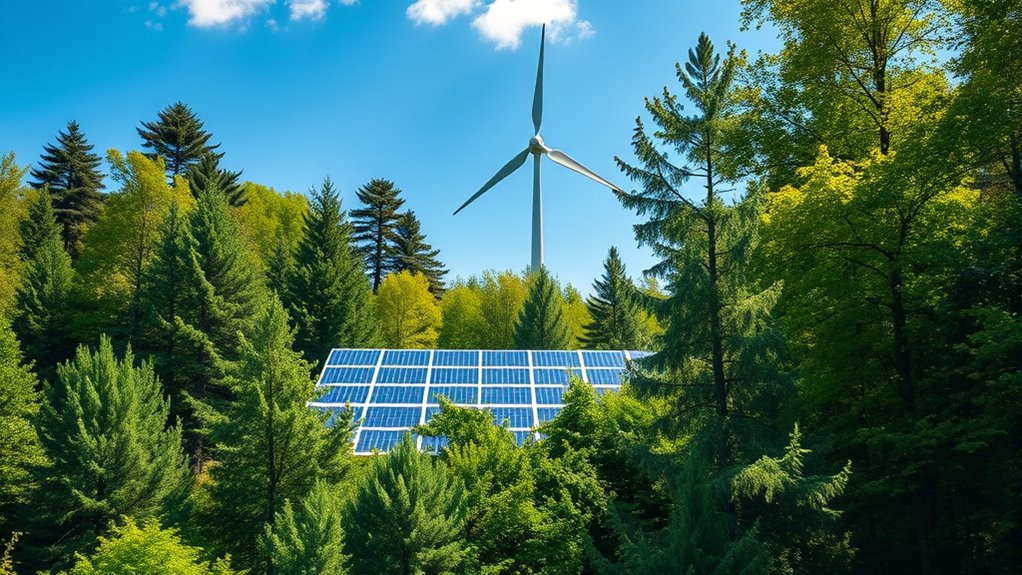
Have you ever wondered how technology can combat climate change? It’s a pressing question as the world faces escalating emissions, rising energy demands, and devastating climate disasters. Climate tech, which includes innovations designed to cut emissions and capture carbon, offers a promising path forward. Unlike broader environmental solutions, climate tech specifically targets global warming by developing hardware, software, and biotech solutions aimed at mitigation and adaptation. These innovations are urgently needed as the energy demands of industries like data centers and AI continue to grow exponentially, driven by surging AI applications and digitization.
Technology is key to combating climate change through innovative solutions for mitigation and adaptation.
You might not realize it, but data centers are substantial contributors to carbon emissions. By 2030, global electricity demand from data centers is expected to more than double, reaching 945 terawatt-hours. Unfortunately, 60% of this increase will be powered by fossil fuels, adding roughly 220 million tons of CO₂ annually. As AI systems become more sophisticated, their energy demands grow, pushing investments into renewable energy sources like solar, wind, and nuclear power. Smart data centers are now adjusting workloads to improve efficiency, and companies like Google and Microsoft are matching their energy use with hourly renewable energy supplies. Still, the expansion of renewables isn’t keeping pace with AI’s energy needs, prompting exploration of moon-based data centers that could harness space-based renewable sources.
Climate tech innovations extend beyond energy production. Technologies like Carbon Capture Utilization and Sequestration (CCUS) are capturing CO₂ directly from industrial processes, preventing it from reaching the atmosphere. Energy storage advancements, such as improved batteries and grid modernization, are vital for integrating intermittent renewables into the grid. Green hydrogen and solar microgrids are providing baseload power, reducing reliance on fossil fuels. AI-driven biotech and materials science are creating alternatives to plastics, while agritech and reforestation tools support carbon removal efforts. These technologies not only cut emissions but also bolster resilience against climate disasters, which are becoming more frequent and severe. The global climate crisis is prompting increased investment in innovative solutions to mitigate impacts and adapt to changing conditions. Additionally, integrating renewable energy sources more efficiently into existing infrastructure remains a key challenge for scaling climate tech solutions globally.
Investors are increasingly recognizing the vast potential of climate tech, pouring billions into startups and projects. The industry is projected to generate €600 billion annually by 2030, with a $2.5 trillion market opportunity. Funding has grown steadily, and AI now accounts for over a quarter of all equity investments in climate tech. Governments and private sectors are shifting focus to baseload solutions like geothermal and nuclear energy, emphasizing energy independence and critical mineral supply chains. As the market matures, the challenge remains to accelerate deployment, improve cost-effectiveness, and guarantee policies support sustainable growth. Ultimately, technology alone can’t solve climate change, but with strategic innovation and decisive action, it can greatly tilt the balance in our favor.
Products Worth Considering

Bose SoundLink Flex Bluetooth Speaker (2nd Gen), Portable Waterproof Speaker, Black

Apple AirPods Pro 3 Wireless Earbuds with Active Noise Cancellation

Logitech MX Mechanical Wireless Illuminated Keyboard, Tactile Quiet, Graphite
As an affiliate, we earn on qualifying purchases.
Frequently Asked Questions
How Can Policy Effectively Regulate Unconstrained Energy Consumption Growth?
You can effectively regulate unconstrained energy consumption growth by implementing clear, enforceable policies that set limits and standards for usage. Encourage renewable energy investments, incentivize energy efficiency, and impose penalties for excessive consumption. Collaborate with stakeholders to develop transparent tracking systems, and promote public awareness. By actively monitoring and adjusting regulations, you guarantee sustainable growth, reduce emissions, and prevent energy overloads that threaten climate goals.
What Are the Risks of Relying on Moon-Based Data Centers?
Relying on moon-based data centers might seem futuristic, but it’s fraught with risks. You could face unforeseen technical failures, high energy costs, and logistical nightmares, delaying critical data processing. Plus, harnessing lunar resources raises questions about sustainability and environmental impact. As you explore this bold frontier, remember that untested technology could divert resources from proven solutions, leaving you vulnerable to setbacks when you need climate resilience the most.
How Can AI Reduce the Environmental Impact of Its Own Energy Demands?
You can reduce AI’s environmental impact by optimizing energy efficiency in data centers and AI workloads. Use smarter algorithms to minimize processing power, shift workloads to renewable-powered facilities, and implement real-time energy monitoring. Investing in energy-efficient hardware and supporting grid modernization helps, too. By actively managing and curbing AI’s energy use, you contribute to lowering greenhouse gas emissions and promoting sustainable technology growth.
What Incentives Exist for Private Investment in Climate Resilience Technologies?
Think of the investment landscape as a garden needing nurturing. You’ll find incentives like government grants, tax credits, and public-private partnerships that make funding climate resilience tech more attractive. With $11.1 billion poured into this sector in Q3 2025, investors see the potential for high returns and societal impact. These incentives act as catalysts, helping you transform climate challenges into opportunities for sustainable growth and resilience.
How Do We Ensure Transparency and Accountability in Climate Tech Initiatives?
You can guarantee transparency and accountability in climate tech initiatives by demanding clear reporting standards and regular progress updates. Push for independent audits and verifiable data to track emissions reductions and project impacts accurately. Advocate for strong policies that enforce transparency, and support organizations committed to open communication. By staying informed and holding stakeholders accountable, you help foster trust and ensure that climate tech efforts deliver real, measurable results.
Conclusion
Ultimately, climate tech is a double-edged sword—you hold the power to steer it toward hope or harm. Like a ship steering through stormy seas, your choices can guide us to a sustainable future or lead us further astray. Embrace innovation wisely, and you become the captain of change. The future’s in your hands, and with mindful action, you can turn the tide before it’s too late.