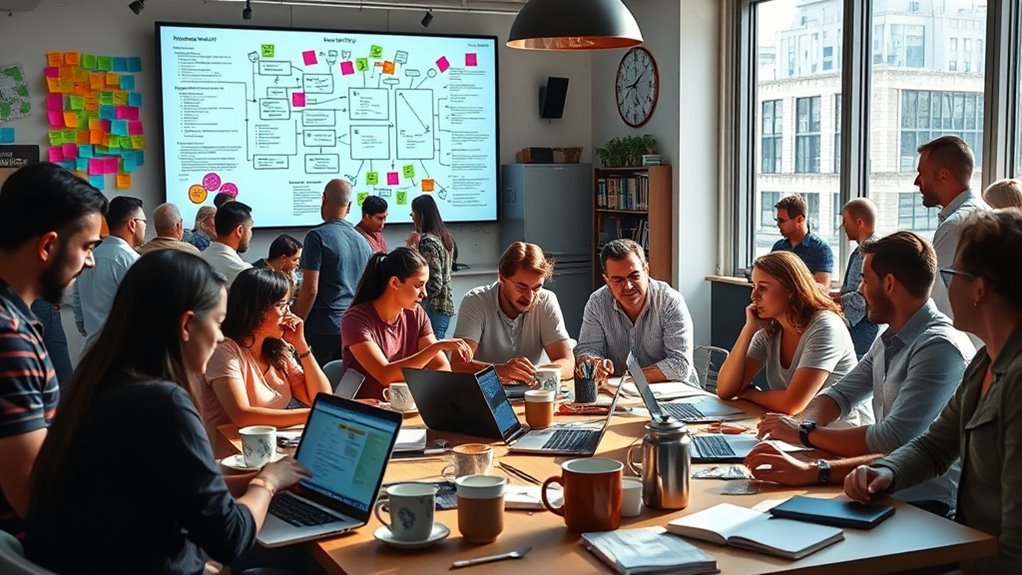

Open source software drives innovation by releasing the collective power of global collaboration. When you participate, you gain access to a world of shared expertise and knowledge. This environment promotes rapid software iterations, allowing you to suggest improvements and fix bugs alongside others. By engaging in open source communities, you can push technological boundaries and spark creativity. There’s so much more to explore about how collaboration can revolutionize your projects and ideas.
Open a free Amazon Business account
Business pricing, bulk buying and tax-exempt orders.
As an affiliate, we earn on qualifying purchases.
Key Takeaways
- Open source collaboration allows global participation, enhancing innovation through diverse perspectives and expertise.
- Collective problem-solving accelerates software iterations, leading to rapid technological advancements and updates.
- Contributors can suggest improvements and fix bugs, fostering a participatory environment that drives continuous innovation.
- Community engagement cultivates a culture of experimentation, pushing technological boundaries and encouraging risk-taking.
- Access to shared knowledge empowers developers to explore new ideas, fueling creativity and driving progress in the tech landscape.

Have you ever wondered how open source software has transformed the tech landscape? It’s fascinating to think about the ways sharing code and ideas has led to incredible innovations. You’re part of a global community that thrives on collaboration, and that’s a powerful thing. When developers come together to create software that anyone can use, modify, and distribute, it opens the door to endless possibilities. This kind of community engagement fuels creativity and drives progress in technology.
Open source software transforms technology through collaboration, unlocking creativity and endless possibilities for innovation.
Let’s face it, traditional software development often stifles innovation due to its restrictive nature. Proprietary software limits access and control, which can slow down technological advances. With open source, however, you can tap into a wealth of knowledge and expertise from people all around the world. The collaborative environment encourages problem-solving and allows for rapid iterations, meaning that software can evolve much faster than its closed counterparts. You’re not just a consumer; you can contribute, suggest improvements, and even fix bugs, which empowers you and others in the community.
But it’s not all smooth sailing. While the open-source model offers tremendous benefits, it also comes with its own set of challenges, particularly around licensing. Navigating the various licenses can be tricky, and you might find yourself faced with decisions that affect how you can use or distribute software. Understanding these licensing challenges is essential if you want to participate fully in the open-source movement. Different licenses have different rules about modification and redistribution, so it’s important to read the fine print and know what you’re getting into.
Despite these hurdles, the benefits of community engagement in open source far outweigh the drawbacks. You learn from others, share your expertise, and build networks that can lead to new opportunities. The sense of belonging and shared purpose fosters a unique culture that encourages risk-taking and experimentation. This collaborative spirit is what drives innovation, pushing the boundaries of what’s possible in technology. Additionally, engaging in music therapy integration can enhance emotional well-being and foster creativity among developers, further enriching the collaborative environment.

Laptop Privacy Screen 14 Inch 16:9 Aspect Ratio, Laptop Screen Privacy
- Easy to Install: Two installation options, quick setup in 30 seconds
- Anti-Glare Technology: Reduces glare by over 90%, softens light
- Dual-Sided Surface: Glossy for anti-peep, matte for anti-glare
As an affiliate, we earn on qualifying purchases.
Frequently Asked Questions
How Do I Contribute to an Open Source Project?
To contribute to an open source project, start by finding a project that interests you. Check its contribution guidelines, usually found in the repository. Join the community support channels, like forums or chat groups, to connect with other contributors. You can fix bugs, add features, or improve documentation. Make your changes, submit a pull request, and be open to feedback. Engaging with the community enhances your experience and helps the project thrive.
What Licenses Are Commonly Used in Open Source Software?
Common license types in open source software include the MIT License, GNU General Public License (GPL), and Apache License. Each has its own rules regarding licensing compliance, so it’s essential you understand the implications of each before you contribute or use the software. For instance, the GPL requires derivative works to also be open source, while the MIT License is more permissive. Always check the license to verify you’re following the necessary guidelines.
Can I Use Open Source Software for Commercial Purposes?
Yes, you can use open source software for commercial purposes! Many open source licenses allow for commercial integration, but you’ll need to check the specific license terms. Some licenses, like the MIT or Apache license, impose minimal restrictions, making it easy to monetize your software. Just guarantee you comply with any obligations, such as attribution or sharing modifications, to stay within the licensing requirements. Happy coding and good luck with your project!
How Is Open Source Software Maintained Over Time?
Open source software is maintained over time through active community governance and a rigorous code review process. You’ll find that contributors regularly update code, fix bugs, and add features based on user feedback. This collaborative approach guarantees that the software remains relevant and secure. By participating in discussions and reviews, you can help shape the future of the project, making it a dynamic and evolving tool that meets the needs of its users.
What Are the Risks of Using Open Source Software?
When diving into the ocean of open source software, you might find hidden dangers lurking beneath the surface. The risks include potential security vulnerabilities that could expose your systems to threats. Additionally, licensing uncertainties can lead to legal headaches if you misuse the software. It’s essential to stay vigilant, regularly update your tools, and carefully review licenses to navigate these challenges effectively, ensuring your projects remain secure and compliant.
Conclusion
In a world where sharing’s often seen as risky, open source software proves that collaboration isn’t just a nice idea—it’s revolutionary. You’d think keeping secrets would drive innovation, but here’s the twist: by opening your code, you invite fresh perspectives and creativity. So, while some cling to their closed doors, the real pioneers are out there, co-creating solutions that change the game. Ironically, it’s the act of giving away that fuels the most powerful advancements.

SightPro Magnetic Laptop Privacy Screen 14 Inch 16:9 - Patented Removable Laptop Privacy Filter Shield and Protector
- Magnetic Snap-on Attachment: Easy magnetic attachment and removal
- Compatible Dimensions: Fits 14-inch screens, verify measurements
- Enhanced Privacy: Blacks out side viewing, clear front view
As an affiliate, we earn on qualifying purchases.

SightPro 13.3 Inch 16:9 Laptop Privacy Screen Filter - Computer Monitor Privacy Shield and Protector - High Clarity
- Privacy Filter Dimensions: Compatible with various laptop brands
- Attachment Options: Adhesive strips or slide mount tabs
- Privacy and Glare Reduction: Blacks out side view, reduces glare and blue light
As an affiliate, we earn on qualifying purchases.
Grilling season Picks
grills
As an affiliate, we earn on qualifying purchases.