
In a smart city, your movements are continuously watched through high-definition cameras with panoramic and PTZ features, while AI analyzes footage for suspicious activity. Public spaces, roads, and vehicles are monitored with facial recognition and license plate systems that track millions daily. Data from these systems feeds into centralized hubs, enabling instant responses and traffic management. But as these surveillance networks grow, you’ll discover how your privacy might be affected and what’s at stake if you keep exploring.

Get privacy and security gear delivered free — and shop member deals
- Fast, free delivery on millions of items
- Access to Prime Big Deal Days deals on October 6–7
- Prime Video, Amazon Music and more included
Key Takeaways
- Cities use high-definition cameras, AI, and facial recognition to monitor public spaces and identify suspicious behavior in real time.
- License plate recognition systems track thousands of vehicles daily, aiding crime prevention and traffic management.
- AI analyzes video feeds for anomalies like vandalism or loitering, enabling rapid law enforcement response.
- Data from surveillance networks is stored on cloud platforms and processed locally via edge computing for efficiency.
- Privacy concerns arise as extensive monitoring and data collection raise ethical questions about individual rights.
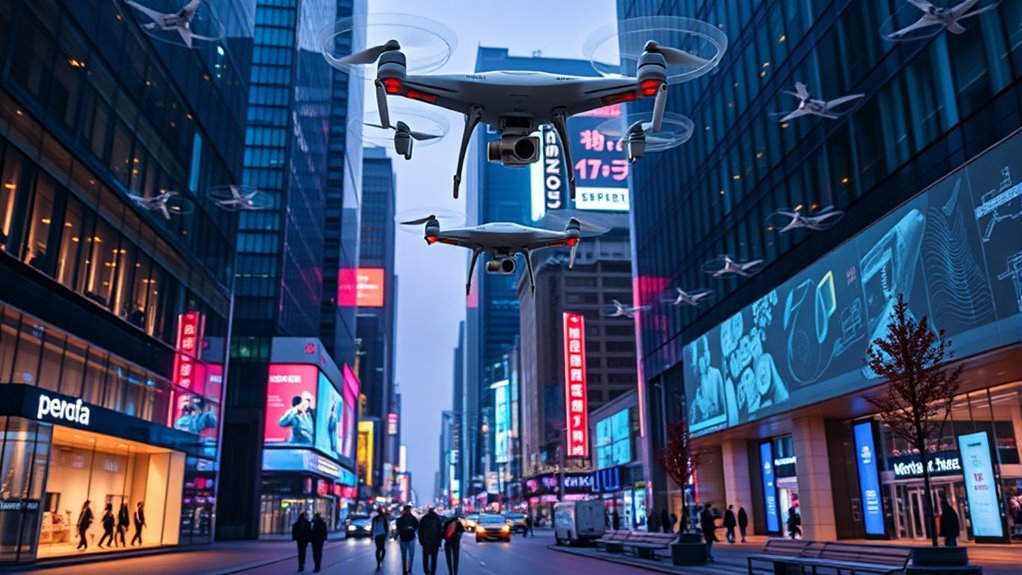
As cities become smarter, they’re increasingly equipped with advanced surveillance technologies that constantly monitor public spaces, traffic, and infrastructure. You might notice high-definition IP cameras, panoramic 360-degree views, and pan-tilt-zoom (PTZ) cameras capturing every corner of parks, streets, and busy intersections around the clock. These cameras stream data through centralized video management systems, enabling authorities to oversee multiple zones seamlessly and respond swiftly to incidents. License plate recognition (LPR) systems are also in place, tracking thousands of vehicles per hour—Cape Town, for example, monitors over 300,000 cars daily at key entry points, leading to a 65% crime reduction on main streets. These systems identify stolen vehicles, monitor traffic flow, and support law enforcement in real time. Traffic monitoring is elevated with intelligent cameras counting vehicles and pedestrians, allowing cities like Copenhagen and Stockholm to optimize traffic lights and reduce congestion. In real-time, AI detects anomalies like accidents, stalled vehicles, or illegal parking—prompting immediate rerouting or emergency responses. The integration of AI-powered analytics extends to public safety, where virtual perimeters with object recognition prevent theft and illegal dumping. Facial recognition systems scan crowds for suspicious individuals, helping law enforcement identify potential threats before escalation. London’s CCTV network, combined with AI detection, flags vandalism, loitering, and violent behavior instantly, improving response times. AI doesn’t just watch; it learns. Convolutional Neural Networks (CNNs) analyze video feeds to identify suspicious activities and trigger alerts, shifting the focus from mere documentation to proactive prevention. Predictive analytics forecast security threats, enabling authorities to allocate resources efficiently and address high-risk areas before crimes occur. During public events, crowd analytics predict potential stampedes, helping manage large gatherings safely. Data infrastructure is optimized through edge computing, which processes data locally to reduce latency and bandwidth needs, as seen in Opelika, Alabama. Cloud storage solutions like Backblaze provide reliable retention for vast amounts of surveillance footage, ensuring data integrity and accessibility. Furthermore, these systems are often integrated with other urban data sources, creating a comprehensive network that supports smarter city planning and emergency response strategies. This interconnected system relies on urban data integration to improve operational efficiency and enhance citizen safety. All of this data collection and processing happen within a complex system that includes IoT gateways, 4G/LTE, or 5G connections, and centralized command centers coordinating responses across agencies. Real-world deployments, such as New York City’s monitoring of 6,000 buses or San Francisco’s IoT water leak detection, demonstrate how these technologies operate at scale. As a result, crime rates drop, traffic flows improve, and public safety increases—yet, the flip side involves privacy concerns. The extensive surveillance network, facial recognition, and data analysis create an intricate web that raises questions about citizen privacy and ethical boundaries. As your city becomes smarter, it’s clear that your movements and activities are under more watchful eyes than ever before.
Frequently Asked Questions
How Is Citizen Data Protected From Misuse in Smart City Surveillance?
You’re protected through strict data privacy policies, encryption, and access controls that limit who can see your information. Smart cities use anonymization techniques to prevent identifying individuals unnecessarily. Regular audits, transparent data handling, and compliance with legal standards help prevent misuse. Plus, citizen oversight and ethical guidelines ensure authorities use surveillance data responsibly, giving you confidence that your privacy remains a priority amid advanced technology.
Can Surveillance Systems Be Accessed Remotely by Unauthorized Individuals?
Yes, surveillance systems can be accessed remotely by unauthorized individuals if security isn’t strict. Hackers target weak points, exploiting vulnerabilities in network access, cloud connections, or device defenses. You need to prioritize robust passwords, encryption, and regular updates to keep intruders out. Without vigilant vigilance, malicious actors may manipulate, monitor, or even sabotage sensitive city systems, risking residents’ privacy and safety. Protect your city’s security by staying proactive and prepared.
What Measures Are in Place to Prevent Facial Recognition Abuse?
You can be assured that strict measures are in place to prevent facial recognition abuse. Your city implements robust access controls, encryption, and multi-factor authentication to safeguard systems. Regular audits and compliance with privacy laws guarantee data is used ethically. Additionally, oversight committees review policies and monitor system use, holding officials accountable. These steps aim to protect your privacy while enabling effective public safety applications.
How Do Cities Balance Security and Privacy Concerns?
You might think your city is all about security, but it’s also secretly worried about privacy. Cities try to balance the two by implementing strict data controls, anonymizing facial data, and setting clear regulations. They use smart tech to protect you without turning you into a walking ID. Still, it’s a delicate dance—one step too far and you’re dancing on the line between safety and Big Brother.
Are There Laws Regulating Surveillance Data Collection and Storage?
Yes, laws regulate surveillance data collection and storage. You must adhere to privacy laws like GDPR or CCPA, which set strict guidelines on data handling, consent, and security. Cities often implement policies requiring transparency, data minimization, and regular audits. These regulations aim to safeguard your privacy while allowing authorities to use surveillance systems effectively. Always stay informed about local laws governing data collection to ensure your rights are respected.
Conclusion
As you navigate the smart city, remember it’s like walking through a glass house—you’re always under watch, your every move reflected back at you. While technology offers convenience, it also casts a shadow over your privacy. Stay aware and vigilant, because in this digital age, your personal space is shrinking. Embrace the benefits, but don’t forget to guard the door to your own freedom, or soon, you might find the city’s gaze becomes your only view.
Fall Picks
fall essentials
As an affiliate, we earn on qualifying purchases.