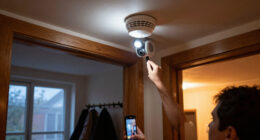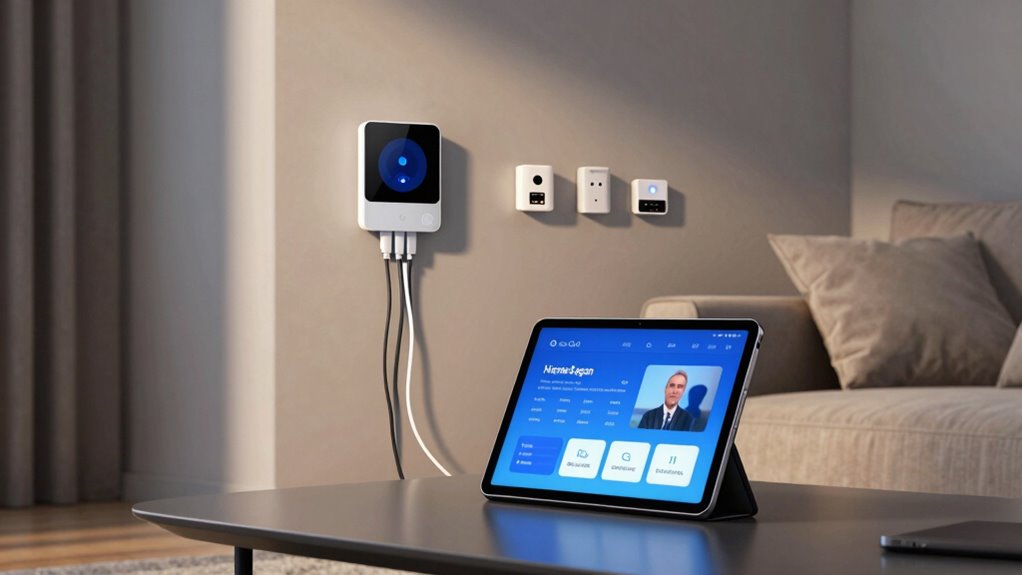

Smart home devices make life easier but hide significant risks that threaten your privacy and safety. With over half of consumer IoT gadgets containing critical vulnerabilities, hackers can exploit default passwords, outdated firmware, or poor security practices to access your personal data, invade your privacy, or even control your home’s security systems. Many homes are vulnerable to botnets and large-scale attacks like DDoS. To stay protected, understanding these dangers and how to mitigate them is essential. Keep exploring to learn more.

Get privacy and security gear delivered free with Prime
- Fast, free delivery on millions of items
- Prime Video, Amazon Music and more included
- Member-only deals all year
Key Takeaways
- Many IoT devices have critical vulnerabilities, including default passwords and outdated firmware, increasing attack risks.
- Insecure communication and weak authentication enable hackers to hijack devices for data theft or botnet attacks.
- Compromised smart devices can leak personal audio, video, and sensitive health data, jeopardizing privacy.
- Lack of proper security updates and network segmentation allows attackers to pivot within smart homes.
- Consumers often lack awareness or tools to properly secure IoT devices, amplifying potential dangers.

Smart homes bring convenience and modern living, but they also expand your attack surface considerably. With an average of about 22 consumer IoT devices per household, you’re exposed to a growing number of endpoints that hackers can target. By 2025, the global IoT device count is estimated at around 18 billion, expected to surpass 35–40 billion by 2030. This massive proliferation makes your home a more attractive target, especially since homes face roughly 29 IoT-targeted attacks daily. These automated probes seek out vulnerabilities, often exploiting weak points before you even realize there’s a threat.
With over 22 IoT devices per home and billions more worldwide, your smart home faces constant cyber threats daily.
The scale of malicious activity is staggering. Millions of devices generate billions of security events—about 13.6 billion in one major dataset from 2025 alone—highlighting how attackers continuously scan and exploit vulnerabilities. Many of your devices are growing faster than your ability to manage or inventory them, creating visibility gaps that hackers are quick to exploit. Over half of consumer IoT devices harbor critical vulnerabilities, and one in five ships with default passwords, making brute-force attacks trivial for cybercriminals. Outdated firmware and unpatched software account for nearly 60% of breaches, leaving your devices fundamentally open doors for intruders. The recent data breach at Mars Hydro exposed approximately 2.7 billion records, demonstrating how vulnerable cloud storage configurations can be. Network segmentation remains weak in many homes, with roughly 77.7% showing poor separation between IoT devices and valuable assets. This poor segmentation allows attackers to pivot from compromised devices to higher-value targets, increasing the risk of costly breaches. Many constrained devices lack secure update mechanisms or modern encryption, which impairs your ability to fix vulnerabilities quickly and prolongs exposure. Hackers also leverage botnets—networks of infected devices—to launch massive DDoS attacks, with some reaching 22.2 Tbps in 2025. Campaigns like Mirai variants and BadBox infected millions of devices, including TVs and cameras, demonstrating how diverse infection vectors can be.
Beyond operational disruptions, your privacy faces serious threats. Compromised cameras, microphones, and sensors have leaked audio and video data, exposing personal behaviors and environments. Over a quarter of IoT breaches involve personal data theft, risking identity theft and privacy violations. Medical devices, smart hubs, and voice assistants are high-value targets, often poorly protected, making sensitive data vulnerable to exfiltration. Insecure devices can also directly threaten your safety—hackers can *access* doors, manipulate thermostats, or tamper with your vehicle, creating real-world hazards. Additionally, many devices lack proper security measures, making them easy targets even for less sophisticated attackers.
Despite regulatory efforts, many vulnerabilities persist. Weak authentication, unencrypted communication, and outdated firmware remain common, making your devices easy prey. Consumers often lack awareness or the means to secure their devices properly, with only a quarter regularly updating software. To protect yourself, you need to implement strong credentials, keep firmware current, segment your network, and monitor device activity. The growing threat landscape means that without proactive measures, your smart home could become a playground for cybercriminals, risking your privacy, safety, and peace of mind.
Frequently Asked Questions
How Can I Identify Vulnerable Iot Devices in My Home Network?
You can identify vulnerable IoT devices in your home network by regularly scanning your network for unfamiliar devices, checking for default passwords, and ensuring firmware is up-to-date. Use network segmentation to isolate IoT gadgets from sensitive data. Monitor for unusual activity or traffic spikes, and disable unnecessary features. Maintaining a detailed inventory helps you spot outdated or insecure devices, reducing your exposure to attacks and vulnerabilities.
What Are the Best Practices for Securing Iot Device Passwords?
You should never leave default passwords on your IoT devices, yet many do. To secure them, create strong, unique passwords for each device, avoiding common words or patterns. Use a password manager to keep track, and change passwords regularly. Enable two-factor authentication if available. Juxtapose convenience with security—prioritize the latter by taking these simple steps to protect your network from attacks and breaches.
How Often Should I Update My Iot Device Firmware?
You should update your IoT device firmware as often as possible, ideally as soon as updates are available. Manufacturers regularly release patches to fix vulnerabilities, improve security, and add features. Ignoring updates leaves your devices exposed to exploits and malware. Set up automatic updates if available, and regularly check for new firmware releases. Staying current helps protect your devices, your privacy, and your entire network from emerging threats.
Are There Tools to Monitor Iot Device Activity for Security Threats?
Think of your network as a busy city street, and IoT devices as pedestrians. You can use tools like network monitoring software, intrusion detection systems, and asset management platforms to watch their every move. These tools act like security cameras and traffic cops, alerting you to suspicious activity. With them, you can track device behavior, identify threats early, and keep your digital neighborhood safe from malicious intruders.
What Regulations Apply to Iot Device Security Standards?
You should know that regulations like the IoT Cybersecurity Improvement Act in the US, the EU’s Cybersecurity Act, and various industry standards set baseline security requirements for IoT devices. These rules mandate secure design, vulnerability management, and transparency. You must stay compliant by implementing strong credentials, timely updates, and proper network segmentation. Regularly check for evolving regulations to confirm your devices meet current security standards and reduce risks.
Conclusion
So, here you are, trusting your smart home to make life easier, only to realize it might be secretly plotting against you. Ironically, those tiny devices meant to boost convenience could turn into your biggest security nightmare. As you enjoy the comfort of your connected home, remember: sometimes, the biggest risk isn’t the device itself but the false sense of safety it gives you. Stay alert—your smart home might just be smarter than you think.
Fall Picks
fall essentials
As an affiliate, we earn on qualifying purchases.