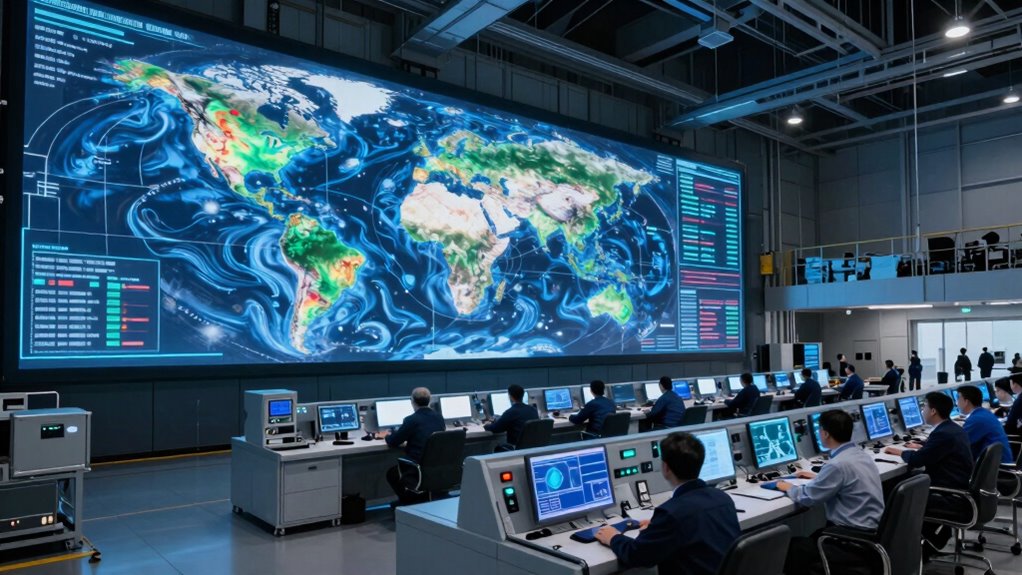

Geoengineering is a bold, large-scale approach to directly modify Earth’s climate, aiming to fight climate change by removing greenhouse gases or reflecting sunlight. Techniques include capturing CO2 or dispersing reflective particles into the atmosphere. While it could quickly lower global temperatures, risks like weather disruptions and ethical concerns arise. There’s no global regulation yet, and relying on it might undermine efforts to reduce emissions. To discover how these methods work and their implications, keep exploring this complex technological plan.

Get privacy and security gear delivered free with Prime
- Fast, free delivery on millions of items
- Prime Video, Amazon Music and more included
- Member-only deals all year
Key Takeaways
- Geoengineering involves large-scale interventions like removing greenhouse gases or reflecting sunlight to combat climate change.
- Techniques include Carbon Dioxide Removal (e.g., direct air capture, ocean fertilization) and Solar Radiation Modification (e.g., sulfate aerosols, cloud brightening).
- These methods aim to quickly reduce global temperatures but carry risks such as ecosystem disruption and regional climate impacts.
- Ethical concerns and governance challenges hinder widespread deployment, with limited real-world testing and no comprehensive regulations.
- Geoengineering is seen as a radical, controversial approach that addresses symptoms rather than root causes of climate change.

Geoengineering involves deliberate, large-scale interventions in Earth’s climate system to combat the effects of human-caused climate change. These strategies aim to directly manipulate the environment—whether by removing greenhouse gases like CO2, methane, and nitrous oxide or by reflecting sunlight away from the planet to reduce global temperatures. Often called climate engineering or climate intervention, geoengineering encompasses techniques that target the symptoms of climate change, rather than addressing its root causes such as emissions. This approach includes two main categories: carbon dioxide removal (CDR), which focuses on extracting greenhouse gases from the atmosphere, and solar radiation modification (SRM), which seeks to reduce incoming solar energy.
In CDR, you might consider methods like direct air capture and storage, ocean fertilization, ocean alkalinity enhancement, or afforestation. These techniques aim to remove CO2 from the atmosphere, either through mechanical means or biological processes, and store it safely underground or in oceans. For example, direct air capture involves machines that suck CO2 from the air and convert it into a storable form. Ocean fertilization stimulates plankton blooms by adding nutrients like iron, which then absorb CO2 as they grow. Similarly, planting forests or restoring soils captures carbon naturally, acting as a form of mitigation. These methods, however, require significant land or ocean space and carry risks such as disrupting ecosystems or affecting food security. Notably, the success of these techniques depends heavily on advancements in carbon removal technology.
SRM techniques focus on reflecting sunlight before it heats the planet. You might consider stratospheric sulfate aerosol injection, where reflective particles are dispersed into the atmosphere, or marine cloud brightening, which sprays sea salt to increase cloud reflectivity. Space-based mirrors or modifications to ice or land surfaces to increase their reflectivity also fall under SRM. While these methods could quickly reduce global temperatures, they carry risks like disrupting weather patterns, such as monsoons, causing droughts, or altering precipitation. Their impacts can vary across regions, complicating governance and raising ethical concerns.
Despite the promise of these approaches, geoengineering remains largely speculative. Researchers use models to study potential effectiveness and risks, but real-world experiments are limited. Many scientists warn that reliance on geoengineering could discourage efforts to cut emissions, and abruptly stopping SRM could cause rapid climate shifts—a phenomenon called termination shock. Governance is another concern, as no *exhaustive* international framework exists to regulate or oversee these interventions. Public acceptance, ethics, and potential unintended consequences continue to generate debate. While some advocates see geoengineering as a necessary tool to buy time in the fight against climate change, others remain cautious about its risks and moral implications.
Products Worth Considering

Samsung 27-Inch Odyssey QD-OLED G8 4K 240Hz Gaming Monitor

Samsung 32-Inch Odyssey OLED G8 (G80SH) 4K Gaming Monitor

Apple iPad Air (2025) 13‑inch Wi‑Fi 256 GB – Space Gray (M3 chip)
As an affiliate, we earn on qualifying purchases.
Frequently Asked Questions
Can Geoengineering Permanently Eliminate Climate Change?
No, geoengineering can’t permanently eliminate climate change. While it might temporarily reduce symptoms like global temperatures, it doesn’t address the root cause—greenhouse gas emissions. You’d need ongoing interventions, which could cause unpredictable side effects and require constant management. Relying solely on geoengineering risks undermining efforts to cut emissions and may lead to environmental or social issues. Ultimately, sustainable change depends on reducing emissions and transforming how we use energy.
Who Should Regulate or Oversee Geoengineering Projects Globally?
You should advocate for a global, inclusive governance body that oversees geoengineering projects. It needs to include scientists, policymakers, and affected communities to guarantee transparency and safety. You must push for international treaties, similar to climate agreements, that regulate research, deployment, and risk management. This way, you help prevent unilateral actions, reduce risks, and promote responsible, equitable use of geoengineering technologies for the planet’s benefit.
What Are the Economic Costs of Large-Scale Geoengineering?
Imagine trying to balance a giant, teetering globe on your fingertips—that’s the economic cost of large-scale geoengineering. It requires massive investments in new technologies, infrastructure, and research, often running into billions or even trillions of dollars. You’ll also face costs from potential environmental damage, unintended consequences, and the need for ongoing maintenance and governance. These expenses could strain economies, especially if risks or failures lead to costly disasters or irreversible harm.
Could Geoengineering Cause Unintended Environmental Consequences?
Yes, geoengineering could cause unintended environmental consequences. You might disrupt weather patterns like monsoons, leading to droughts or floods. Marine-based methods could harm ecosystems and coastal communities. If deployment stops suddenly, feedback loops like ice-albedo loss could accelerate warming. You also risk creating imbalances in natural systems, which could have far-reaching effects on biodiversity, agriculture, and water resources, making environmental impacts unpredictable and potentially severe.
Is Geoengineering Morally Acceptable to Intervene in Earth’s Climate?
Morally, geoengineering might seem like a misguided gamble, but if it could mitigate catastrophic climate consequences, it might be justified. You should consider the potential to prevent suffering, protect vulnerable communities, and preserve planetary health. Yet, you must weigh the risks of unforeseen side effects, ethical dilemmas, and global governance gaps. Ultimately, you decide if the urgent need outweighs the uncertainties, embracing responsibility for Earth’s future.
Conclusion
You now see how geoengineering could be a double-edged sword, holding the power to tame or threaten our planet’s climate. While it offers a glimmer of hope, it’s not a silver bullet—there are risks and uncertainties lurking beneath the surface. Think of it as walking a tightrope; one wrong move could spell disaster. So, tread carefully, because rushing into this brave new world without caution could turn a potential lifeline into a Pandora’s box.