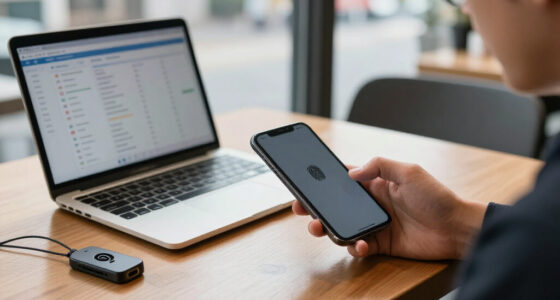
Your smart fridge can unexpectedly become part of a botnet, sending spam or launching cyberattacks without your knowledge. Many devices ship with default passwords or have unpatched vulnerabilities that hackers exploit remotely. Once compromised, your appliance can help spread malware, participate in DDoS attacks, or even hijack your bandwidth. As more IoT devices connect to homes, the risk grows. Curious to learn how these appliances turn into cyber weapons and how to protect yourself? Keep going to find out more.
Listen free for 30 days with Audible
Thousands of audiobooks and originals — cancel anytime.
As an affiliate, we earn on qualifying purchases.
Key Takeaways
- Smart fridges can be hijacked via default passwords and unpatched vulnerabilities, turning them into malicious botnet nodes.
- Infected appliances have been used to send spam, execute DDoS attacks, and facilitate malware spread within home networks.
- Cybercriminals exploit insecure network services and weak credentials in IoT devices to gain remote control over smart appliances.
- The 2013-2014 refrigerator botnet incident demonstrated household appliances’ potential to launch large-scale cyberattacks.
- Improving security practices like changing default passwords and updating firmware can prevent your fridge from becoming part of a botnet.

Smart Fridge Botnet
The rise of smart refrigerators has introduced new vulnerabilities that cybercriminals are increasingly exploiting to build powerful botnets. These appliances, once thought to be harmless convenience devices, now serve as entry points for malicious actors seeking to expand their digital armies. The first widely reported incident involving refrigerator-based botnets occurred in late 2013 and early 2014, when attackers used compromised smart devices to send spam emails. Proofpoint documented over 100,000 infected devices during that campaign, which resulted in roughly 750,000 spam messages. These early campaigns showed that even household appliances could be weaponized for large-scale cyber operations. Subsequent analyses revealed that not only refrigerators but also smart TVs, wireless speakers, and other connected home gadgets could be enlisted into IoT botnets. These networks are often used for mass spam, phishing, and launching distributed denial-of-service (DDoS) attacks, with Mirai (2016) illustrating the scale potential. Mirai infected hundreds of thousands of devices and generated DDoS attacks exceeding 1 terabit per second, knocking offline major websites and services.
You might wonder how attackers manage to compromise these appliances. Default or weak credentials are the primary attack vector. Many devices ship with factory passwords that users never change, allowing automated tools to guess or brute-force login credentials quickly. Unpatched firmware and insecure update mechanisms further expose devices to known exploits, enabling malware to be installed remotely. Open network services like Telnet, SSH, or management portals also offer easy access points for attackers scanning the internet. Many smart fridges lack proper security monitoring, making it difficult to detect or respond to infections before they spread. Additional vulnerabilities stem from insecure supply chains and inconsistent security standards among manufacturers, increasing the attack surface. Furthermore, Samsung’s known security flaws, such as SSL validation issues and exposed credentials, make their smart refrigerators particularly vulnerable to being recruited into botnets. Implementing security best practices can significantly reduce the risk of infection and compromise.
Once infected, your smart fridge could become part of a broader malicious campaign. Attackers often use these devices to distribute spam, carry out DDoS attacks, or propagate malware laterally into your home network. They can also hijack your appliance’s bandwidth for proxying or command-and-control operations, making it harder to trace malicious activity back to the attacker. In some cases, synchronized power draws from multiple appliances could stress local power grids, posing physical risks. The rapid growth of IoT devices and their long lifespans mean more vulnerable endpoints are emerging, raising the risk of future large-scale attacks. As malware evolves to become more stealthy and resilient, your smart fridge could unknowingly serve as a launchpad for cybercriminals, emphasizing the need for stronger security measures. Changing default passwords, updating firmware promptly, and segmenting your network are critical steps you can take to protect yourself from becoming part of a dangerous IoT botnet.

RUNBOX Wallet for Men Slim Leather Bifold RFID Blocking with 2 ID Windows
- Slim and Compact Design: Measures 4.3x3.2x0.6 inches, fits in pocket
- Ample Card Storage: Holds up to 15 cards with 2 extra slots
- Convenient ID Windows: Includes 2 ID windows for easy access
As an affiliate, we earn on qualifying purchases.
Frequently Asked Questions
How Can I Tell if My Smart Fridge Is Part of a Botnet?
If your smart fridge is part of a botnet, you might notice unusual activity like slow performance, frequent crashes, or strange network traffic. Check for high data usage, unexpected device reboots, or unfamiliar connections in your router logs. Confirm your device’s firmware is up-to-date, change default passwords, and disable unused services. Regularly monitor your network for anomalies, and consider segmenting IoT devices on separate networks for added security.
What Are the Signs of a Compromised Iot Device Like a Fridge?
Signs of a compromised IoT device like a fridge include strange spikes in power consumption, sluggish responses, and suspicious network activity. You might notice unfamiliar devices connected to your Wi-Fi or unexplained reboots. Slow or inconsistent appliance performance can also signal malware meddling. If your smart fridge starts acting erratically, it’s time to troubleshoot, change passwords, and tighten security to thwart sneaky cyber intruders.
Can a Smart Fridge Attack Other Devices on My Home Network?
Yes, a compromised smart fridge can attack other devices on your home network. If infected, it might scan for open ports, exploit vulnerabilities, or act as a launchpad for spreading malware. Attackers could use it for lateral movement, accessing sensitive data or taking down other devices. To prevent this, change default passwords, disable unnecessary services, and keep firmware updated. Segment your IoT devices onto separate networks for added security.
Are There Specific Brands More Vulnerable to Fridge Botnets?
Some brands might be more prone to fridge botnets because they often cut corners on security. Less reputable manufacturers may use default passwords, unpatched firmware, or insecure network settings, making their devices easier targets. When shopping for smart appliances, look for those with strong security features, regular updates, and transparent vulnerability practices. Otherwise, you risk turning your smart fridge into an unwelcome participant in a botnet, quietly causing chaos in your home network.
What Legal Actions Exist Against Manufacturers for Insecure Smart Appliances?
You can pursue legal actions like class-action lawsuits or regulatory enforcement against manufacturers for deploying insecure smart appliances. Agencies like the FTC, FCC, or GDPR authorities can investigate and penalize companies that neglect security standards. Consumers may also file claims for damages or demand better security practices. However, legal outcomes depend on jurisdiction, evidence of negligence, and whether manufacturers violated specific laws or failed to disclose vulnerabilities.
Conclusion
So, next time your smart fridge starts acting up, remember—you’re not just battling a appliance, but a piece of a larger, lurking threat. It’s a wake-up call, a reminder that technology’s power can turn against us, like a wolf in sheep’s clothing. Stay vigilant, stay protected, because in this digital age, the line between convenience and chaos is razor-thin. Don’t let your smart home become the next battleground in the silent war.

Wallet for Men, Mens Minimalist Wallet 9-13 Cards, Slim Compact RFID Wallet
- Quick Card Access: Ejection mechanism for easy card retrieval
- Slim Yet Spacious: Holds 9-13 cards with removable cash clip
- ID Window: Clear slot for easy ID access
As an affiliate, we earn on qualifying purchases.
Baby shower & registry season Picks
baby registry must-haves
As an affiliate, we earn on qualifying purchases.