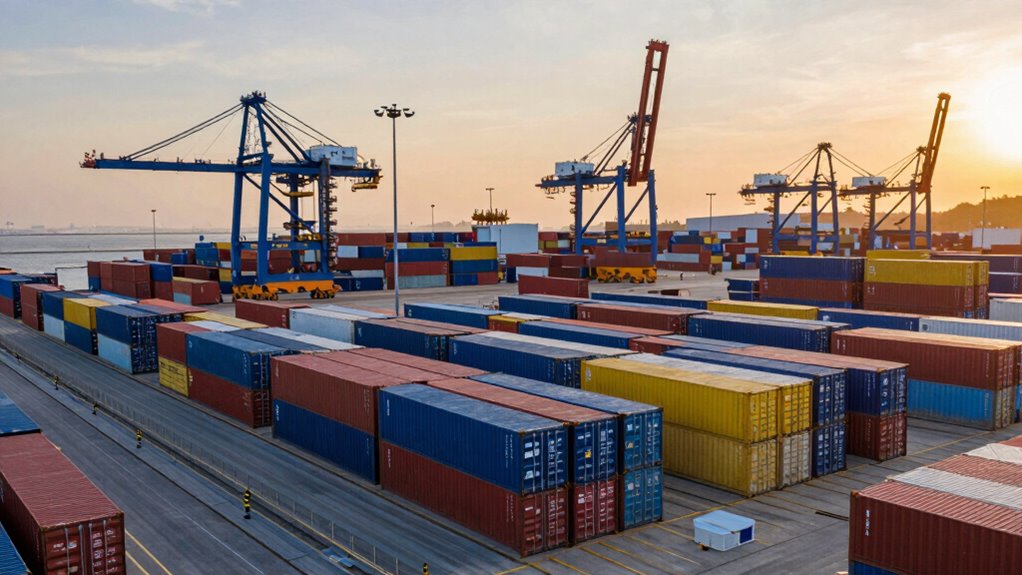

Container security differs from traditional security because it focuses on protecting lightweight, portable units that are often ephemeral and run in highly dynamic environments. You need to guarantee strict isolation, manage microservice access, and monitor behaviors during runtime, unlike traditional defenses that primarily protect static servers and networks. Automation and continuous monitoring are essential to adapt to the container lifecycle. To understand how to tackle these unique challenges, explore further ways container security is evolving.

Get privacy and security gear delivered free — and shop member deals
- Fast, free delivery on millions of items
- Access to Prime Big Deal Days deals on October 6–7
- Prime Video, Amazon Music and more included
Key Takeaways
- Container security focuses on protecting lightweight, portable units rather than entire networks or servers.
- Runtime monitoring is essential to detect suspicious activity during container operation.
- Security controls are granular, targeting individual containers and microservices instead of broad system-level policies.
- The ephemeral and dynamic nature of containers requires continuous, automated security measures.
- Container security emphasizes isolation, access control, and security across the entire container lifecycle.

As organizations increasingly adopt containerization to streamline development and deployment, understanding how container security differs from traditional security methods is essential. Unlike traditional security strategies that primarily focus on securing entire servers or networks, container security centers on safeguarding lightweight, portable units of software—containers—that run isolated applications. This shift introduces new challenges and opportunities, especially in areas like microservice isolation and managing runtime vulnerabilities. With containers, you need to guarantee that each microservice is properly isolated so that a compromise in one doesn’t cascade into others. This microservice isolation is fundamental, as containers often run multiple services on the same host, increasing the risk if one container is compromised. Traditional security tools, which typically monitor network traffic or scan for known vulnerabilities at the host level, aren’t always effective in this environment. Instead, you must implement security measures that focus on the container itself, such as runtime security, which monitors containers during operation for suspicious activity or anomalies. Additionally, the ephemeral nature of containers means that security measures must be adaptable and continuously updated to match their dynamic lifecycle. Understanding the container lifecycle is crucial for implementing effective security strategies that evolve with the environment. Moreover, because containers are highly portable, ensuring consistent security policies across different deployment environments is a critical consideration. Container orchestration tools also play a vital role in managing security at scale, providing centralized control and automation capabilities. Runtime vulnerabilities are a significant concern in container security because they can be exploited once a container is active. While traditional security often relies on perimeter defenses like firewalls and intrusion prevention systems, in containerized environments, you need to focus on runtime protections that can detect and respond to threats in real-time. Containers are ephemeral and dynamic, meaning they can be spun up and destroyed quickly, making static security measures less effective. Instead, you should employ tools that continuously monitor container behavior, looking for unusual patterns that could indicate a runtime vulnerability exploitation. This approach helps you catch issues like privilege escalations or unauthorized access attempts as they happen, reducing potential damage. Recognizing the importance of security automation can significantly improve response times and reduce manual intervention in these complex environments. Another way container security differs from traditional security is in the scope and granularity of controls. Traditional security often applies broad policies to entire systems or networks, but with containers, security must be more granular—down to individual containers and microservices. You need to enforce strict access controls, image scanning before deployment, and runtime security policies that adapt to the dynamic nature of containers. Because containers are portable, guaranteeing security consistency across different environments becomes essential, demanding a security approach that’s flexible yet robust. Ultimately, understanding these differences helps you build a security posture that not only protects your containerized applications but also leverages their agility and scalability without exposing them to unnecessary risks.
container security monitoring tools
As an affiliate, we earn on qualifying purchases.
As an affiliate, we earn on qualifying purchases.
Frequently Asked Questions
How Does Container Orchestration Impact Security Measures?
Container orchestration profoundly impacts security measures by managing container deployment, scaling, and updates efficiently. You benefit from container isolation, which keeps applications separated and reduces attack surfaces. Additionally, orchestration scalability allows you to quickly adapt security protocols across many containers as your environment grows. This dynamic approach helps you maintain consistent security standards, detect vulnerabilities faster, and respond promptly to threats, ensuring your containerized applications stay protected at scale.
What Are the Common Vulnerabilities Specific to Containers?
You’d think containers are invincible, but their biggest vulnerabilities lie in poor container isolation and unscanned images. When isolation isn’t tight, malicious code can spread easily. Skipping image scanning leaves known vulnerabilities exposed, giving attackers a free pass. Ironically, the very efficiency of containers can become their downfall if you overlook these common vulnerabilities. Secure your environment by enforcing strict isolation and regularly scanning images for hidden threats.
How Do Container Runtime Security Tools Work?
Container runtime security tools work by actively monitoring container activities and ensuring container isolation. They track processes, system calls, and network traffic during runtime to detect suspicious behavior or breaches in real-time. These tools also enforce security policies, prevent unauthorized access, and provide alerts if anomalies occur. By focusing on runtime monitoring and maintaining strict container isolation, they help protect your environment from vulnerabilities specific to containerized applications.
Can Container Security Prevent All Types of Cyberattacks?
Sure, container security can seem like a superhero, but it’s not invincible. While container isolation and image scanning protect against many threats, they can’t prevent every cyberattack. Clever attackers evolve, slipping through cracks or exploiting vulnerabilities. So, don’t rely solely on it. Think of container security as a vigilant guard dog, not an impervious fortress—always stay alert, update regularly, and combine it with other security measures for better protection.
What Are the Best Practices for Securing Container Images?
To safeguard container images effectively, you should implement best practices like container isolation and regular image scanning. Container isolation ensures each container runs separately, reducing potential attack surfaces. Conduct image scanning to detect vulnerabilities before deployment, ensuring your images are clean and secure. Always keep images up-to-date, use trusted sources, and apply security patches promptly. These steps help prevent security breaches and maintain a robust container environment.
runtime container security software
As an affiliate, we earn on qualifying purchases.
As an affiliate, we earn on qualifying purchases.
Conclusion
In the end, understanding the differences between container security and traditional security is like upgrading from a bicycle to a rocket ship—you gain agility, scalability, and unmatched efficiency. You need to adapt your security measures to the unique challenges of containers, or risk being left in the dust by cyber threats that are evolving faster than you can blink. Embrace container security now, or get ready to watch your defenses crumble like a house of cards.
microservice isolation security solutions
As an affiliate, we earn on qualifying purchases.
As an affiliate, we earn on qualifying purchases.
container security automation tools
As an affiliate, we earn on qualifying purchases.
As an affiliate, we earn on qualifying purchases.
Fall Picks
fall essentials
As an affiliate, we earn on qualifying purchases.