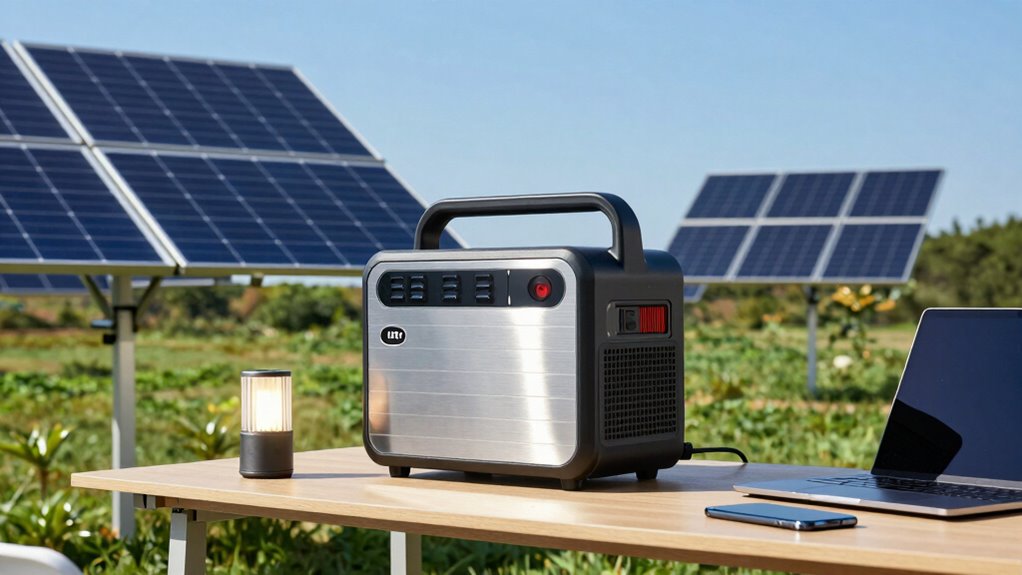
Solar generators can power small devices like phones, lights, and laptops, making them ideal for camping, outdoor events, or emergencies. However, they can’t run heavy appliances like refrigerators or air conditioners for long, especially if their capacity is limited. Recharging depends on sunlight, which can be inconsistent due to weather or the generator’s design. If you want to understand the real capabilities and limits, keep exploring how these systems work in different conditions.

Get privacy and security gear delivered free with Prime
- Fast, free delivery on millions of items
- Prime Video, Amazon Music and more included
- Member-only deals all year
Key Takeaways
- Solar generators can reliably power small devices and electronics during outdoor activities or power outages.
- They cannot efficiently run high-wattage appliances like air conditioners or electric heaters for extended periods.
- Their recharging depends on sunlight, making performance variable with weather and environmental conditions.
- Battery lifespan and charge cycles limit long-term use, requiring eventual replacements or maintenance.
- External solar panels and proper management extend usability but add setup complexity and depend on sunlight availability.
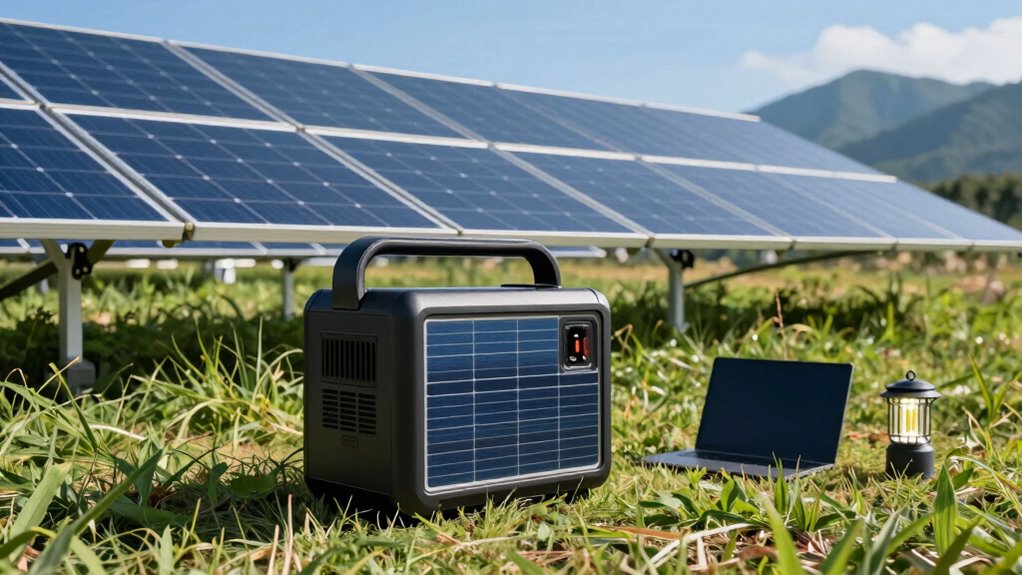
Have you ever wondered what a solar generator can really do for you? The truth is, these devices are fantastic tools for certain situations, but they’re not magic solutions for every power need. When considering a solar generator, it’s important to understand its strengths and limitations. One key factor is battery longevity. Most solar generators rely on rechargeable batteries, which degrade over time. While manufacturers often claim a certain number of charge cycles, real-world use can shorten this lifespan. If you plan to use your solar generator daily or for extended periods, you’ll need to keep in mind that its battery won’t last forever and may eventually require replacement. This is especially true if you frequently drain the battery completely or expose it to extreme temperatures. Knowing this helps set realistic expectations about maintenance and long-term costs.
Portability concerns are another vital aspect. Solar generators are designed to be mobile, making them ideal for camping trips, outdoor events, or emergency backup. They typically come in compact, lightweight packages with built-in handles or wheels. However, their portability has practical limits. Larger models with higher power capacities tend to be heavier and bulkier, making them less convenient to carry over long distances. If you need a truly portable unit, you’ll want to balance size, weight, and power output carefully. Smaller units might not provide enough juice for all your devices, while larger ones could be cumbersome to transport. Also, keep in mind that some solar generators require external solar panels for recharging, which adds another layer to portability concerns. Carrying panels and setting them up in ideal sunlight can be challenging depending on where you’re using the device. Additionally, understanding the battery life cycle of these devices is crucial to maintaining their effectiveness over time. Being aware of the power capacity and how it aligns with your energy needs can help you select the best model for your specific situations. Moreover, considering the recharge options and their efficiency can impact how well the generator supports your energy requirements during extended use. Properly managing your solar input can also extend the overall lifespan of your system. It’s also important to consider how weather conditions may influence your ability to recharge via solar power, as solar efficiency can vary significantly depending on sunlight exposure.
Products Worth Considering

Anker SOLIX C1000 Gen 2 Portable Power Station with 200W Solar Panel

Jackery Explorer 300 Portable Power Station, 292Wh

Jackery Solar Generator 1000 v2 with 200W Solar Panel, 1024Wh LiFePO4 Battery
As an affiliate, we earn on qualifying purchases.
Frequently Asked Questions
How Long Do Solar Generators Typically Last Before Needing Replacement?
A solar generator typically lasts between 5 to 15 years before needing replacement, depending on battery lifespan and usage. You should check the warranty coverage, usually around 2 to 10 years, which can protect against early battery failure. Proper maintenance and gentle charging habits can extend your generator’s life. Keep an eye on performance and consider replacing the battery when capacity declines markedly to ensure reliable power.
Can Solar Generators Power a Whole House During an Outage?
A solar generator can power your whole house during an outage if it has enough battery capacity, but most portable models can’t support continuous, full-home needs. You’ll need a high-capacity, stationary unit designed for that purpose. Keep in mind, portability concerns mean larger, more capable units are less portable. So, if you want reliable whole-house backup, choose a system specifically built for that, rather than a small, portable model.
Are Solar Generators Effective in Extreme Weather Conditions?
During a hurricane, your solar generator’s durability and extreme weather resilience are tested. While some models withstand heavy rain and wind, others falter. For example, a high-quality solar generator with weatherproof design can operate during storms, but exposure to flooding or intense winds may cause damage. Overall, the effectiveness of solar generators in extreme weather depends on their build quality and protective features, making durability essential for reliable backup power.
What Is the Average Cost of a High-Capacity Solar Generator?
You’ll typically spend between $1,000 and $3,500 on a high-capacity solar generator, depending on its battery capacity and features. When choosing one, consider solar panel durability, which impacts long-term performance, and check if the unit supports battery recycling for sustainability. Higher-end models often offer better durability and eco-friendly features, making them worth the investment for reliable, clean power during outages or outdoor adventures.
Do Solar Generators Require Any Regular Maintenance?
Think of your solar generator as a garden; it needs a little tending to stay healthy. You don’t have to water it daily, but regular maintenance, like checking connections and cleaning panels, keeps it in top shape. Battery lifespan varies, but with proper care, maintenance frequency can be minimal—perhaps once or twice a year. This way, your solar generator stays reliable and ready to power up whenever you need it.
Conclusion
Solar generators are like trusty sidekicks, perfect for powering small devices and keeping your essentials running during outages or adventures. However, they’re not magic wands that can replace your entire home’s energy needs. While they shine brightest with portability and eco-friendliness, don’t expect them to handle heavy-duty appliances or endless power. Knowing their limits helps you use them wisely, turning their potential into a reliable spark rather than a blazing wildfire.