
AI-focused devices are built with specialized architectures and materials that boost performance and efficiency for AI tasks. Unlike traditional hardware, which is designed for versatility, these devices optimize neural network training and inference, operate closer to data sources, and reduce latency and energy consumption. They scale better for complex models and larger datasets. If you want to understand how these innovations transform AI capabilities, explore further insights below.
Key Takeaways
- AI-focused devices are optimized with purpose-built architectures for enhanced AI computation performance.
- They operate at the edge for real-time processing, reducing latency and bandwidth needs.
- These devices prioritize power efficiency, enabling AI tasks with lower energy consumption.
- Hardware innovation supports scalability for larger datasets and more complex AI models.
- Unlike traditional hardware, they are specialized for AI workloads rather than general-purpose computing.
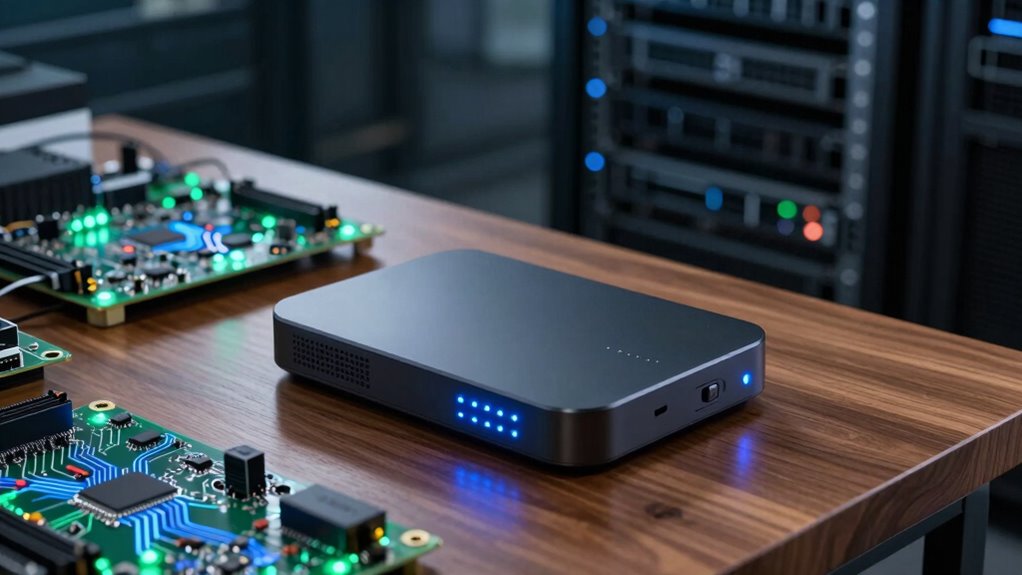
As artificial intelligence continues to evolve, the hardware supporting these technologies has also transformed, leading to a clear divide between AI-focused devices and traditional hardware. This shift is driven by the unique demands of AI workloads, which require specialized processing capabilities that standard hardware often can’t efficiently deliver. AI-focused devices are designed with this in mind, emphasizing features like edge computing and power efficiency to optimize performance and minimize energy consumption.
Unlike traditional hardware, which often relies on centralized data centers and general-purpose processors, AI-focused devices are built to operate closer to the data source. Edge computing plays a pivotal role here, enabling real-time processing directly on the device or near the data collection point. This reduces latency, speeds up decision-making, and alleviates the need to transmit vast amounts of data over networks. If you’re working with applications like autonomous vehicles, smart cameras, or IoT sensors, edge computing guarantees that AI models can analyze data instantaneously without waiting for cloud processing, making your systems more responsive and reliable. Additionally, hardware specialization in AI-focused devices often involves integrating new materials and architectures that are specifically optimized for AI computations, setting them apart from classic hardware designs. These innovations also facilitate scalability, allowing devices to grow with increasing data and complexity.
AI devices process data locally at the edge, reducing latency and enabling instant decision-making for real-time applications.
Power efficiency is another key differentiator. Traditional hardware, such as standard CPUs and servers, often consumes significant amounts of energy, especially when handling intensive AI calculations. AI-focused devices are optimized to perform complex tasks while using less power, which is vital for deployment in environments where energy resources are limited or where minimizing operational costs is a priority. This efficiency doesn’t come at the expense of performance; instead, specialized hardware like AI accelerators, tensor processing units (TPUs), and neuromorphic chips are engineered to execute AI algorithms swiftly and accurately without draining power. Moreover, hardware acceleration further enhances processing speed and energy savings, making these devices even more efficient. As a result, these innovations support cost-effective AI deployment in diverse settings.
Furthermore, AI-focused devices are tailored to support machine learning tasks, incorporating hardware that accelerates neural network training and inference. They often include dedicated chips that speed up matrix operations and other computations fundamental to AI. This hardware specialization means you can achieve faster results, handle larger datasets, and deploy more sophisticated models than you could with traditional hardware. As AI continues to advance, these devices are increasingly incorporating innovative architectures that further enhance their capabilities and efficiency.
In addition, hardware specialization in AI-focused devices often involves integrating new materials and architectures that are specifically optimized for AI computations, setting them apart from classic hardware designs. In essence, the main difference lies in purpose-built design. Traditional hardware emphasizes versatility and general-purpose computing, while AI-focused devices prioritize optimized performance for AI workloads, edge computing capabilities, and power efficiency. If you’re integrating AI into your projects, understanding these distinctions helps you choose the right hardware to meet your needs—whether it’s for real-time insights at the edge or energy-efficient processing in constrained environments.

AI & Edge Computing: Practical Projects for Deploying Machine Learning Models on Raspberry Pi and Local Devices
As an affiliate, we earn on qualifying purchases.
As an affiliate, we earn on qualifying purchases.
Frequently Asked Questions
How Do Ai-Focused Devices Impact Energy Consumption Compared to Traditional Hardware?
AI-focused devices often consume more energy than traditional hardware because they require intensive processing for tasks like machine learning. However, they improve energy efficiency through advanced power management, optimizing performance and reducing waste during idle times. Your devices adapt their power use based on workload, balancing high-performance needs with energy conservation. This dynamic approach helps you get smarter, faster results without considerably increasing overall energy consumption.
What Are the Cost Differences Between AI Devices and Conventional Hardware?
Ever wondered if AI devices are worth the extra cost? They tend to be more expensive upfront due to their advanced hardware and specialized components, but they often offer better cost efficiency over time through faster processing and reduced energy use. While AI-focused devices have increased hardware complexity, this complexity can lead to higher initial costs. However, their improved performance can make them more economical in the long run.
How Do AI Devices Handle Data Privacy and Security?
AI devices prioritize data privacy and security by implementing robust privacy protocols and data encryption. You can trust that your information remains protected because these devices use advanced encryption methods both during data transmission and storage. They also follow strict privacy protocols to prevent unauthorized access. By actively managing data privacy, AI devices guarantee your personal information stays secure while providing intelligent, responsive functionalities without compromising security.
Can Traditional Hardware Be Upgraded to Support AI Functionalities?
Yes, you can upgrade traditional hardware to support AI functionalities, but it depends on hardware compatibility and software integration. You might need to add more powerful processors, increase RAM, or install specialized AI accelerators like GPUs or TPUs. Ensuring your existing system supports these upgrades is key. Additionally, you should update or install compatible AI software to fully harness the device’s new AI capabilities for peak performance.
What Is the Lifespan of Ai-Focused Devices Versus Traditional Hardware?
Think of AI-focused devices as wise old trees, built to endure longer than their traditional counterparts. You’ll find they have greater device durability, often lasting several years with proper maintenance. However, they may need more attentive care to keep up with evolving AI software. Traditional hardware might fade faster, but less maintenance keeps it running for a shorter span. Overall, AI devices are designed for longevity, provided you nurture them well.

AI Hardware Engineering: Designing GPUs, TPUs, and Neural Processing Units for High-Throughput Machine Learning Workloads (AI Infrastructure, Hardware & Compiler Engineering Series)
As an affiliate, we earn on qualifying purchases.
As an affiliate, we earn on qualifying purchases.
Conclusion
So, imagine wielding an AI-focused device that’s like having a supercharged brain in your pocket, outpacing traditional hardware with lightning-fast learning and decision-making. It’s as if you’ve got a tiny genius guiding your every move, transforming the ordinary into the extraordinary. This isn’t just technology—it’s a revolution, turning your daily routine into a high-speed, intelligent adventure. Embrace AI devices, and watch your world evolve faster than you ever thought possible!

Local LLM Inference Optimization: A Comprehensive Guide to Quantization, Hardware Acceleration, and Efficient Private AI Deployment
As an affiliate, we earn on qualifying purchases.
As an affiliate, we earn on qualifying purchases.
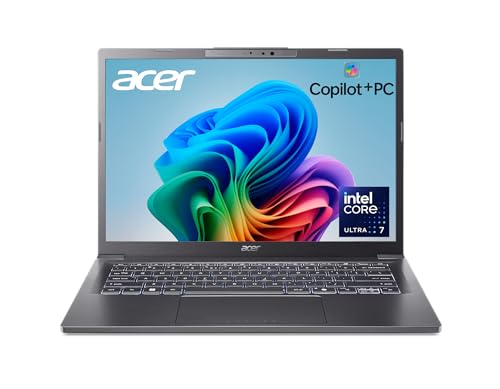
Acer Aspire 14 AI Copilot+ PC | 14" WUXGA Display | Intel Core Ultra 7 Processor 256V | NPU: Up to 47 Tops – GPU: Up to 64 Tops | Intel ARC 140V | 16GB LPDDR5X | 1TB SSD | Wi-Fi 6E | A14-52M-72S0
It's possible on your Intel AI PC – Equipped with an Intel Core Ultra 7 processor (Series 2),…
As an affiliate, we earn on qualifying purchases.
As an affiliate, we earn on qualifying purchases.