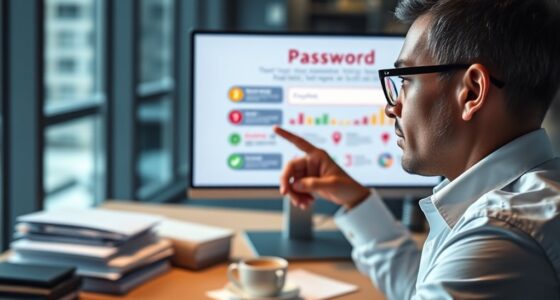

You might think fancy security tools alone can keep you safe online, but that’s not true. Basic habits like recognizing phishing attempts, creating strong passwords, and avoiding suspicious links are far more effective because they address the root of many threats. Even the best software can’t prevent you from clicking a malicious link if you’re not cautious. Staying vigilant and practicing safe browsing habits offer a stronger defense—if you keep going, you’ll discover how to stay protected every day.

Get privacy and security gear delivered free with Prime
- Fast, free delivery on millions of items
- Prime Video, Amazon Music and more included
- Member-only deals all year
Key Takeaways
- Basic habits like scrutinizing emails and avoiding suspicious links prevent many cyber threats that tools alone can’t catch.
- Phishing awareness helps users identify scams beyond what security software can detect automatically.
- Strong, unique passwords and vigilance reduce risk despite the limitations of security tools.
- Keeping software updated and practicing safe browsing minimizes vulnerabilities security tools may miss.
- Consistent safe behaviors complement security tools, creating a more effective overall protection strategy.
In today’s digital world, practicing safe browsing habits is essential to protect your personal information and avoid online threats. While security tools like firewalls and antivirus software are useful, they can’t replace the fundamental habits that keep you safe online. Your awareness of phishing attempts and commitment to good password management are your best defenses against cyber threats. Phishing awareness, in particular, is crucial because many cybercriminals rely on tricking you into revealing sensitive information through fake emails or malicious websites. When you receive an unexpected email asking for login details or urging you to click a link, pause and scrutinize it carefully. Check the sender’s email address and look for signs of deception, such as spelling errors or unfamiliar URLs. If in doubt, avoid clicking on links or attachments and go directly to the official website by typing the URL into your browser. This simple habit can save you from falling victim to scams designed to steal your identity or financial information.
Be cautious of unexpected emails—verify sender details and avoid clicking links to protect your personal information.
Alongside phishing awareness, effective password management forms the backbone of safe browsing. It’s tempting to use the same password across multiple sites, but that practice puts all your accounts at risk if one gets compromised. Instead, create strong, unique passwords for each account, combining letters, numbers, and symbols. Using a reputable password manager can help you keep track of these complex passwords without the hassle of remembering them all. Incorporate two-factor authentication whenever possible, adding an extra layer of security that makes it harder for hackers to access your accounts even if they crack your password. Additionally, understanding biodiversity and its importance can remind us how interconnected and fragile our digital and natural environments are, emphasizing the need for vigilance and protection in all aspects of life. Recognizing the importance of cybersecurity highlights that protecting your online presence is an ongoing process that requires consistent effort. Staying informed about emerging cyber threats can help you adapt your safe browsing practices proactively. Maintaining good online habits also involves awareness of security vulnerabilities, which can be exploited if your devices or software are outdated or not properly secured.
Good browsing habits also involve being cautious about the websites you visit and the information you share online. Stick to reputable sites, especially when entering personal or financial details. Avoid clicking on suspicious ads or links on social media, which might lead to malware or phishing sites. Keep your browser and software up to date, as updates often include security patches that fix vulnerabilities hackers might exploit.
Ultimately, no security tool can fully protect you if you neglect basic safe browsing practices. Your vigilance, combined with strong password management and phishing awareness, forms a powerful shield against online threats. These habits are simple, cost-effective, and effective—more reliable than relying solely on fancy security tools. By making conscious choices during your online activities, you significantly reduce your risk of falling prey to cyberattacks, ensuring your digital life remains safe and secure.
password manager for safe browsing
As an affiliate, we earn on qualifying purchases.
As an affiliate, we earn on qualifying purchases.
Frequently Asked Questions
How Quickly Do New Online Threats Emerge?
New online threats emerge constantly, sometimes within hours or days. Emerging malware and sophisticated phishing tactics evolve rapidly, making it difficult for even the best security tools to keep up. You need to stay vigilant, recognize suspicious links, and avoid sharing personal info. Relying solely on security software isn’t enough; practicing safe browsing habits helps you stay protected against these ever-changing threats.
Can Safe Browsing Habits Fully Prevent All Cyber Attacks?
No, safe browsing habits can’t prevent every cyber attack, but they substantially lower your risk. You must stay alert to threats like phishing scams and practice strong password habits. Even the best security tools can’t catch every threat if you’re not cautious. Your vigilance, awareness of phishing tactics, and robust password practices create an essential line of defense that no software alone can provide. Stay vigilant to stay protected.
What Are Common Mistakes Users Make Despite Safe Habits?
You often make mistakes like clicking on suspicious links despite good phishing awareness, or using weak passwords even when managing them carefully. You might also overlook updating software regularly or reuse passwords across sites, risking security breaches. Staying vigilant with safe browsing habits is essential, but it’s equally important to strengthen your password management and remain cautious of phishing attempts to truly protect yourself online.
How Does Device Security Influence Safe Browsing Effectiveness?
Device security acts as the backbone of your safe browsing habits, much like a sturdy foundation supports a house. When you’re aware of device vulnerabilities, you can take targeted steps to patch weaknesses and update software. This proactive approach reduces risks and keeps malicious threats at bay. Your user awareness directly influences browsing effectiveness, ensuring you don’t fall prey to attacks that exploit overlooked vulnerabilities, making your online experience safer and more resilient.
Are Safe Browsing Habits Sufficient for Corporate Cybersecurity?
Safe browsing habits are essential but not enough on their own for corporate cybersecurity. You need to combine user education and policy enforcement to create a robust defense. Educate your team about potential threats and safe practices, then enforce policies that promote secure browsing. This layered approach helps prevent breaches caused by human error, making your organization’s security much stronger than relying solely on technology.
two-factor authentication security device
As an affiliate, we earn on qualifying purchases.
As an affiliate, we earn on qualifying purchases.
Conclusion
Think of your browsing habits as the steady hand guiding your ship through turbulent waters. No matter how shiny or advanced the security tools are, they can’t steer you clear of every hidden reef or storm. Safe habits are your lighthouse, shining a constant glow that keeps you away from danger. Remember, the strongest defenses are often the simple, mindful choices you make every day—your vigilant eyes and cautious steps are your best protection in the vast digital sea.
phishing awareness training course
As an affiliate, we earn on qualifying purchases.
As an affiliate, we earn on qualifying purchases.
As an affiliate, we earn on qualifying purchases.
Halloween Picks
halloween
As an affiliate, we earn on qualifying purchases.