
To protect your brand from deepfake threats, you need advanced detection tools that analyze video and audio for inconsistencies and anomalies. Incorporate AI-powered solutions like FakeCatcher or Video Authenticator, and verify media sources with blockchain and metadata checks. Stay proactive by regularly testing your systems against new manipulation techniques and ensuring transparency with explainable AI. If you want a deeper understanding of these strategies, explore how evolving cybersecurity measures can keep your brand safe from synthetic media attacks.

Get privacy and security gear delivered free — and shop member deals
- Fast, free delivery on millions of items
- Access to Prime Big Deal Days deals on October 6–7
- Prime Video, Amazon Music and more included
Key Takeaways
- Implement advanced AI-driven detection tools analyzing visual and audio inconsistencies in real-time to identify deepfakes early.
- Incorporate explainable AI (XAI) techniques to understand detection decisions and build trust in fake media assessments.
- Use multi-modal verification methods combining video, audio, and metadata analysis for comprehensive synthetic media detection.
- Regularly update detection systems through adversarial testing and third-party audits to address evolving deepfake techniques.
- Integrate detection APIs and cybersecurity protocols like multi-factor authentication to prevent deepfake-related brand and fraud risks.
Understanding the Evolving Threat of Deepfakes

The threat posed by deepfakes is evolving rapidly, driven by advances in AI technology that make synthetic media more realistic and harder to detect. By 2025, around 8 million deepfake videos and AI-generated voice clips could circulate globally, with voice cloning leading the surge. Detection efforts have increased tenfold from 2022 to 2023, but scammers adapt quickly, making traditional tools less effective. Deepfake-enabled fraud costs the U.S. billions annually, with losses soaring from $12.3 billion in 2023 to an estimated $23.1 billion in 2025. Voice phishing attacks have grown over 1,600% in early 2025, often surpassing visual deepfakes in impact. As deepfake technology becomes more accessible and sophisticated, it blurs the line between real and fake content, amplifying risks across sectors. Cybercriminals leverage AI to automate and scale attacks, further complicating detection and prevention efforts. The increasing color accuracy of synthetic media makes it even more convincing to unsuspecting viewers.
Cutting-Edge Techniques for Detecting Synthetic Media
As deepfake technology becomes more sophisticated and widespread, staying ahead requires cutting-edge detection methods. You need tools that analyze visual and audio anomalies quickly and accurately. Advanced AI models now combine machine learning with neural networks to detect deepfakes in real-time streams. Collaborative databases with labeled datasets improve detection accuracy by sharing diverse examples across industries and academia. Real-time detection tools, like Intel’s FakeCatcher, use biometric analysis to identify deepfakes with up to 96% accuracy under controlled conditions. To help you stay compliant, emerging standards and regulations push for technological consistency and mandatory disclosure. Here are key techniques: 1. Advanced AI models analyzing visual/audio inconsistencies 2. Collaborative databases enhancing detection accuracy 3. Real-time biometric detection tools like FakeCatcher. Incorporating visual and audio anomaly detection into your security protocols can significantly reduce the risk of False positives and negatives.
Evaluating and Strengthening Detection Systems
You need to rigorously test your detection systems to guarantee they can handle various manipulations and adversarial conditions. Enhancing transparency helps you understand how the system makes decisions and where it might fail. Regular evaluation and refinement are essential to maintain robustness and adapt to evolving deepfake techniques. Furthermore, establishing standardized, fair benchmarks with comprehensive evaluation metrics is crucial for accurately measuring progress and ensuring the reliability of detection methods. Incorporating synthetic media detection benchmarks can help identify vulnerabilities and improve system resilience.
Testing Detection Robustness
Evaluating and strengthening detection systems for deepfakes requires rigorous robustness testing across diverse scenarios. You need to challenge your models with unseen data, manipulation types, and domain-specific artifacts to identify vulnerabilities. Testing against domain shifts, such as different datasets or manipulation methods, highlights weaknesses in generalization. Employing strategies like hybrid testing—merging known and unknown fake content—can reveal adaptability issues. Adversarial attack simulations further expose how easily models can be bypassed, guiding necessary improvements. To confirm reliability, you should measure performance using metrics like accuracy, AUROC, and F1-score, while considering computational costs. This exhaustive testing helps build resilient detectors capable of handling real-world, evolving deepfake threats. Robustness testing is essential for identifying model vulnerabilities and ensuring consistent performance across various operational conditions.
Enhancing System Transparency
Enhancing system transparency is essential for building trust and ensuring the effectiveness of deepfake detection tools. Explainable AI (XAI) models reveal how decisions are made by highlighting key features like facial cues or motion patterns, making detection outcomes understandable. Research from SRH University shows that XAI improves reliability and trustworthiness, helping users grasp the basis of AI judgments. The DeepExplain framework combines CNNs and LSTMs with tools like Grad-CAM and SHAP to deliver accurate, transparent results. Industry best practices include open-source collaboration, regular updates, and third-party audits, all fostering transparency and fairness. Combining metadata analysis, multimodal cues, and manual verification further clarifies detection signals. Clear communication about system limits and strengths builds stakeholder confidence and promotes responsible AI deployment. Explainable AI significantly enhances the interpretability of detection decisions, enabling users to better comprehend the underlying reasoning behind AI judgments. Integrating AI ethics principles into development processes further supports trustworthy deployment.
Embedding Deepfake Defense in Cybersecurity Strategies
To effectively embed deepfake defense, you need to implement AI-based detection tools like Video Authenticator and FaceForensics++, which analyze media for authenticity. Strengthening authentication layers through multi-factor protocols and blockchain-based content verification further secures your systems. Incorporating media authenticity verification methods enhances the ability to detect sophisticated fakes. Combining these technologies creates a layered defense that can better identify and prevent deepfake threats. Recognizing the increasing sophistication of deepfakes, organizations must stay vigilant and continuously update their detection strategies to maintain trust and security.
Integrating Detection Tools
Embedding deepfake detection tools into cybersecurity strategies is essential for staying ahead of increasingly sophisticated synthetic media threats. By integrating these tools, you can monitor, identify, and respond to malicious deepfakes swiftly. Here are key ways to do so:
- Embed APIs and SDKs: Incorporate detection APIs like Sensity’s Face Manipulation Detection directly into your enterprise systems, video platforms, and identity workflows for seamless protection. Utilizing detection algorithms that are regularly updated can greatly improve accuracy.
- Implement Real-Time Monitoring: Use solutions that continuously scan multiple sources for suspicious activity, enabling immediate incident response before damage occurs. This proactive approach helps prevent the spread of harmful content.
- Utilize Automated Takedown and Alerts: Leverage tools that automatically flag, remove, or alert your team about manipulated media, reducing false positives and increasing response speed.
- Leverage Multi-Modal Detection Platforms: Integrate platforms that analyze video, audio, and text simultaneously to improve accuracy and reduce false negatives, ensuring comprehensive coverage against evolving threats. Multi-Modal Detection Platforms enhance the robustness of your defenses by addressing different media types.
This integration ensures your defenses adapt proactively to emerging synthetic media threats.
Strengthening Authentication Layers
Strengthening authentication layers is essential for defending against deepfake attacks, as relying on a single verification method leaves vulnerabilities. By combining biometrics, behavioral biometrics, device-based verification, and cryptographic methods, you create layered defenses that are much harder for deepfakes to bypass. Facial biometrics with strong liveness detection is widely used, with 75% of organizations relying on it for remote identity verification. Multi-modal systems require attackers to spoof multiple mechanisms simultaneously—an increasingly difficult challenge. Device verification detects signs of synthetic content, while continuous authentication monitors user behavior over time, spotting anomalies. Penetration testing can help identify potential weaknesses in these layered defenses before malicious actors do. Integrating these methods ensures robust protection, making it considerably more complex for attackers to succeed and strengthening your overall cybersecurity resilience against deepfake threats.
Navigating Ethical and Legal Challenges in Media Verification
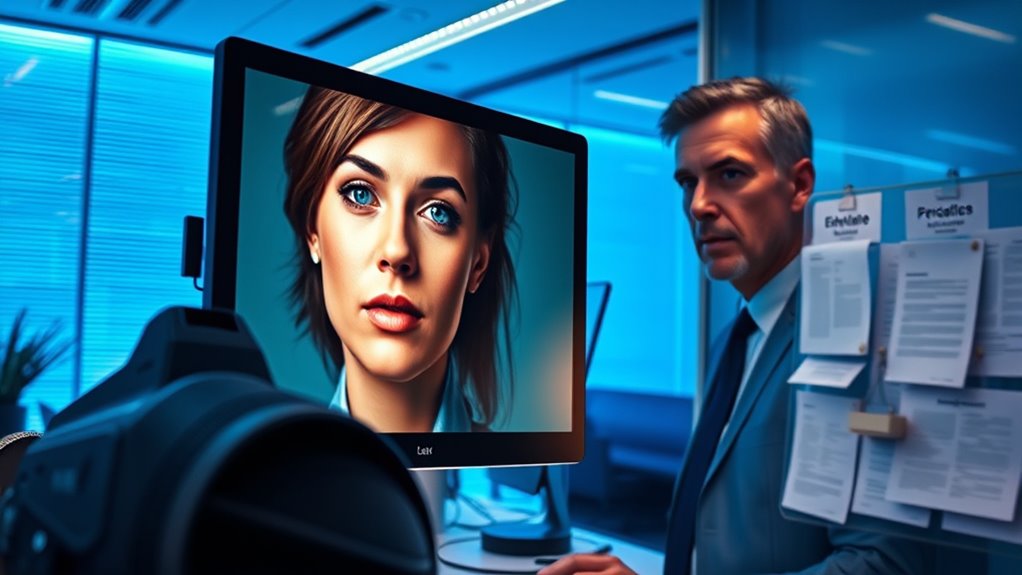
Navigating the ethical and legal challenges of media verification becomes increasingly complex as synthetic media like deepfakes proliferate. You must balance rapid information sharing with thorough fact-checking to prevent misinformation. Algorithmic transparency is essential to build trust in detection systems. You also face challenges verifying media sources amid fake accounts, bots, and astroturfing, which threaten transparency. Additionally, maintaining impartiality in social media use, whether personal or professional, impacts your credibility. Ethical standards need to evolve, especially for citizen journalists versus professionals, regarding pre-publication checks. The proliferation of deepfakes increases the need for robust verification methods. Incorporating media authenticity checks can help distinguish genuine content from synthetic manipulations.
Shaping the Future of Deepfake Prevention and Response
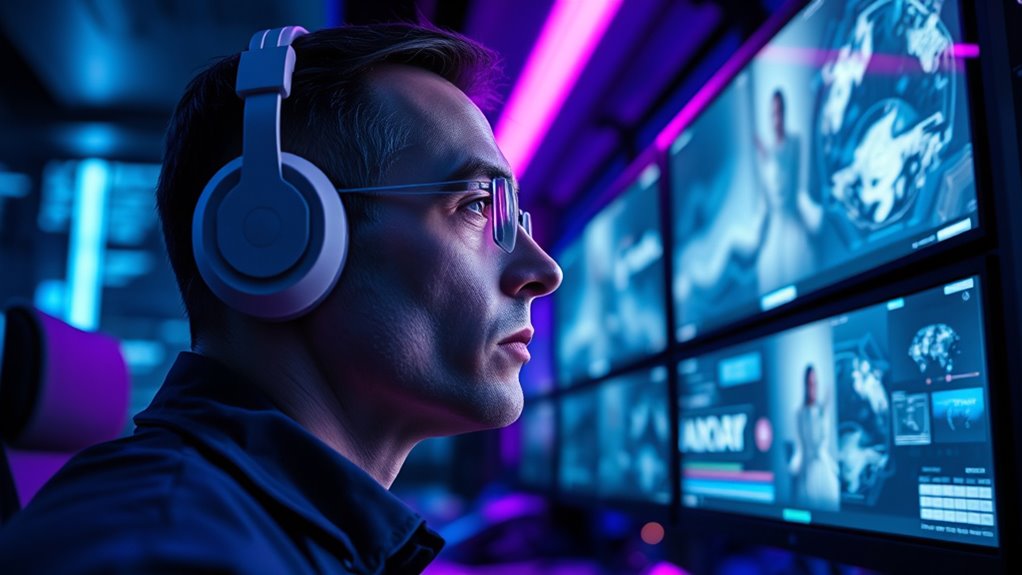
As synthetic media continues to evolve, so must the tools and strategies used to detect and counter deepfakes. Static detection models trained on outdated deepfakes no longer suffice against new, sophisticated methods. Adaptive systems, similar to evolving antivirus software, are vital for staying ahead. Federated learning frameworks enable daily updates of detection capabilities while safeguarding privacy. Real-time liveness detection algorithms analyze voice and video streams for robotic patterns or timing anomalies, helping flag synthetic content instantly. Voice-based phishing surpasses visual deepfakes in frequency and impact, underscoring the importance of integrating detection methods across multiple modalities. Incorporating organic and natural juices into cybersecurity awareness campaigns can help promote healthy skepticism and vigilance among users. Integrating deepfake detection into cybersecurity measures, like multifactor authentication, bolsters defenses beyond traditional passwords. Organizations are developing multi-layered resilience strategies that combine technology, policies, and human oversight. These efforts guarantee swift, effective responses to deepfake threats, protecting brand integrity and customer trust in an increasingly complex digital landscape.
Frequently Asked Questions
How Can Small Businesses Implement Effective Deepfake Detection Measures?
To implement effective deepfake detection, you should start by choosing user-friendly, AI-powered tools that analyze visual, audio, and text inconsistencies. Keep these tools updated regularly to catch new techniques. Educate your team about deepfake risks, monitor media channels consistently, and collaborate with industry partners for better security. Prioritize scalable solutions that fit your budget, and integrate detection measures with your existing systems to protect your brand effectively.
What Are the Costs Associated With Deploying Advanced Deepfake Mitigation Tools?
You’ll face several costs when deploying advanced deepfake mitigation tools. Licensing fees for detection platforms, integration expenses, and infrastructure costs for cloud or on-premise systems add up. Plus, you need to budget for hiring or training staff, ongoing updates, and maintenance. These tools also require continuous adaptation to evolving deepfake techniques, which means investing in robust AI models and staff expertise to keep your brand protected effectively.
How Do Deepfake Detection Techniques Adapt to Rapidly Evolving AI Models?
Think of deepfake detection as a lighthouse guiding ships through shifting fog. You adapt by updating your detection tools constantly, just like adjusting a lighthouse’s beam to new threats. You incorporate multi-layered strategies—analyzing video, voice, and behavior—like shining different lights on an obstacle. Staying ahead means embracing AI-driven innovations and human expertise, ensuring your defenses are as resilient as a lighthouse standing firm against the storm.
Can Deepfake Detection Be Integrated Into Existing Cybersecurity Infrastructures Seamlessly?
You can seamlessly integrate deepfake detection into your existing cybersecurity setup by choosing scalable, reputable tools that align with your risk profile. Make sure these solutions work alongside your threat intelligence and social media monitoring systems. Regular updates and vendor support are essential, and embedding biometric authentication enhances security. When integrated properly, these measures bolster your defenses without disrupting your current workflows, helping you catch synthetic media threats early.
What Role Do Consumer Education and Public Awareness Play in Deepfake Prevention?
Think of consumer education and public awareness as your frontlines in a digital battlefield. They act like shields, helping you recognize and defend against deepfakes before they cause harm. By informing yourself and others, you reduce the chances of being fooled. This proactive approach builds collective resilience, making it harder for malicious content to spread unnoticed. Ultimately, awareness empowers you to stay one step ahead in protecting your digital identity.
Conclusion
By staying vigilant, adopting advanced detection tools, and embedding safeguards into your cybersecurity strategy, you become a fortress against deepfakes. You spot the false before it spreads, verify the authentic before it’s compromised, and respond swiftly before your brand’s reputation is shattered. In this ongoing battle, your vigilance, innovation, and resilience form a shield—protecting your business, preserving your trust, and shaping a future where truth prevails over deception.
Fall Picks
fall essentials
As an affiliate, we earn on qualifying purchases.