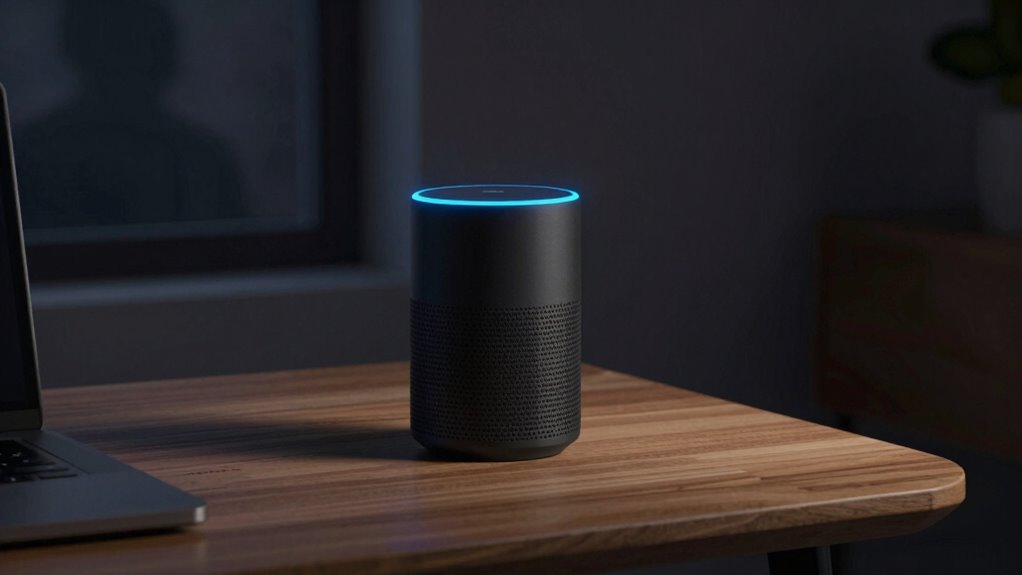

Amazon Echo devices can be secretly exploited to eavesdrop on your conversations without your knowledge. Hackers can use malicious skills or manipulate voice commands to activate silent listening modes, capturing audio indefinitely. These exploits often operate quietly, leaving no visible signs, and can be triggered remotely or through deceptive prompts. If you want to discover how these vulnerabilities work and how to protect yourself, there’s more to uncover that could change how you see your device.

Get privacy and security gear delivered free with Prime
- Fast, free delivery on millions of items
- Prime Video, Amazon Music and more included
- Member-only deals all year
Key Takeaways
- Malicious Alexa skills can secretly record conversations by exploiting unbounded parameters and extended silence periods.
- Attackers manipulate device prompts and fallback intents to enable covert, long-term eavesdropping without user awareness.
- Silent listening modes triggered by command manipulation leave no visible signs, making eavesdropping nearly undetectable.
- Legal actions reveal Amazon’s data collection practices, including recording minors and storing voice data for business purposes.
- Users should remain vigilant about privacy settings and updates to prevent unauthorized eavesdropping exploits.
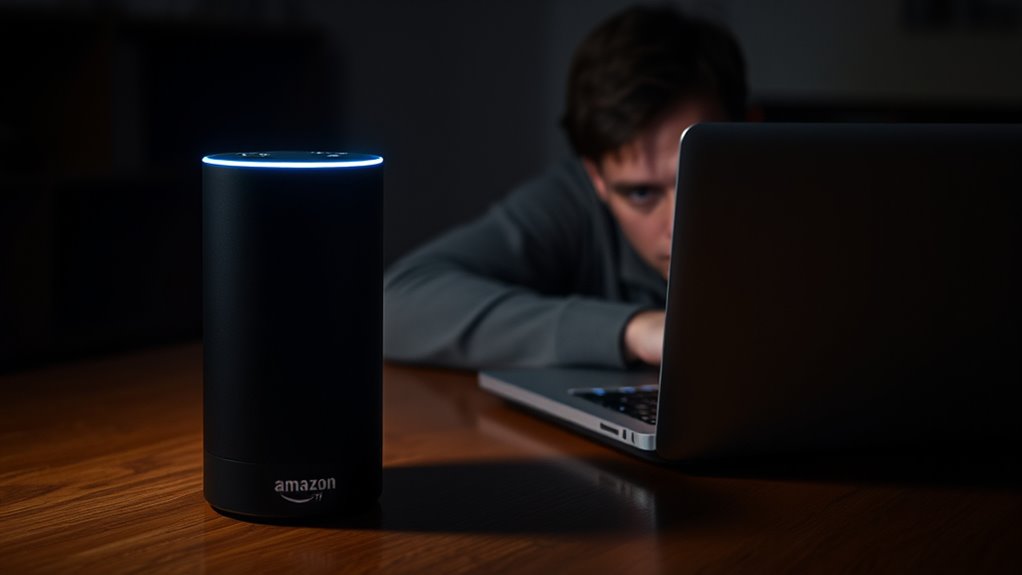
Recent disclosures reveal that your Alexa device may be vulnerable to sophisticated eavesdropping exploits. Security firm Checkmarx uncovered a vulnerability allowing malicious skills to record your speech continuously after activation, all without requiring physical access. This exploit leverages unbounded parameters in Alexa Skills, enabling attackers to set up disguised malicious skills that, once installed, activate a Lambda function on launch. The function keeps listening indefinitely, transcribing audio, and sending transcripts to attacker-controlled servers. This process leaves no obvious signs, making it nearly impossible for you to detect the eavesdropping. Remarkably, the silence grace period for ongoing listening was extended from 8 to 16 seconds via re-prompts, further prolonging the duration attackers can listen in on your conversations. This extension can be exploited by attackers to maximize their listening window. The threat extends beyond malicious skills. Researchers from SRLabs demonstrated that third-party apps, even after passing initial reviews, can be silently exploited through malicious updates. These updates might show fake error messages like “not available in your country,” but continue listening silently for over a minute, capturing sensitive conversations. Similarly, Google Home devices are vulnerable; they forward recognized speech to hacker servers until a 30-second silence threshold is reached. Attackers can exploit this to intercept “OK Google” commands, except when you say “stop,” which might disable the listening. This manipulation hinges on extending silence durations, turning your smart speaker into a remote eavesdropping device without your knowledge. Further complicating matters are voice phishing tactics that exploit fallback intents for unrecognized commands. Attackers modify built-in “stop” commands to enable silent listening, using long pauses or silent prompts to reset speech detection. They may craft prompts asking for your password or email, masquerading as fake security alerts or updates. Such tactics could lead to credential theft or unauthorized account access, especially if you’re not alert to these subtle manipulations. Meanwhile, a class-action lawsuit in Seattle accuses Amazon of illegally recording private conversations without proper consent, violating state laws and prompting the company to deny wrongdoing. The lawsuit seeks damages and an order to stop these privacy violations, which include recording minors without parental consent and storing data beyond promised deletion periods. The Federal Trade Commission and Department of Justice have also charged Amazon with violating children’s privacy laws by retaining kids’ voice recordings and geolocation data, using it to improve Alexa’s algorithms for business purposes. A settlement requires Amazon to delete this data and overhaul their data retention practices. In response, Amazon addressed these issues by deploying safeguards to prevent accidental activation and recording, and promised to notify users about data collection and retention practices. They also deleted inactive children’s accounts as part of their settlement. Despite these efforts, the risk remains that your Alexa device could be covertly listening, recording, and sharing your conversations, making it essential to stay vigilant about privacy settings, updates, and the potential for unseen eavesdropping. Additionally, constant advancements in voice recognition technology continue to pose new privacy challenges that users must remain aware of to protect their personal information.
Frequently Asked Questions
How Can Users Detect if Their Alexa Is Secretly Listening?
To detect if your Alexa is secretly listening, pay attention to the microphone indicator light—if it’s on, it’s active. Regularly check your device’s settings for recent activity logs or recordings. Unusual silence before use or unexpected responses may also signal listening issues. Consider turning off the microphone manually when not in use, and stay updated on software patches that enhance privacy features.
What Specific Vulnerabilities Allow These Eavesdropping Exploits to Succeed?
Imagine your device as an open window, inviting unwanted visitors. These exploits succeed because vulnerabilities like malicious third-party skills, continuous listening functions, and inadequate review processes let attackers activate Alexa’s mic without your knowledge. Flaws in voice command processing, silent re-prompts, and fake error messages create opportunities for persistent eavesdropping. These weaknesses make it possible for hackers to listen in, capturing your conversations even when you think you’re alone.
Are There Any Effective Ways to Prevent Alexa From Recording Without Consent?
To prevent Alexa from recording without your consent, you should disable the microphone when not in use by pressing the microphone off button. Regularly review your voice history and delete recordings through the app. Consider disabling features that automatically record or share data. Using a physical cover or unplugging your device when not needed also adds an extra layer of protection. Stay vigilant about updates and privacy settings to minimize unauthorized recordings.
How Does Amazon’s Response Address Ongoing Security Concerns?
Amazon’s response addresses security concerns by implementing safeguards that prevent accidental recordings, such as improving activation controls and discarding irrelevant audio. They also reported vulnerabilities to developers and made fixes after disclosures, ensuring ongoing updates. Additionally, Amazon adheres to legal requirements, like deleting inactive children’s accounts and notifying users about data practices. These actions aim to strengthen privacy protections and reduce risks of unauthorized eavesdropping, but vigilance remains essential.
Can Third-Party Skills Be Fully Trusted With User Privacy?
Third-party skills are like wolves in sheep’s clothing—trust is risky. You can’t fully rely on them for your privacy because, despite reviews and permissions, malicious updates can sneak through undetected. They might secretly record conversations or send data to attackers. Always scrutinize what skills you enable, and keep your device’s security settings tight. Remember, in the digital wilderness, trusting every skill leaves you vulnerable to hidden dangers.
Conclusion
So, next time you hear Alexa suddenly perk up, remember, it’s not just a friendly helper—it could be secretly spying on you like a sneaky ninja in the night. This exploit shows that your smart device might be more like a silent, uninvited guest than a helpful assistant. Stay cautious and keep your digital guard up, because if this gets worse, it could be the biggest privacy breach in history—way bigger than your worst nightmare.
Halloween Picks
halloween
As an affiliate, we earn on qualifying purchases.