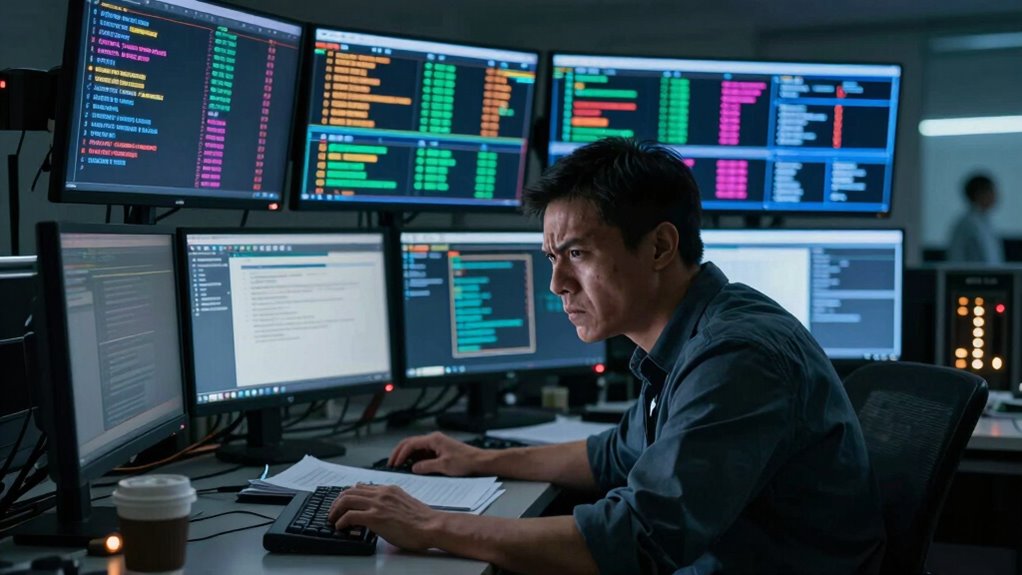

Alert fatigue in security operations overwhelms you with constant alerts, making it easy to miss critical threats. False positives waste your team’s time, reducing focus and increasing stress. Without proper prioritization and automation, your team struggles to distinguish real risks from noise, risking missed breaches. Continuing this way only worsens your security posture and team burnout. Stay with us, and you’ll discover strategies to turn chaos into actionable security insights and regain control over your alerts.

Get privacy and security gear delivered free with Prime
- Fast, free delivery on millions of items
- Prime Video, Amazon Music and more included
- Member-only deals all year
Key Takeaways
- Alert overload causes analysts to overlook critical threats due to desensitization and fatigue.
- False positives waste resources, reducing focus on genuine security issues.
- Continuous false alarms diminish team responsiveness and increase burnout risk.
- Lack of prioritization hampers effective response to high-impact threats.
- Ineffective automation and tuning perpetuate noise, worsening alert fatigue.
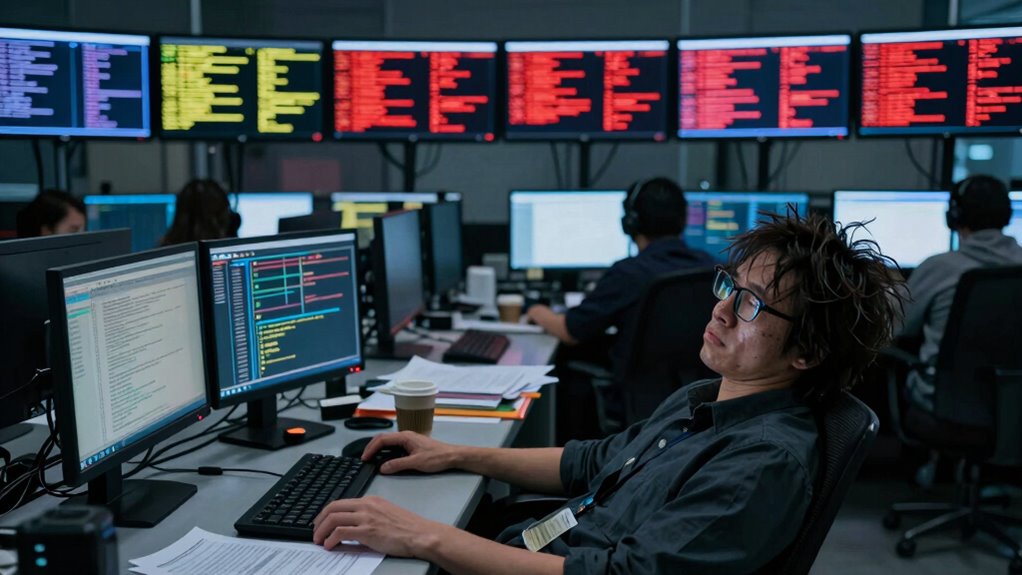
Have you ever felt overwhelmed by the constant stream of security alerts flooding your team’s systems? It’s a common experience in security operations, and it’s precisely what leads to alert fatigue. When alerts arrive non-stop, it becomes easy to lose focus, miss critical threats, or waste time chasing false positives. That’s where threat prioritization comes into play. Instead of treating every alert equally, you need to develop a way to rank them based on their potential impact. This threat prioritization approach helps your team focus on what truly matters, reducing the chances of overlooking serious threats. But threat prioritization alone isn’t enough—it’s only part of the solution. You also need robust automation strategies that can sift through the noise quickly and accurately. Automation allows your security tools to handle routine tasks, such as initial triage, data collection, and even some investigation steps, freeing up your analysts to concentrate on higher-level decision-making. When combined, threat prioritization and automation strategies form a powerful approach to combat alert fatigue. They help you filter out the irrelevant alerts and quickly surface those that deserve immediate attention. Without these strategies in place, your team is likely to become desensitized, which increases the risk of missing a critical breach or responding too late. Automation doesn’t mean replacing your analysts; it means empowering them to work smarter, not harder. By automating repetitive tasks, your team can spend more time analyzing complex threats and developing proactive defense measures. It also ensures consistency in how alerts are handled, reducing human error and bias. Additionally, integrating cybersecurity news and threat intelligence feeds can enhance your understanding of emerging threats and improve your prioritization accuracy. Incorporating threat intelligence is essential for maintaining an effective security posture, as it allows your team to stay ahead of evolving tactics. Furthermore, understanding the volume of alerts generated by your systems helps in designing more effective filtering and prioritization mechanisms. Effective alert management is critical for sustaining a resilient security program, especially in environments with rapidly changing threat landscapes. However, implementing these solutions isn’t a one-time effort. It requires continuous tuning and updating to adapt to evolving threats and changes in your environment. You need to regularly review your threat models, refine automation rules, and guarantee your threat prioritization aligns with your organization’s current risk landscape. This ongoing process helps prevent alert fatigue from becoming an unmanageable problem. Ultimately, the real issue with alert fatigue isn’t just the volume of alerts itself; it’s how your team manages and responds to them. Prioritization and automation strategies are vital in turning an overwhelming flood of notifications into actionable intelligence. They enable you to focus on what truly matters, reduce stress and burnout, and improve your overall security posture. When you get these elements right, alert fatigue becomes less of a threat and more of a manageable challenge—one that you can control rather than be controlled by.
As an affiliate, we earn on qualifying purchases.
Frequently Asked Questions
How Does Alert Fatigue Affect Incident Response Times?
Alert fatigue slows down your incident response times because you struggle to prioritize alerts effectively. When you’re overwhelmed with numerous low-priority notifications, it’s harder to identify genuine threats quickly. This hampers your response efficiency, making you more prone to missing critical incidents. To improve, you need better alert prioritization systems that help you focus on high-risk alerts first, ensuring faster and more accurate incident handling.
What Tools Can Help Reduce Alert Fatigue Effectively?
You can substantially reduce alert fatigue using tools that leverage machine learning and automated filtering. Studies show that automated filtering can decrease false positives by up to 80%, helping you focus on genuine threats. Machine learning algorithms analyze patterns to prioritize alerts, reducing noise and fatigue. These tools streamline your incident response, making detection faster and more accurate, so you’re not overwhelmed by unnecessary alerts.
How Can Organizations Prioritize Alerts to Prevent Burnout?
You should implement alert triage and prioritization strategies to prevent burnout. Start by categorizing alerts based on severity and potential impact, ensuring critical threats receive immediate attention. Automate repetitive tasks where possible, and use contextual data to make informed decisions. Regularly review and adjust your prioritization processes to stay aligned with evolving threats. This approach helps your team focus on high-priority alerts, reducing fatigue and maintaining effective security operations.
What Training Is Recommended for Security Teams Facing Alert Overload?
Think of alert overload as a storm you need to weather. You should invest in targeted security training that emphasizes alert management skills, teaching your team how to distinguish critical alerts from noise. Practical exercises, scenario-based learning, and regular drills help build confidence. This training sharpens their ability to respond efficiently, reducing fatigue and ensuring they stay vigilant. Proper alert management training turns chaos into clarity, making security operations more effective.
Are There Industry Standards for Acceptable Alert Volumes?
Industry benchmarks for alert volume vary depending on your organization’s size and sector, but generally, a manageable alert volume should allow your team to investigate critical issues promptly without feeling overwhelmed. You should aim for an alert volume that balances thorough coverage with operational efficiency. Regularly reviewing your alert metrics against industry standards helps identify if your alert volume is appropriate or if you need to optimize your security tools to reduce unnecessary alerts.
As an affiliate, we earn on qualifying purchases.
Conclusion
To break free from alert fatigue, you must see beyond the noise and focus on what truly matters. Think of each alert as a thread in a tangled web—you need to carefully untangle the genuine threats from the false alarms. By implementing smarter tools and strategies, you can restore clarity and regain control. Only then can your security operations become a well-orchestrated symphony rather than a chaotic cacophony.
security incident response automation
As an affiliate, we earn on qualifying purchases.
As an affiliate, we earn on qualifying purchases.
cybersecurity threat intelligence feeds
As an affiliate, we earn on qualifying purchases.
As an affiliate, we earn on qualifying purchases.
Halloween Picks
halloween
As an affiliate, we earn on qualifying purchases.