
Infosec, cybersecurity, and IT security each play unique but interconnected roles in safeguarding your data and systems. Infosec protects all forms of data from unauthorized access, while cybersecurity focuses specifically on defending against digital threats like malware and phishing. IT security ensures your hardware and network infrastructure remain operational and resilient. Understanding these differences is vital for effective risk management and compliance. If you’re curious about how these areas overlap, there’s more to explore!

Get privacy and security gear delivered free with Prime
- Fast, free delivery on millions of items
- Prime Video, Amazon Music and more included
- Member-only deals all year
Key Takeaways
- Information Security (Infosec) encompasses the protection of all data forms, including digital, physical, and intellectual assets.
- Cybersecurity is a subset of infosec focused specifically on defending against digital threats like malware and phishing.
- IT Security safeguards the hardware, software, and networks that support information systems, ensuring operational integrity.
- Infosec includes compliance with regulations like GDPR and HIPAA, while cybersecurity practices target prevention of digital attacks.
- All three areas overlap, necessitating a holistic approach to effectively manage risks and protect digital assets.
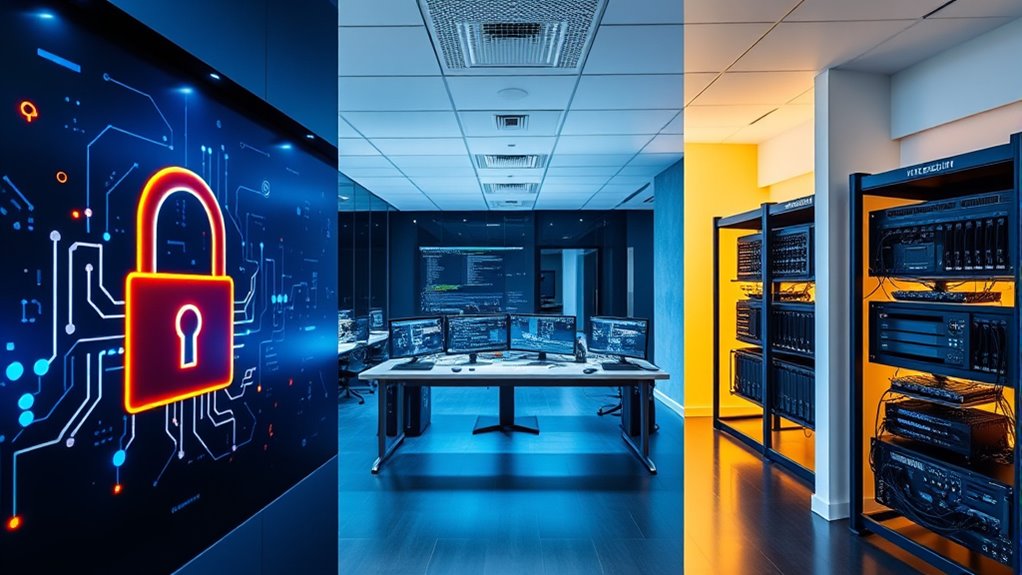
When you think about protecting your digital assets, it’s easy to confuse infosec, cybersecurity, and IT security, as they often overlap but serve distinct purposes. Understanding these differences is vital for effective risk management. Information security, or infosec, focuses on protecting data from unauthorized access and corruption, regardless of the form that data takes—whether it’s digital, physical, or intellectual. This broad scope means that infosec encompasses everything from data encryption to physical security measures. If you want to guarantee your organization complies with various compliance standards, like GDPR or HIPAA, infosec provides the framework to meet those requirements through proper data handling and protection strategies.
On the other hand, cybersecurity zeroes in on protecting your systems and networks from digital attacks. It deals specifically with threats that can compromise your information systems, such as malware, phishing attacks, and insider threats. If you’re looking to secure your network from cybercriminals, you’ll want to prioritize cybersecurity practices. This includes implementing firewalls, intrusion detection systems, and regular security updates. While cybersecurity is an essential aspect of infosec, it doesn’t cover all the bases, particularly when it comes to physical data protection or non-digital threats.
IT security, meanwhile, is more about protecting the infrastructure that supports your information systems. This includes hardware, software, and the networks that allow data to flow securely. The goal here is to guarantee that your IT environment is resilient enough to withstand attacks and maintain operational integrity. If you’re concerned about the overall health of your IT systems, you’ll want to focus on IT security measures, such as network monitoring and disaster recovery plans.
To effectively protect your digital assets, you need a holistic approach that incorporates elements from all three areas. Risk management plays a key role in this; it involves identifying potential threats and vulnerabilities and implementing strategies to mitigate them. Compliance standards serve as guidelines to ensure that you’re meeting legal and regulatory obligations while also securing your data effectively.
Frequently Asked Questions
What Certifications Are Recommended for a Career in Cybersecurity?
For a career in cybersecurity, you should consider certifications like CompTIA Security+, Certified Ethical Hacker (CEH), and Offensive Security Certified Professional (OSCP). These focus on essential skills like penetration testing and threat hunting. Additionally, you might want to explore Certified Information Systems Security Professional (CISSP) to deepen your understanding of security frameworks. Earning these certifications will enhance your knowledge and make you a more competitive candidate in the cybersecurity job market.
How Can I Start Learning About Information Security?
To start learning about information security, immerse yourself in online resources like courses, webinars, and articles. Focus on security awareness to understand the importance of safeguarding information. Engage in hands-on labs or simulations to practice threat detection skills. Join online communities or forums to connect with professionals and share insights. Don’t forget to read about real-world incidents to grasp the evolving landscape of threats. Stay curious, and you’ll quickly build a solid foundation!
What Are Common Job Roles in IT Security?
In the bustling world of IT security, you’ll find roles like security analyst, penetration tester, and security architect, each like a knight guarding the kingdom. These professionals focus on threat detection, ensuring your organization stays safe from lurking dangers. Security awareness coordinators educate employees on best practices, creating a vigilant workforce. So, delve into this arena, where every role plays an essential part in fortifying defenses against evolving cyber threats.
How Do Companies Typically Measure Security Effectiveness?
Companies typically measure security effectiveness through security metrics and risk assessments. You’ll often find them monitoring incident response times, the number of breaches, and compliance with regulations. By analyzing these metrics, they can identify vulnerabilities and assess the overall risk posture. Regular risk assessments help you understand potential threats and prioritize resources effectively. This proactive approach makes sure that security measures align with business objectives and adapt to evolving threats in today’s landscape.
What Tools Are Essential for Cybersecurity Professionals?
To excel as a cybersecurity professional, you need essential tools like penetration testing software and advanced threat detection systems. Penetration testing tools help you identify vulnerabilities in your network and applications before attackers do. Meanwhile, threat detection solutions enable you to monitor for suspicious activities in real-time, ensuring you’re aware of potential breaches. By utilizing these tools, you can proactively safeguard your organization against evolving cyber threats and enhance overall security effectiveness.
Conclusion
In the world of digital protection, understanding the differences between infosec, cybersecurity, and IT security is vital. Think of it like the saying, “A chain is only as strong as its weakest link.” Each aspect plays a unique role in safeguarding information, networks, and systems. By recognizing these distinctions, you can better defend against threats and enhance your organization’s overall security posture. Keep these concepts in mind, and you’ll be better equipped to navigate the complex landscape of digital safety.
Halloween Picks
halloween
As an affiliate, we earn on qualifying purchases.