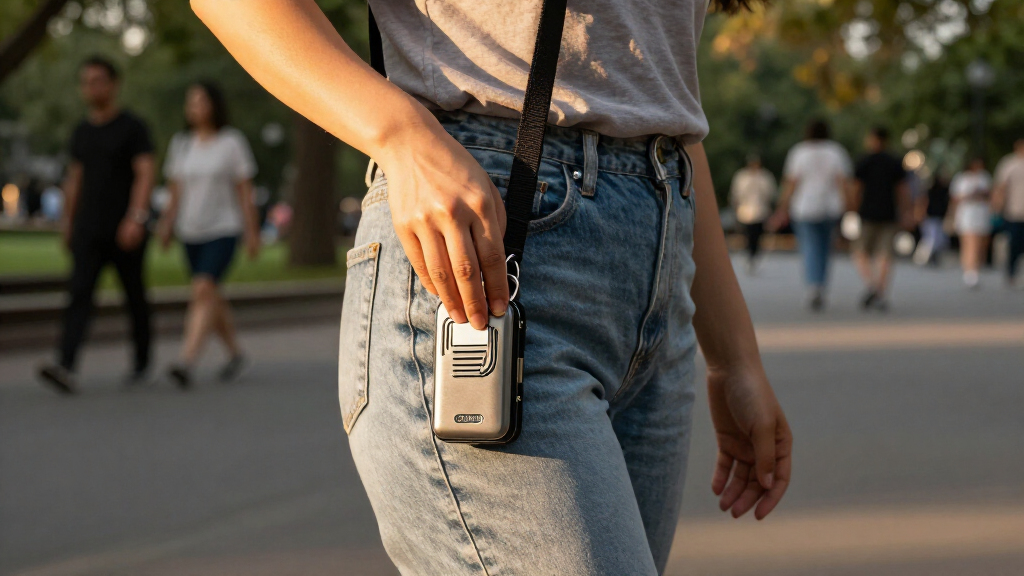
Wearable personal safety alarms range from simple pull-pin sirens to monitored medical alert devices with GPS and fall detection. I rank the Safety+ 4G Medical Alert System as the best overall for people who want professional monitoring, while the Vantamo Personal Alarm stands out as a rechargeable siren for everyday carry and the She’s Birdie 3.0 offers a recognizable, straightforward alarm design. The main tradeoff is between a loud local alarm you carry yourself and a connected service that may require a subscription, charging, and cellular coverage. Carry style, battery upkeep, and how an alarm activates matter as much as its advertised siren level. Read on for the full breakdown and guidance on choosing a device that fits your routine.

Get privacy and security gear delivered free with Prime
- Fast, free delivery on millions of items
- Prime Video, Amazon Music and more included
- Member-only deals all year
Key Takeaways
- Connected protection and a siren solve different problems: Safety+ adds monitoring, GPS, and fall detection, while most keychain alarms depend on someone nearby hearing the siren.
- Wrist-worn medical alert devices suit a different routine than keychains: the Safety+ wristband is aimed at seniors who want an alert close at hand, not shoppers seeking a simple personal alarm.
- Rechargeable models reduce battery replacement but add a charging task: Vantamo, TECKNET rechargeable, and She’s Birdie options call for regular power checks.
- Multi-packs prioritize distribution and backup: Taiker, Fauxomor, and Kosin packs can equip several people, but buyers should check each unit’s attachment style and upkeep needs.
- Advertised decibel figures alone do not determine usefulness: an alarm only helps when it is accessible, easy to activate, and carried with enough battery to sound.


| wearable personal safety alarm | Battery | Dimensions | Alarm volume |
|---|---|---|---|
| Safety+ 4G Medical Alert Syste | — | — | — |
| MIEUTE Clip-On Personal Safety | Built-in 120 mAh rechargeable lithium-ion | — | 130 dB |
| She’s Birdie Personal Safety A | — | 3 × 1 × 3 in | 130 dB |
| TECKNET Personal Safety Alarm | 110 mAh lithium-ion | — | — |
| Safety+ 4G Medical Alert Wrist | Rechargeable; all-day battery life | — | — |
| TECKNET Rechargeable Personal | — | 1.26 × 0.49 × 3.94 in | 130 dB |
| Taiker Personal Safety Alarm K | — | 6 × 5 × 2.64 in | 140 dB |
| Vantamo Personal Alarm with Lo | One lithium-polymer battery included | 0.98 × 0.66 × 3.81 in | 130 dB |
| MIEUTE Clip-On Personal Safety | Built-in 120 mAh lithium battery | — | 130 dB |
| Fauxomor 140 dB Personal Safet | — | — | 140 dB |
| Kosin Personal Safety Alarm | 3 × LR44 batteries per unit, included; 6 V | 2.7 × 1.7 × 0.7 in | — |
| She’s Birdie 3.0 New Version | Rechargeable lithium-ion; one included | 1.25 × 0.6 × 3.7 in | — |
| Original Defense Personal Safe | One included lithium-ion battery; 4.5 V | 1.25 × 0.5 × 3.75 in | — |
| She’s Birdie 3.0 Rechargeable | One rechargeable lithium-ion battery, included | 1.25 × 0.6 × 3.7 in | — |
More Details on Our Top Picks
Safety+ 4G Medical Alert System with Fall Detection, GPS, 24/7 Monitoring and Mobile Caregiver App
For someone who needs a monitored response rather than a siren meant to attract nearby help, the Safety+ 4G Medical Alert System is the most service-focused option in this group. Its built-in cellular connection lets the wearer reach 24/7 monitoring without carrying a smartphone, while GPS and automatic fall detection add location and hands-free alert options. The caregiver app also gives family members battery and activity updates. Compared with the Safety+ 4G Medical Alert Wristband, this system offers a lanyard and belt-clip format, which may suit someone who does not want a wrist-worn device. The tradeoff is ongoing monitoring service cost after the first free month, and its response features depend on 4G coverage. It is water-resistant for showers and rain, but less suited to buyers seeking a simple, one-time-purchase siren.
Pros:- 24/7 nationwide emergency monitoring with trained operators
- Automatic fall detection can send an alert when the wearer cannot press a button
- Up to 6 days of battery life reduces charging frequency
- Built-in cellular connectivity and caregiver app work without a separate smartphone
Cons:- Requires an ongoing monthly monitoring subscription after the first free month
- Emergency connectivity depends on available 4G coverage
- A monitoring pendant or clip is less discreet than the Safety+ wristband format
Best for: Older adults or people at risk of falls who want 24/7 operator monitoring, GPS location, and caregiver updates without needing a smartphone.
Not ideal for: Buyers who want a low-maintenance siren without a subscription, or people who spend time in areas with weak 4G coverage.
- Connectivity:Nationwide 4G cellular
- Battery life:Up to 6 days per charge
- Fall detection:Automatic
- Location:Real-time GPS
- Monitoring:24/7 emergency monitoring
- Water resistance:Suitable for showers and rain
- Included accessories:Charging dock, power adapter, lanyard with magnetic clasp, and belt clip
Our verdict“Choose this system if operator monitoring and automatic fall alerts matter more than avoiding a recurring service plan.”
MIEUTE Clip-On Personal Safety Alarm with 130 dB Siren and LED Strobe
The MIEUTE Clip-On pairs a 130 dB siren with a 19-LED strobe, giving it a stronger visibility focus than the simpler alarm-disc format of She’s Birdie Personal Safety Alarm Disc. Its magnetic spring clip can attach to clothing, a bag, or a leash, so it is practical for walks and outdoor routines where hands-free carrying matters. USB-C charging is convenient, and the listed standby time of up to 365 days suggests infrequent charging between uses, though actual standby depends on conditions. The light has both steady and flashing modes, which can help with visibility but does not replace a dedicated flashlight. Its IP44 rating covers splashes and light exposure, not immersion or sustained heavy rain. I would skip it if you need a wearable connected to professional monitoring or automatic fall detection.
Pros:- Combines a 130 dB siren with a 19-LED strobe
- Magnetic spring clip supports hands-free attachment to clothing, bags, or leashes
- USB-C charging avoids a proprietary charging connector
- Steady and flashing light modes support different visibility needs
Cons:- IP44 protection is limited to splashes and light exposure
- The up-to-365-day standby figure may vary with use and charging conditions
- Does not provide GPS, fall detection, or monitored emergency response
Best for: Walkers, runners, and dog owners who want a clip-on siren and strobe that can be attached to clothing or a leash.
Not ideal for: People seeking fall detection, GPS tracking, professional monitoring, or protection beyond light splash exposure.
- Alarm volume:130 dB
- LEDs:19
- Light modes:Steady and flashing strobe
- Battery:Built-in 120 mAh rechargeable lithium-ion
- Charging:USB-C
- Standby time:Up to 365 days
- Water resistance:IP44
- Mounting and size:Magnetic spring clip; 5.3 × 1.9 × 0.34 in
Our verdict“Pick this clip-on for outdoor use when a loud siren and conspicuous strobe matter more than medical monitoring.”
She’s Birdie Personal Safety Alarm Disc with LED Light, Rechargeable (Blossom)
The She’s Birdie alarm disc is the most adaptable carry option among these siren-focused picks: its silicone strap can attach to clothing, bags, leashes, strollers, or bikes. That flexibility makes it a better match for changing daily routines than the more specifically clip-oriented MIEUTE Clip-On Personal Safety Alarm. Its 130 dB siren is paired with solid white, flashing white, and flashing red light modes, so the alarm can add visibility as well as sound. Activation is manual, however; unlike the Safety+ medical alert devices, it will not detect a fall or contact a monitoring service on its own. The rechargeable battery and low-battery indicator are useful, but the product data does not give runtime or charging time, making it harder to plan charging around regular use. Its water-resistant design is not specified for a particular exposure rating.
Pros:- 130 dB siren provides a loud manual alert
- Three light modes include flashing red for added visibility
- Silicone strap allows attachment to several types of everyday carry items
- Rechargeable battery and low-battery indicator help with upkeep
Cons:- Alarm requires the wearer to press the button
- Battery runtime and charging time are not specified
- Water resistance is stated without a defined rating
Best for: People who want one rechargeable alarm they can move between a bag, clothing, stroller, bike, or leash.
Not ideal for: People who need automatic fall alerts, known battery-runtime estimates, or a stated water-resistance rating for demanding weather.
- Alarm volume:130 dB
- Light modes:Solid white, flashing white, and flashing red
- Activation:Manual button press
- Power:One included rechargeable battery
- Water resistance:Water-resistant; rating not specified
- Dimensions:3 × 1 × 3 in
- Included items:Alarm disc, silicone strap, USB charging cord, and user manual
Our verdict“Choose this disc if you want a rechargeable, easy-to-relocate siren and light, and are comfortable activating it yourself.”
TECKNET Personal Safety Alarm with LED Flashlight and Find My Tracker
The TECKNET Personal Safety Alarm stands apart from the siren-and-strobe devices by adding an LED flashlight and Bluetooth tracking compatible with Apple Find My. That combination makes it a more useful everyday keychain companion than the She’s Birdie Personal Safety Alarm Disc for someone who often misplaces keys or luggage. It still delivers a 130 dB alarm, but the tracking feature is a convenience layer, not a substitute for GPS emergency location or 24/7 monitoring like the Safety+ systems provide. Its compact ABS body and USB-C charging suit key or bag carry, while the stated standby time is 6–8 months. The main compromise is platform dependence: tracking availability can vary by device and ecosystem. Alarm mode runs for up to 90 minutes per full charge, so buyers should not treat standby time as alarm runtime.
Pros:- 130 dB alarm adds an audible emergency signal
- Apple Find My compatibility can help locate attached keys or belongings
- Built-in LED flashlight adds a practical everyday function
- USB-C charging and stated 6–8 month standby time suit regular carry
Cons:- Tracking usefulness depends on compatible devices and platform support
- Alarm mode runs for up to 90 minutes per full charge
- Bluetooth item tracking is not the same as GPS emergency location or monitored response
Best for: iPhone users who want a keychain safety siren that also helps locate keys, bags, or luggage.
Not ideal for: People who need medical monitoring, automatic fall detection, or location sharing independent of compatible tracking devices.
- Audible alarm:130 dB
- Tracking compatibility:Apple Find My; iOS and Android compatibility stated
- Battery:110 mAh lithium-ion
- Charging:USB-C
- Standby time:6–8 months
- Alarm runtime:Up to 90 minutes per full charge
- Material and dimensions:ABS; 1.2 × 0.59 × 3.9 in
- Warranty:36 months when registered
Our verdict“Choose this keychain model if you want a personal alarm plus item tracking, but not a medical alert service.”
Safety+ 4G Medical Alert Wristband for Seniors with Fall Detection
For someone who is more likely to keep a device on their wrist than wear a pendant or clip, the Safety+ 4G Medical Alert Wristband puts the SOS control within easy reach. It combines automatic fall detection, GPS, and 24/7 emergency monitoring over 4G, while caregiver app access shares location, activity, battery status, and alerts. Compared with the Safety+ 4G Medical Alert System, this version has a wrist-worn format rather than a lanyard and belt-clip setup; that can improve access to the button but makes fit and wrist comfort more central. It is water-resistant and recharges on a dock, though the battery is described only as lasting all day, with no specific runtime. Activation and a monthly monitoring plan are required, so this is a service-based choice rather than a simple personal siren.
Pros:- Automatic fall detection works alongside a manual SOS button
- GPS tracking and 24/7 emergency monitoring are included
- Caregiver app provides activity, battery, location, and alert updates
- Water-resistant wrist-worn design keeps the SOS control close at hand
Cons:- Requires activation and a paid monthly monitoring plan after the first month
- Battery life is described as all-day without a specific duration
- Wrist fit may not suit people who prefer the lanyard or clip options of the other Safety+ system
Best for: Seniors who prefer a wrist-worn SOS device and need caregiver updates, GPS location, and fall detection with 24/7 monitoring.
Not ideal for: People who want a no-subscription siren, need a published multi-day battery estimate, or dislike wearing a device on their wrist.
- Connectivity:4G cellular
- Mounting type:Wrist
- Fall detection:Included
- Location tracking:GPS
- Battery:Rechargeable; all-day battery life
- Water resistance:Water-resistant
- Weight:7.4 g
- Included items:SOS wrist wearable, charging dock with power adapter, and caregiver app access
- Monitoring service:24/7 emergency monitoring; monthly service required
Our verdict“Choose this wristband if a reachable SOS button and monitored fall response outweigh subscription and charging-plan concerns.”
TECKNET Rechargeable Personal Safety Alarm with 130 dB Siren and Strobe Light
I’d choose the TECKNET for someone who wants a wearable alarm that can stay attached to a bag or keys without frequent charging. Its stated standby time of up to 500 days is the longest clearly specified here, and a low-battery alert gives a reminder to recharge. The 130 dB siren pairs with a flashing strobe, while the concealed double-press button offers an alternative to pulling the pin. That flexibility distinguishes it from the Taiker 10-Pack, which relies on a contact pin and disposable batteries. The tradeoff is that the TECKNET’s alarm and lights have finite runtimes once activated, and its 36-month warranty requires registration. I’d pick it for set-and-carry readiness, not for someone who wants a multi-unit household pack.
Pros:- Up to 500 days of stated standby reduces routine charging.
- Pull-pin and concealed double-press activation give two ways to trigger it.
- A 130 dB siren, flashing strobe, and continuous light combine sound and visibility.
- At 28 g, it is light enough for keys, a bag, or a belt.
Cons:- Alarm runtime is up to 90 minutes, while the flashing and continuous lights have shorter stated runtimes.
- The 36-month warranty requires registration.
- A single unit is less suited to outfitting multiple people than the Taiker 10-Pack.
Best for: People who want one lightweight, rechargeable alarm on their everyday keys or bag and value long standby between charges.
Not ideal for: Households seeking several alarms at once, or buyers who want the longest possible active alarm runtime.
- Alarm volume:130 dB
- Power and battery:Battery powered; lithium-ion; 1 battery included
- Standby time:Up to 500 days
- Alarm runtime:Up to 90 minutes
- Light runtimes:Flashing: up to 5 hours; continuous: up to 3 hours
- Activation:Pull pin or double-press button
- Weight:28 g
- Dimensions:1.26 × 0.49 × 3.94 in
- Warranty:36 months; registration required
Our verdict“Choose the TECKNET if you want a lightweight rechargeable alarm with long stated standby and two activation methods.”
Taiker Personal Safety Alarm Keychains with LED Light, 10-Pack
The Taiker 10-Pack is the practical group choice: one purchase supplies alarms for family members, bags, or several everyday locations. Each unit has a stated 140 dB siren and an LED light, but activation is deliberately simple—pull the contact pin to sound it, then reinsert the pin to stop it. Compared with the rechargeable TECKNET, Taiker favors quantity and a straightforward pull-pin design over charging reminders and alternate button activation. That simplicity also comes with compromises: these alarms use alkaline batteries, and there is no stop control beyond replacing the pin. The stated alarm duration is up to 30 minutes, shorter than the TECKNET’s stated active alarm runtime. I’d favor this pack when broad distribution matters more than individual-unit flexibility or rechargeable convenience.
Pros:- Ten alarms make it easy to outfit several people or keep units in different bags.
- The stated 140 dB siren is louder on paper than the 130 dB TECKNET and Vantamo.
- A built-in LED light can help with visibility in dark conditions.
- Each unit can attach to a keychain, backpack, or bag.
Cons:- Alkaline batteries require replacement rather than USB charging.
- The contact pin must be reinserted to stop the alarm.
- Stated alarm duration is up to 30 minutes.
Best for: Families, caregivers, or community groups that want a basic alarm and LED light assigned to multiple people or bags.
Not ideal for: Buyers who want rechargeable units, alternate activation controls, or a way to silence the alarm without reinserting the contact pin.
- Pack quantity:10 alarms
- Alarm volume:140 dB
- Maximum range:606.11 feet
- Alarm duration:Up to 30 minutes
- Light:LED
- Material:ABS
- Power:Alkaline battery powered
- Color:Black and white
- Dimensions:6 × 5 × 2.64 in
Our verdict“Choose the Taiker pack when you need simple pull-pin alarms for a group and can manage disposable batteries.”
Vantamo Personal Alarm with Low Battery Indicator, Strobe Light, and 130 dB Dual Speakers – Rechargeable Safety Keychain for Women
The Vantamo puts its emphasis on sound output: dual speakers produce a stated 130 dB alarm, supported by a strobe and a low-battery indicator. For someone who wants a rechargeable keychain alarm with an explicit reminder to check its charge, that combination is more useful than choosing on volume claims alone. Compared with the TECKNET, Vantamo lists USB-C charger and power-bank compatibility, while TECKNET provides a specified 500-day standby figure and more detail about light and alarm runtimes. Vantamo’s supplied information does not give a standby duration or activation sequence, so buyers have less to go on when planning maintenance and use. Its compact dimensions help, but the product description cautions that it may feel bulky on a small keyring. I’d choose it for its dual-speaker design, not for the clearest runtime documentation.
Pros:- Dual speakers are designed to project the stated 130 dB alarm.
- A strobe adds a visual signal alongside the siren.
- Rechargeable battery and low-battery indicator support charge readiness.
- USB-C charger and power-bank compatibility provide charging options.
Cons:- The product data does not specify standby time or alarm and light runtimes, unlike the TECKNET.
- The maker notes that its size may feel bulky on small keyrings.
- A loud alarm can be disruptive if triggered in a quiet setting.
Best for: People who want a rechargeable keychain alarm with dual speakers, a strobe, and a low-battery reminder.
Not ideal for: Buyers who need a documented standby duration, detailed active runtimes, or a particularly unobtrusive small-keyring attachment.
- Alarm volume:130 dB
- Speaker design:Dual speakers
- Power source:Battery powered
- Battery:One lithium-polymer battery included
- Charging compatibility:USB-C charger or power bank
- Light:Strobe
- Control method:Touch
- Dimensions:0.98 × 0.66 × 3.81 in
- Color:Charcoal
Our verdict“Pick the Vantamo if dual speakers and a low-battery indicator matter more to you than published runtime details.”
MIEUTE Clip-On Personal Safety Alarm with LED Strobe
The MIEUTE Clip-On is the most purpose-built option here for attaching directly to clothing, a bag, or a leash. Its magnetic spring clip avoids relying on a keyring, and the fluorescent-green body, reflective material, and 19-LED ring offer visibility even when the siren is not active. Steady and flashing light modes make it more flexible as a visibility aid than the basic LED on the Taiker alarms. It also adds USB-C charging, up to 365 days of stated standby, and IP44 resistance for rain, sweat, and splashes. The limit is that IP44 is not protection for submersion, and the built-in battery is only 120 mAh. Compared with the TECKNET, it has a shorter stated standby period but a more specialized clip-on and outdoor-lighting setup.
Pros:- Magnetic spring clip attaches to clothing, bags, and leashes without a keyring.
- Nineteen LEDs provide steady illumination and flashing strobe modes.
- USB-C charging and up to 365 days of stated standby reduce routine charging.
- IP44 resistance and reflective material suit everyday outdoor use.
Cons:- IP44 covers rain, sweat, and splashes, not immersion.
- The built-in battery capacity is 120 mAh.
- Its stated standby time is shorter than the TECKNET’s up to 500 days.
Best for: Walkers, runners, and dog owners who want a rechargeable alarm clipped to clothing or gear, with light modes for visibility.
Not ideal for: People who need waterproof protection for immersion or prefer a keychain-style alarm with a larger documented battery capacity.
- Alarm volume:130 dB
- LEDs:19
- Light modes:Steady illumination and flashing strobe
- Battery:Built-in 120 mAh lithium battery
- Charging:USB-C rechargeable
- Standby time:Up to 365 days
- Water resistance:IP44
- Mounting:Magnetic spring clip
- Warranty:1 year
Our verdict“Choose the MIEUTE if clip-on attachment and versatile outdoor visibility matter more than maximum standby time or waterproofing.”
Fauxomor 140 dB Personal Safety Alarm Keychains, 3-Pack
The Fauxomor 3-Pack suits buyers who want a few alarms to share or place on separate bags without committing to the Taiker’s ten-unit pack. Each pull-pin unit pairs a stated 140 dB siren with a strobe LED, and the included lanyard gives another way to attach it to belongings. Unlike the rechargeable TECKNET and Vantamo, Fauxomor uses replaceable disposable batteries and gives a low-battery alert; the listing states battery life of up to three years. That avoids routine charging, but it shifts readiness to battery replacement, and the batteries are described as nonstandard. Activation is pull-pin only, so it lacks the TECKNET’s alternate button method. I’d pick Fauxomor for a compact shared set with simple operation, while buyers wanting rechargeable convenience should look elsewhere.
Pros:- Three alarms provide a smaller shared set than the Taiker 10-Pack.
- The stated 140 dB siren is paired with a strobe LED.
- Pull-pin activation is straightforward.
- Low-battery alert and stated battery life of up to three years help with readiness checks.
Cons:- Uses three nonstandard disposable batteries rather than a rechargeable battery.
- Pull pin is the only listed activation method.
- Battery readiness depends on monitoring and replacing batteries when needed.
Best for: People who want three alarms for a small household or several bags, with pull-pin operation and no routine charging.
Not ideal for: Buyers who prefer standard or rechargeable batteries, or want multiple activation methods and detailed light runtimes.
- Pack size:3 alarms
- Alarm volume:140 dB
- Weight:0.95 oz
- Power source:Battery powered
- Batteries:3 nonstandard disposable batteries included
- Stated battery life:Up to 3 years
- Continuous use:Up to 60 minutes
- Activation:Pull pin
- Features:Strobe LED, low-battery alert, and lanyard
Our verdict“Choose Fauxomor for three simple, loud pull-pin alarms if you accept the nonstandard disposable batteries.”
Kosin Personal Safety Alarm – 6 Pack, 140dB Keychain
The Kosin makes the most sense when one alarm is not enough: its six-unit pack can cover several family members, bags, or sets of keys. Its listed 140 dB siren is louder on paper than the 130 dB alarms from Original Defense and She’s Birdie, while the built-in LED adds a small amount of visibility after dark. At 30 g, each unit is easy to carry, and the six colors help people tell them apart. The tradeoff is a replaceable-battery setup: each alarm uses three LR44 cells, so readiness depends on checking and replacing them. The ABS housing may also feel less substantial than a more polished single alarm, and the long stated standby life does not mean the siren can run that long; continuous alarm time is listed as up to 50 minutes.
Pros:- Six alarms let a household or group equip multiple people at once
- Listed 140 dB siren is higher than the 130 dB ratings listed for Original Defense and She’s Birdie
- Built-in LED light can help with visibility in low light
- Compact 30 g units come in six colors for easy identification
Cons:- Each unit requires three LR44 batteries that need periodic replacement
- Continuous alarm time is listed as up to 50 minutes, so prolonged activation can drain the batteries
- ABS plastic housing may feel less substantial than a metal-bodied alarm
Best for: Households, student groups, or caregivers who want a separate keychain alarm for several people
Not ideal for: Buyers seeking one rechargeable alarm or a more premium-feeling housing, since these use replaceable LR44 batteries and ABS plastic
- Pack size:6 alarms
- Material:ABS and metal
- Dimensions:2.7 × 1.7 × 0.7 in
- Weight:30 g (0.07 lb) per unit
- Battery:3 × LR44 batteries per unit, included; 6 V
- Siren volume:140 dB
- Maximum range:600 ft
- Additional feature:Built-in LED light
- Colors:Gold, blue, silver, black, purple, and pink
Our verdict“Choose Kosin when you need several compact alarms for a group and prefer a loud siren over rechargeable convenience.”
She’s Birdie 3.0 New Version – The Original Personal Safety Alarm for Women by Women–Loud Siren, Flash Light and Rechargeable Battery in a Variety of Colors (Metallic Rose Pink)
Birdie 3.0 is a strong fit for someone who wants a single reusable alarm that clips to a bag or keychain rather than a multi-pack like Kosin. Pulling the top ring activates its siren and flashing light; pushing the ring back deactivates it, keeping the operation direct. The rechargeable battery is listed for 120 minutes of continuous sound and light, avoiding the routine LR44 replacements required by Kosin and Original Defense. The main buying caveat is a conflict in the supplied sound information: the description says 130 dB, while the product specifications list 90 dB. I would not choose it based on the higher figure without verifying the exact unit’s rating. Its one-alarm format and compact size suit everyday carry, but buyers who need several devices or a clearly documented sound level have better-matched alternatives.
Pros:- Rechargeable lithium-ion battery avoids routine disposable-cell changes
- Pull-ring activation and push-to-deactivate operation are straightforward
- Siren and flashing strobe combine audible and visual alerts
- Compact dimensions allow attachment to a keychain or bag
Cons:- Sound level is inconsistent across the supplied information: 130 dB in the description and 90 dB in the specifications
- One alarm per unit is less suited to equipping a household than Kosin’s six-pack
- Requires charging to remain ready for use
Best for: Commuters, students, and solo walkers who want one compact alarm with rechargeable power and simple pull-ring activation
Not ideal for: Buyers who need multiple alarms or want an unambiguous, consistently stated siren rating before choosing
- Color:Metallic rose pink
- Dimensions:1.25 × 0.6 × 3.7 in
- Battery:Rechargeable lithium-ion; one included
- Continuous operation:Up to 120 minutes of sound and light
- Siren volume:130 dB in description; 90 dB in specifications
- Activation:Pull top ring to activate; push to deactivate
- Lighting:Flashing strobe light
- Attachment:Keychain or bag
Our verdict“Pick Birdie 3.0 if a rechargeable, pull-ring alarm suits your daily carry, but verify the siren rating if sound output is your deciding factor.”
Original Defense Personal Safety Siren Alarm with LED Strobe, Mint
Original Defense stands out for its stated 1,000-foot maximum range, the longest range listed among these four products. That figure may appeal to people walking or jogging outdoors who want an alarm intended to carry beyond close quarters, while its 130 dB siren and LED strobe offer both sound and visual signaling. It is a simpler, replaceable-battery alternative to the rechargeable She’s Birdie 3.0 models, and the compact body can attach to keys, a bag, or a belt. The description calls it water-resistant, a useful detail for everyday carrying, though no specific resistance rating is provided. Unlike Kosin, this is a single unit, not a group pack; unlike Birdie, its battery is not described as rechargeable. Buyers should also note that battery life is stated as up to 365 days, not a guarantee of performance without checks.
Pros:- Listed maximum range of 1,000 feet exceeds the 600-foot figure for Kosin
- Pairs a 130 dB siren with an LED strobe
- Compact body attaches to keys, bags, or belts
- Described as water-resistant and includes a carabiner clip
Cons:- Uses a battery rather than the rechargeable setup found in She’s Birdie 3.0
- Supplied information does not specify a water-resistance rating
- One alarm per unit does not match Kosin’s six-device format for groups
Best for: Outdoor walkers and runners who want a compact alarm with a stated long range and a strobe
Not ideal for: People who prefer rechargeable devices or need several alarms to distribute among family members
- Color:Mint
- Dimensions:1.25 × 0.5 × 3.75 in
- Weight:0.04 kg
- Siren volume:130 dB
- Maximum range:1,000 ft
- Light:LED strobe
- Battery:One included lithium-ion battery; 4.5 V
- Battery life:Up to 365 days
- Water resistance:Described as water-resistant; rating not specified
Our verdict“Choose Original Defense for a single compact alarm with a long stated range, provided you are comfortable maintaining a replaceable-battery device.”
She’s Birdie 3.0 Rechargeable Personal Safety Alarm with Siren and Strobe Light, Charcoal Black
This charcoal Birdie 3.0 is the most straightforward match for buyers who want a single rechargeable alarm in a low-key color. Its pull ring activates the siren and flashing strobe, and the compact 1.25 × 0.6 × 3.7-inch body attaches to a keychain or bag. Like the metallic rose Birdie, it offers up to 120 minutes of continuous operation, so it avoids the battery replacement cycle of Original Defense and Kosin. The critical drawback is the same conflicting sound information: the description gives 130 dB, while the specifications say 90 dB. This makes it harder to compare its audible alert confidently with Original Defense’s listed 130 dB siren. Compared with the rose version, the documented feature set is nearly identical; the main distinction here is the charcoal finish, not a different safety function.
Pros:- Rechargeable battery supports repeated use without disposable-cell replacement
- Pull-ring activation pairs the siren with a flashing strobe
- Compact size attaches to a keychain or bag
- Up to 120 minutes of continuous sound and light is listed
Cons:- Sound level conflicts between the 130 dB description and 90 dB specification
- Single-unit format is less suited to equipping a group than Kosin’s six-pack
- Needs charging to remain ready, unlike a device maintained with spare batteries
Best for: People who want a rechargeable pull-ring alarm for everyday keychain or bag carry and prefer a charcoal finish
Not ideal for: Buyers who need a reliable, clearly specified siren rating or want multiple alarms in one purchase
- Brand and model:She’s Birdie 3.0
- Color:Charcoal black
- Dimensions:1.25 × 0.6 × 3.7 in
- Battery:One rechargeable lithium-ion battery, included
- Continuous operation:Up to 120 minutes
- Siren volume:130 dB in description; 90 dB in specifications
- Activation:Pull ring
- Lighting:Flashing strobe light
- Unit count:1
Our verdict“Choose the charcoal Birdie for compact rechargeable carry, but not if a consistent, verified sound-level specification is essential to your decision.”
How We Picked
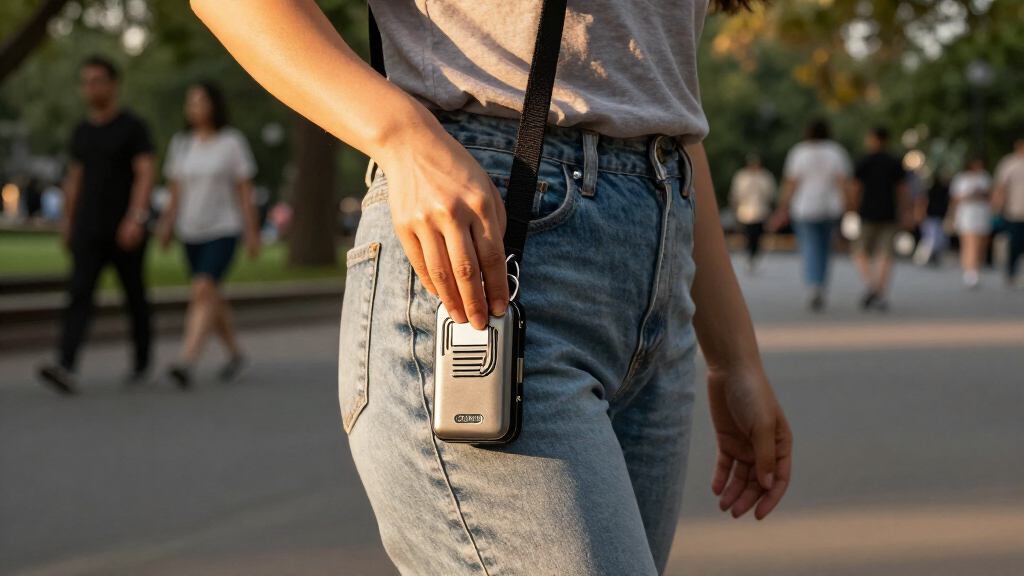
I compared the 14 options by the job they are designed to do: attract nearby attention with a local siren, provide light or a strobe, or connect the wearer to monitoring and location support. I weighed activation simplicity, wearable or clip-on practicality, power and battery upkeep, and whether the listed features offered a meaningful advantage for a particular buyer. A high decibel claim mattered less than whether the alarm could be reached and operated during a stressful moment.
The ranking puts the Safety+ 4G Medical Alert System first because it adds monitoring, GPS, and fall detection for buyers who need more than a loud sound. Among standalone alarms, rechargeable options with useful carrying features rank ahead of basic multi-packs for individual everyday use; the packs remain sensible for equipping multiple people. The Safety+ wristband is included for senior-focused wear, but it is not interchangeable with a low-maintenance keychain siren. Product claims are treated as listed features, not as a guarantee of real-world sound coverage or response.
Factors to Consider When Choosing Wearable Personal Safety Alarms
Start with the situation you want the alarm to address. A device for a solo walk, a senior who may need help after a fall, and a household buying several alarms will have different priorities. These factors help separate a loud accessory from a wearable safety setup you can maintain and use.
Choose a local siren or a monitored alert
A siren can draw attention from people within hearing range, but it does not contact a response center by itself. A monitored device may add an operator, location tools, or fall detection, which can matter when the wearer may not be able to call for help. Check what the service actually includes, whether cellular coverage is required, and whether ongoing service enrollment is part of ownership. Do not assume a GPS feature means someone is automatically notified. For a person who wants a simple alert to activate themselves, a keychain alarm may be enough. For someone living alone or at risk of a fall, the added complexity of monitoring may be justified.
Match the wearing style to the way you dress and move
Clip-on, keychain, and wrist-worn designs are not interchangeable in daily use. A keychain alarm works only if the keys are with you, while a clip can attach to a bag or clothing but may be harder to reach under a coat. A wristband stays close to the wearer, which can help when carrying a bag is difficult, though it may feel less like an everyday accessory. Consider the clothes and bags you use most often, not just the product photo. Avoid attaching an alarm somewhere that makes its activation method awkward to reach. A device carried consistently is more useful than one with features you rarely bring along.
Treat battery care as part of the safety plan
Rechargeable alarms avoid disposable-battery shopping, but they need a regular charging habit and a place in your routine. Models with replaceable batteries can be easier to keep ready if replacements are accessible, though the battery still needs periodic checking. A low-battery indicator can help prompt action, but it cannot replace checking that the device is charged or functional. Set a recurring reminder and test the alarm according to its instructions, taking care not to startle people nearby. If the wearer is unlikely to remember charging a device, favor a maintenance routine they can follow or a caregiver can support. A neglected alarm can fail at the moment it is needed, regardless of its advertised sound level.
Look beyond the decibel number
Decibel figures are not a complete measure of how useful an alarm will be in a particular place. Sound can be masked by traffic, crowds, or indoor noise, and the distance and conditions used for a rating may not match everyday use. A strobe or LED can add a visual cue, but it does not make a device a substitute for a phone or monitored alert. Think about whether you need people nearby to notice you, light for finding a keyhole, or both. Read how the alarm activates and whether it keeps sounding until stopped. Choose a design you can operate quickly rather than relying on the largest printed number.
Decide whether a multi-pack is genuinely better for your household
Multi-packs can make sense when several family members need an alarm or when you want units placed in different bags. Their value depends on whether every person will carry and maintain one, not simply on the number included. Check whether the alarms use the same activation method and whether each requires its own battery checks. A pack of simple sirens does not provide the monitoring or fall-detection functions of a connected medical alert system. If you are buying for one person, a single alarm with a more suitable attachment or charging design may be easier to keep ready. Assign each unit to a specific person or bag so backup devices do not become forgotten spares.
Check setup, service, and accessibility before choosing
Connected devices can require cellular service, account setup, app access, or a monitoring plan, while a standalone siren may work without those steps. Confirm who will complete setup and who can manage alerts or caregiver features. For older adults or anyone with limited dexterity, consider whether the controls are easy to locate and activate without fine finger movement. Also check whether the wearer can hear the alarm and understand how to stop or reset it. A feature list can look reassuring while still being difficult for the intended user to manage. Favor the simplest device that meets the real need, unless added services provide support the wearer cannot otherwise access.
Frequently Asked Questions
Should I choose a wearable siren or a monitored medical alert device?
Choose a siren if your main goal is to attract attention from people nearby and you can activate it yourself. A monitored device is better suited to someone who may need an operator, location support, or help after a fall. Check the service requirements, cellular availability, and any ongoing enrollment before deciding. A siren does not automatically summon emergency services, and GPS does not guarantee that a caregiver is notified. Match the device to the kind of help the wearer may need, rather than treating these categories as substitutes.
Is a 140 dB alarm necessarily better than a 130 dB alarm?
Not by the number alone. Published decibel claims do not tell you how the alarm will carry through traffic, walls, or a crowded space, and measurement conditions can differ. Activation speed, access, battery condition, and whether the wearer can operate the control all affect practical usefulness. A lower-rated alarm that is easy to reach may be a better fit than a louder model buried in a bag. Use the stated figure as one point of comparison, not as a guarantee of hearing distance.
Are rechargeable personal alarms a better choice than battery-powered ones?
Rechargeable models suit buyers who prefer not to replace disposable batteries and can keep a charging routine. Battery-powered designs may suit someone who would rather replace a cell than remember to plug in another device. Either type can be unready if its power is not checked. Look for clear low-battery signals and decide who will handle upkeep, especially when buying for another person. The best power arrangement is the one the wearer or caregiver can reliably maintain.
Can I rely on a personal safety alarm instead of carrying a phone?
A standalone alarm can make noise or provide light, but it generally does not offer the communication functions of a phone. A connected medical alert product may include monitoring or location features, but its coverage and service terms need checking. Consider carrying both when you need to contact a specific person, share details, or call for help directly. A siren is most useful as one part of a personal safety plan, not a replacement for every other way to get assistance. Check the product’s actual alert path before relying on it for a particular situation.
What should I check before buying an alarm for an older adult?
Start with whether the person can wear it comfortably and activate it without help. A wrist-worn device may be easier to keep close than keys or a bag, while a monitored option may better suit someone concerned about falls or being alone. Check charging or battery tasks, service setup, cellular coverage, and whether a caregiver can assist with account management. Ask the wearer to practice using the controls so the steps are familiar. Choose based on the person’s routine and abilities rather than assuming that more features will be easier to use.
Conclusion
My best overall choice is the Safety+ 4G Medical Alert System for buyers who want monitoring, GPS, and fall detection in addition to a wearable alert. For best value across multiple people, the Taiker 10-pack is the pack-focused pick; for one person seeking a rechargeable siren, the Vantamo is a stronger everyday-carry fit. The best premium choice is the monitored Safety+ system, while the She’s Birdie 3.0 is my best for beginners among standalone alarms thanks to its straightforward alarm-and-light approach. For seniors who prefer a wrist-worn device, consider the Safety+ Medical Alert Wristband; for shoppers who want several simple alarms, compare the Taiker, Fauxomor, and Kosin packs. Choose the option the wearer can keep accessible, powered, and easy to use.