

You might overlook basic practices like wireless isolation and VLANs, but they are vital for good network segmentation. Wireless isolation prevents devices from directly communicating or accessing sensitive areas, reducing risks if compromised. VLANs help separate different groups within your network, improving security and performance. These simple steps create strong boundaries to stop threats from spreading and keep your network resilient. Keep going to discover more essential fundamentals that can make your network more secure and efficient.

Get privacy and security gear delivered free with Prime
- Fast, free delivery on millions of items
- Prime Video, Amazon Music and more included
- Member-only deals all year
Key Takeaways
- Wireless isolation prevents lateral movement and unauthorized access between wireless devices and sensitive network segments.
- Implementing VLANs logically separates device groups, reducing attack surfaces and improving traffic management.
- Regularly reviewing and maintaining segmentation strategies ensures defenses adapt to evolving threats.
- Basic practices like wireless isolation and VLANs create layered security with minimal complexity.
- Clear boundaries and controls within segmentation strategies enhance overall network security and performance.
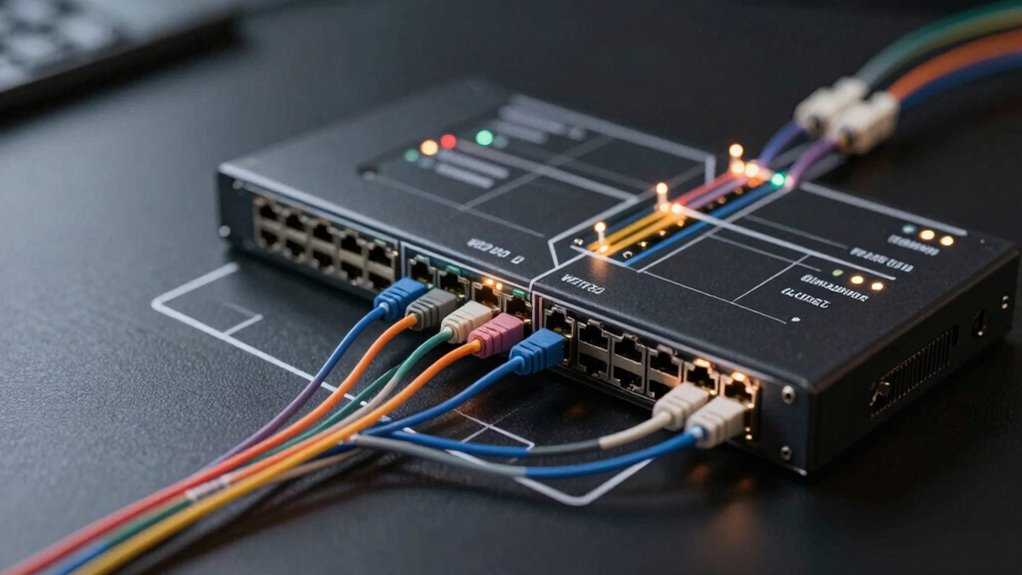
Have you ever wondered how organizations protect sensitive data and improve network performance? The answer often lies in the fundamentals of network segmentation, a essential strategy that divides a large network into smaller, more manageable parts. While many focus on advanced tools or complex configurations, the basics are surprisingly effective when properly implemented. One of the most overlooked yet critical aspects is wireless isolation. This technique prevents wireless devices from directly communicating with each other or with wired segments unless explicitly allowed, reducing the risk of unauthorized access or lateral movement by malicious actors. Wireless isolation acts as a barrier, ensuring that even if an attacker gains access to a wireless device, they can’t easily traverse the network to reach sensitive data or essential systems.
Alongside wireless isolation, VLAN implementation stands out as a straightforward but powerful method to segment networks logically. Virtual Local Area Networks (VLANs) enable you to assign different groups of devices to separate virtual networks within the same physical infrastructure. This separation keeps sensitive departments, like finance or HR, isolated from less secure segments like guest Wi-Fi, preventing potential breaches from spreading across the entire network. Proper VLAN implementation also simplifies traffic management, boosts overall network performance by reducing broadcast domains, and enhances security by limiting access to specific resources. When you configure VLANs correctly, you create clear boundaries, making it much harder for cyber threats to move laterally within your organization.
VLANs create logical network boundaries, enhancing security, performance, and traffic management across your organization.
Beyond wireless isolation and VLANs, understanding the importance of implementing these basic techniques regularly is key. Many overlook these foundational steps, assuming that more sophisticated security measures are enough. However, neglecting these simple yet effective practices leaves gaps that cybercriminals can exploit. Regularly reviewing and adjusting your network segmentation strategy ensures that your defenses stay current with evolving threats. Employing network monitoring tools can help detect anomalies and unauthorized access attempts early, strengthening your overall security posture. Incorporating basic security principles into your routine helps maintain a resilient network and prevents complacency from undermining your defenses. Recognizing the role of segmentation in limiting attack surfaces emphasizes the importance of these fundamental practices in comprehensive cybersecurity strategies. Segmenting networks based on user roles, device types, or data sensitivity helps you enforce policies consistently, reducing the risk of accidental data leaks or targeted attacks. Additionally, understanding that wireless security is an integral part of overall network security underscores the need to properly isolate wireless devices from sensitive areas. Moreover, staying informed about emerging threats related to wireless vulnerabilities can further enhance your security measures.
In essence, mastering the basics of network segmentation—such as wireless isolation and VLAN implementation—sets a solid foundation for your organization’s cybersecurity posture. These measures are often simple to implement but deliver significant protection and performance benefits. When you focus on these core principles, you create a layered defense that keeps your sensitive data safer and your network running efficiently. So, don’t underestimate the power of these fundamental practices; they are your first line of defense in building a resilient network infrastructure.
wireless network isolation device
As an affiliate, we earn on qualifying purchases.
As an affiliate, we earn on qualifying purchases.
Frequently Asked Questions
How Does Network Segmentation Impact Overall Network Performance?
Network segmentation improves overall network performance by reducing congestion and enhancing security. By creating virtual LANs, you isolate traffic within specific segments, preventing unnecessary data flow across the entire network. This traffic isolation minimizes latency and boosts efficiency, ensuring critical applications run smoothly. When you segment your network properly, you optimize bandwidth usage, improve response times, and make managing network traffic easier, leading to a more reliable and high-performing system.
What Are Common Challenges in Implementing Network Segmentation?
Did you know 60% of organizations face challenges implementing network segmentation? You might struggle with establishing proper access control, which is vital to limit user permissions. Traffic isolation can also be tricky, especially in complex networks, leading to potential vulnerabilities. These challenges demand careful planning and consistent monitoring. Overcoming them guarantees your network is secure, resilient, and properly segmented to prevent lateral movement of threats.
How Often Should Network Segmentation Policies Be Reviewed?
You should review your network segmentation policies at least annually, or whenever significant changes occur. Regular reviews guarantee your access control measures remain effective and aligned with evolving threats. Keep an eye on policy updates, especially after infrastructure changes or new vulnerabilities emerge. This proactive approach helps maintain a secure network environment, preventing unauthorized access and minimizing potential breaches. Consistent reviews are essential for robust, adaptive security.
What Tools Assist in Managing Segmented Networks?
You can manage segmented networks effectively with tools like advanced firewall configurations and VLAN management software. Firewalls help enforce security policies between segments, while VLAN management tools allow you to organize and control network traffic efficiently. These tools give you visibility and control, making it easier to monitor, troubleshoot, and maintain your network segmentation. Regularly updating and fine-tuning these tools guarantees your network stays secure and well-structured.
Can Network Segmentation Prevent All Types of Cyber Attacks?
Think of your network like a city with fences and gates. Network segmentation helps contain threats and control access, but it can’t prevent all cyber attacks. For example, a skilled attacker might bypass barriers through phishing or insider threats. While segmentation strengthens security by limiting damage and improving threat containment, it’s essential to combine it with robust access control measures to reduce vulnerabilities further.
As an affiliate, we earn on qualifying purchases.
Conclusion
By gently weaving your network into well-defined zones, you create a resilient fabric that’s harder to unravel. Think of it as carefully dividing a garden into sections, each protected like a precious bloom. When you master these basics, your network becomes a quiet fortress, subtly guarding your valuable data from unseen threats. Embrace these simple steps, and watch your digital landscape flourish with confidence and grace, quietly shielding what matters most beneath a calm, secure canopy.
network segmentation security tools
As an affiliate, we earn on qualifying purchases.
As an affiliate, we earn on qualifying purchases.
As an affiliate, we earn on qualifying purchases.
Fall Picks
fall essentials
As an affiliate, we earn on qualifying purchases.