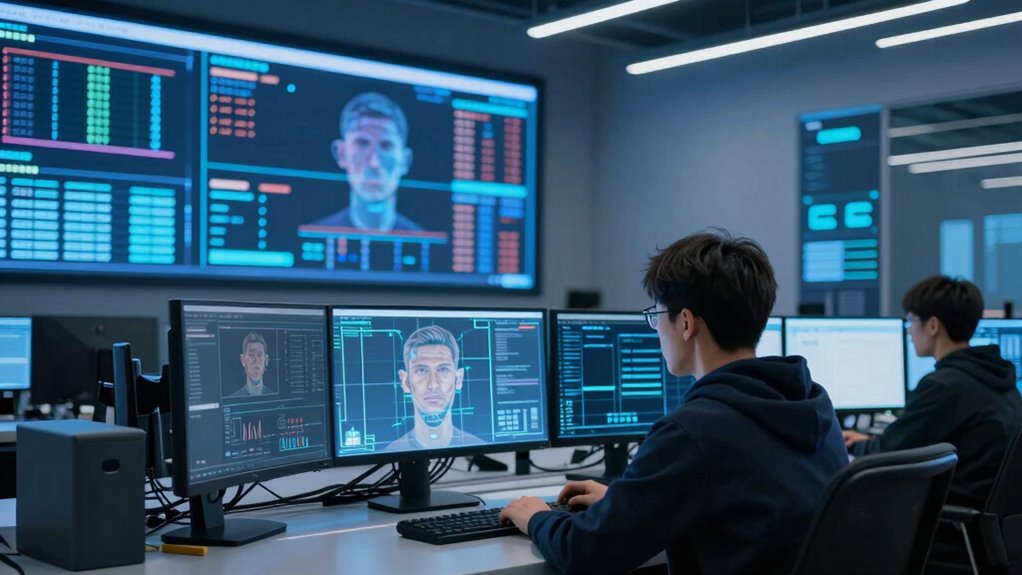

To fight a fake video that looks real, you should use a combination of advanced detection tools that analyze visuals, audio, and metadata at a granular level, while also relying on proactive monitoring and human review. Technologies like deepfake detection software, forensic analysis, and biological signals can uncover subtle manipulations. Incorporating real-time verification methods, watermarking, and ethical AI practices helps prevent and identify deepfakes early. Keep exploring to discover more effective strategies to stay ahead of evolving threats.
Key Takeaways
- Employ advanced multilayer analysis, including pixel forensics and audio signal examination, to detect subtle manipulations.
- Use specialized detection tools like Sensity AI and Pindrop that analyze visual and audio inconsistencies in real-time.
- Combine multiple detection methods with human review to improve accuracy against evolving deepfake techniques.
- Implement proactive measures such as watermarking, multi-factor authentication, and continuous monitoring to prevent and verify authentic content.
- Stay updated on emerging technologies like provenance-aware detection and multimodal models to enhance future deepfake defenses.
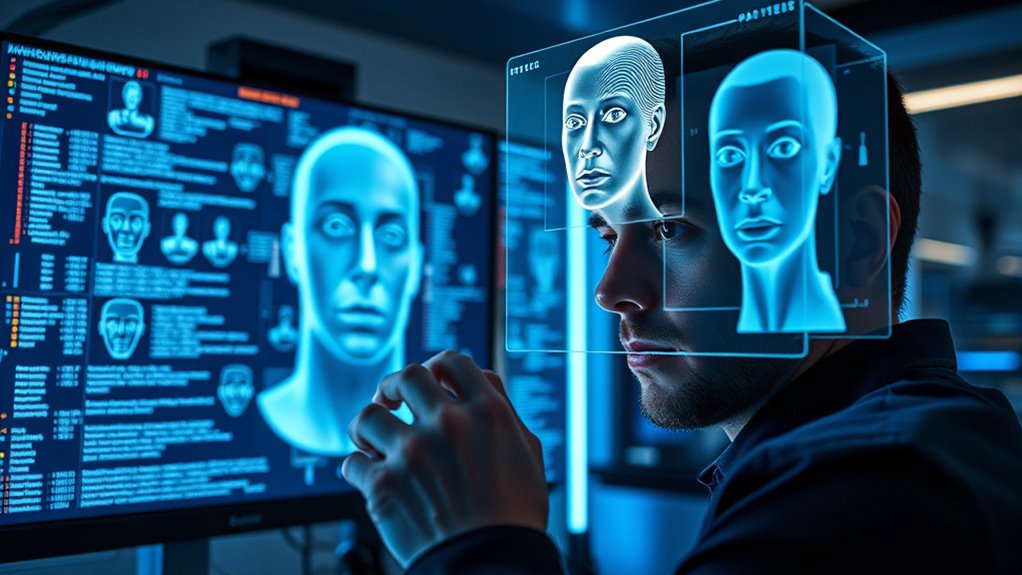
Are you prepared to defend against the rising threat of deepfakes? As these manipulated videos and audio clips become more sophisticated, knowing how to spot and counter them is essential. Detection tools have advanced considerably, employing multilayer analysis that examines visuals, file structures, metadata, and audio signals. These methods help identify subtle visual alterations through pixel-level forensics and uncover acoustic inconsistencies in synthesized audio. Vision-language models like CLIP analyze spatial and temporal artifacts across frames, revealing discrepancies that escape traditional checks. Biological signal detection, which tracks blood flow and facial capillary patterns, offers a high accuracy rate—up to 96%—making it a powerful line of defense against deepfakes. Advanced detection methods can also analyze inconsistencies in audio-visual synchronization, further improving identification accuracy. Leading detection tools such as Sensity AI provide enterprise-grade, real-time monitoring of social media and video platforms. They generate forensic-grade reports with confidence scores, helping you evaluate the authenticity of media content quickly. Paravision’s Deepfake Detection assesses face swaps and expression manipulations by analyzing output scores, while Pindrop specializes in identifying voice deepfakes through tonal shifts, static, and timing anomalies. These tools combine multiple detection techniques to improve accuracy but aren’t infallible. Outside their training data, they can struggle to identify new or evolving manipulation methods, especially during live video chats where static algorithms may fail against real-time deepfakes. Combining different detection methods can be challenging when faced with novel forgeries, as attackers continually develop new techniques to bypass existing defenses. Robust detection methods are vital to staying ahead of increasingly sophisticated deepfake techniques.
Effective deepfake detection combines pixel-level analysis, biological signals, and advanced models like CLIP for comprehensive verification.
To effectively combat these threats, proactive prevention strategies are critical. Continuous live monitoring flags suspicious content on social media platforms, while human-in-the-loop systems combine automated detection with manual review for better context and confidence. Multi-factor authentication, which requires both face recognition and device verification, adds an extra layer of security. Injection attack prevention blocks synthetic content during authentication processes, and proactive watermarking in synthetic media helps verify authenticity. These measures, along with ongoing technological improvements, create a more robust defense system. [Implementing user education and awareness campaigns also plays a vital role in preventing the spread of deepfakes and reducing susceptibility to manipulation.] Looking ahead, future trends will focus on integrating provenance-aware detection systems and multimodal models like CLIP-TimeSformer, which can identify inconsistencies across frames and modalities. Ethically trained AI that uses diverse, consented datasets will enhance accuracy across demographics. Real-time enterprise tools will help combat misinformation and impersonation, while forensic reporting with confidence scores will make legal proceedings more reliable. Staying ahead of deepfake threats requires a combination of advanced detection tools, vigilant monitoring, and proactive prevention strategies—equipping you with the best possible defenses against highly convincing fake videos.
Frequently Asked Questions
Can Deepfake Detection Tools Keep up With Rapidly Evolving Techniques?
Detection tools struggle to keep up because deepfake creators constantly refine their techniques, making it hard for static algorithms to catch up. You need adaptive, multilayer systems that analyze visuals, audio, and metadata while using AI models like CLIP and forensic methods. Continuous updates, human oversight, and proactive watermarking help you stay ahead. Combining multiple detection strategies ensures your defenses evolve alongside deepfake technology, minimizing risks.
How Effective Are Current Detection Methods Across Different Languages and Regions?
Imagine trying to catch a chameleon changing colors in a dense jungle; that’s how effective current detection methods are across languages and regions. They adapt remarkably, analyzing visuals, audio, and metadata to spot subtle inconsistencies. With tools like multilayer analysis and biological signal detection, you gain a sharp eye for deception worldwide. Yet, as deepfakes evolve, staying vigilant requires continuous updates, ensuring your defenses don’t become outdated in this digital jungle.
What Are the Privacy Implications of Biological Signal Detection?
You should be aware that biological signal detection raises privacy concerns because it involves analyzing subtle physiological signs like blood flow or facial capillaries. This could lead to unintentional data collection or misuse of sensitive health information. You might feel your privacy is compromised if such data is stored or shared without consent. To protect yourself, guarantee proper regulations are in place and opt for platforms that prioritize data security and transparency.
Are There Legal Standards for Proving Authenticity of Media in Court?
In court, proving media authenticity relies on standards like the Daubert or Frye tests, which assess scientific validity. For example, if a deepfake video is used as evidence, you’d need forensic experts to demonstrate the detection methods’ reliability and adherence to accepted practices. These standards guarantee the evidence is credible, allowing judges and juries to evaluate its authenticity based on scientific principles and expert testimony.
How Can Individuals Protect Themselves From Deepfake Impersonations Online?
You can protect yourself from deepfake impersonations online by staying vigilant and verifying content before trusting it. Use fact-checking tools and look for signs of manipulation, like inconsistent audio or visual cues. Enable multi-factor authentication on your accounts to prevent unauthorized access. Keep software updated to patch vulnerabilities, and report suspicious content. Educate yourself about deepfake tactics, so you’re better prepared to recognize and respond to fake videos or messages.
Conclusion
To stay ahead of deepfakes, always verify sources and use advanced detection tools—think of it as your modern-day digital armor, much like the knights of old relied on their shields. Remember, in this age of fake videos, a skeptical eye and the right tech can save you from being duped. Don’t let malicious actors turn you into a mere pixelated pawn—arm yourself with knowledge and stay vigilant, or you’ll find yourself caught in a digital Tower of Babel.