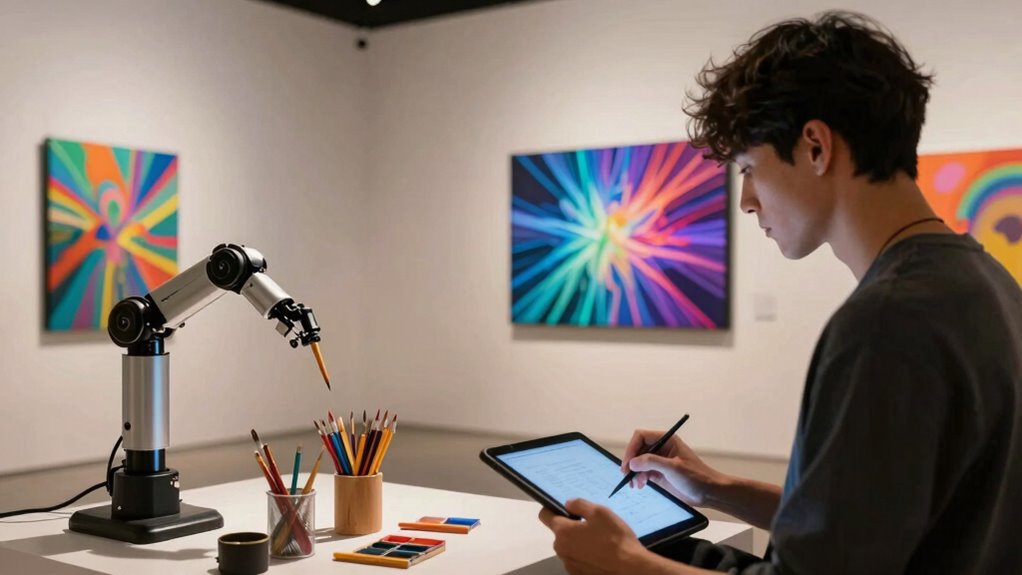
The AI artist revolution is transforming how you create and see art, blending human imagination with machine intelligence. It’s not about replacing your creativity but enhancing it—opening new possibilities and workflows. As AI tools become more integrated, they challenge traditional notions of authorship but also expand your creative horizons. To understand how this balance between algorithms and human ingenuity evolves and what it means for the future of art, keep exploring these exciting changes.
Key Takeaways
- AI acts as a creative enabler, enhancing human artistry rather than replacing it.
- Artists are increasingly integrating AI tools, fostering hybrid workflows and new creative roles.
- Ethical and legal challenges may shape AI adoption, but regulation aims to protect artistic integrity.
- The growing market and investment indicate sustained relevance of human creativity alongside AI.
- AI’s rapid evolution encourages a collaborative, rather than competitive, relationship with human artists.
AI Artist Revolution
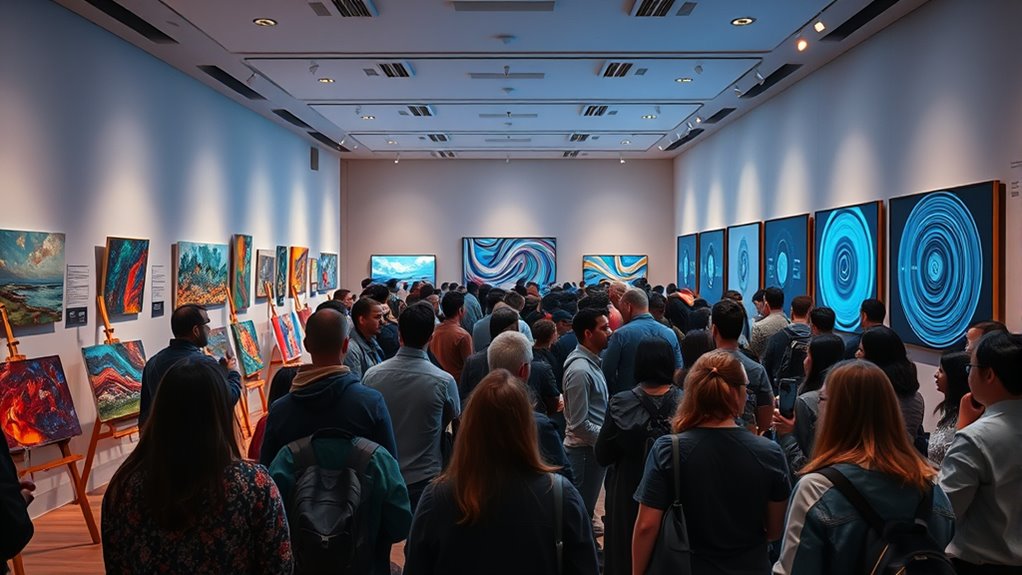
The AI artist revolution is transforming creative industries at an unprecedented pace, blending human ingenuity with machine intelligence. As an artist or enthusiast, you’re witnessing a shift where AI tools like Midjourney, DALL-E, and Stable Diffusion are not just supplementary but central to the creative process. The market for AI-generated art is booming, valued at $3.2 billion in 2024 and expected to skyrocket to over $40 billion by 2033, growing at nearly 29% annually. This rapid expansion means AI art will soon account for a significant portion of the contemporary art scene, with estimates suggesting it will represent 5% of the market by 2025. The pace of adoption is staggering—almost 30% of digital artists now use AI to enhance their work, and more than half believe their contributions remain essential despite AI’s involvement. Platforms like Stable Diffusion alone have attracted over 10 million users, demonstrating widespread engagement across the globe.
You’re also part of a landscape where AI images are generated at a staggering rate—over 34 million daily in 2025—and contribute heavily to marketing, social media, and creative projects. AI tools are not just producing images but also enabling rapid edits, style transfers, and realistic renderings, with AI-generated content powering more than two-thirds of online visual content. This surge fuels new business models: artists use AI for print-on-demand products, children’s books, and stock images, while platforms distribute AI art to major stock sites, generating billions in revenue. The market’s growth reflects not only technological advancements but also increasing investments—private funding alone reached $33.9 billion in 2024—showing confidence in AI’s future role in art. Furthermore, AI’s integration into creative workflows is poised to redefine the very nature of artistic expression. As a result, understanding how AI influences the creative process is essential for artists and enthusiasts alike.
As this revolution unfolds, it’s clear that AI acts more like an enabler than a replacement. While automation might displace some jobs, it also creates millions of new roles, especially in prompting, controlling, and refining AI art tools. The creative pipeline is evolving into a fusion of human craftsmanship and machine efficiency, freeing artists to focus on high-level conceptual work. However, challenges remain. Ethical concerns over datasets, copyright issues, and transparency laws threaten to slow progress. Still, institutions like The Getty are integrating AI into their collections, signaling acceptance at the highest levels. As you navigate this changing landscape, remember that creativity isn’t disappearing—it’s being reshaped. The question isn’t whether algorithms will dominate, but how you can harness AI to elevate your art in a new era of hybrid creativity.
Top picks for "artist revolution creativity"
Open Amazon search results for this keyword.
As an affiliate, we earn on qualifying purchases.
Frequently Asked Questions
How Will AI Impact Traditional Art Education and Training?
AI will profoundly reshape traditional art education and training by integrating new tools that enhance creativity and technical skills. You’ll learn to use AI-driven platforms alongside traditional methods, fostering innovation. As AI automates routine tasks, you’ll focus more on conceptual thinking and unique expression. Embracing this shift, you’ll develop versatile skills, blending craftsmanship with technology, preparing you for an evolving art landscape where human intuition and machine collaboration thrive together.
What Ethical Concerns Arise From Ai-Generated Art?
Is AI-generated art the Pandora’s box of ethical dilemmas? You might worry about copyright infringement, as AI often learns from existing works without explicit permission. There’s also the risk of devaluing human creativity and authentic expression. Plus, concerns about transparency and accountability arise when AI blurs the line between artist and algorithm. You need to contemplate how to balance innovation with respecting original creators’ rights and maintaining artistic integrity.
Can AI Truly Replicate Human Emotional Expression in Art?
AI can mimic human emotional expression in art, but it doesn’t truly feel or understand emotions like humans do. You might notice AI-generated pieces that evoke feelings, yet they lack genuine emotional depth and personal experience. While AI tools help you craft expressive artwork quickly, the real emotional connection comes from your unique perspective and human intuition. So, AI supports your creativity but can’t fully replicate the depth of human emotion.
How Will Copyright Laws Adapt to Ai-Created Artworks?
Copyright laws will evolve like a river carving new paths around obstacles, trying to keep pace with AI art’s rapid flow. You’ll see laws clarifying ownership—distinguishing human creators from algorithms—and establishing new standards for originality. While some hurdles remain, expect regulations to become more flexible, protecting artists’ rights and encouraging innovation. As the legal landscape shifts, you’ll need to stay informed, ensuring your creative work remains protected in this ever-changing digital tide.
Will AI Art Diminish the Value of Human Artists’ Work?
AI art won’t diminish your value as a human artist; instead, it can enhance your creative journey. You’re still essential for bringing emotional depth, storytelling, and unique perspective that algorithms can’t replicate. Use AI as a tool to expand your skills and productivity. As AI grows, your originality and craftsmanship will stand out even more, making your work more meaningful and valuable in a rapidly evolving digital art landscape.
Conclusion
As algorithms accelerate and art transforms, you must decide: will you defend the delicate dance of human creativity or surrender to the seductive speed of synthetic solutions? Embrace the evolving elegance of innovation, or resist the relentless rise of robots? Remember, your unique voice and vivid vision can preserve the precious, personal pulse of art amid the algorithmic avalanche. The choice is yours—continue creating, or be consumed by the cold, calculating codes.