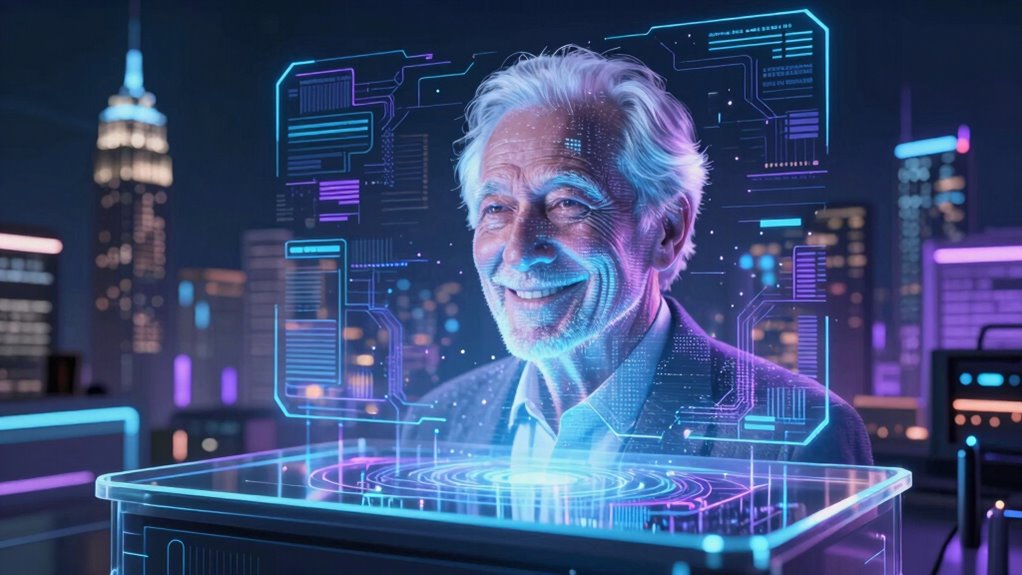

Digital immortality aims to let you live on after death by creating digital replicas, avatars, or consciousness uploads. Advances in AI, neural mapping, and biometric data help build these virtual versions of yourself that can learn, evolve, and interact indefinitely. However, replicating true consciousness remains a challenge, and many ethical questions arise. If you want to explore how technology might someday grant eternal life, there’s much more to uncover ahead.

Get privacy and security gear delivered free with Prime
- Fast, free delivery on millions of items
- Prime Video, Amazon Music and more included
- Member-only deals all year
Key Takeaways
- Digital immortality aims to preserve personality and consciousness through avatars or AI models, enabling ongoing digital existence.
- Technologies like AI, neural mapping, and data collection support creating lifelike digital replicas of individuals.
- While current systems can simulate interactions and maintain online personas, true consciousness transfer remains unproven.
- Challenges include high costs, data privacy concerns, and ethical debates about authenticity and human identity.
- Overall, technology can extend digital presence but cannot yet guarantee actual eternal life or consciousness survival.
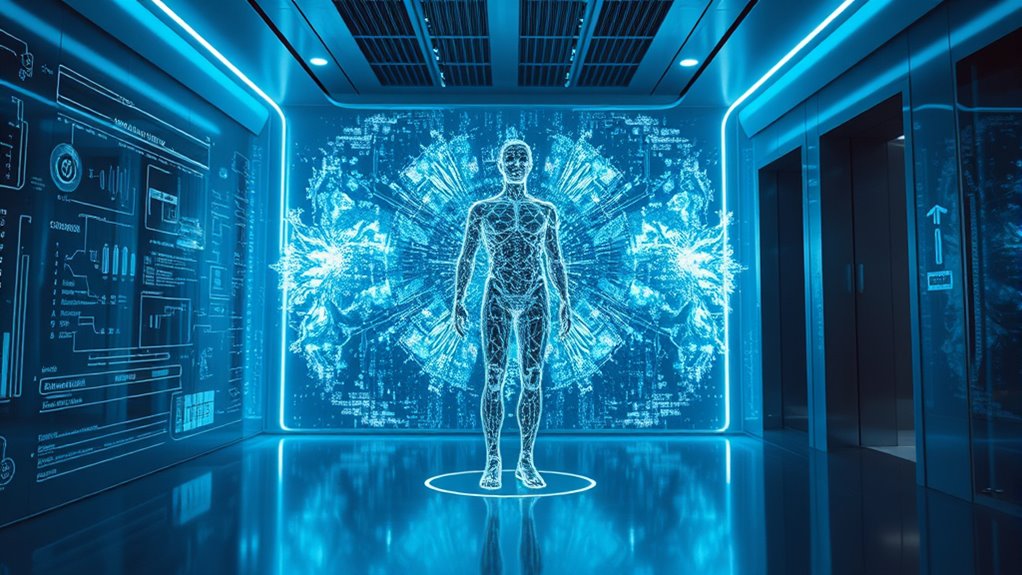
Have you ever wondered if death is truly the end? Digital immortality offers a fascinating glimpse into that possibility, aiming to preserve your personality, memories, or even your consciousness in a digital form after your physical death. This concept involves creating avatars or replicas that mimic your behaviors and interactions, allowing your digital self to evolve and engage indefinitely. Some envision virtual immortality through mind uploading, where your mind is transferred to a computer or network, transcending physical limitations. The idea is not just about data storage but about maintaining a dynamic digital identity that can continue to learn, adapt, and even interact with loved ones long after you’re gone.
To bring this to life, advanced technologies come into play. AI and machine learning analyze vast amounts of your personal data—social media activity, journals, biometric information, and communication styles—to identify patterns that predict your thoughts and actions. Neural mapping and cryonics support processes like mind uploading, with the goal of creating a digital replica that can potentially host your consciousness. Speech synthesis models can convincingly reproduce your voice, while chatbots trained on your message patterns can simulate conversations. Holograms, VR simulations, and robotic forms enable interactions that feel remarkably lifelike, offering a glimpse of your personality in digital or physical forms. For example, AI-created chatbots like Replika or HereAfter AI use uploaded personal data to engage with others, while digital memorials preserve your online presence for posthumous tributes.
The process begins with gathering extensive data—your preferences, activities, biometric details, and personal writings—and storing this securely in cloud-based systems. AI then identifies behavioral patterns, enabling the creation of models that can predict your responses and emulate your communication style. These models undergo continuous learning, allowing your digital personality to evolve over time, responding to new information and interactions. These advancements rely heavily on cloud-based systems to securely store and manage the vast amounts of data needed for accurate modeling. The aim is to produce digital entities that can interact convincingly, offering a form of ongoing presence that blurs the line between life and death. Recent advances in neural interface technology may soon make direct brain-to-computer connections possible, potentially accelerating progress toward true mind uploading.
However, this emerging field faces significant challenges. Technical hurdles include the complex task of uploading consciousness and replicating thought processes, which remain unproven. Costs are high, and data security concerns persist. There’s no current evidence that true consciousness can be transferred or recreated digitally, raising questions about the authenticity of these digital selves. Society remains uncertain about accepting such technologies, and ethical issues around privacy, consent, and human identity continue to spark debate. Many wonder if these digital replicas truly capture the essence of the person or simply mimic surface behaviors, leaving the core question of whether digital immortality is a real possibility or just an intriguing illusion.
Frequently Asked Questions
Is Digital Immortality Ethically Acceptable Across Different Cultures?
You might think digital immortality is ethically acceptable, but cultural views vary. Some cultures see honoring ancestors and preserving identity as essential, so they may embrace it. Others prioritize natural life cycles and believe it disrupts human values. You should consider privacy, consent, and societal impacts. Ultimately, whether it’s acceptable depends on respecting diverse beliefs, addressing ethical concerns, and balancing technological possibilities with cultural values.
How Secure Is the Data Used for Creating Digital Personalities?
The data used for creating digital personalities can be quite secure, but risks remain. You might face breaches or unauthorized access if companies don’t implement strong encryption and security protocols. Even with safeguards, cyberattacks evolve, and sensitive personal information could be compromised. To protect your digital legacy, you should stay informed about the security measures in place and consider using trusted services that prioritize privacy and data protection.
Can Digital Immortality Truly Replicate Human Consciousness?
Digital immortality can’t truly replicate human consciousness yet. You might create digital profiles that mimic your behavior, but they lack genuine awareness, emotions, and subjective experience. While AI can simulate aspects of your personality, it doesn’t possess your consciousness or true self-awareness. So, even with advanced technology, you’re fundamentally creating a convincing imitation rather than a real continuation of your inner mind.
What Are the Legal Rights of Digital Entities After Creator’s Death?
Think of digital entities as seeds planted in legal soil. After your death, their rights depend on jurisdiction and agreements you set. You might designate who controls or profits from them, or whether they have autonomy. Laws are still catching up, so you could face uncertain rights and protections. To safeguard your digital legacy, consider legal wills, clear terms of use, and ongoing management plans for your virtual creations.
How Accessible Will Digital Immortality Be to the General Public?
Digital immortality will become more accessible as technology advances and costs decrease. You might soon create digital replicas or avatars of yourself easily, using platforms that compile your data from social media, biometrics, and personal stories. With increasing public awareness and improved AI tools, more people could interact with their digital selves. However, affordability and societal acceptance will influence how quickly and widely this technology becomes available to everyone.
Conclusion
Imagine your digital self as a luminous star, shining on forever in the vast night sky of the internet. While technology promises eternal life through your data and memories, it’s like chasing shadows—an illusion of permanence in a fleeting world. Will you embrace this digital immortality, or will you let your story fade into the darkness? Ultimately, your choice shapes whether you become a timeless echo or a passing whisper in the digital universe.
Columbus Day / Indigenous Peoples' Day Picks
long weekend sales
As an affiliate, we earn on qualifying purchases.