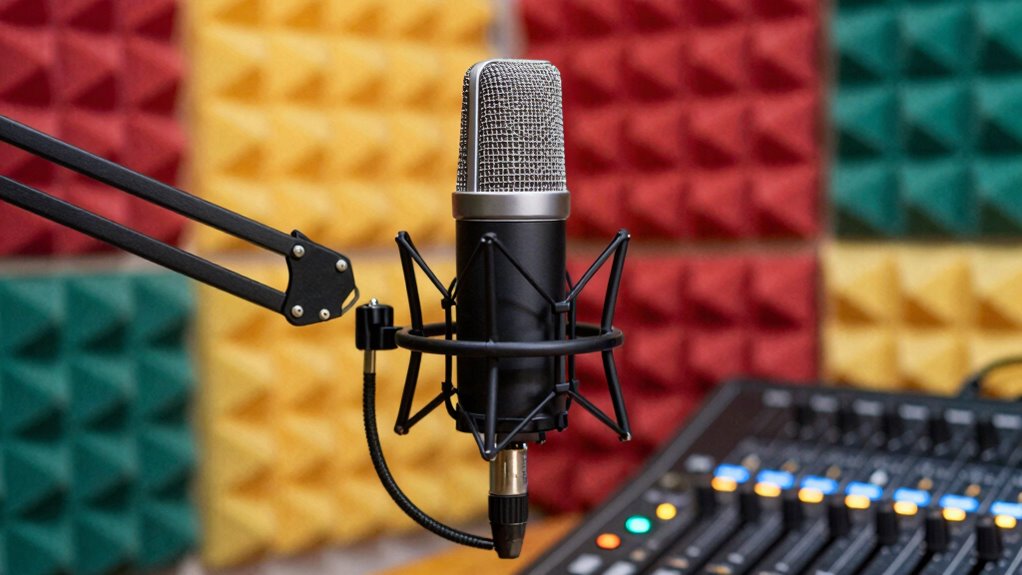

Your microphone has the biggest impact on your podcast’s audio quality. Proper placement, like keeping it 6 to 12 inches from your mouth and using a pop filter, makes a huge difference. Even the best mic won’t sound great if the room isn’t treated to reduce echo and background noise. Focusing on your microphone setup and environment can make your sound professional. Keep exploring to discover more tips that can elevate your podcast’s audio quality.

Get privacy and security gear delivered free with Prime
- Fast, free delivery on millions of items
- Prime Video, Amazon Music and more included
- Member-only deals all year
Key Takeaways
- Proper microphone placement ensures clear, consistent voice capture and reduces background noise interference.
- Acoustic treatment minimizes echo, reverb, and room noise, significantly improving sound clarity.
- Using a quality microphone with a pop filter reduces plosive sounds and enhances audio professionalism.
- Optimizing room environment and minimizing reflective surfaces creates a more focused and natural sound.
- Small adjustments in mic positioning and environment setup can dramatically elevate overall audio quality.
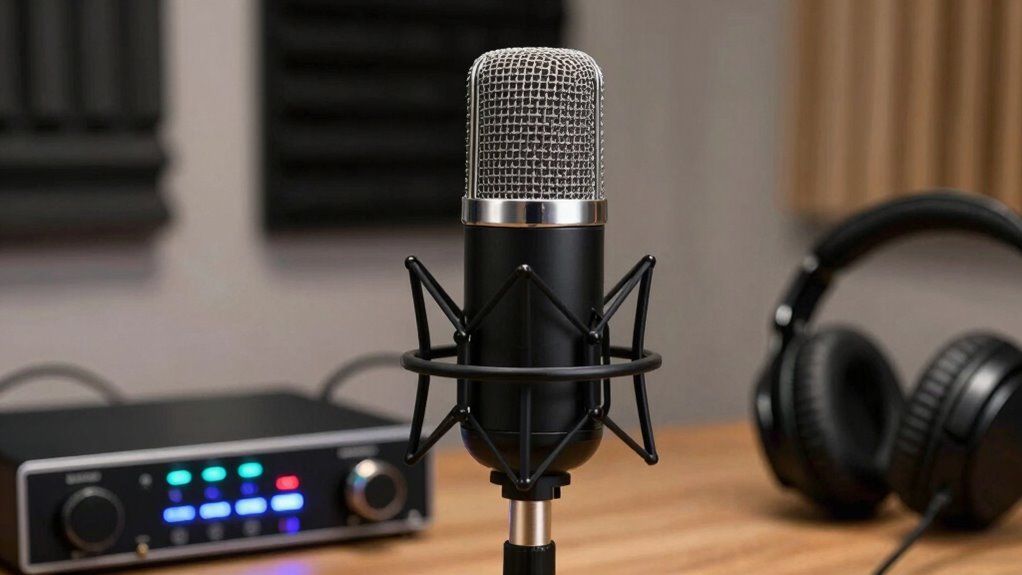
Creating a high-quality podcast begins with understanding the importance of good equipment and sound. The way you set up your microphone and the environment you record in can considerably influence your audio quality. Microphone placement is one of the most critical factors. If you position your microphone too close or too far, you’ll notice issues like muffled sound or background noise overwhelming your voice. Aim to keep the mic about 6 to 12 inches from your mouth, and use a pop filter to reduce plosive sounds. Consistent placement helps maintain a clear, balanced tone and minimizes inconsistencies that can distract listeners.
Proper microphone placement ensures clear, balanced audio and reduces distracting inconsistencies.
Beyond positioning, acoustic treatment plays a crucial role in improving your audio. Many podcasters overlook the importance of controlling room sound, but untreated spaces often produce echo, reverb, or background noise that diminishes clarity. You don’t need a professional studio—simple acoustic treatment like foam panels, blankets, or even thick curtains can absorb excess sound reflections. This makes your voice sound more natural and focused, directly enhancing overall audio quality. When your environment is acoustically treated, it’s easier to capture the nuances of your voice without interference, meaning listeners get a more engaging experience.
Investing in a good microphone is important, but even the best equipment can’t compensate for poor placement or an untreated room. Proper microphone placement ensures that you’re capturing your voice accurately and consistently, while acoustic treatment ensures that unwanted room sounds aren’t interfering. If you neglect these aspects, you’ll find that your audio quality suffers, no matter how high-end your gear is. Conversely, paying attention to both can make a noticeable difference, giving your podcast a professional edge and keeping your audience engaged.
In essence, the biggest changes to your audio quality come from how you position your microphone and how well you treat your recording space. These adjustments are often simple and affordable but have a profound impact on sound clarity and professionalism. Don’t underestimate their importance—small tweaks in microphone placement and acoustic treatment can elevate your podcast from amateur to polished. When you fine-tune these elements, your voice will come through more naturally, and your audience will notice the difference. Good equipment is essential, but sound environment optimization makes all the difference in creating crisp, clear, and compelling audio. Additionally, understanding how room acoustics affect sound can guide you in making more effective improvements to your recording space. Being aware of acoustic treatment principles can help you identify the best solutions for your specific environment, making your efforts more targeted and effective. Paying attention to these factors can help you achieve professional-quality sound without breaking the bank.
best podcasting microphone with pop filter
As an affiliate, we earn on qualifying purchases.
As an affiliate, we earn on qualifying purchases.
Frequently Asked Questions
How Does Microphone Placement Affect Recorded Audio Quality?
Microphone placement greatly impacts your recorded audio quality because it affects how sound enters the mic and interacts with its polar patterns. Keep the mic close, ideally 6-12 inches away, and use a pop filter to reduce plosive sounds. Proper placement guarantees clear sound, minimizes background noise, and optimizes the microphone’s polar pattern for your voice. Experimenting with placement helps you find the best position for professional-sounding recordings.
What Role Does Room Acoustics Play in Podcast Clarity?
They say, “A clean room makes a clear voice,” and that’s true for podcast clarity. Your room acoustics play a crucial role—poorly treated spaces with echo or background noise can muddy your sound. By using room treatment and installing acoustic panels, you absorb unwanted reflections and outside noise. This guarantees your voice comes through crisp and professional, keeping your listeners engaged and your message crystal clear.
Can Cheaper Equipment Produce Professional-Sounding Podcasts?
Yes, cheaper equipment can produce professional-sounding podcasts, especially if you work within budget constraints and focus on smart equipment upgrades. Prioritize microphones and headphones that offer good sound quality, and use proper room acoustics. Even affordable gear can sound polished if you optimize your setup and editing process. Ultimately, consistent content, good technique, and environment matter more than expensive equipment alone.
How Important Is Audio Editing Software in Improving Sound Quality?
Audio editing software is essential, as it allows you to refine your sound quality through sound wave manipulation and noise reduction techniques. You can smooth out inconsistencies, eliminate background noise, and enhance clarity, making your podcast sound more professional. Without these tools, even high-quality recordings can seem rough or unpolished. As a result, using effective editing software greatly elevates your podcast’s overall sound, engaging listeners more effectively.
Does Headphone Quality Impact Overall Podcast Sound Perception?
Yes, headphone quality considerably impacts your podcast sound perception. High-quality headphones offer better sound isolation, allowing you to catch subtle audio details, and provide greater comfort during long editing sessions. Comfortable headphones prevent fatigue, so you stay focused, while sound isolation minimizes external noise, ensuring you accurately judge your audio quality. Investing in good headphones enhances your ability to produce professional-sounding podcasts and improves your overall editing experience.
acoustic treatment foam panels for recording
As an affiliate, we earn on qualifying purchases.
As an affiliate, we earn on qualifying purchases.
Conclusion
Investing in the right equipment can considerably boost your podcast’s audio quality. A good microphone, for instance, can improve clarity by up to 70%, making your voice sound more professional. Remember, it’s not just about gear but also your environment and technique. By choosing quality gear and paying attention to setup, you’ll keep listeners engaged and coming back. After all, in the world of podcasting, clear sound isn’t just an option — it’s the key to standing out.
microphone boom arm stand for podcasting
As an affiliate, we earn on qualifying purchases.
As an affiliate, we earn on qualifying purchases.
soundproofing blankets for home studio
As an affiliate, we earn on qualifying purchases.
As an affiliate, we earn on qualifying purchases.
Fall Picks
fall essentials
As an affiliate, we earn on qualifying purchases.