
Brain-computer interfaces are no longer just sci-fi; they’re becoming a real technological breakthrough. Advances like high-accuracy speech neuroprostheses, minimally invasive implants, and AI-driven decoding are transforming lives by restoring communication and control for those with paralysis or disorders. With rapid innovations moving BCI from experimental labs to everyday use, it’s clear this tech is on the cusp of shifting our interactions with devices and the world around us. To see how far this journey has come, explore further.
Key Takeaways
- Recent BCI breakthroughs enable communication for severely paralyzed individuals, moving beyond science fiction into real-world applications.
- Advances in implant technology and AI decoding are creating more natural, seamless interactions, bridging the gap to everyday use.
- Invasive and minimally invasive devices are improving safety, signal fidelity, and user control, accelerating clinical and consumer adoption.
- BCI research is transitioning from experimental labs to mainstream products, integrating with consumer tech like smartphones and AR/VR.
- Ongoing innovations suggest BCIs are on the cusp of becoming a transformative, everyday technology rather than a sci-fi concept.
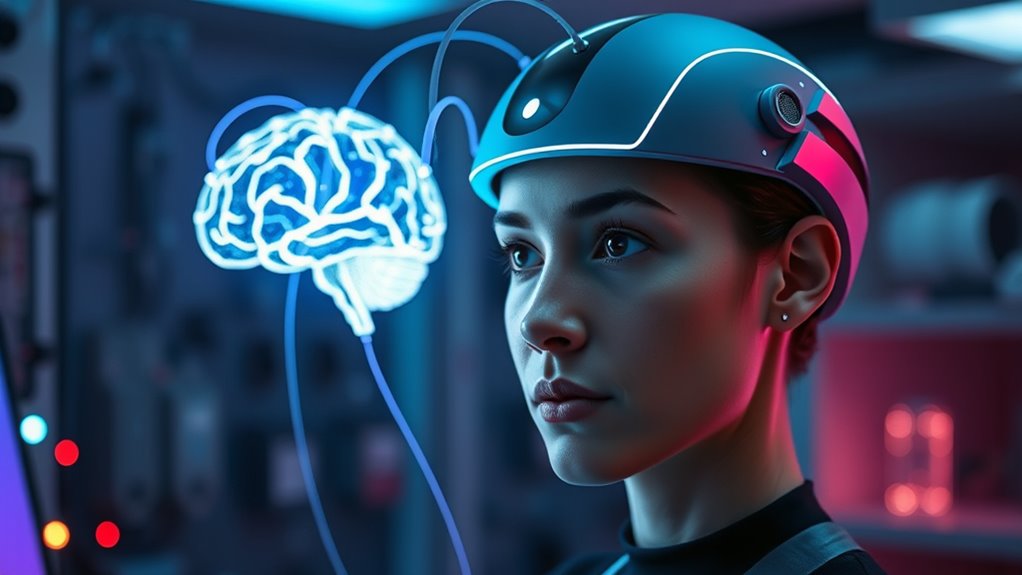
Have you ever imagined controlling devices or restoring speech with just your thoughts? Today, that idea is edging closer to reality thanks to rapid advances in brain-computer interfaces (BCIs). Researchers have achieved remarkable milestones, such as a speech neuroprosthesis that translates attempted speech with up to 97% accuracy, as reported in the New England Journal of Medicine. This breakthrough enables individuals with ALS to communicate more effectively, showcasing how BCIs are transforming lives. Multiple clinical trials are underway, demonstrating that people with severe paralysis can regain control of devices or communicate through implanted systems like BrainGate2, Synchron, and Neuralink. These innovations highlight the potential for BCIs to restore independence and reconnect individuals with their surroundings.
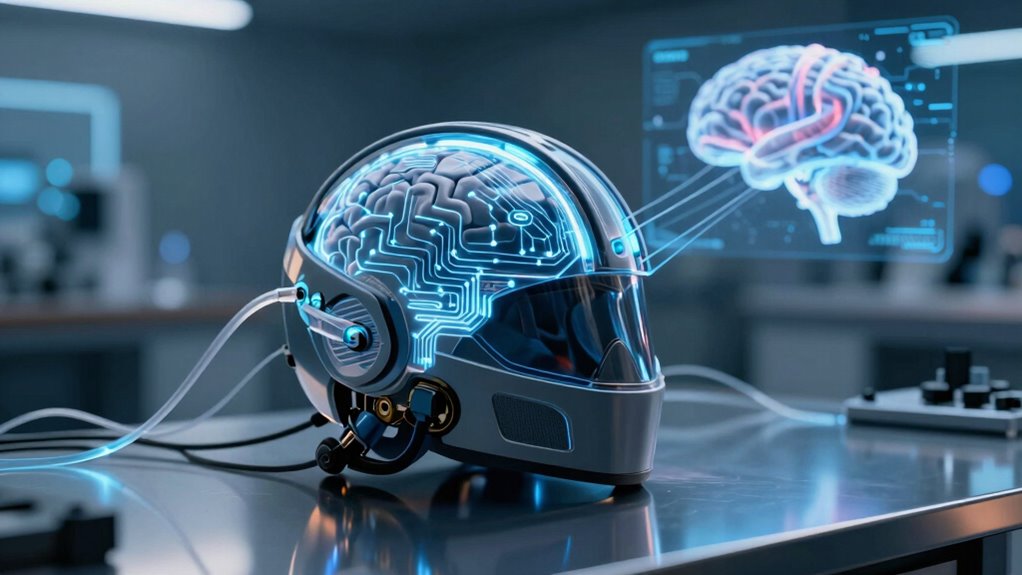
The technology behind these breakthroughs is evolving rapidly. Invasive implants, such as intracortical microelectrode arrays, offer high signal fidelity for decoding fine motor movements and speech but require surgery and long-term biocompatibility management. Meanwhile, minimally invasive approaches like Synchron’s Stentrode deploy electrodes via blood vessels, reducing surgical risks while maintaining high-quality neural recordings. Surface and sheet electrodes, made of thin films, cover cortical areas for high-channel recordings with less cortical penetration. Noninvasive systems like EEG provide safer options but with limited bandwidth and resolution, suitable for simpler tasks. A new wave of hybrid, wireless single-chip devices, such as the silicon-based BISC, combines amplification, processing, and wireless telemetry, enabling real-time high-bandwidth neural communication. Moreover, ongoing advancements in neural signal processing are making these systems more accurate and responsive.
Signal processing and AI play essential roles. Modern BCIs utilize advanced algorithms—filtering, feature extraction, machine learning—to decode users’ intentions from neural signals rapidly. High-bandwidth implants allow deploying neural network models that interpret complex thoughts, speech, and perceptual states almost instantly. Closed-loop systems further enhance performance by providing sensory feedback and adaptive decoding, leveraging neuroplasticity to improve over time. Integration with consumer platforms, like Apple’s recent BCI Human Interface Device protocol, makes controlling tablets, phones, and AR/VR devices increasingly seamless. These advancements are pushing the boundaries of what’s possible, moving BCIs from experimental labs into everyday use. The award-winning work at UC Davis exemplifies the rapid progress and impactful applications of BCI technology, including speech restoration.
Frequently Asked Questions
How Secure Are Brain Data Transmissions Against Hacking?
Your brain data transmissions are becoming more secure as developers implement advanced encryption and security protocols. They use encryption standards similar to those for online banking, making hacking extremely difficult. However, no system is completely invulnerable, and as BCI tech advances, so do hacking techniques. You should stay informed about security updates and choose devices with robust security features to protect your sensitive brain data from potential threats.
What Are the Long-Term Effects of Implanting BCI Devices?
Think of your brain as a delicate garden, and BCI implants as careful gardeners tending it. Long-term effects might include neuroplastic changes, improved communication, or unforeseen risks like inflammation or neural scarring. You could experience enhanced abilities, but also potential cognitive or emotional shifts over time. Regular monitoring and ongoing research are essential to guarantee these implants nurture your brain’s health rather than harm it, shaping a future where technology and biology bloom together.
How Accessible Will BCI Technology Be for Everyday Users?
BCI technology will become more accessible for everyday users by 2030, thanks to less invasive procedures, lower costs, and wider clinical adoption. You’ll likely see consumer-friendly devices integrated into daily life, like smart implants or wearable tech, making communication and control seamless. As companies like Neuralink and Apple expand their offerings, you’ll find BCI devices more affordable, user-friendly, and tailored to individual needs, transforming how you interact with technology daily.
Can BCIS Enhance Normal Cognitive Functions Beyond Medical Needs?
Yes, BCIs can enhance your normal cognitive functions beyond medical needs. You might experience improved memory, faster learning, or sharper focus as these devices interface directly with your brain. With ongoing advancements, BCIs could seamlessly augment your mental capabilities, allowing you to multitask more efficiently or access information instantly. As technology becomes more accessible, you’ll find yourself with powerful tools to boost your everyday mental performance and cognitive flexibility.
What Ethical Issues Arise From Mind-Reading Capabilities?
Think of mind-reading capabilities as opening Pandora’s box, full of ethical dilemmas. You might worry about privacy invasion, where your deepest thoughts could be accessed without consent. There’s also the risk of manipulation, where your mental data could be exploited or altered. Ensuring informed consent, securing data, and respecting mental autonomy become essential, so these powerful tools serve you, not control you, and protect your mental sanctum.
Conclusion
Imagine a world where your thoughts control devices instantly—nothing short of science fiction becoming your everyday reality. Brain-computer interfaces aren’t just a leap; they’re a giant, universe-shaking jump toward a future where mind and machine merge seamlessly. If this technology keeps evolving, you’ll be able to communicate, heal, and even innovate at speeds you never thought possible. Get ready—you’re on the brink of a revolution so incredible, it’ll make Hollywood’s wildest dreams look tame!