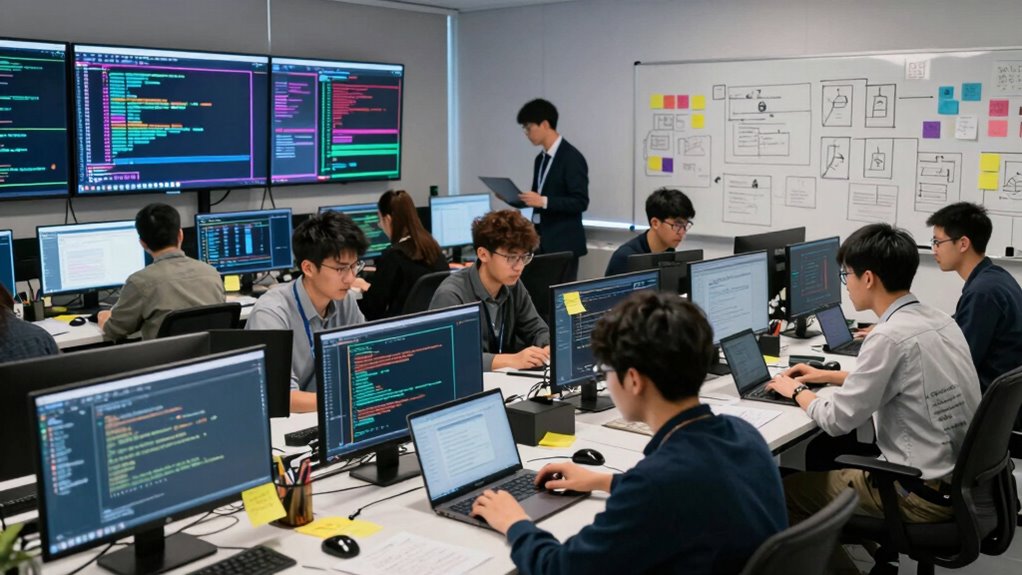

Hackathons are one of the best places to practice shipping because they push you to turn ideas into tangible products quickly, mimicking real-world deadlines. You learn to prioritize features, manage time, and adapt based on feedback—all while collaborating with diverse team members. The fast-paced environment helps you develop skills essential for shipping projects efficiently. Keep going to discover how hackathons can sharpen your ability to deliver successful products under pressure.

Get privacy and security gear delivered free with Prime
- Fast, free delivery on millions of items
- Prime Video, Amazon Music and more included
- Member-only deals all year
Key Takeaways
- Hackathons simulate real-world deadlines, sharpening skills in delivering functional products quickly.
- They foster effective team collaboration, essential for efficient project shipping.
- Participants learn to prioritize features and manage time under intense pressure.
- Rapid prototyping and feedback loops enhance adaptability and iterative development skills.
- Hackathons provide practical experience in product lifecycle management and agile methodologies.

Hackathons have become some of the best places to practice shipping, offering a fast-paced environment where you can turn ideas into tangible products quickly. During these intense events, you learn to prioritize features, set clear goals, and deliver results within tight deadlines. It’s a crash course in turning concepts into real, usable solutions—exactly what shipping a product entails. The pressure to produce something meaningful in a limited time pushes you to refine your skills in real-time, making hackathons ideal for honing your ability to ship efficiently.
Hackathons are the ultimate training ground for quick, effective product shipping under pressure.
One of the biggest lessons you gain from hackathons is the importance of team collaboration. When you’re surrounded by diverse talents—developers, designers, marketers—you quickly see how essential effective communication is to progress. You learn to share your ideas clearly, listen to others, and adapt quickly based on team input. These moments teach you that shipping isn’t just about coding or designing; it’s about working together to overcome obstacles and integrate different perspectives into a cohesive final product. The collaborative environment of a hackathon mimics real-world team dynamics, helping you develop skills that are fundamental when launching projects in your daily work.
Time management is another indispensable skill you develop during hackathons. With only a limited window—often just 24 or 48 hours—you realize the importance of setting priorities and sticking to a schedule. You learn to break down your project into manageable tasks, allocate time effectively, and avoid perfectionism that can slow you down. This experience sharpens your ability to focus on the core features that deliver value, rather than getting sidetracked by unnecessary details. Managing your time well in a hackathon translates directly to real-world product shipping, where deadlines are tight and the cost of delays can be high. Additionally, understanding product lifecycle concepts helps you better appreciate the entire process of bringing a product from idea to market, and it emphasizes the significance of agile methodologies in maintaining flexibility and continuous delivery. Recognizing how to manage scope effectively during these events prepares you for handling complex projects with evolving requirements.
The fast iteration cycles of hackathons also teach you to embrace feedback and rapid prototyping. Instead of waiting for perfect solutions, you learn to launch early, gather user input, and iterate quickly. This mindset is essential for shipping because it encourages continuous improvement rather than perfectionism. Plus, working under these conditions pushes you to be more adaptable and resilient, qualities that are invaluable when facing the unpredictable challenges of bringing a product to market. Recognizing the importance of artificial intelligence in streamlining workflows can further enhance your ability to innovate rapidly.
As an affiliate, we earn on qualifying purchases.
Frequently Asked Questions
How Do Hackathons Differ From Traditional Product Launches?
Hackathons differ from traditional product launches because they focus on rapid development and testing, emphasizing user experience and innovation strategies. You actively collaborate in a compressed timeframe, allowing you to iterate quickly, learn from real-time feedback, and refine ideas. Unlike traditional launches, which are planned and polished over months, hackathons promote experimentation and agility, helping you identify what works fast and adapt on the fly for better, more user-centric products.
What Skills Are Most Crucial for Successful Shipping During Hackathons?
You need strong time management and cross-functional collaboration skills for successful shipping during hackathons. Prioritize tasks effectively to meet tight deadlines and stay organized. Communicate clearly with team members from different backgrounds, ensuring everyone’s on the same page. Embrace flexibility and quick problem-solving to adapt to challenges. These skills help you deliver a functional product within the limited timeframe, making the most of hackathon opportunities to practice shipping.
How Can Teams Maintain Momentum After Hackathon Completion?
Imagine your team finishing a hackathon with a promising prototype. To maintain momentum, focus on team motivation by setting clear, achievable goals for post-event follow-up. Regular check-ins and celebrating small wins keep everyone engaged. Document progress, share success stories, and assign responsibilities to guarantee continuous development. By maintaining this momentum, your team transforms a fleeting project into a sustainable, impactful solution that grows beyond the hackathon.
Are Hackathons Suitable for Beginners or Only Experienced Developers?
Hackathons are definitely beginner-friendly, offering a great environment for skill development, even if you’re new to coding or development. You can learn from experienced teammates, try out new technologies, and build projects quickly. The collaborative atmosphere encourages experimentation, making it an excellent place for beginners to grow. Plus, many events provide resources and mentorship, helping you develop confidence and practical skills without feeling overwhelmed.
What Are the Common Pitfalls That Hinder Shipping at Hackathons?
You might face pitfalls like scope creep, where you stretch your project’s boundaries too thin, or poor time management, making it hard to finish. To avoid these, stay focused on your core goals and set clear, manageable milestones. Keep an eye on the clock, prioritize tasks, and resist the urge to add features that can derail your progress. Staying disciplined helps guarantee you ship a viable project by the deadline.
As an affiliate, we earn on qualifying purchases.
Conclusion
So, picture yourself at the finish line of a hackathon, a burst of adrenaline as your project finally takes shape. These events aren’t just about coding—they’re about shipping ideas into the real world, under pressure but with passion. Each line you write and decision you make sharpens your skills, readying you for the next challenge. Hackathons offer a vibrant stage where you practice turning dreams into tangible, impactful solutions—making them the ultimate playground for shipping.
As an affiliate, we earn on qualifying purchases.
time management planner for developers
As an affiliate, we earn on qualifying purchases.
As an affiliate, we earn on qualifying purchases.
Halloween Picks
halloween
As an affiliate, we earn on qualifying purchases.