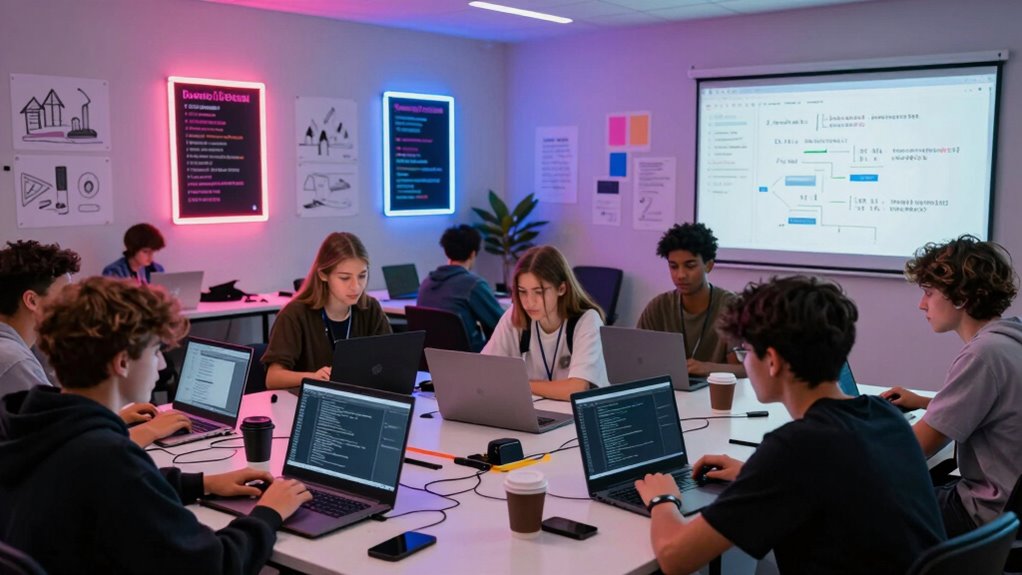
Teen coders in student hackathons are shaping the future by rapidly developing innovative solutions across disciplines like AI, IoT, and data visualization. These events foster hands-on learning, teamwork, and exposure to new technologies, boosting your skills and portfolio. As you participate, you connect with mentors and industry trends that can propel your career forward. Stay with us to discover how these hackathons are revolutionizing industries and empowering the next generation of innovators.
Key Takeaways
- Teen coders at hackathons develop innovative solutions using cutting-edge technologies like AI and IoT, shaping future industry trends.
- These events foster interdisciplinary collaboration, enhancing problem-solving and soft skills vital for future careers.
- Projects often evolve into real products, providing teens with practical experience and strong portfolios for job markets.
- Hackathons promote creativity and outside-the-box thinking, encouraging teens to drive societal and technological advancements.
- Participants build industry connections, gaining mentorship and exposure to current research, influencing future tech development.

Student hackathons are rapidly growing events that bring together students from diverse backgrounds to collaborate intensively on real-world problems within a limited timeframe. As a participant, you’ll find yourself working in teams—sometimes dozens or even hundreds—focused on creating innovative prototypes, apps, or solutions in just 24 to 48 hours. These events are not only about coding; they encompass design, business, healthcare, and other disciplines, fostering interdisciplinary collaboration. Whether you’re a beginner or an advanced coder, hackathons provide a hands-on environment where you can learn new skills, experiment with technologies, and solve pressing challenges.
During these intense sessions, your team will develop prototypes rapidly, often using modern tools like AI frameworks, cloud services, and data visualization dashboards. Mentors and guest speakers from the tech industry guide you through technical and soft skills, helping you sharpen problem-solving abilities and improve communication. You’ll gain experience in areas like mobile development, data storytelling, and hardware integration—skills that are *indispensable* in today’s job market. Many projects from hackathons evolve into real products or prototypes that can be showcased in interviews or incubators, boosting your portfolio and career prospects. Hackathons also promote innovation by encouraging participants to think outside the box and develop novel solutions.
Hackathons build skills in AI, cloud, data visualization, mobile development, and hardware—key assets for today’s tech careers.
Furthermore, these events often leverage cutting-edge technology trends like AI, IoT, and data visualization, which are integral to current research and industry priorities. Hackathon organizers frequently utilize free-tier cloud platforms for deployment and collaboration, making high-tech solutions accessible to all participants. The events’ organizational scale continues to grow, requiring months of planning, sponsorship, and logistical coordination, but the impact is clear. Hackathons are shaping the future by nurturing creative problem-solvers, fostering industry connections, and inspiring solutions that extend well beyond the event itself. As a participant, you’re not just coding—you’re actively building the future of technology and society.
Frequently Asked Questions
How Do Hackathons Support Long-Term Student Career Development?
Hackathons boost your long-term career by giving you hands-on experience with modern tools like AI, data visualization, and cloud platforms. You’ll develop practical skills through intensive sprints, workshops, and mentorship, building a portfolio of prototypes that impress employers. Networking with recruiters and industry sponsors during these events opens doors to internships and jobs. Plus, the projects you create often lead to further development, collaborations, or even startups, shaping your professional growth.
What Measures Are Taken to Ensure Inclusivity and Diversity?
You might think inclusivity just happens naturally, but hackathons actively take steps to make everyone feel welcome. They offer beginner tracks, mentorship, and remote options, even if travel costs still pose barriers. Organizers focus on equity, working to involve underrepresented groups and ensure diverse participation. By fostering accessible environments, they aim to break down walls—though, admittedly, they’re still learning how to eliminate all of them completely.
How Do Student-Led Hackathons Sustain Funding and Resources?
You sustain funding and resources for student-led hackathons by building strong partnerships with industry sponsors and universities, which provide financial support, mentorship, and prizes. You also leverage community engagement and alumni networks to attract ongoing sponsorships and donations. Additionally, securing grants and hosting fundraising events help cover costs. Demonstrating the event’s impact on skill development and career outcomes encourages continued backing from stakeholders and guarantees long-term resource availability.
What Role Do Universities Play in Organizing These Events?
Universities play a vital role by organizing, funding, and promoting hackathons. They provide venues, resources, and mentorship, helping to attract diverse participants. Universities also partner with industry sponsors and facilitate outreach to underrepresented groups. You can leverage these events for student engagement, skill development, and community impact. By supporting hackathons, universities foster innovation, build talent pipelines, and strengthen their reputation as hubs of technological advancement and collaborative learning.
How Are Post-Hackathon Projects Transitioned Into Real-World Solutions?
Think of post-hackathon projects as seeds waiting to grow. You can turn them into real-world solutions by connecting teams with industry mentors, incubators, and university resources. Many projects evolve through ongoing development, pitching to investors, or integrating into startups. Hackathons often provide pathways for projects to gain recognition, secure funding, and partner with organizations, transforming quick prototypes into impactful, lasting solutions that address real community and industry needs.
Conclusion
So, next time you hear about teen coders winning hackathons, don’t just shrug it off. Remember, these young geniuses might just be the future inventors of the next big thing—or the reason your smart fridge starts giving you attitude. Either way, they’re proving that age isn’t a barrier, just a badge of honor. Who knew that in a few years, your biggest tech annoyance could come from the kid who once hacked your Wi-Fi?