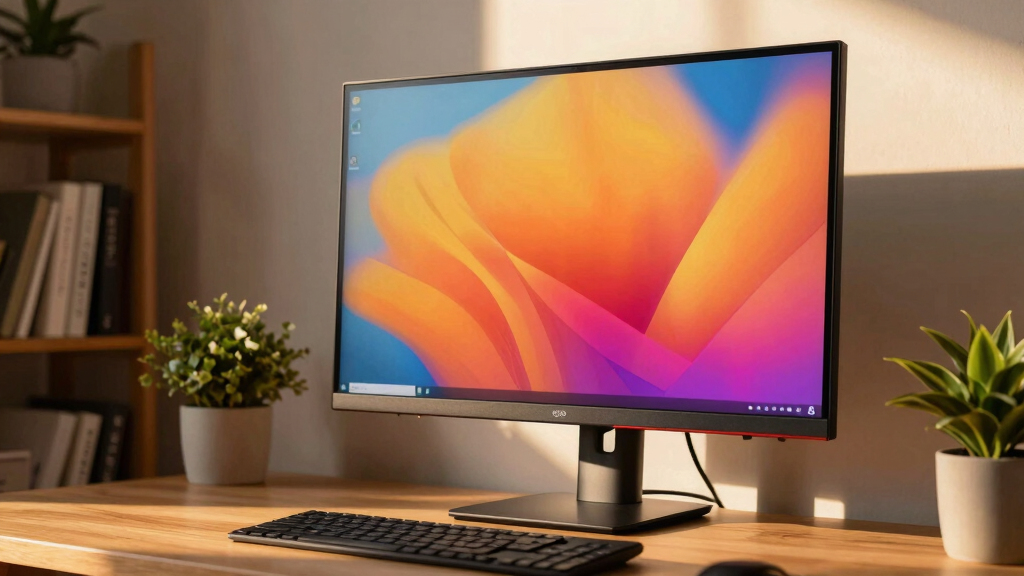

Finding the best monitors for programmers over $500 involves balancing screen real estate, color accuracy, resolution, and connectivity. The top pick, the LG 40U990A-W, offers an immersive 5K2K WUHD display with Thunderbolt 5 for seamless workflows. Meanwhile, models like the Samsung Odyssey G9 and BenQ RD280UA excel in ultra-wide and ergonomic design, respectively. Each of these options makes different tradeoffs—whether it’s size, refresh rate, or price—so understanding your priorities is key. Continue reading for a detailed breakdown of each monitor and how they stand out in this premium category.
Key Takeaways
- High resolution and large screen sizes dominate the top tier, offering extensive workspace for multitasking.
- OLED technology and ultra-wide aspect ratios are common among the best options, improving visual clarity and immersion.
- Connectivity options like Thunderbolt 5 and USB-C are crucial for seamless integration into modern workflows.
- Tradeoffs often include premium pricing versus features like refresh rate or color accuracy, requiring buyers to prioritize their needs.
- Premium build quality and ergonomic features are standard, but some models focus more on gaming performance while others excel in professional tasks.



More Details on Our Top Picks
LG 45GX950A-B 45-inch Ultragear 5K2K WUHD OLED Curved Gaming Monitor, Dual-Mode, 165Hz, 0.03ms, G-Sync, FreeSync, HDR True Black 400, USB-C 90W
The LG 45GX950A-B stands out for its expansive 45-inch curved OLED display, offering a 5K2K resolution that surpasses the 32-inch LG OLED for detailed workflows. Its ultra-wide 21:9 aspect ratio and deep blacks deliver an immersive experience ideal for detailed coding, multimedia editing, and gaming. The dual-mode refresh rate—165Hz for high-performance tasks and 330Hz in WFHD—provides versatility, unlike the more gaming-focused Samsung Odyssey G9, which emphasizes ultra-wide gaming but at the cost of workspace complexity. The premium price and large footprint make it less suited for casual setups, but for professionals needing color accuracy and expansive screens, this model excels. It’s perfect for those who want a combination of top-tier visuals and multi-purpose performance, despite the high cost and space requirements.
Pros:- Exceptional 5K2K OLED resolution with vibrant colors and deep blacks
- Ultra-wide 45-inch curved display enhances immersion
- Dual-mode allows switching between high-res and ultra-responsive gaming modes
- Fast response time of 0.03ms minimizes ghosting
Cons:- Premium price point may be prohibitive for some users
- Large size demands significant desk space
- Limited to high-end gaming and professional use
Best for: Professional developers, digital artists, and multimedia creators who need expansive, color-accurate displays with high responsiveness.
Not ideal for: Casual users with limited desk space or those seeking a more budget-friendly monitor for routine programming tasks.
- Display Size:45 inches
- Resolution:5120 x 2160 (5K2K WUHD)
- Panel Type:OLED
- Refresh Rate:165Hz (dual mode), 330Hz (WFHD mode)
- Response Time:0.03ms (GtG)
- Brightness:Up to 1300 nits
Bottom line: This monitor makes the most sense for professionals and serious gamers who prioritize visual quality and immersive experience over cost and space considerations.
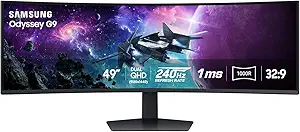
The Samsung Odyssey G9 offers a colossal 49-inch curved display with Dual QHD resolution, making it ideal for gamers and multitaskers alike. Its 240Hz refresh rate and 1ms response time ensure smooth, tear-free gameplay, comparable to the LG UltraGear OLED but with a broader visual real estate. While the G9 excels in creating an immersive gaming environment, it also functions well for multiple coding windows or complex workflows, unlike more specialized professional monitors. Its size may be excessive for standard desks, and its premium features come with a hefty price tag, but the high contrast and HDR 1000 support make it a compelling choice for those who want a versatile, ultra-wide display. It’s best suited for users who prioritize gaming immersion and multitasking over pixel-perfect color accuracy.
Pros:- Ultra-wide 49-inch curved display for immersive experience
- High 240Hz refresh rate and 1ms response for smooth gameplay
- HDR 1000 and high contrast ratio deliver vivid visuals
- Adjustable ergonomic stand and customizable lighting
Cons:- Requires a large desk space, which may be impractical
- Premium price may be a barrier for some users
- Complex setup with many features might be overwhelming
Best for: Gamers and power users who want a massive, curved display for gaming, multitasking, and creative workflows that benefit from ultra-wide real estate.
Not ideal for: Users with limited space or those seeking a traditional, color-accurate monitor for detailed editing or professional work.
- Screen Size:49 inches
- Resolution:5120×1440 (Dual QHD)
- Refresh Rate:240Hz
- Response Time:1ms(GtG)
- Brightness:1000 nits
- HDR:DisplayHDR 1000
Bottom line: Ideal for gamers and multitaskers who want an expansive, immersive display, despite its large size and cost.
LG 32GX850A-B 32″ UltraGear 4K UHD OLED Gaming Monitor with G-SYNC and FreeSync Premium Pro
The LG 32GX850A-B combines a 32-inch 4K UHD OLED panel with ultra-fast response times, making it a strong contender for those who need high resolution in a more manageable size. Its OLED technology ensures striking contrast and vibrant colors, comparable to larger OLEDs but in a more space-efficient package. This model’s dual-mode refresh rate—165Hz and 330Hz—offers flexibility for different workflows, similar to the LG 45GX950A but in a smaller footprint. While it may lack the ultra-wide aspect ratio some programmers prefer, it excels in providing crisp details and rapid responsiveness for coding, video editing, and gaming. However, the premium price and glossy finish could pose challenges in bright environments, especially for users with limited desk space seeking a larger display.
Pros:- Vivid 4K UHD OLED display with deep blacks and vibrant colors
- Ultra-fast 0.03ms response time for smooth visuals
- Dual-mode refresh rate for gaming and productivity
- Extensive ergonomic adjustments
Cons:- High price for a 32-inch screen may deter budget-conscious buyers
- Glossy finish can cause reflections in bright rooms
- Limited screen size may be less ideal for multi-window workflows
Best for: Developers and creators who prioritize high resolution, color accuracy, and space efficiency in a versatile OLED display.
Not ideal for: Those needing large, ultra-wide screens for multitasking or extensive side-by-side coding windows.
- Display Size:32 inches
- Resolution:3840 x 2160 (4K UHD)
- Panel Type:OLED
- Refresh Rate:165Hz / 330Hz (dual mode)
- Response Time:0.03ms (GtG)
- Contrast Ratio:1.5M:1
Bottom line: A compact, high-performance OLED choice perfect for users who need excellent visuals without the size of larger monitors.
LG 40U990A-W 40-inch Ultrafine evo 5K2K WUHD Curved Monitor with Thunderbolt 5
The LG 40U990A-W delivers a 40-inch curved Nano IPS Black display with 5K2K resolution, targeting creators and professionals who need a large, color-accurate workspace. Its Thunderbolt 5 and multiple connectivity options—including HDMI, DisplayPort, and USB-C—make it highly versatile for complex setups, surpassing the connectivity options of the LG 45GX950A in terms of professional interfaces. The VESA DisplayHDR 600 and 99% DCI-P3 coverage ensure vibrant, accurate visuals suitable for color-critical tasks. While the size and high price may be overkill for routine programming, it excels for those who want a combination of high resolution, flexibility, and ergonomic features. Its complex setup is best suited for users comfortable with advanced configurations.
Pros:- Exceptional 5K2K resolution with vivid, accurate colors
- Multiple high-speed connectivity options including Thunderbolt 5
- Ergonomic adjustments and eye comfort features
- Supports daisy chaining and KVM for expanded workflows
Cons:- High price may be prohibitive for non-professional users
- Large size requires significant desk space
- Setup complexity could be challenging for some users
Best for: Creative professionals, video editors, and developers who need a large, versatile display with extensive connectivity and color fidelity.
Not ideal for: Casual programmers or users with limited desk space who prefer a smaller or more straightforward monitor.
- Display Size:40 inches
- Resolution:5120 x 2160 (5K2K)
- Panel Technology:Nano IPS Black
- HDR:VESA DisplayHDR 600
- Connectivity:Thunderbolt 5, HDMI 2.1 x2, DisplayPort 2.1, USB-C
- Stand Adjustments:Tilt, Height, Swivel
Bottom line: This monitor is tailored for professionals demanding a large, high-resolution workspace with top-tier connectivity and color accuracy, despite its cost and setup complexity.
Alienware 34 240Hz QD-OLED Curved Gaming Monitor – AW3425DW
This monitor distinguishes itself with vivid QD-OLED color accuracy and an ultra-fast 0.03ms response time, making it ideal for programmers who also want a visually stunning experience. Compared with the Samsung G9, it sacrifices size for a more focused ultrawide that’s easier to fit on standard desks, but its brightness is somewhat limited for HDR viewing. The high refresh rate and rapid response make it well-suited for multitasking and fast interactions, although the high price and size may be a barrier for some users. Its curved display enhances immersion and reduces eye strain during extended coding sessions, yet the lower peak brightness can impact HDR quality in bright environments.
Pros:- Vivid QD-OLED color accuracy enhances code syntax highlighting and visuals
- Exceptional 0.03ms response time reduces ghosting during fast interactions
- Ultra-fast 240Hz refresh rate supports multitasking and smooth window switching
- Immersive curved ultrawide display helps reduce eye fatigue during long coding sessions
Cons:- Relatively high price limits accessibility for some budgets
- HDR brightness is limited to 250 nits, reducing HDR impact
- Large size may not fit all desk setups comfortably
Best for: Programmers who value vibrant colors, fast responsiveness, and immersive ultrawide experience within a compact space
Not ideal for: Users seeking maximum HDR brightness or those with limited desk space due to its large footprint
- Screen Size:34.2 inches
- Resolution:3440×1440 (WQHD)
- Refresh Rate:240Hz
- Response Time:0.03ms
- Display Type:OLED
- Contrast Ratio:1,500,000:1
Bottom line: This monitor suits developers who want a premium, vibrant, ultrawide display with exceptional speed, and size is not a concern.
Samsung 49″ Odyssey OLED G9 (G91SD) Curved Gaming Monitor, Dual QHD, 144Hz, 0.03ms, G-Sync Compatible, FreeSync Premium Pro, Ergonomic Stand
The Samsung Odyssey G9 offers a massive 49-inch dual QHD curved display with QD-OLED technology for stunning contrast and color depth, surpassing the smaller Alienware in sheer size and field of view. Its 144Hz refresh rate and 0.03ms response time make it excellent for multitasking and gaming alike, while its ergonomic stand allows for comfortable long hours of coding. Compared to the smaller ASUS OLED, the G9’s size can be overwhelming for some, and its premium price reflects its high-end features. The large curve and dual resolution make it ideal for developers working on complex multi-window setups, but the size demands a substantial desk and might be unwieldy for some users.
Pros:- Immersive 49-inch dual QHD display for extensive multitasking
- Deep blacks and vibrant colors from QD-OLED technology
- Adjustable ergonomic stand for comfort during long sessions
- Fast response time supports smooth visuals during intensive tasks
Cons:- Extensive desk space required due to large size
- Premium cost may be prohibitive
- Complex setup can be challenging for non-technical users
Best for: Developers and power users needing a gigantic, vibrant display for multitasking and detailed visual work
Not ideal for: Those with limited desk space or seeking a more modest monitor for basic coding tasks
- Screen Size:49 inches
- Resolution:5120 x 1440 (Dual QHD)
- Refresh Rate:144Hz
- Response Time:0.03ms
- Panel Technology:QD-OLED
- HDR:VESA DisplayHDR True Black 400
Bottom line: This monitor is perfect for developers who need a vast, high-contrast display and have ample space, but it’s overkill for simpler setups.
BenQ RD280UA 28.2” 4K Programming Monitor with Ergo Arm and Eye-Care Tech
The BenQ RD280UA delivers a sharp 4K resolution on a 28.2-inch Nano Matte panel, making it ideal for detailed coding and multi-window workflows. Its ergonomic flexible arm and eye-care features like Night Hours Protection significantly reduce fatigue, setting it apart from larger, less adjustable monitors like the G9. While its size is more manageable for standard desks, its focus on ergonomics and eye comfort makes it especially suited for developers working long hours. The limited port options and higher price for a 28-inch display may be downsides for some, but its specialized features make it a dedicated programming workstation.
Pros:- High-resolution 4K display enhances code readability and multitasking
- Ergonomic flexible arm allows precise positioning
- Eye-care technology minimizes eye strain during prolonged use
- Anti-glare Nano Matte surface reduces reflections
Cons:- Higher price point relative to size
- Limited port options reduce connectivity flexibility
- Primarily designed for programming, less suited for gaming or graphics work
Best for: Programmers prioritizing ergonomics, high resolution, and extended comfort in their daily work
Not ideal for: Gamers or creative professionals seeking high refresh rates or color gamut for visual arts
- Screen Size:28.2 inches
- Resolution:3840×2560 (4K)
- Panel Type:Nano Matte
- Connectivity:90W USB-C
- Features:Ergo Flexible Arm, Night Hours Protection
- Special Mode:Coding HotKey
Bottom line: This monitor is ideal for developers who need a crisp display with ergonomic features for all-day comfort, but it’s less suitable for gaming or multimedia tasks.
ASUS ROG Strix 27” 1440P OLED Gaming Monitor (XG27AQDMG)
The ASUS ROG Strix XG27AQDMG offers a 27-inch OLED panel with 240Hz refresh rate and 0.03ms response time, making it a superb choice for both gamers and creators who need precise color and fast visuals. It surpasses smaller monitors like the BenQ in terms of refresh rate and gaming features but is limited in size for those who prefer larger displays. Its 99% DCI-P3 coverage ensures vibrant, accurate colors, while the anti-flicker and uniform brightness features help reduce burn-in risk, making it more durable for long-term use. However, the potential for burn-in remains a concern despite protective measures, and its premium price makes it less accessible for casual users.
Pros:- High refresh rate and rapid response support smooth gaming and detailed coding
- Excellent 99% DCI-P3 coverage for color-critical work
- Advanced cooling and anti-flicker tech prolongs panel life
- Compact 27-inch size fits smaller desks comfortably
Cons:- Potential burn-in risk despite protective features
- Premium price limits availability for some users
- Limited screen real estate compared to ultrawide options
Best for: Creative professionals and gamers who need excellent color accuracy and fast response times in a compact size
Not ideal for: Developers seeking larger screens for extensive multitasking or users with a limited budget
- Size:27 inches
- Resolution:2560 x 1440 (QHD)
- Refresh Rate:240Hz
- Response Time:0.03ms
- Panel Type:OLED
- Color Coverage:99% DCI-P3
Bottom line: This monitor excels for those needing a compact, color-accurate display with fast response, but it’s less suited for users requiring larger screens for multitasking.
Samsung 57″ Odyssey Neo G9 (G95NC) Dual UHD Curved Gaming Monitor, 240Hz, 1ms, Quantum Mini-LED, HDR 1000, DisplayPort 2.1
The Samsung Odyssey Neo G9 is the largest in this lineup, with a dual UHD curved display offering an unparalleled expansive workspace. Its Quantum Mini-LED technology delivers exceptional contrast and brightness, outpacing many others in HDR performance, including the Alienware and ASUS models. While primarily aimed at gamers, its vast real estate makes it a compelling option for developers who need a massive, detailed view of multiple windows and codebases simultaneously. However, its size demands a substantial desk setup, and the high price may be restrictive. Its 240Hz refresh rate and 1ms response time ensure smooth visuals, but the size and complexity may overwhelm casual or space-constrained users.
Pros:- Massive dual UHD display provides extensive multitasking space
- Quantum Mini-LED for superior contrast and HDR performance
- High refresh rate and quick response support smooth visuals
- Multiple input options and ergonomic adjustments for customization
Cons:- Huge footprint requires significant desk space
- Premium price limits accessibility
- Setup complexity may challenge some users
Best for: Power users and developers who want an extremely large, high-contrast display for multitasking or immersive coding experiences
Not ideal for: Users with limited space or those seeking a more modest, budget-friendly monitor
- Screen Size:57 inches
- Resolution:Dual 4K UHD
- Refresh Rate:240Hz
- Response Time:1ms (GTG)
- Panel Technology:Quantum Mini-LED
- HDR:DisplayHDR 1000
Bottom line: This monitor is best for those with ample space who need an ultra-wide, high-end display for multitasking and immersive visuals, understanding size is a key factor.
ASUS ROG Swift 32” 4K QD-OLED Gaming Monitor (PG32UCDM)
Compared with the LG 38WR85QC-W, the ASUS PG32UCDM excels in delivering exceptional contrast and color vibrancy with its 4K QD-OLED panel, making it ideal for creators who value deep blacks and vivid imagery. Its 240Hz refresh rate and 0.03ms response time provide outstanding motion clarity, although this performance comes at a premium price point. The advanced heat management system helps prevent burn-in, a common concern with OLEDs, but the high cost and specialized use mean it might be overkill for purely productivity-focused users. For those who blend creative work with gaming, this monitor offers unmatched visual quality, but it may not be practical for general office tasks.
Pros:- Vivid, high-contrast OLED display with 99% DCI-P3
- Exceptional 240Hz refresh rate and 0.03ms response time for smooth motion
- Advanced heat and burn-in mitigation features
- Supports G-SYNC and HDR400 for enhanced visual experiences
Cons:- Premium price may be prohibitive for many users
- Potential burn-in risk despite mitigation features
- Limited suitability for non-gaming, non-creative workflows
Best for: High-end creative professionals and gamers who prioritize color accuracy and fast response times.
Not ideal for: Budget-conscious users or those seeking a monitor primarily for coding and multitasking without high-end gaming or creative demands.
- Display Size:32 Inches
- Resolution:3840 x 2160 (4K UHD)
- Display Type:QD-OLED
- Refresh Rate:240 Hz
- Response Time:0.03 ms (GTG)
- HDR:DisplayHDR 400, True Black
Bottom line: This monitor is best suited for creators and gamers who need top-tier visuals and are comfortable with a high investment.
LG 38WR85QC-W 38-Inch Curved UltraWide WQHD Nano IPS Monitor with HDR 600
This 38-inch curved UltraWide monitor makes a strong case for programmers who manage multiple windows or need a panoramic view. With its Nano IPS panel covering 98% DCI-P3 and HDR 600 support, it offers superb color accuracy and contrast, surpassing standard IPS monitors like the ASUS PG32UCDM in immersive multitasking. The 144Hz refresh rate and 1ms response time ensure smooth interactions, especially during multimedia tasks or light gaming. Its large footprint and curved design might not suit everyone, especially those with limited desk space or preference for flat screens. Overall, this monitor pairs high-quality visuals with ergonomic flexibility, making it ideal for productivity and creative workflows, though the price reflects its premium nature.
Pros:- Large 38-inch curved display enhances multitasking
- Excellent color accuracy with Nano IPS and HDR 600
- Fast 144Hz refresh rate and 1ms response time for fluid interactions
- Multiple ergonomic adjustments including height, tilt, and swivel
Cons:- High price point may be prohibitive
- Size and curve may be less suitable for static coding setups
- Requires significant desk space
Best for: Professionals who need an expansive, color-accurate display for multitasking, creative work, and occasional gaming.
Not ideal for: Users with limited space or those who prefer flat, smaller monitors for single-task focus.
- Display Size:38 inches
- Resolution:3840×1600 (WQHD+)
- Panel Type:Nano IPS
- Curvature:2300R
- HDR:VESA DisplayHDR 600
- Refresh Rate:144Hz
- Response Time:1ms (GtG)
Bottom line: This monitor suits users who need a broad, high-quality display for multitasking and creative work in a premium package.

How We Picked
The monitors in this roundup were chosen based on a combination of performance, build quality, usability, and value for high-end programming setups. Priority was given to models offering high resolutions (4K or above), large screen sizes (40 inches or more), and features that support extended use—such as ergonomic stands and eye care tech. Connectivity options like Thunderbolt and USB-C were also considered essential for seamless integration. We ranked products by balancing these factors with real-world usability, ensuring each option provides a meaningful advantage for programmers working over $500 budget thresholds.Factors to Consider When Choosing Best Monitors For Programmers Over $500
When selecting a monitor over $500 for programming, it’s important to look beyond basic specs and consider how the features align with your workflow. Size and resolution are fundamental, but ergonomic design, connectivity, and display technology can significantly impact your daily productivity. Understanding these factors helps you avoid common pitfalls like choosing a monitor that’s too small or incompatible with your setup. Here are key considerations to guide your decision.Screen Size and Resolution
Large screens (40 inches and above) paired with high resolutions like 4K or 5K provide the space needed for multiple windows and complex code editing. Ultra-wide monitors offer even more horizontal space, reducing the need to switch between tabs. However, larger monitors require more desk space and may demand more powerful hardware to drive the display smoothly. Balancing size and resolution ensures you get enough workspace without sacrificing clarity or performance.
Color Accuracy and Panel Technology
For developers working with design, UI, or visual assets, color accuracy becomes essential. OLED panels and Nano IPS technology deliver superior contrast and color reproduction, making details pop. For general programming, these features enhance comfort over long sessions. Beware that premium color accuracy can add cost, and some panels may have issues like burn-in or uneven backlighting—so understanding panel technology helps avoid these pitfalls.
Connectivity and Compatibility
Modern programming setups benefit from Thunderbolt 5 and USB-C ports, enabling fast data transfer and single-cable connectivity for power and video. Check your hardware compatibility before purchasing—some monitors may lack the ports you need or may require adapters. Integrated hubs with multiple USB ports can also streamline your workspace, reducing cable clutter and improving efficiency during long coding sessions.
Ergonomics and Build Quality
Adjustable stands, height, tilt, and swivel features are vital for maintaining comfort during extended work periods. A well-built, sturdy monitor reduces vibrations and movement, which can cause eye strain or discomfort. Some high-end models include features like anti-glare coatings and flicker-free technology, further improving long-term usability. These ergonomic details can justify higher prices by supporting your health and productivity.
Refresh Rate and Response Time
While high refresh rates are more critical for gaming, they can also benefit coding tasks by providing smoother visuals when scrolling or switching windows. Most monitors in this category focus on static display quality, but some, like the Alienware AW3425DW, combine high refresh rates with OLED technology for versatile use. Weigh the importance of refresh rate against other features—if your work involves multimedia or gaming, prioritize higher rates; otherwise, focus on resolution and color accuracy.
Frequently Asked Questions
Is a 40-inch monitor too large for a typical desk?
A 40-inch monitor can be a significant addition to your desk, but it’s not necessarily too large if you have ample space. These monitors are designed to maximize workspace and reduce the need for multiple monitors. However, ensure your desk can support the weight and size, and that your graphics card can drive the resolution smoothly. Proper ergonomic placement is essential to avoid neck or eye strain, so consider adjustable stands and good viewing distance.
Should I prioritize OLED or Nano IPS panels for programming?
OLED panels provide exceptional contrast and deep blacks, which can reduce eye strain and improve visual clarity for long coding sessions. Nano IPS panels, on the other hand, offer very accurate colors and wider viewing angles at generally lower costs. For programming, the choice depends on whether you value color fidelity more or contrast and black levels. Both technologies are excellent, but OLED tends to be more premium and may have concerns like burn-in if used improperly.
Is a higher refresh rate over 120Hz necessary for programming?
For most programming tasks, a refresh rate over 120Hz isn’t essential. Higher rates are mainly beneficial for gaming or multimedia editing where smooth motion matters. However, a higher refresh rate can make scrolling and window transitions feel more fluid, which can reduce eye fatigue during long sessions. If you also game or do video editing, prioritizing a monitor with 144Hz or higher might be worthwhile; otherwise, resolution and ergonomics should take precedence.
How important is USB-C or Thunderbolt connectivity for programmers?
USB-C and Thunderbolt ports are highly valuable for programmers because they allow you to connect multiple peripherals and transfer data quickly with a single cable. This reduces clutter, simplifies your workspace, and can deliver power and video simultaneously. If your laptop or desktop supports these standards, choosing a monitor with these ports makes your setup more streamlined and future-proof, especially as devices increasingly rely on these connection types.
Are there benefits to ultra-wide monitors over dual monitor setups?
Ultra-wide monitors offer a seamless, single-screen experience that can improve workflow by eliminating bezels and misalignments between separate displays. They also reduce cable clutter and can be more space-efficient. However, ultra-wide screens tend to be more expensive and require more powerful hardware to drive effectively. For those who prefer a clean, continuous workspace, ultra-wide monitors are an excellent choice; for others, dual monitors might offer more flexibility and easier customization.
Conclusion
For most programmers, the LG 40U990A-W stands out as the best overall choice thanks to its combination of high resolution, large size, and versatile connectivity. Those seeking the best value might prefer the BenQ RD280UA for its ergonomic design and affordability. If premium build quality and top-tier visuals are your priority, the ASUS ROG Swift 32” OLED offers an exceptional experience. Beginners or those new to high-end setups should consider models with adjustable ergonomics and straightforward connectivity, like the LG 38WR85QC-W. Finally, professionals working with color-sensitive tasks should lean toward OLED or Nano IPS options for accurate visuals.