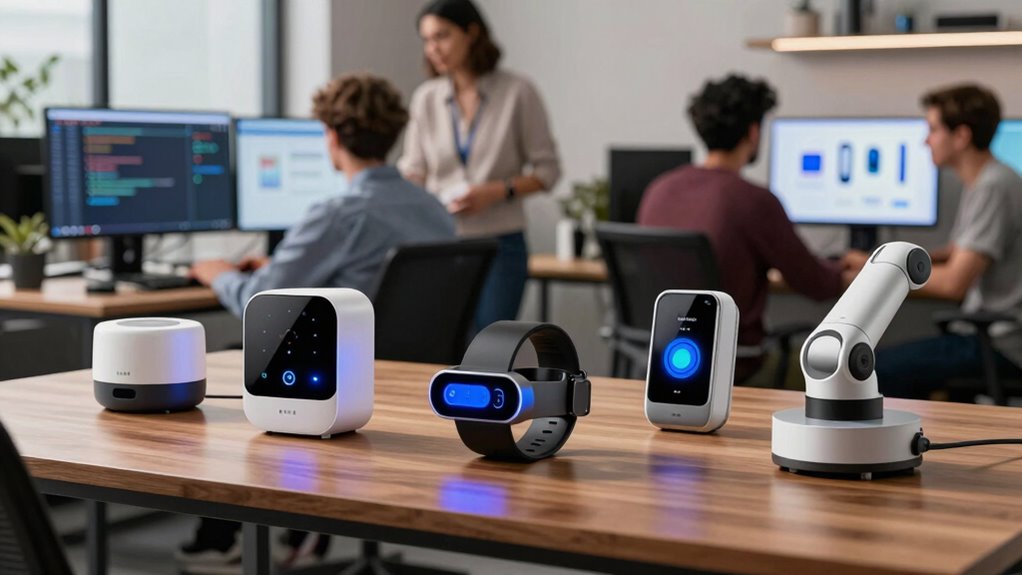

Many hackathon projects have become successful products you might use daily. For example, Oculus VR started in a garage before Facebook bought it for $2 billion. Product Hunt grew from a simple email list into a massive platform. Planio evolved from a dev shop into a popular SaaS. These stories show that innovative ideas from hackathons can turn into game-changing solutions. Keep exploring to uncover more inspiring stories behind these transformative projects.
Key Takeaways
- Oculus VR evolved from a hackathon project into a $2 billion VR headset company.
- Product Hunt started as a simple email list and became a major platform with hundreds of thousands of users.
- Planio transitioned from a dev shop tool to a SaaS used by over 1,500 customers.
- Fireworks AI models from hackathons led to the development of ProoferX, an automated documentation tool.
- Many successful startups leverage hackathon ideas as launchpads for scalable, market-ready products.
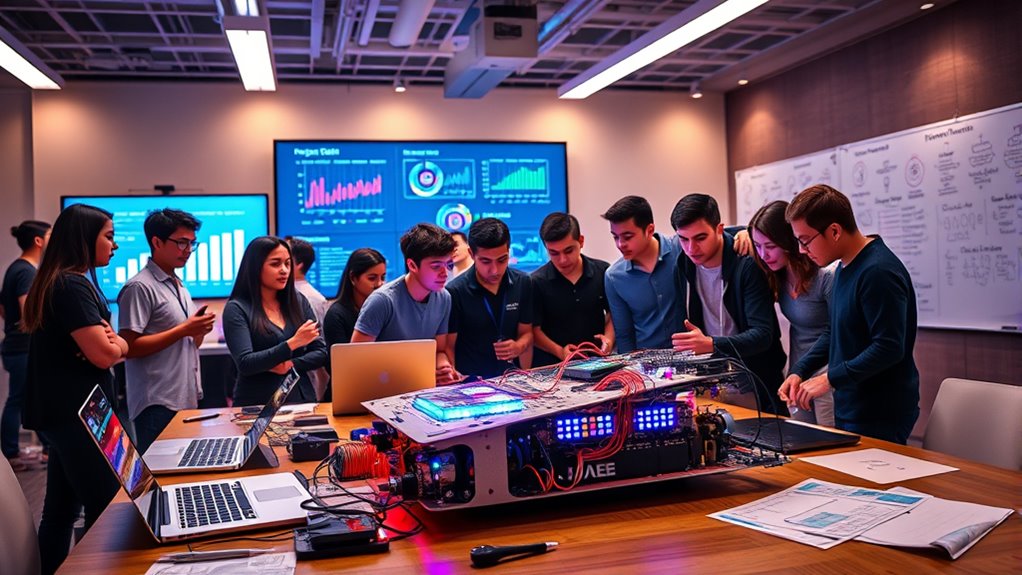
Hackathons have become a breeding ground for innovative solutions that blend technology with social impact, business growth, and personal passion. When you participate, you tap into a fast-paced environment that pushes you to turn ideas into real-world products swiftly. Many of these projects don’t just stay on paper; they evolve into successful products and companies that make a significant difference. Take the P&G Social Good Hackathon, for example. Conducted across seven cities, it focused on social challenges like women’s health, menstrual hygiene, mental health, and healthcare access. With themes like “Lady Problems Series,” over 1,000 participants generated more than 230 solutions, including scent-diffusing alarms and smart air filtration devices using Febreze technology. Not only did this showcase innovative thinking, but it also aligned business goals with social good, boosting P&G’s reputation as an innovator committed to social impact. Hackathon projects frequently transition from prototypes to market-ready products. Similarly, the Lyf Sustainability Hackathon in Singapore produced 30 creative solutions aimed at making communities more sustainable. One standout project, GreenGO!, combined personalized eco-tasks with real-time carbon tracking for properties, demonstrating how hackathon creativity can lead to tangible sustainability tools. This event, hosted at SWITCH—Singapore’s premier innovation festival—highlighted talents to global leaders and reinforced Lyf’s image as a forward-thinking, innovation-friendly brand. It’s proof that hackathon projects, when aligned with company visions, can develop into scalable solutions that benefit both society and business. Your efforts in hackathons can also lead to recognition and further development. For instance, Nehil Jain’s team secured three consecutive wins using Fireworks AI models to improve documentation reliability and automate tasks like release notes. Their project, ProoferX, converts URLs into markdown, then validates code through AI models, boosting developer confidence in technical documentation. This consistent success illustrates how hackathon innovations can mature into reliable, deployable tools, eventually finding a place in the tech ecosystem. These examples demonstrate how hackathons can be a launchpad for real products, especially when teams leverage structured innovation processes to guide their development. Palmer Luckey’s garage project that became Oculus VR started as a side project, eventually leading to a $2 billion sale to Facebook before a consumer product even launched. Similarly, Product Hunt began as a simple email list for tech enthusiasts, growing into a platform used by hundreds of thousands monthly and sold for $20 million. The Planio project management tool, created by a dev shop to manage complex client projects, evolved into a standalone SaaS used by over 1,500 customers, becoming a major contributor to the open-source Redmine project. Participating in hackathons can turn your innovative ideas into impactful products with lasting influence. These stories show that with focus, agility, and creativity, what starts as a quick project can grow into a game-changing solution.
Frequently Asked Questions
How Do Hackathon Projects Secure Funding for Development?
To secure funding for your hackathon project’s development, you should showcase its potential impact and scalability. Present a clear business plan, including market size, revenue models, and user benefits. Network with judges, mentors, and investors during and after the event, pitching your idea passionately. Consider applying for startup grants, accelerators, or seed funding programs that support innovative solutions. Building a prototype or MVP can also attract investors’ interest.
What Are Common Challenges in Turning Hacks Into Products?
Around 40% of hackathon projects face challenges turning into products. You often struggle with scaling ideas, securing ongoing funding, and validating market fit. Time constraints limit thorough testing, and team dynamics can shift as priorities change. Additionally, technical debt and lack of business expertise hinder progress. To succeed, you need clear roadmaps, mentorship, and support to navigate these hurdles and transform innovative hacks into viable, sustainable products.
How Long Does It Typically Take to Commercialize a Hackathon Idea?
It usually takes anywhere from a few months to over a year to commercialize a hackathon idea. You’ll need to refine your concept, develop a prototype, test it, and gather user feedback. Then, you’ll focus on building a scalable product, securing funding, and steering regulatory or market challenges. Staying committed, adaptable, and efficient throughout this process accelerates your journey from hackathon prototype to a market-ready product.
Which Industries Benefit Most From Hackathon-Driven Innovations?
You’re in luck—industries like technology, healthcare, and sustainability reap the biggest benefits from hackathon innovations. These sectors face complex problems that require fresh, rapid solutions, making hackathons a goldmine for breakthroughs. Your team can develop groundbreaking apps, AI tools, or eco-friendly solutions in days, transforming industries overnight. Hackathons accelerate innovation cycles, helping companies stay ahead of competitors and address pressing issues with creative, actionable ideas.
What Skills Are Essential for Successful Hackathon-To-Product Transitions?
You need strong technical skills like coding, design, and data analysis to turn ideas into prototypes quickly. Equally important are problem-solving abilities, creativity, and adaptability to handle evolving challenges. Communication skills help you pitch your solution effectively to stakeholders. Project management skills guarantee you stay on track. Collaboration and resilience are vital for overcoming setbacks. By balancing these skills, you’ll increase your chances of transforming hackathon innovations into successful, sustainable products.
Conclusion
Imagine turning your wildest hackathon ideas into tangible products that change lives. These projects prove that with passion and innovation, your flashes of inspiration can grow into real-world solutions. So, next time you code late into the night, remember: your ideas are seeds, waiting to blossom into the next big thing. Dream big, work hard, and watch as your creative sparks ignite a future brighter than you ever imagined.
Fall Picks
fall essentials
As an affiliate, we earn on qualifying purchases.