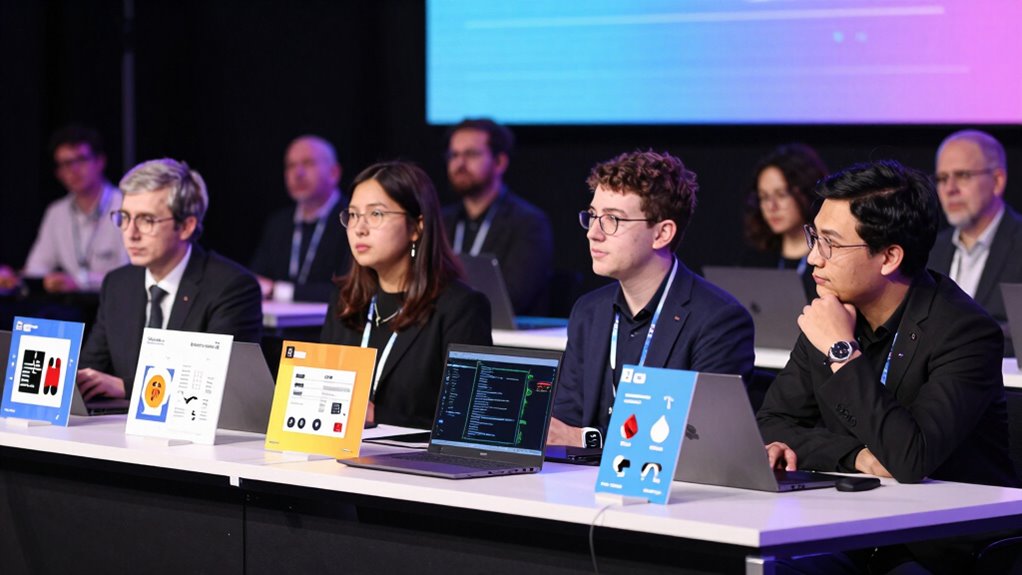

To make your hackathon project stand out, focus on demonstrating innovative ideas that solve real-world problems with broad impact. Showcase a reliable MVP, highlighting how your solution is unique and disruptive. Use clear visuals and a compelling pitch to emphasize technical excellence and market relevance. Aim for a project that’s feasible, scalable, and shows long-term potential. Keep these criteria in mind, and you’ll uncover exactly what judges are truly looking for as you explore further.

Get privacy and security gear delivered free — and shop member deals
- Fast, free delivery on millions of items
- Access to Prime Big Deal Days deals on October 6–7
- Prime Video, Amazon Music and more included
Key Takeaways
- Demonstrate technical excellence with a reliable MVP that addresses real-world problems effectively.
- Present innovative, unique ideas that push boundaries and offer fresh solutions.
- Clearly communicate the project’s impact, market relevance, and potential for broad adoption.
- Use compelling visuals and demos to showcase functionality and “Wow” factor within time limits.
- Align your project with real-world needs, emphasizing scalability, sustainability, and disruption potential.

Hackathon judges play a crucial role in uncovering the most innovative and impactful solutions, but their decision-making processes often remain behind the scenes. They evaluate projects based on multiple criteria that reflect both technical excellence and real-world relevance. Your project’s value hinges on how broadly and deeply it can impact lives, reaching not just niche markets but also large audiences. The most impressive entries demonstrate solutions that markedly solve relevant problems, with clear potential for market disruption. When your idea shows a meaningful effect on many people, and addresses known challenges with a business relevance, it stands out.
Hackathon judges prioritize innovative, impactful solutions that solve real problems and reach large audiences, emphasizing technical excellence and market disruption.
Creativity and originality are highly prized. Judges look for fresh ideas that push boundaries, pulling off something new and unique that hasn’t been done before. Your project should showcase clever techniques or transformative potential that evoke a “Wow” factor. Simply copying existing solutions won’t cut it; instead, highlight how your approach is different and how it could shake up the current landscape. The level of innovation often weighs heavily, especially if it demonstrates a clear departure from prior work, making your project memorable.
Technical execution is equally critical. Judges value the complexity involved—whether through integrating multiple components or tackling difficult problems. Your minimum viable product (MVP) must function reliably, proving that your solution is feasible and ready for deployment. They assess whether your technology can adapt to real-world conditions, considering resource needs and the practicality of your implementation roadmap. A well-crafted demo that clearly shows your solution’s functionality and benefits will resonate more than just a good idea. Additionally, demonstrating energy-efficient approaches can set your project apart, aligning with sustainable innovation trends.
Impact potential is another key factor. Projects with the ability to address significant challenges and deliver measurable efficiency gains tend to score higher. Judges consider whether your solution could be scaled for widespread adoption, whether it offers long-term sustainability, and if it provides economic value—such as reducing costs or generating revenue. The more your project aligns with real-world needs and demonstrates growth potential, the more appealing it becomes.
Presentation matters too. Clear, compelling communication during your pitch—highlighting how your project fulfills the judging criteria—can tip the scales. Use visuals and demos effectively, adhering to time limits and engaging your audience. A project that clearly demonstrates its capabilities and communicates its vision effectively will leave a lasting impression. Remember, judges appreciate projects that show not just technical prowess but also a strong understanding of market needs and potential.
Ultimately, judges seek projects that combine originality, technical skill, impactful solutions, and persuasive presentation. Showing how your project addresses real challenges, with a feasible plan for scaling and long-term sustainability, will help your entry stand out from the crowd.
Frequently Asked Questions
How Do Judges Evaluate the Long-Term Sustainability of Projects?
You should focus on how your project demonstrates economic sustainability, scalability, and long-term relevance. Show judges that your solution can adapt to real-world conditions, maintain performance over time, and address significant challenges. Highlight your implementation plan, resource management, and potential for widespread adoption. By emphasizing ongoing value and potential growth, you prove your project’s long-term viability and its ability to make a lasting impact beyond the hackathon.
What Role Does Team Collaboration Play in Scoring?
You might think team collaboration only matters for smooth progress, but judges actually see it as vital. When your team works seamlessly, it shows strong communication, shared understanding, and problem-solving skills—all of which boost your project’s score. Collaboration demonstrates your ability to innovate together and adapt under pressure. So, actively engaging with your teammates, dividing tasks effectively, and maintaining clear communication can greatly enhance your project’s overall evaluation.
Are Innovative Ideas More Valued Than Practical Solutions?
Innovative ideas are highly valued because they show originality and transformative potential, making your project stand out. However, judges also look for practical solutions that are feasible, effective, and ready for real-world deployment. You should aim to balance creativity with practicality, demonstrating how your idea can solve significant problems efficiently. Combining originality with clear implementation and impact can give your project the edge it needs to impress judges.
How Important Is Market Potential in the Judging Criteria?
Market potential is vital in judging because it shows your project’s ability to reach and impact a broad audience. Judges look for solutions that solve significant problems with business relevance, offering scalability and long-term sustainability. If your project demonstrates clear market demand and strategic growth potential, it stands out as valuable. Focus on how your idea can expand beyond the hackathon, proving its real-world applicability and economic viability.
Do Judges Consider the Technological Complexity of Entries?
Yes, judges do consider the technological complexity of your entry. They look for technical excellence, innovation, and how well you’ve implemented advanced AI solutions. Demonstrating a high level of technical skill shows your project’s feasibility, adaptability, and potential for real-world impact. Make sure to highlight the complexity involved, how you managed it, and how it enhances your solution’s effectiveness to stand out in the judging process.
Conclusion
So, next time you’re coding late into the night, remember what the judges said—it’s often the small, unexpected details that make your project stand out. Sometimes, a simple idea or a clever twist catches their eye just when you least expect it. Keep innovating, stay authentic, and trust that your passion will shine through. After all, the best projects often emerge when you least plan for them, proving that luck favors the prepared.
Fall Picks
fall essentials
As an affiliate, we earn on qualifying purchases.