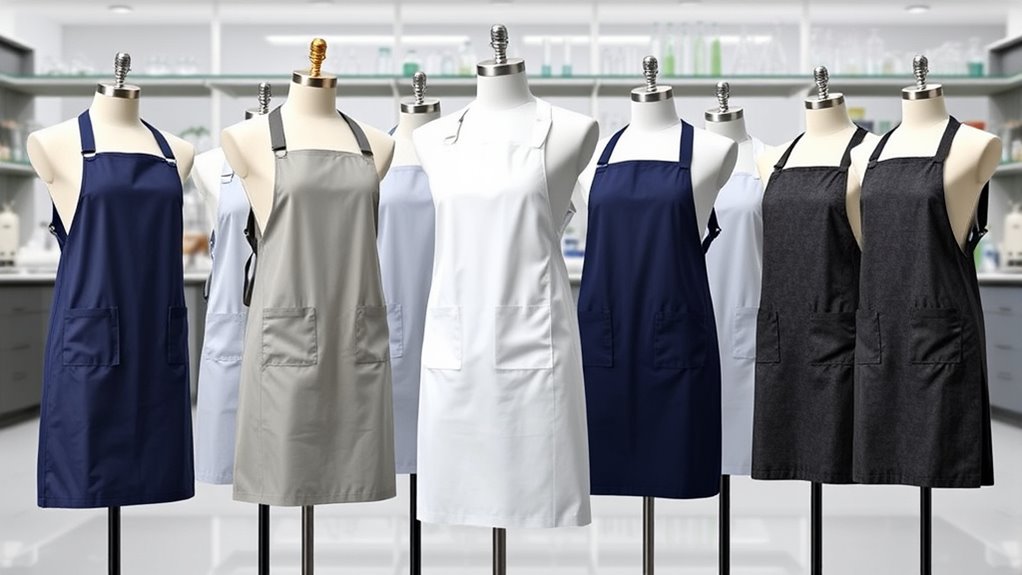

Choosing a lab apron starts with the kind of mess you need to manage: splashes, oily residue, or repeated cleaning. The VWELL 41.5-inch vinyl apron is my strongest pick when broad coverage and stated resistance to some chemicals matter most. For work where small tools need to stay close, I favor the VWELL two-pocket apron; the clear PVC apron is a longer option for buyers who want coverage without an opaque front.

Get privacy and security gear delivered free with Prime
- Fast, free delivery on millions of items
- Prime Video, Amazon Music and more included
- Member-only deals all year
These are liquid-resistant work aprons, not certified laboratory protective equipment. Their descriptions do not establish protection against every chemical, heat, biological hazard, or splash exposure. I rank them by the practical lab-apron details provided: coverage, closures, pocket utility, surface cleanup, and how clearly the material limits are stated. The main tradeoff is straightforward: longer coverage and easy wipe-down can come with less convenience, while a pocketed or padded design may be easier to work in but has care or fit limitations.
Key Takeaways
- For the broadest stated chemical and liquid coverage, the VWELL 41.5 by 28 inch apron lists resistance to water, oil, weak acids and bases, fuels, and other water-based chemicals; check actual compatibility before use.
- For carrying small tools, the VWELL 35 by 28 inch model adds two front pockets, but its shorter length gives less vertical coverage than the 41.5-inch pick.
- For neck comfort, Homsolver pairs a padded neck strap with 39-inch coverage, though its hand-wash-only care takes more effort.
- For a two-apron set, the adjustable PVC rubber work apron comes as a pair and wipes clean, but one size may not suit every body.
- For long clear coverage, the 45.3-inch clear PVC apron is the longest listed, though its description gives fewer details about fit and chemical resistance.
| VWELL Waterproof Vinyl Apron, 41.5 x 28 Inches, Chemical Resistant, No Pocket |  | Best Overall for Stated Liquid and Chemical Resistance | VIEW ON AMAZON | See Our Full Breakdown |
| VWELL Waterproof Vinyl Apron with 2 Pockets |  | Best for Convenient Tool Storage | VIEW ON AMAZON | See Our Full Breakdown |
| Homsolver Waterproof Adjustable Apron |  | Best for a More Comfortable Neck Strap | VIEW ON AMAZON | See Our Full Breakdown |
| Waterproof PVC Rubber Work Apron, Adjustable |  | Best Two-Pack for Easy Wipe-Down | VIEW ON AMAZON | See Our Full Breakdown |
| Clear Waterproof PVC Apron, 45.3 x 27.5 in |  | Best for Maximum Listed Length in a Clear Design | VIEW ON AMAZON | See Our Full Breakdown |
More Details on Our Top Picks
VWELL Waterproof Vinyl Apron, 41.5 x 28 Inches, Chemical Resistant, No Pocket
This is my leading choice when the apron needs to cover clothing through splash-prone, oily, or generally messy work. At 41.5 inches long and 28 inches wide, it offers more listed vertical coverage than the pocketed VWELL model, and the extra-long ties plus adjustable neck strap make the fit more adaptable. Its description names water, oil, weak acids and bases, gasoline, diesel, and other water-based chemicals, giving buyers more information than the generic liquid-resistance claims on several alternatives.
That detail still has limits: the listing does not give a compatibility chart, concentration limits, or certification. I would verify the actual chemical before use and follow workplace PPE rules. Compared with the clear PVC apron, this VWELL specifies a broader set of resistant substances; compared with Homsolver, it is easier to rinse or wipe rather than hand wash. The absence of pockets keeps the front simple to clean, but means tools need another home. Choose it for coverage and cleanup, and skip it if you need storage on the apron itself.
Pros:- 41.5-inch length provides more listed coverage than the 35-inch pocketed VWELL apron.
- Describes resistance to water, oil, weak acids and bases, fuels, and other water-based chemicals.
- Adjustable neck strap and extra-long ties allow a flexible fit.
- Can be rinsed or wiped with a soapy cloth.
Cons:- No pockets for pens, small tools, or other work items.
- Chemical resistance is limited to the stated substances; no compatibility chart or certification is supplied.
Best for: People needing a long, wipeable apron for wet or oily tasks where its listed material resistance matches the substance involved.
Not ideal for: Lab workers who require certified chemical PPE, verified compatibility with a particular reagent, or pockets for tools.
Our verdict“I rank this first for its combination of broad listed coverage, adjustable ties, and the clearest resistance description in the group.”
VWELL Waterproof Vinyl Apron with 2 Pockets
When keeping a few frequently used items close matters more than maximum length, this two-pocket VWELL offers the most practical layout in the lineup. The pair of large front pockets can hold small tools or supplies during routine work, and its adjustable neck strap and extra-long ties echo the flexible fit of the longer VWELL model. Its PU-coated vinyl is described as helping protect against water, oil, stains, and some chemicals.
The compromise is coverage: at 35 by 28 inches, it is notably shorter than the 41.5-inch no-pocket VWELL and the 45.3-inch clear apron. The product also does not provide specific fit measurements beyond the overall dimensions. I would choose it for light, organized tasks where pockets save repeated trips to a bench, but the pockets add seams and surfaces that may require attention during cleanup. Its chemical claims are described in limited terms, so buyers should not assume suitability for an unlisted reagent. For more stated coverage, the first VWELL is a stronger option; for pocket utility, this one leads.
Pros:- Two large front pockets provide handy storage for small work items.
- Adjustable neck strap and extra-long ties support a flexible fit.
- PU-coated vinyl is described as resisting water, oil, stains, and some chemicals.
- Useful across cleaning, cooking, gardening, and grooming tasks.
Cons:- At 35 inches long, it is shorter than three alternatives in this roundup.
- No detailed fit measurements or specific chemical compatibility chart are provided.
Best for: People doing routine wet or messy work who want front pockets for a few small items and can work with a shorter apron.
Not ideal for: Anyone who needs the longest possible front coverage or has a specific chemical exposure that requires documented material compatibility.
Our verdict“I recommend this model when on-apron storage matters more than the extra coverage offered by the longer picks.”
Homsolver Waterproof Adjustable Apron
Homsolver stands out through a small but useful comfort detail: a padded neck strap. For work that keeps an apron on for a longer stretch, that feature may make this more comfortable than the unpadded straps described for the two VWELL options and the adjustable PVC two-pack. Its 39-inch length also gives more listed coverage than the pocketed VWELL, while the 38.5-inch adjustable ties allow room to secure it around varied builds.
The tradeoff is upkeep. This PVC apron is hand wash only, so it is less convenient to clean than the first VWELL’s rinse-or-wipe instructions or the two-pack’s wipeable surface. Its liquid-resistance description is broad, but unlike the first VWELL, it does not enumerate weak acids, bases, or fuels. I would pick Homsolver for general liquid messes when neck comfort is a priority, not as a substitute for verified lab PPE. Buyers who want easy wipe-down should lean toward the first or fourth option, and those needing storage should consider the pocketed VWELL.
Pros:- Padded neck strap may improve comfort over an extended task.
- 39-inch length offers more coverage than the pocketed VWELL apron.
- Adjustable 38.5-inch ties accommodate different builds.
- PVC is described as resisting water, oil, and other liquids.
Cons:- Hand-wash-only care takes more effort than wiping or rinsing.
- The description does not list specific chemical compatibility or PPE certification.
Best for: People who want a padded neck strap and adjustable ties for general wet or messy tasks.
Not ideal for: Anyone who needs a wipe-clean routine, apron pockets, or detailed documentation of chemical compatibility.
Our verdict“I place Homsolver in the middle for its comfort-focused strap and useful length, with hand washing as its main practical drawback.”
Waterproof PVC Rubber Work Apron, Adjustable
This pick makes sense when a work area needs two basic wipeable aprons on hand. The pack includes two black PVC aprons, each with a 40-inch length and adjustable neck strap. The care directions call for a soapy cloth or damp-cloth rinse followed by air drying, a straightforward routine for water, oil, and other liquid messes. Compared with Homsolver, it avoids a hand-wash-only process; compared with the pocketed VWELL, it supplies a second apron instead of front storage.
There is little fit detail beyond the one-size construction and adjustable neck strap, so it may not sit well on every person or over every type of clothing. The description does not identify particular chemical resistance beyond general liquid and oil protection. I would treat it as a utility barrier for routine cleaning or splashy household tasks, not as specialized chemical PPE. The two-apron pack can suit a shared space or a spare-on-hand setup, but buyers working alone who prioritize more documented resistance may prefer the first VWELL.
Pros:- Pack contains two aprons, useful for a shared space or keeping a spare ready.
- 40-inch length provides substantial listed coverage.
- Adjustable neck strap offers some fit flexibility.
- Wipes clean with a soapy cloth and air dries after rinsing.
Cons:- One-size fit may not suit every body or clothing layer.
- Not machine washable, and no specific chemical resistance list is given.
Best for: Shared workspaces or households that want two adjustable aprons for general wet tasks and quick surface cleaning.
Not ideal for: People who need a tailored fit, pockets, machine washing, or chemical compatibility documentation.
Our verdict“I recommend this two-pack for straightforward, shared liquid protection when quick wipe-down matters more than pockets or tailored sizing.”
Clear Waterproof PVC Apron, 45.3 x 27.5 in
At 45.3 inches long, this clear PVC apron has the greatest stated length among the five picks. That makes it worth a look for buyers seeking broad front coverage, while the transparent material preserves visibility of clothing beneath it. Its smooth surface is described as easy to wipe clean and suitable for kitchen, lab, restaurant, and workshop tasks. Compared with the first VWELL, it offers greater stated length, but the VWELL provides a much clearer list of substances it is designed to resist.
The listing gives little detail about the strap or tie arrangement, so I cannot compare its adjustability with the other models. It also says hand wash, despite describing the surface as easy to wipe clean. There are no stated pockets, pack extras, or detailed chemical limits. I would treat this as a general splash and stain barrier for low-risk work after checking fit and workplace requirements. For a buyer who needs adjustable ties or substance-specific resistance information, the first VWELL is the more informative choice.
Pros:- 45.3-inch length is the longest listed in this roundup.
- Clear finish keeps clothing visible beneath the apron.
- Smooth PVC surface is described as easy to wipe clean.
- Listed for general kitchen, lab, restaurant, and workshop use.
Cons:- Strap and tie details are not specified.
- Chemical resistance is not described beyond general water and oil protection.
Best for: People who want a clear apron with the longest listed dimensions for general splash-prone tasks.
Not ideal for: Anyone who needs documented chemical compatibility, known adjustable closures, or built-in storage.
Our verdict“I rank this last because its length is appealing, but the sparse fit and resistance details make it harder to match to lab work.”

How We Picked
I compared these five options as liquid-barrier aprons for lab-adjacent tasks, focusing on what the supplied product details actually support. Length and width help estimate how much clothing the apron may cover, while adjustable straps and tie length affect whether it can be secured over different clothing. Pockets, neck padding, and cleaning instructions matter because a lab apron has to fit the workflow as well as resist splashes.
I gave more weight to specific material and resistance information than to broad claims. The first VWELL apron names water, oil, weak acids and bases, fuels, and water-based chemicals, but that wording does not establish compatibility with a particular reagent or concentration. Several other aprons are described as waterproof or liquid resistant without detailed chemical limits. I treat those claims as general splash or mess protection only.
My order reflects these differences: the first pick combines the clearest stated resistance range with generous dimensions and adjustable ties; the pocketed model is more convenient but shorter. Homsolver prioritizes a padded strap, the two-pack emphasizes wipe-down utility and quantity, and the clear apron offers the greatest listed length with the least detailed fit information. None of these listings provides certification or a chemical compatibility chart, so I would match any apron to the product’s safety data and the lab’s required PPE standards before relying on it.
Factors to Consider When Choosing Lab Apron
I would choose a lab apron by matching its stated coverage and material information to the task, then checking fit and cleanup. An apron described as waterproof may help with routine liquid splashes, but that claim alone cannot tell you whether it is suitable for a particular laboratory chemical.
Match the material claim to the substance
The first VWELL provides the most specific list here: water, oil, weak acids and bases, fuels, and other water-based chemicals. That list is more useful than a general waterproof label, but it still does not identify concentrations, exposure duration, or breakthrough performance. For a lab reagent, consult the apron maker’s compatibility information and the substance safety data sheet. If those sources do not establish suitability, use the protective equipment specified by your lab instead of inferring safety from a broad claim.
Use dimensions to estimate coverage
Listed lengths range from 35 inches on the pocketed VWELL to 45.3 inches on the clear PVC model. The longer aprons may cover more clothing, but body height, apron position, and garment bulk all affect the result. Width also matters when turning or reaching. Check the measurements against the wearer and task; the listings do not provide complete size charts. The two VWELL aprons have stated widths of 28 inches, while the clear model is listed at 27.5 inches.
Check how the apron secures
An adjustable neck strap and sufficiently long ties can make it easier to position an apron over a lab coat or other clothing. The two VWELL options specify extra-long ties, Homsolver lists adjustable 38.5-inch ties, and the two-pack describes an adjustable neck strap. The clear PVC listing gives less closure detail. If the apron slips, leaves gaps, or restricts reaching, its nominal length alone will not make it a good fit. Try the intended clothing layers when fit information is sparse.
Decide whether pockets help or hinder
The pocketed VWELL is the only model here with storage. That can help with small items during routine work, but pockets can collect residue and create extra areas to clean. In tasks where contamination control matters, tools may be better stored on a bench or in designated holders. The no-pocket VWELL has a simpler front surface, which may make wiping easier. Choose pockets for convenience only when they suit your lab’s cleaning and contamination practices.
Plan for cleanup and drying
Care directions differ: the first VWELL can be rinsed or wiped with a soapy cloth, the two-pack calls for wiping or damp-cloth rinsing followed by air drying, and Homsolver and the clear PVC apron say hand wash. The faster routine may matter when an apron is used often, but follow the manufacturer’s directions so the material is not damaged. Allow a rinsed apron to dry fully before storage, and replace it if the surface, ties, or straps become cracked or compromised.
Treat an apron as one part of PPE
None of these descriptions supplies a protective certification, a chemical breakthrough chart, or evidence of protection from heat, biological hazards, or all splash scenarios. A lab apron should match a written risk assessment and the facility’s PPE rules. For hazardous substances, use the apron or gown specified by the relevant procedure and pair it with suitable eye, hand, and body protection. General-purpose PVC and vinyl aprons can serve messy low-risk tasks, but their broad claims should not replace a validated selection.
Frequently Asked Questions
Can I use any of these aprons for laboratory chemicals?
Only when the specific apron material is confirmed as compatible with the chemical, concentration, and task. The first VWELL lists several substances and categories, but does not provide a full compatibility chart or performance certification. The remaining descriptions mostly make broad liquid-resistance claims. Check the safety data sheet, manufacturer guidance, and your lab’s PPE procedure before use.
Which apron gives the most coverage?
The clear PVC apron has the longest listed dimension at 45.3 inches. The 41.5-inch VWELL comes next, followed by the 40-inch PVC two-pack and 39-inch Homsolver; the pocketed VWELL is 35 inches long. Actual coverage depends on body size, how the apron hangs, and the clothing worn underneath, so use the dimensions as a starting point rather than a fit guarantee.
Which option is easiest to clean?
The first VWELL and the PVC two-pack have the clearest wipe or rinse routines. The VWELL can be rinsed or cleaned with a soapy cloth, while the two-pack directions call for a soapy wipe or damp-cloth rinse and air drying. Homsolver and the clear PVC apron specify hand washing. For any of them, follow the care directions and check that the apron remains intact after cleaning.
Are pockets useful on a lab apron?
Pockets can keep small items close during routine tasks, which is the main advantage of the two-pocket VWELL. They can also collect residue and add places that need careful cleaning. Whether they make sense depends on the task and your lab’s contamination-control rules. For work where a smooth front is easier to clean, the no-pocket models may be a better fit.
How do I choose between the two VWELL aprons?
Choose the 41.5-inch version if you want the longer listed coverage and the most specific resistance description in this roundup; it has no pockets. Choose the 35-inch model if two front pockets are useful and the shorter length works for you. Both have an adjustable neck strap and extra-long ties, but neither listing replaces checking chemical compatibility for the exact material and exposure.
Conclusion
For the broadest stated resistance information and a longer cut, I would start with the 41.5-inch VWELL, while verifying that its material suits the actual substance. Pick the pocketed VWELL for routine tasks where storage beats extra length, or choose Homsolver if a padded neck strap matters more than quick cleanup. The PVC two-pack fits shared spaces that need basic wipeable aprons, and the clear PVC model suits buyers who prioritize its longer listed dimensions. For hazardous lab work, base the decision on documented compatibility and required PPE standards rather than a general waterproof claim.
Columbus Day / Indigenous Peoples' Day Picks
long weekend sales
As an affiliate, we earn on qualifying purchases.