
A video doorbell with local storage can save recordings at home instead of relying only on a cloud plan, but the storage method and power setup vary widely. I rank the Tapo D225 as the best overall pick for its wired-or-battery flexibility and included chime, while the REOLINK PoE is a standout for buyers who want a wired network connection and the eufy E340 Kit suits shoppers drawn to a dual-camera design. The main tradeoffs are installation effort, whether storage needs a separate hub or card, and how much flexibility you want around power and placement. A model that stores footage locally may still depend on an app, network access, or a base station for everyday use. Read on for the full breakdown and guidance on matching those details to your home.

Get privacy and security gear delivered free with Prime
- Fast, free delivery on millions of items
- Prime Video, Amazon Music and more included
- Member-only deals all year
Key Takeaways
- The Tapo D225 ranks first for flexibility: its wired-or-battery operation and included chime make it a balanced choice for homes with different installation constraints.
- PoE is the specialist option: the REOLINK PoE model fits buyers prepared to run network cable in exchange for a wired connection, while the WiFi version avoids that cabling commitment.
- Local storage does not mean one storage setup: these picks include models paired with a base, models with a chime, and models whose storage details should be checked before purchase.
- Dual cameras solve a different coverage problem: the eufy E340 models stand out for shoppers prioritizing a second camera view rather than a simple, single-angle doorbell.
- Wireless convenience has a maintenance cost: battery-powered options simplify placement, but wired choices can reduce the routine of charging and are better for buyers with compatible wiring.
| Tapo 2K Wireless Smart Video Doorbell D205 160° Ultra-Wide View | 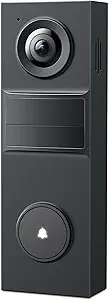 | Best for Flexible Battery Installation | Video resolution: 2K (3MP) | Field of view: 160° | Local storage: microSD card up to 512 GB; card sold separately | VIEW ON AMAZON | See Our Full Breakdown |
| aosu 5MP Ultra HD Wireless and Wired Video Doorbell Camera |  | Best for Extended Local Loop Recording | Resolution: 5MP | Field of view: 166° | Aspect ratio: 4:3 | VIEW ON AMAZON | See Our Full Breakdown |
| REOLINK Video Doorbell PoE 2K Wired Outdoor Security Camera with Chime V2 | 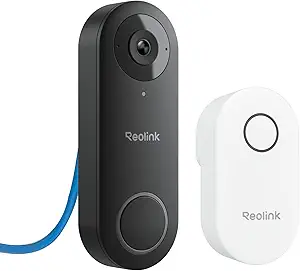 | Best for Always-On Wired Local Recording | Resolution: 2K (3840 × 2160) Super HD | Aspect ratio: 4:3 | Field of view: 135° horizontal, 100° vertical, 180° diagonal | VIEW ON AMAZON | See Our Full Breakdown |
| REOLINK 2K WiFi Wired Video Doorbell Camera with Chime |  | Best for Dual-Band Wi-Fi and a Wide Wired View | Resolution: 2K | Field of view: 180° | Aspect ratio: 4:3 | VIEW ON AMAZON | See Our Full Breakdown |
| eufy Security Video Doorbell E340 Kit with Chime |  | Best for Monitoring the Doorstep Below the Camera | Video resolution: 2K | Camera system: Dual cameras | Local storage: 8GB eMMC | VIEW ON AMAZON | See Our Full Breakdown |
| Tapo D225 2K Smart Video Doorbell (Wired or Battery Powered) with Chime |  | Best Overall for Flexible Local Storage | Resolution: 2K QHD | Field of View: 180° | Power: 8–24V hardwire or 10,000mAh battery | VIEW ON AMAZON | See Our Full Breakdown |
| Aosu 2K Wireless Doorbell Camera with aosuBase | 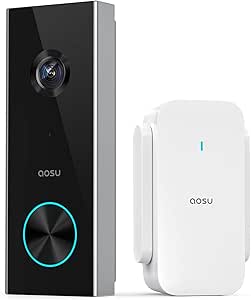 | Best for Local Storage with a Wi-Fi Extender | Resolution: 2K | Field of View: 166° | Aspect Ratio: 4:3 | VIEW ON AMAZON | See Our Full Breakdown |
| Tapo D210 2K Wireless Smart Video Doorbell with Chime |  | Best for Activity-Zone Control | Resolution: 2K | Field of View: 160° diagonal | Power: 6400mAh rechargeable battery | VIEW ON AMAZON | See Our Full Breakdown |
| BOIFUN Video Doorbell Camera Wireless (No Subscription Required) – 2K HD | 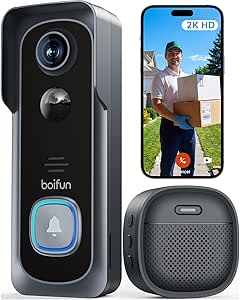 | Best for Subscription-Free Simplicity | Resolution: 3MP (2K HD) | Field of View: 166° | Power: 5200mAh non-removable rechargeable battery | VIEW ON AMAZON | See Our Full Breakdown |
| eufy Security Video Doorbell E340 with Dual Cameras |  | Best for Package Coverage | Camera Setup: Dual cameras | Resolution: 2K | Local Storage: 8GB eMMC | VIEW ON AMAZON | See Our Full Breakdown |
| video doorbell with local storage | Local storage | Power | Field of view | Resolution |
|---|---|---|---|---|
| Tapo 2K Wireless Smart Video D | microSD card up to 512 GB; card sold separately | Rechargeable 5,200 mAh battery | 160° | — |
| aosu 5MP Ultra HD Wireless and | 8GB aosuBase Mini | Battery or wired | 166° | 5MP |
| REOLINK Video Doorbell PoE 2K | microSD up to 512GB, optional NVR, FTP, or NAS | — | 135° horizontal, 100° vertical, 180° diagonal | 2K (3840 × 2160) Super HD |
| REOLINK 2K WiFi Wired Video Do | — | 12–24V AC or 24V DC | 180° | 2K |
| eufy Security Video Doorbell E | 8GB eMMC | Battery or wired; wired mode requires the battery installed | — | — |
| Tapo D225 2K Smart Video Doorb | MicroSD up to 512GB; card not included | 8–24V hardwire or 10,000mAh battery | 180° | 2K QHD |
| Aosu 2K Wireless Doorbell Came | MicroSD up to 128GB; card sold separately | Battery powered; 5200mAh battery | 166° | 2K |
| Tapo D210 2K Wireless Smart Vi | MicroSD up to 512GB; card not included | 6400mAh rechargeable battery | 160° diagonal | 2K |
| BOIFUN Video Doorbell Camera W | MicroSD up to 128GB; card not included | 5200mAh non-removable rechargeable battery | 166° | 3MP (2K HD) |
| eufy Security Video Doorbell E | 8GB eMMC | Battery or 16–24V wired power | — | 2K |
More Details on Our Top Picks
Tapo 2K Wireless Smart Video Doorbell D205 160° Ultra-Wide View
The Tapo D205 combines local microSD recording with a rechargeable battery, making it a flexible choice when running doorbell wiring is impractical. Its 2K video and 160° view cover a broad approach, while person detection and custom activity zones can help limit alerts from passing movement. Unlike the wired REOLINK PoE Video Doorbell, it does not need an Ethernet cable or continuous wired power, but it also cannot offer that model’s uninterrupted recording setup. The microSD card is sold separately, and the camera relies on 2.4 GHz Wi-Fi, which may not suit homes using a different network band at the door. Its battery life is listed as up to 180 days, though actual runtime varies with use. The separate indoor chime is another purchase to plan for.
Pros:- Local microSD storage supports recording without a required cloud subscription.
- 160° field of view and 2K resolution provide broad, detailed coverage.
- Battery-powered installation avoids the need for doorbell wiring.
- Person detection and customizable activity zones help tailor alerts.
Cons:- Only supports 2.4 GHz Wi-Fi.
- MicroSD card is sold separately.
- Indoor chime is not included.
Best for: Renters or homeowners who need a battery-powered doorbell with local recording and a wide view, but do not want mandatory cloud storage.
Not ideal for: Households that need continuous wired recording, use only 5 GHz Wi-Fi near the entrance, or want an indoor chime included.
- Video resolution:2K (3MP)
- Field of view:160°
- Local storage:microSD card up to 512 GB; card sold separately
- Power:Rechargeable 5,200 mAh battery
- Listed battery life:Up to 180 days; varies with usage
- Wi-Fi:2.4 GHz
- Detection:Person detection with custom activity zones
- Weather resistance:IP54
Our verdict“Choose the D205 if you want flexible battery installation and local microSD recording, and can accept 2.4 GHz-only Wi-Fi and a separately purchased chime.”
aosu 5MP Ultra HD Wireless and Wired Video Doorbell Camera
The aosu doorbell’s strongest local-storage case is its included 8GB aosuBase Mini, which supports 60-day loop recording without requiring a subscription for basic storage. Its 5MP resolution and 166° view give it a wider, higher-resolution brief than the Tapo D205, while radar, PIR, and AI human recognition combine several detection methods to help distinguish people from other motion. It also offers battery or wired power, so it suits more installations than the fixed-wired REOLINK 2K WiFi Doorbell. The tradeoff is that the included storage is a defined capacity rather than a removable microSD card, and advanced AI features or extended storage may depend on optional cloud plans. The listing also gives conflicting IP65 and IP66 weather ratings, so I would not rely on the higher figure without confirmation.
Pros:- Included 8GB base supports 60-day loop recording without a required subscription for local storage.
- 5MP video and 166° field of view provide detailed, broad coverage.
- Battery or wired power accommodates different doorbell setups.
- Radar, PIR, and AI human recognition offer layered detection.
Cons:- Advanced AI features and extended storage may require optional cloud plans.
- Product information conflicts on whether weather resistance is IP65 or IP66.
- The supplied local storage is limited to the base’s 8GB capacity.
Best for: Buyers who want an included local-storage base, loop recording, and a choice between battery and wired installation.
Not ideal for: Shoppers who want a clearly stated, consistent weather-resistance rating or expect every advanced detection and storage feature to work without optional services.
- Resolution:5MP
- Field of view:166°
- Aspect ratio:4:3
- Local storage:8GB aosuBase Mini
- Loop recording:60 days
- Power:Battery or wired
- Detection:Radar, PIR, and AI human recognition
- Smart home compatibility:Amazon Alexa and Google Assistant
Our verdict“Pick aosu if an included base with loop recording matters more than removable storage or a fully consistent weather-resistance specification.”
REOLINK Video Doorbell PoE 2K Wired Outdoor Security Camera with Chime V2
If local recording matters more than installation flexibility, the REOLINK PoE Video Doorbell is the most capable wired option here. Power over Ethernet provides a stable connection and supports uninterrupted recording, while storage can go to a microSD card, NVR, FTP, or NAS. That flexibility goes beyond the aosu model’s included 8GB base, especially for buyers who already maintain network storage. HDR, 3D noise reduction, and pre-roll recording are useful for capturing a clearer view around an alert, and the included Chime V2 avoids the separate-chime issue of the Tapo D205. The tradeoff is a demanding setup: this model has no Wi-Fi, and its power supply is not included, so a compatible PoE injector or switch may be needed. It is a stronger fit for a planned wired system than a quick retrofit.
Pros:- PoE connection supports stable operation and continuous recording.
- Storage options include microSD up to 512GB, NVR, FTP, and NAS.
- HDR, 3D DNR, and pre-roll support clearer event footage.
- Chime V2 is included with ten selectable tones.
Cons:- Ethernet-only connectivity rules out Wi-Fi installation.
- Power supply is not included; a PoE injector or switch may be required.
- Listed as incompatible with third-party NVRs.
Best for: Homeowners with Ethernet access at the entrance who want stable wired operation and several local recording destinations.
Not ideal for: Renters or anyone needing wireless placement, a simple battery installation, or compatibility with a third-party NVR.
- Resolution:2K (3840 × 2160) Super HD
- Aspect ratio:4:3
- Field of view:135° horizontal, 100° vertical, 180° diagonal
- Power options:IEEE 802.3af PoE, 12–24V AC, or 24V DC
- Local storage:microSD up to 512GB, optional NVR, FTP, or NAS
- Connectivity:Ethernet only; no Wi-Fi
- Frame rate:20 fps
- Included accessory:Reolink Chime V2
Our verdict“Choose this REOLINK if you have Ethernet at the door and want dependable, flexible local recording rather than a wireless installation.”
REOLINK 2K WiFi Wired Video Doorbell Camera with Chime
This REOLINK gives wired-doorbell buyers a useful middle ground: it keeps the power reliability of a hardwired camera while using 2.4 GHz or 5 GHz Wi-Fi instead of requiring Ethernet like the REOLINK PoE model. Its 180° field of view and 4:3 image shape are designed to show more of the doorway, and local storage can work with compatible Reolink equipment. The included Chime V2 also means there is an indoor alert in the box, unlike the Tapo D205, whose chime is sold separately. The compromise is that this is not a battery-powered choice: it needs 12–24V AC or 24V DC wiring. The listing does not give a microSD capacity or detailed local-recording configuration, so buyers seeking a clear, standalone storage specification may prefer the PoE model’s stated options.
Pros:- Local storage supports use with compatible Reolink equipment.
- Dual-band Wi-Fi provides 2.4 GHz and 5 GHz connection options.
- 180° field of view and 4:3 aspect ratio cover a broad doorway area.
- Chime V2 is included with ten selectable tunes.
Cons:- Requires hardwired power and cannot be installed as a battery-only doorbell.
- Local-storage capacity and configuration are not specified in the supplied product details.
- Some features may depend on compatible Reolink devices or services.
Best for: Homeowners with existing doorbell wiring who want a wide 2K view, dual-band Wi-Fi, and an included chime.
Not ideal for: People without doorbell wiring or buyers who need a clearly specified standalone local-storage capacity and recording setup.
- Resolution:2K
- Field of view:180°
- Aspect ratio:4:3
- Wi-Fi:2.4 GHz and 5 GHz
- Power:12–24V AC or 24V DC
- Local storage compatibility:Reolink NVR system and local storage
- Night vision:Infrared
- Included accessory:Reolink Chime V2
Our verdict“Choose this model if your door already has wiring and you value dual-band Wi-Fi and a broad view more than battery flexibility or clearly itemized storage capacity.”
eufy Security Video Doorbell E340 Kit with Chime
The E340 Kit makes a distinct case for local storage with its dual-camera layout: one camera watches visitors while the second covers the doorstep, where packages can sit outside the main camera’s view. Its 8GB built-in storage records locally without a required subscription, and battery or wired power gives it more installation options than the hardwired REOLINK 2K WiFi Doorbell. Color night vision and 2K video add useful visibility after dark, while the included chime completes the basic setup. Unlike the aosu doorbell, this listing does not specify loop-recording duration, and it provides no battery-runtime estimate, so buyers cannot easily plan around recording capacity or charging intervals. Wired operation also requires the battery to remain installed. This is the pick for doorstep coverage, not the clearest choice for storage-management details.
Pros:- Dual cameras show visitors and the area directly below the doorbell.
- 8GB eMMC local storage works without a required subscription.
- Battery or wired power supports more installation situations.
- Color night vision is specified up to 16 feet.
Cons:- Battery runtime is not specified in the product details.
- Wired mode requires the battery to remain installed.
- The listing does not state recording retention or loop duration.
Best for: Package-conscious households that want a second view of the doorstep and subscription-free local recording.
Not ideal for: Buyers who need a stated battery runtime, removable storage, or detailed information about recording retention and loop behavior.
- Video resolution:2K
- Camera system:Dual cameras
- Local storage:8GB eMMC
- Night vision:Color, up to 16 ft (5 m)
- Power:Battery or wired; wired mode requires the battery installed
- Wired voltage:16–24V
- Connectivity:Wi-Fi
- Included accessory:Chime
Our verdict“Choose the E340 Kit if seeing packages beneath the camera matters most and 8GB of subscription-free local storage meets your needs.”
Tapo D225 2K Smart Video Doorbell (Wired or Battery Powered) with Chime
The Tapo D225 is my most adaptable pick for buyers who want local recording without committing to one power setup. It accepts a microSD card up to 512GB, far more capacity than the 128GB limit on the Aosu 2K Wireless Doorbell or BOIFUN. Its 2K video and 180° view also cover more of the entrance than the Tapo D210’s 160° diagonal view, while person, package, and vehicle detection can help sort alerts by what is approaching.
Choose hardwiring for continuous power or the 10,000mAh battery when wiring is impractical; the included chime adds an indoor alert. The tradeoffs are a card sold separately and 2.4GHz-only Wi-Fi. Battery runtime also depends on activity, so frequent motion can mean more charging than the stated maximum of eight months.
Pros:- Supports microSD cards up to 512GB for substantial local recording capacity
- 180° field of view and 2K video cover a broad area around the door
- Can run on 8–24V wiring or its 10,000mAh rechargeable battery
- Detects people, packages, and vehicles, with a modular indoor chime included
Cons:- MicroSD card is not included
- Works only on 2.4GHz Wi-Fi
- Battery runtime varies with motion activity and other usage conditions
Best for: Households that want high-capacity local recordings, broad entry coverage, and the choice between hardwired and battery installation.
Not ideal for: Homes that rely on 5GHz Wi-Fi or buyers who want local recording ready to use without purchasing a microSD card.
- Resolution:2K QHD
- Field of View:180°
- Power:8–24V hardwire or 10,000mAh battery
- Battery Life:Up to 8 months per charge
- Local Storage:MicroSD up to 512GB; card not included
- Wi-Fi:2.4GHz only
- Night Vision:Full color with spotlight
- Detection:Person, package, and vehicle
- Chime:Modular indoor chime included
Our verdict“Choose the D225 if you want flexible power, broad coverage, and more local-storage capacity than the Aosu or BOIFUN options.”
Aosu 2K Wireless Doorbell Camera with aosuBase
The Aosu stands apart because its aosuBase Mini combines a microSD slot, indoor chime, and 2.4GHz Wi-Fi extender. That setup can suit a front door where the router signal is weak, while keeping recordings local rather than requiring a cloud plan. Its 2K, 166° view is nearly as broad as the BOIFUN’s 166° view, and human detection aims to cut down on alerts that are not about people.
Compared with the Tapo D225, the Aosu is battery-only and accepts smaller cards—up to 128GB rather than 512GB—so it offers less flexibility for power and storage capacity. The card is also sold separately, and the battery needs recharging. Two-way talk, quick replies, and a voice changer add ways to respond, but 5GHz Wi-Fi is not supported.
Pros:- aosuBase Mini includes a microSD slot, Wi-Fi extender, and indoor chime
- 2K resolution and a 166° field of view
- AI human detection helps limit irrelevant motion alerts
- Offers two-way talk, quick replies, and voice-changing replies
Cons:- MicroSD card is sold separately and capacity is limited to 128GB
- Battery-powered design requires periodic recharging
- Supports 2.4GHz Wi-Fi only
Best for: Renters or homeowners with a weak 2.4GHz signal near the entrance who want a bundled local-storage base and indoor chime.
Not ideal for: Buyers seeking wired power, higher-capacity microSD support, or compatibility with a 5GHz-only network.
- Resolution:2K
- Field of View:166°
- Aspect Ratio:4:3
- Power:Battery powered; 5200mAh battery
- Local Storage:MicroSD up to 128GB; card sold separately
- Wi-Fi:2.4GHz; 5GHz not supported
- Included Base:aosuBase Mini with Wi-Fi extender, microSD slot, and indoor chime
- Audio:Two-way talk
Our verdict“Pick the Aosu if a weak door-area Wi-Fi signal and an included storage base matter more than wired power or large-card capacity.”
Tapo D210 2K Wireless Smart Video Doorbell with Chime
The Tapo D210 is a sensible choice when you want to define which parts of the entrance should trigger attention. Its activity zones and person detection give it an alert-filtering angle that the BOIFUN’s listed human detection does not match with customizable zones. For local recordings, it supports a microSD card up to 512GB, the same capacity as the more feature-rich Tapo D225, and its rechargeable design avoids a wiring requirement.
The D225 is the stronger fit if you want a wider view, vehicle and package detection, or a hardwired option: it reaches 180° and offers all three detection types, while the D210 has a 160° diagonal view and person detection. The D210’s card is not included, and its 2.4GHz-only Wi-Fi may not suit every network. Cloud video history is available through a subscription, but local storage remains an alternative.
Pros:- Supports local recording on microSD cards up to 512GB
- Activity zones and person detection help focus alerts on chosen areas
- Rechargeable battery allows placement without doorbell wiring
- Includes a 15° horizontal wedge and supports Alexa and Google Assistant
Cons:- MicroSD card is not included
- Only supports 2.4GHz Wi-Fi
- Battery runtime varies with usage and conditions
Best for: Battery-powered doorbell buyers who want to tune motion alerts around a specific entryway and save footage to a high-capacity microSD card.
Not ideal for: Shoppers who need vehicle or package detection, a wider 180° view, or hardwired power; the Tapo D225 fits those needs better.
- Resolution:2K
- Field of View:160° diagonal
- Power:6400mAh rechargeable battery
- Local Storage:MicroSD up to 512GB; card not included
- Wi-Fi:2.4GHz
- Night Vision:Full color with adjustable spotlight
- Detection:Person detection and customizable activity zones
- Audio:Two-way audio and quick responses
- Voice Assistant Compatibility:Alexa and Google Assistant
Our verdict“Choose the D210 if customizable activity zones matter more than the D225’s wider view, broader detection, and wired-power option.”
BOIFUN Video Doorbell Camera Wireless (No Subscription Required) – 2K HD
BOIFUN suits buyers who want core doorbell features and local recording without building a setup around a cloud plan. It records to a microSD card up to 128GB, and its listed core features include live view, two-way audio, and human detection without a mandatory subscription. The 166° field of view matches the Aosu’s listed coverage, while HDR night vision uses invisible infrared rather than the Tapo D210’s color night vision and spotlight.
The battery is rated for up to 60 days under a stated usage pattern, making it a modestly sized commitment between charges rather than the D225’s claimed maximum of eight months. Actual runtime depends on motion and clip activity. Unlike the D225, BOIFUN is battery-only, its battery is non-removable, and its storage ceiling is lower. The microSD card is not included, and Wi-Fi is limited to 2.4GHz.
Pros:- Core live view, two-way audio, and human detection do not require a subscription
- 2K video with a 166° field of view
- HDR infrared night vision reaches up to 33 feet
- Up to 60 days of battery life under the specified usage pattern
Cons:- Non-removable battery must be recharged in place
- MicroSD storage is limited to 128GB and the card is not included
- Supports 2.4GHz Wi-Fi only
Best for: Buyers who want a straightforward wireless doorbell with local recording and no required subscription for live view, two-way audio, or human detection.
Not ideal for: Households that need wired power, replaceable batteries, more than 128GB of local storage, or full-color night vision.
- Resolution:3MP (2K HD)
- Field of View:166°
- Power:5200mAh non-removable rechargeable battery
- Battery Life:Up to 60 days at 30 motions per day with 10-second clips
- Local Storage:MicroSD up to 128GB; card not included
- Night Vision:HDR invisible 940nm infrared, up to 33 feet
- Wi-Fi:2.4GHz only
- Audio:Two-way audio
- Detection:Human detection and motion alerts
Our verdict“Choose BOIFUN for simple subscription-free essentials, but choose the Tapo D225 for wired power, broader detection, and higher-capacity local storage.”
eufy Security Video Doorbell E340 with Dual Cameras
The eufy E340 makes the strongest case for local storage when the main concern is seeing both visitors and parcels at the doorstep. Its dual-camera design adds a view aimed at package coverage, a distinction the single-camera Tapo D225 and Tapo D210 do not offer. Recordings go to 8GB of built-in eMMC storage, so there is no microSD card to buy or install, and the listing specifies no subscription fee for local storage.
Power can come from a battery or 16–24V wiring, giving it more installation flexibility than the battery-only BOIFUN. The tradeoff is fixed, relatively limited storage compared with the D225’s support for cards up to 512GB. Its chime may need to be purchased separately, and wired use depends on having a compatible power source. It also supports compatible chimes and eufy HomeBase 2 and 3.
Pros:- Dual cameras capture visitors and provide a separate package view
- Built-in 8GB eMMC storage avoids buying a microSD card
- Local storage is available without a monthly subscription fee
- Supports battery or 16–24V wired installation
Cons:- Built-in storage is limited to 8GB and is not listed as expandable
- Chime may need to be purchased separately
- Wired installation requires a compatible 16–24V power source
Best for: Online shoppers and households that want a dedicated view of packages alongside visitors, with local recording that needs no separate memory card.
Not ideal for: Buyers who want expandable storage, an included chime, or a doorbell that can be wired without checking for a 16–24V supply.
- Camera Setup:Dual cameras
- Resolution:2K
- Local Storage:8GB eMMC
- Power:Battery or 16–24V wired power
- Viewing Angle:160°
- Night Vision:Color night vision up to 16 feet
- Compatibility:Alexa, Google Assistant, eufy HomeBase 2 and 3, compatible chimes
- Mount Type:Wall mount
Our verdict“Choose the E340 if package visibility and card-free local recording matter more than the expandable storage offered by the Tapo D225.”

How We Picked
I compared each doorbell through the specific needs behind local recording: where footage is stored, whether a separate base or other component is part of the setup, and how clearly the product’s configuration supports recording without making a cloud plan the only route. I also weighed power and installation, including battery, wired, and PoE approaches; view design; included chimes; and the practical upkeep each arrangement can involve. Because storage capabilities and included components can differ between similarly named versions, buyers should confirm the exact model and package before ordering.
The ranking favors useful balance rather than a single headline specification. The Tapo D225 takes the top spot for combining power flexibility and a chime, while the REOLINK PoE and WiFi models separate themselves by installation style. Dual-camera eufy models earn attention for coverage priorities, and the remaining picks are placed according to their fit for wireless installation, bundled storage systems, or simpler setups. I treat unclear storage requirements as a reason to verify the listing, not as a feature to assume.
| video doorbell with local storage | Detection | Night vision |
|---|---|---|
| Tapo 2K Wireless Smart Video D | Person detection with custom activity zones | — |
| aosu 5MP Ultra HD Wireless and | Radar, PIR, and AI human recognition | — |
| REOLINK Video Doorbell PoE 2K | — | — |
| REOLINK 2K WiFi Wired Video Do | — | Infrared |
| eufy Security Video Doorbell E | — | Color, up to 16 ft (5 m) |
| Tapo D225 2K Smart Video Doorb | Person, package, and vehicle | Full color with spotlight |
| Aosu 2K Wireless Doorbell Came | — | — |
| Tapo D210 2K Wireless Smart Vi | Person detection and customizable activity zones | Full color with adjustable spotlight |
| BOIFUN Video Doorbell Camera W | Human detection and motion alerts | HDR invisible 940nm infrared, up to 33 feet |
| eufy Security Video Doorbell E | — | Color night vision up to 16 feet |
Factors to Consider When Choosing Video Doorbell With Local Storage
Choosing a doorbell for local recording starts with more than asking whether it saves clips without a subscription. I recommend checking the entire recording path: what stores the footage, what happens if the doorbell loses power or WiFi, and how you will retrieve clips later. These broader checks can prevent a setup that technically records locally but does not suit your home or habits.
Check Where Footage Is Actually Stored
“Local storage” can refer to memory inside the doorbell, a card, or a separate hub or base station. Those arrangements differ in setup, capacity, and what stays accessible if the doorbell is damaged or removed. Before buying, confirm whether storage hardware is included or must be supplied separately. Also check how recordings are played back and whether the app needs an internet connection for viewing clips from outside the home. A common mistake is to treat “no subscription required” as proof that every desired feature works offline. Match the storage method to your comfort with managing cards, hubs, and app access.
Match Power to Your Installation
Battery models give more freedom over placement and can suit homes without compatible doorbell wiring, but they add a charging routine. Wired models can avoid frequent recharging, though existing wiring, transformer compatibility, and installation access may affect whether they are practical. PoE adds another choice: it combines power and network connection over Ethernet, but only makes sense if you can route a cable to the door. Do not assume a wired label means any existing setup will work; check the manufacturer’s electrical requirements first. Think about how often the doorbell is triggered, since frequent activity can affect battery upkeep. Choose the least complicated power arrangement your home can support.
Decide How Much Coverage You Need
A wider view can show more of the porch, while a second camera can provide a distinct angle, such as a view closer to the doorstep. Those approaches are not interchangeable: one broad frame may be simpler, while multiple views can help with areas a single lens misses. Check the camera’s orientation against your entrance, nearby walls, and where parcels are left. A high resolution alone does not guarantee that a face or delivery is framed usefully. Consider whether your priority is identifying visitors, checking packages, or covering a wider approach. Pick the view design that addresses your actual blind spot rather than paying for extra coverage you will not use.
Plan for WiFi and Network Reliability
Local recording can reduce dependence on cloud storage, but it does not automatically remove the need for a stable home network. WiFi models still need a dependable connection for notifications and remote access, and the signal at the front door may be weaker than it is indoors. PoE can suit a home where wired networking is available and WiFi coverage is unreliable, but cable installation is part of the cost in time and effort. Check the doorbell’s network requirements and test signal strength at the mounting spot before committing. Buyers often focus on router speed while overlooking the exterior wall or distance from the access point. A reliable connection helps make stored footage useful when you need to check it remotely.
Compare the Whole Package, Not Just the Doorbell
Included chimes and storage bases can change the setup effort and what you need to buy separately. A chime can make visitor alerts easier to hear indoors, while a base may be central to how a particular system stores recordings. Confirm which components come in the exact kit; product names may describe both a doorbell alone and a bundle. Check whether the chime or hub needs its own outlet and where it can be placed for a dependable connection. Do not assume that two versions from the same line share identical accessories or storage capacity. Comparing the full package helps prevent a lower-hassle choice on paper from turning into extra setup work.
Think Through Recording Retention and Privacy
Local recording still raises questions about how long clips remain available and who can access them. Look for information on storage capacity, overwrite behavior, motion-event settings, and the steps needed to export important footage. A device that records frequently may fill its storage sooner than one tuned to capture only relevant activity. Privacy settings also matter when the camera faces a shared walkway or neighboring property; use motion zones and framing controls where available. Consider who in your household needs app access and how accounts are protected. These checks help balance useful evidence, storage management, and respect for nearby spaces.
Frequently Asked Questions
Does a video doorbell with local storage work without internet?
Local storage can let a doorbell save footage without sending every clip to cloud storage, but that does not mean all functions work without internet. Live notifications, remote viewing, app setup, and playback away from home may rely on a network connection. The exact behavior depends on the model and whether recordings sit in the doorbell or a connected base. Check the product’s offline capabilities before buying if internet outages are a key concern. For an outage-ready setup, confirm both that recording continues and that you can retrieve clips afterward.
Do I need to buy a separate memory card or storage hub?
It depends on the specific model and package: some systems rely on a base station, while others may use a different local-storage arrangement. A product title that mentions a chime does not automatically mean a storage hub is included. Check the included-items list and the manufacturer’s storage requirements for the exact version you plan to purchase. Also verify whether a card is bundled, supported at all, or sold separately. Treating the doorbell and its storage components as one complete system is the safest way to avoid a setup gap.
Should I choose a battery, wired, or PoE doorbell?
Choose based on the wiring and network access already available at your entrance. Battery models are easier to place when wiring is absent, but you will need to recharge them as part of normal upkeep. Wired models can reduce charging chores if your existing electrical setup meets the product requirements. PoE is a strong fit when you can run Ethernet and want a network connection that does not depend on WiFi at the door. Before deciding, confirm compatibility and installation demands rather than relying on the product label alone.
Is a dual-camera doorbell worth choosing over a wide-angle model?
A dual-camera design is useful when you want distinct views, such as one view of visitors and another aimed toward the doorstep. A wide-angle camera may be simpler if your main goal is seeing more of the porch in one frame. Neither approach guarantees that your particular entry is covered well, since mounting height, wall position, and parcel placement affect the result. Map the areas you want to monitor before choosing. In this roundup, the eufy E340 options suit buyers drawn to a second view, while the Tapo D205’s 160-degree view is a single-camera alternative for broader framing.
Can I avoid a subscription and still review recordings away from home?
Some local-storage systems let you review saved recordings through an app without paying for cloud storage, but remote access can still depend on internet service and account setup. Subscription-free recording and fully offline access are different claims. Check whether the model supports remote playback of locally saved clips, what components must stay connected, and whether any app features require a plan. If you want footage available during an internet outage, ask separately whether recording continues and whether playback is possible locally. This distinction is especially useful when comparing a standalone doorbell with a system built around a base.
Conclusion
For the broadest mix of setup flexibility and everyday practicality, I recommend the Tapo D225 as best overall. Buyers seeking a wired network connection should choose the REOLINK PoE, while the eufy E340 Kit is my best premium fit for shoppers who prioritize a dual-camera setup. For a value-minded wireless choice, compare the Tapo D210 and BOIFUN against your needs for included components and confirmed storage details before deciding. Beginners may find the Tapo D205 easier to shortlist if a wireless setup and wide view are their main priorities. If your specific need is flexible power, start with the D225 or Tapo D225’s wired-or-battery approach; if it is PoE or a second camera view, choose the REOLINK PoE or eufy E340 family respectively. In every case, verify the exact bundle and local-storage requirements so the doorbell, chime, and recording setup match your expectations.
Fall Picks
fall essentials
As an affiliate, we earn on qualifying purchases.