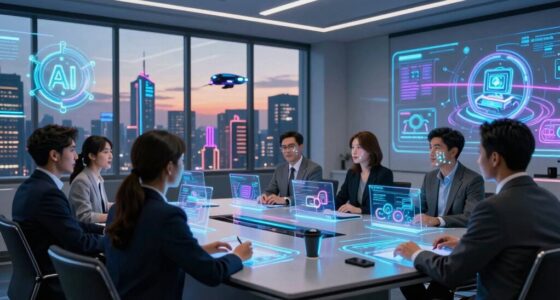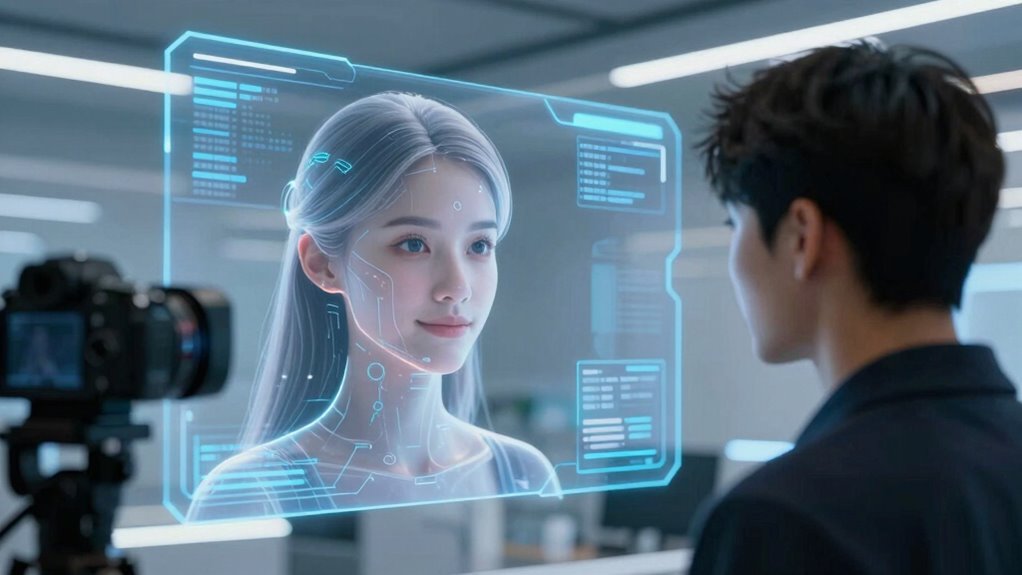

Your digital twin is becoming a personalized virtual clone that mirrors your behaviors, health, and preferences in real time. It gathers information from sensors, wearables, and other sources to create a dynamic, interactive model of you. This digital replica can help with health decisions, lifestyle changes, and even simulate future scenarios. As technology advances, your virtual self may soon become an integral part of your daily life—if you continue exploring, you’ll discover how this innovation could transform your world.

Get privacy and security gear delivered free with Prime
- Fast, free delivery on millions of items
- Prime Video, Amazon Music and more included
- Member-only deals all year
Key Takeaways
- Digital twins are evolving to create personalized virtual clones that mirror individual behaviors, preferences, and health data in real time.
- These virtual clones integrate data from sensors, wearables, and external sources, continuously updating to reflect changes in the real person.
- Future digital twins could support personalized healthcare, lifestyle planning, and decision-making through simulated responses and recommendations.
- As technology advances, digital clones may connect with smart environments, creating a comprehensive digital ecosystem of an individual.
- Privacy and data security are critical considerations as digital twins become detailed representations of personal lives and behaviors.
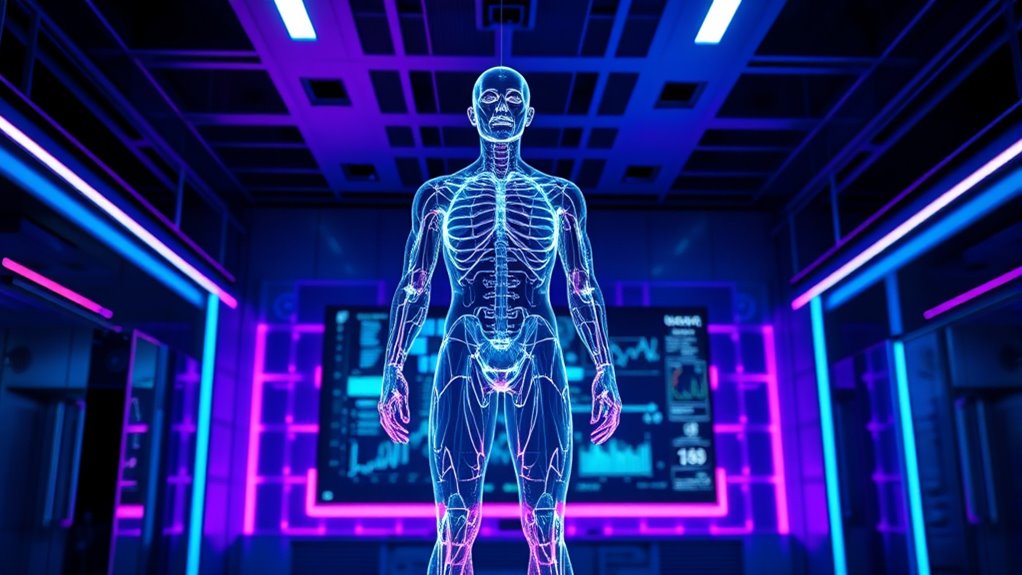
A Digital Twin Virtual Clone is a sophisticated digital replica of a physical object, system, or process that mirrors its real-world counterpart in real time. While initially designed for machinery, manufacturing, and infrastructure, the concept is rapidly extending to individuals. Imagine having a virtual clone of yourself that continuously updates with your behaviors, preferences, and physiological data, providing a dynamic digital counterpart. This digital extension can be created by integrating data from sensors, wearables, and external sources, allowing your virtual clone to reflect your current state, habits, and decision-making patterns accurately. It’s built upon continuous data synchronization from your physical self, using behavioral models and adaptive algorithms to emulate your responses and actions in various scenarios. This digital twin isn’t static; it evolves as you do, incorporating real-time inputs from your daily life, health metrics, and environmental factors, ensuring that its behavior closely matches your own. Connecting these data streams enables the digital twin to adapt to changing circumstances and provide more precise insights over time. The origins of digital twins trace back to NASA’s spacecraft simulations in 2010, which used real-time data to monitor and predict spacecraft performance. This concept has matured, especially with advances in IoT, AI, and machine learning, enabling the creation of highly detailed, interactive virtual models. For a person, your digital twin would include not only your physical attributes but also your routines, preferences, and even behavioral tendencies. It could simulate how you’d react in different situations, providing insights for personal health, decision-making, or even social interactions. Think of it as a personalized simulation that helps you make better choices by testing out possibilities virtually before acting in reality. This virtual clone can serve many purposes. In healthcare, it could model your physiological responses to medications or treatments, optimizing personalized care. It could also help in lifestyle planning, fitness routines, or dietary adjustments based on your evolving data. In professional settings, your digital twin might assist with training, decision-making, or stress testing scenarios relevant to your work or environment. The integration of advanced features like large language models (LLMs) enables the digital twin to process complex data, generate insightful recommendations, or even simulate conversations, making your virtual clone more interactive and intuitive. Additionally, data security and privacy are crucial considerations as this technology develops, ensuring your personal information remains protected. Beyond personal applications, your digital twin could connect with broader systems—such as smart homes, transportation, or urban environments—creating a detailed digital ecosystem reflecting your interactions. As this technology develops, your virtual clone could become an indispensable tool, offering real-time insights, predictions, and personalized support. While still in early stages, the potential for every person to have a virtual twin is rapidly approaching, promising a future where digital and physical selves are intricately intertwined for smarter, more efficient living.
Products Worth Considering

Apple iPad Air (4th Generation, 10.9-inch, Wi-Fi, 256GB) – Space Gray

Sonos Era 100 Wireless Smart Speaker, Black

LG UltraGear 32GX850A-B 32-Inch 4K UHD Glossy OLED Gaming Monitor
As an affiliate, we earn on qualifying purchases.
Frequently Asked Questions
Will Digital Twins Be Able to Predict Future Personal Health Issues Accurately?
Yes, digital twins can predict future personal health issues with increasing accuracy. You’ll benefit from continuous data collection from sensors, wearables, and medical devices that monitor your essential signs and health metrics in real time. Advanced AI and predictive analytics analyze this data, identifying patterns and risks early. This proactive approach helps you and your healthcare providers address potential problems before they become serious, improving overall health outcomes.
How Secure Is the Data Used to Create Personal Digital Twins?
The data used to create your personal digital twin is generally quite secure, but vulnerabilities exist. You need to be cautious because hackers can target sensitive health and personal information. Make sure providers implement strong encryption, regular security updates, and strict access controls. Stay informed about their privacy policies, and consider using additional security measures like multi-factor authentication to protect your data effectively.
Can Digital Twins Adapt to Changing Personal Behaviors and Environments?
Yes, digital twins adapt to changing personal behaviors and environments, reflecting your daily shifts, habits, and surroundings. They continuously learn from real-time data, updating their models to mirror your evolving lifestyle. This ongoing adaptation helps optimize health, daily routines, and interactions, making your virtual clone more accurate and responsive. As your behaviors change, so does your digital twin, ensuring it remains a personalized, dynamic reflection of your life.
What Are the Ethical Considerations of Creating Personal Virtual Clones?
Creating personal virtual clones raises significant ethical concerns. You might worry about privacy, as sensitive data could be misused or hacked. There’s also the risk of loss of autonomy if AI influences your decisions. Additionally, questions about consent, data ownership, and potential misuse for manipulation or surveillance emerge. You should consider how to safeguard your rights and ensure transparent, fair use of your digital twin, respecting your dignity and personal boundaries.
Will Digital Twins Replace Physical Interactions or Human Contact in Daily Life?
Imagine a world where your digital twin greets you with your favorite smile, yet can’t replace the warmth of a genuine hug. Digital twins won’t fully substitute physical interactions, but they’ll enhance your daily life—streamlining tasks, offering support, and providing insights. While they enrich experiences, human contact remains irreplaceable for emotional connection. Your virtual clone complements, not replaces, real-world relationships, ensuring you stay connected both digitally and emotionally.
Conclusion
Soon, your digital twin could become an unseen mirror of your every move, decision, and thought. As technology advances, the line between reality and simulation blurs, leaving you to wonder: what happens when your virtual clone knows you better than you know yourself? Will it serve as your guide or your shadow? One thing’s certain—your future self might hold secrets you’ve yet to discover, lurking just beyond the horizon of the digital world.