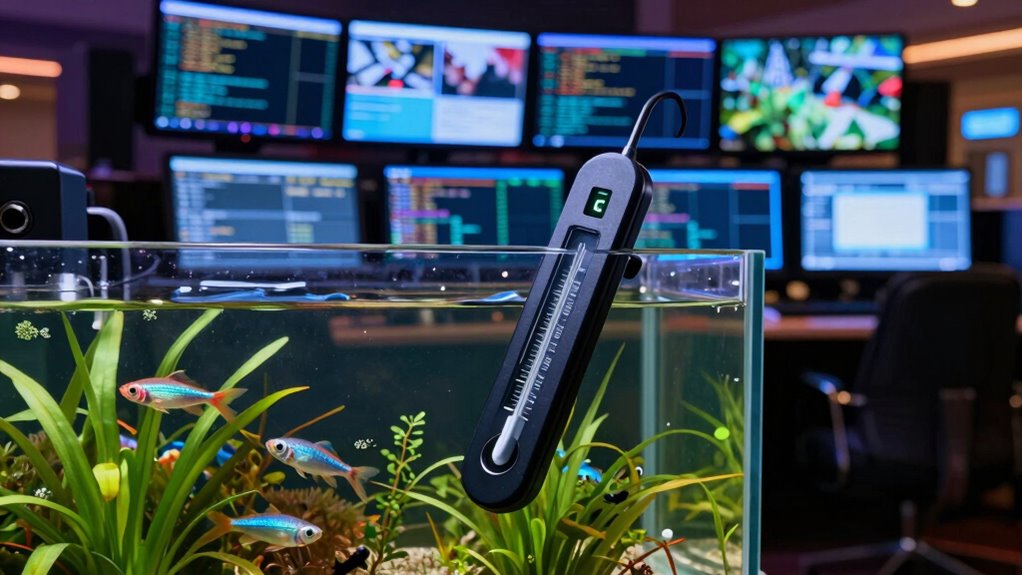

Hackers found an easy entry point through a vulnerable fish tank thermometer connected to the casino’s network. It lacked security, allowing them to inject malware and gain access. From there, they moved laterally, targeting sensitive gambler data stored on a server. They used encrypted channels to exfiltrate the data quietly over time. If you’re curious about how this small device enabled such a big breach, there’s more to uncover just ahead.

Get privacy and security gear delivered free with Prime
- Fast, free delivery on millions of items
- Prime Video, Amazon Music and more included
- Member-only deals all year
Key Takeaways
- Hackers exploited an unprotected IoT fish tank thermometer to gain initial access to the casino’s network.
- The thermometer served as a backdoor, enabling lateral movement toward high-value databases.
- Data was exfiltrated through encrypted channels, blending with legitimate traffic to avoid detection.
- IoT device vulnerabilities like default passwords and outdated firmware facilitated the breach.
- Securing IoT devices and network segmentation are critical to prevent similar cyberattacks.

In a surprising twist on cybercrime, hackers exploited a vulnerable internet-connected fish tank thermometer to breach a North American casino’s network. You might think a device monitoring aquarium temperature is harmless, but in this case, it became the gateway for a sophisticated attack. The thermometer lacked the security protections typical of more critical systems—no strong passwords, unpatched firmware, and no network segmentation. Hackers scanned the casino’s smart system for weaknesses, quickly identifying this IoT device as an entry point. Once they found an opening, they injected malware or remote access tools, gaining unauthorized control over the thermometer.
From there, they moved laterally through the network, searching for more valuable targets. Their goal: access to the high-roller gambler database, which stored sensitive personal and financial data. This database was located on a server accessible from the compromised segment of the network, allowing the attackers to breach it with relative ease. Once inside, they extracted the data using encrypted channels—VPNs or even the TOR network—to stay hidden. To avoid detection, they split the stolen data into small pieces and timed their exfiltration during peak network activity, blending their traffic with legitimate data flows.
Your typical IoT device, like this fish tank thermometer, doesn’t have the security measures of a laptop or server. Many run unpatched firmware, come with default passwords, and lack the necessary protections to prevent remote exploits. In this case, the device’s lack of security created an unintentional backdoor into the casino’s entire network. The hackers didn’t stop at just the gambler database; they also targeted payment systems and employee records, risking further financial and identity theft. Moreover, this incident underscores how device vulnerabilities can be exploited to compromise entire networks, highlighting the importance of comprehensive security measures.
IoT devices often lack security, creating backdoors that can compromise entire networks.
The exfiltration process involved routing the data back through the compromised thermostat to cloud storage, all while employing encrypted channels for stealth. They timed their data transfers during busy network periods to evade alarms and split the data into small chunks to make detection even harder. The entire operation was remarkably smooth, with the attackers maintaining undetected access for some time before the breach was discovered.
This incident highlights a vital lesson: IoT devices are not immune to cyber threats. Many lack proper security from the start, creating opportunities for hackers to exploit. You must segment IoT devices on separate networks, keep their firmware updated, and change default passwords immediately. Securing these devices isn’t just about protecting them; it’s about safeguarding the entire network. The casino’s breach serves as a stark reminder that even the most innocuous devices, like a fish tank thermometer, can become the Achilles’ heel in your cybersecurity defenses. The increasing proliferation of IoT devices across various sectors further amplifies the importance of implementing comprehensive security measures to prevent similar incidents.
Top picks for "casino heist hacker"
As an affiliate, we earn on qualifying purchases.
Frequently Asked Questions
How Common Are Iot Device Vulnerabilities in Casinos?
IoT device vulnerabilities are quite common in casinos. You might not realize it, but many casinos rely on smart devices like fish tank thermometers, cameras, or environmental sensors that often lack proper security measures. These devices are frequently unpatched, use default passwords, or have weak firmware, making them easy targets for hackers. To protect your casino, you need to segment these devices, update firmware regularly, and secure network access.
What Immediate Steps Should Casinos Take After Such Breaches?
You need to act fast, because a breach like this can release chaos! Immediately isolate affected IoT devices, disable remote access, and change all default passwords. Conduct a thorough security audit, update firmware, and patch vulnerabilities. Notify your cybersecurity team and legal counsel. Strengthen network segmentation, encrypt data traffic, and monitor for suspicious activity. Quick, decisive action can contain damage and prevent hackers from turning your casino into their playground.
Are Fish Tank Thermometers Typically Secured Against Hacking?
No, fish tank thermometers typically aren’t secured against hacking. They often lack strong passwords, regular firmware updates, or encryption, making them easy targets. Since these devices are connected to the internet for monitoring, hackers can exploit vulnerabilities to access your network. To protect your casino, you should segment IoT devices, change default credentials, and keep firmware up to date regularly.
Could This Type of Attack Happen in Other Industries?
Yes, this kind of attack could happen in other industries. Imagine vulnerabilities in seemingly harmless IoT devices like smart thermostats, security cameras, or industrial sensors. Hackers can exploit weak security, gain access, and move laterally into critical systems. If you don’t secure these devices with strong passwords, regular updates, and network segmentation, you risk compromising sensitive data, operations, and even safety in healthcare, manufacturing, or commercial sectors.
How Can Consumers Protect Their Data From Similar Iot Exploits?
To protect your data from IoT exploits, you should change default passwords on all devices, use strong, unique passwords, and enable two-factor authentication where possible. Keep your firmware and software updated regularly to patch vulnerabilities. Segment IoT devices from your main network to limit access, and encrypt data traffic to prevent eavesdropping. Be cautious about which devices you connect and monitor their activity for suspicious behavior.
Conclusion
Now, picture that seemingly innocent fish tank thermometer, quietly lurking in the corner, its readings transmitted like secret whispers across the network. Just as a tiny ripple can create a tidal wave, this small device became a gateway for hackers to breach the casino’s defenses. It’s a stark reminder that even the most unexpected objects can hide dangerous secrets, urging you to stay vigilant and protect every corner of your digital world before it’s too late.
Halloween Picks
halloween
As an affiliate, we earn on qualifying purchases.