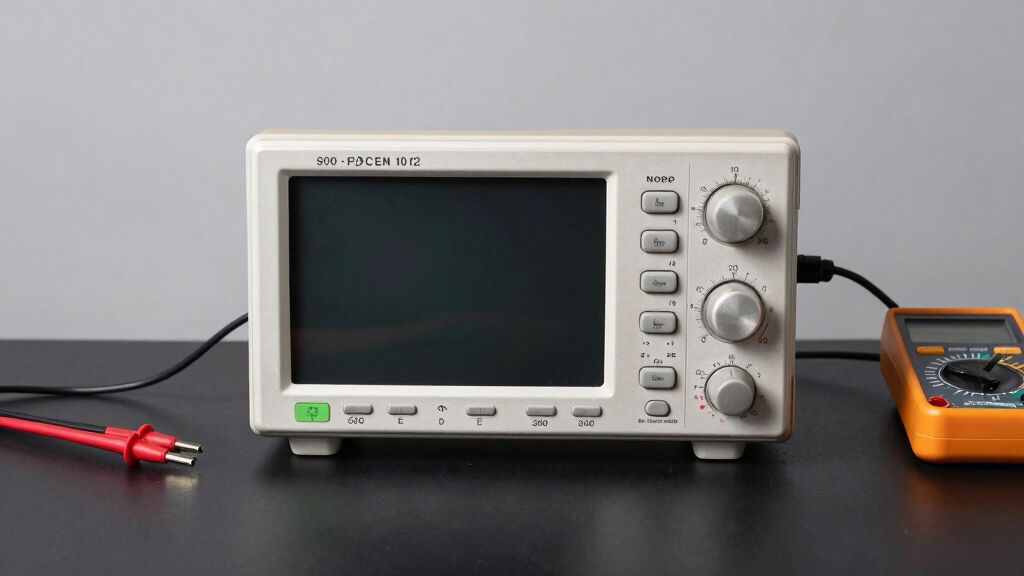
Choosing the best oscilloscopes over $500 means balancing advanced features with value for professional and serious hobbyist use. The top picks include the Siglent SDS824X for its high bandwidth and mixed signal capabilities, and the Rigol DHO924S for its impressive 250 MHz bandwidth and additional features like Bode plot analysis. These models often come with tradeoffs: higher cost for more precise measurements, more channels, or better user interfaces. Understanding what matters most—whether it’s bandwidth, number of channels, or ease of use—is key to making the right choice. Keep reading for a detailed breakdown of these leading oscilloscopes and how they compare.
Open a free Amazon Business account
Business pricing, bulk buying and tax-exempt orders.
Create a free accountAs an affiliate, we earn on qualifying purchases.
Key Takeaways
- Higher bandwidth models like the Rigol DHO924S significantly improve signal clarity for complex signals.
- Mixed signal oscilloscopes like the Siglent SDS824X are ideal for multi-purpose testing in advanced projects.
- Portability varies; handheld options such as the Micsig SATO1004 offer convenience but often sacrifice some features.
- User interface and remote control capabilities can greatly impact usability in professional environments.
- Price differences among these models reflect variations in bandwidth, channels, and additional features like Bode plots or AFGs.



More Details on Our Top Picks
Siglent SDS824X HD Mixed Signal Oscilloscope (4 Channel / 200 MHz)
The Siglent SDS824X HD stands out for its high bandwidth and multi-channel capability, making it a top choice for complex signal testing. Compared to the RIGOL DHO814, it offers more digital channels and faster waveform capture rates, which are critical for detailed analysis. However, its advanced features require additional options and a steeper learning curve, which could be a hurdle for less experienced users. Its ability to handle both analog and digital signals in one device simplifies many testing setups. The tradeoff is that setup complexity and extra costs for options might deter those looking for a straightforward, all-in-one solution. Overall, this scope makes the most sense for engineers needing flexible, high-performance testing with room for expansion.Pros:- High bandwidth and multiple channels for complex testing
- Fast waveform capture rates for detailed signal analysis
- Supports mixed signal testing with optional digital channels
Cons:- Additional options required for full digital and waveform generator features
- Complex setup may be intimidating for new users
Best for: Professional electrical engineers and advanced technicians working on mixed-signal projects
Not ideal for: Hobbyists or beginners seeking a simpler, plug-and-play oscilloscope without extra costs
- Channels:4 analog, 16 digital (requires options)
- Bandwidth:200 MHz
- Digital Channels:16
- Waveform Capture Rate:120,000 wfm/s (normal), 500,000 wfm/s (sequence)
- Waveform Generator:25 MHz (requires options)
Bottom line: Ideal for experienced professionals needing a flexible, high-performance scope with expandable features.
Fluke 123B Industrial ScopeMeter Hand-held Oscilloscope, 2 Input Channels, 20 MHz Bandwidth, SCC120 Kit
The Fluke 123B ScopeMeter excels in portability, offering a compact design with reliable auto-reading features that simplify complex industrial measurements. Unlike the RIGOL DHO814, which provides high-resolution analysis and remote control, the Fluke’s strength lies in its ruggedness and ease of use in harsh environments. Its limited bandwidth of 20 MHz constrains it for high-frequency signals but excels for troubleshooting machinery and power systems. The long battery life and simple interface make it practical for field technicians who need quick, accurate readings without fuss. The key tradeoff is its lower bandwidth, which excludes it from high-frequency, high-precision applications. It’s best suited for industrial professionals who prioritize portability and simplicity over bandwidth.Pros:- Portable and rugged for industrial environments
- Auto-reading technology simplifies measurements
- Long battery life supports extended field use
Cons:- Limited bandwidth restricts high-frequency testing
- Shorter charge time for extended use may require planning
Best for: Industrial field technicians and maintenance engineers needing portable, reliable measurements
Not ideal for: Electronics hobbyists or engineers working on high-frequency circuit design requiring higher bandwidth and detailed analysis
- Input Channels:2
- Bandwidth:20 MHz
- Display:5000-count true-rms digital
- Battery:Li-ion rechargeable, 7 hours operation
- Charge Time:4 hours
Bottom line: This scope-meter is perfect for industrial professionals who need quick, reliable measurements in the field without high-frequency demands.
RIGOL Digital Oscilloscope DHO814 100 MHz 4-Ch 1.25 GSa/s 12-bit 25 Mpts with Touchscreen and Remote Control
The RIGOL DHO814 offers a compelling blend of high sampling rate and resolution, making it well-suited for detailed troubleshooting and protocol decoding. Compared to the Fluke ScopeMeter, it provides far higher bandwidth and advanced features like trigger decode and remote control, ideal for lab environments. Its 100 MHz bandwidth, while lower than some larger models, still covers most signal analysis needs and its touch screen enhances usability. The drawback is its size and complexity, which might be overkill for simple or portable testing needs. This scope is best for engineers who need not only detailed waveform analysis but also connectivity for remote diagnostics, at the expense of portability.Pros:- High sampling rate and 12-bit resolution for detailed signals
- Multiple connectivity options for remote control and data transfer
- Touchscreen interface simplifies operation
Cons:- Relatively high price for hobbyist or entry-level users
- Large size may limit portability
- Steeper learning curve due to advanced features
Best for: Electronics engineers and troubleshooting specialists requiring high-resolution, protocol-aware analysis
Not ideal for: Field technicians or hobbyists seeking a lightweight, straightforward scope without advanced features
- Bandwidth:100 MHz
- Channels:4
- Sampling Rate:1.25 GSa/s
- Vertical Resolution:12-bit
- Memory Depth:25 Mpts
- Connectivity:LAN, USB, HDMI
Bottom line: This scope is best for professionals needing high-resolution analysis and remote capabilities in a stable, bench-top form factor.
Micsig SATO1004 Portable Handheld Automotive Oscilloscope with 4 Channels and 100MHz Bandwidth
The Micsig SATO1004 is tailored for automotive technicians needing portability and quick diagnostics. Its 100 MHz bandwidth and 1 GSa/s sampling rate exceed many handheld models, offering detailed waveform capture in a small package. Unlike the Fluke ScopeMeter, which emphasizes ruggedness and simplicity, the SATO1004 incorporates a full Android OS and remote operation via smartphone app, providing advanced data management and analysis. Its multiple I/O ports and internal storage support complex automotive troubleshooting. The main tradeoff is its reliance on stable Wi-Fi and a potentially steep learning curve for users unfamiliar with Android-based scopes. This makes it ideal for automotive professionals who want a versatile, connected device for field diagnostics.Pros:- Portable with a touch screen interface
- Supports remote operation via smartphone app
- Multiple I/O ports and substantial internal storage
Cons:- Requires stable Wi-Fi for remote features
- Complex interface for users unfamiliar with Android
Best for: Automotive technicians and mobile engineers needing a portable, connected diagnostic tool
Not ideal for: Electronics hobbyists or those without automotive testing needs who prefer simpler devices
- Bandwidth:100 MHz
- Channels:4
- Sampling Rate:1 GSa/s
- Display:8-inch Touch Screen
- Internal Storage:32 GB
- Operating System:Android
Bottom line: This handheld scope makes the most sense for automotive professionals seeking portability, connectivity, and detailed data analysis in the field.
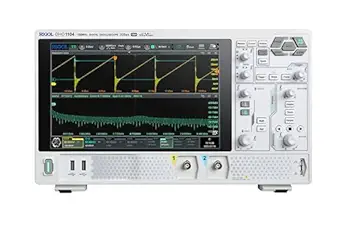
RIGOL DHO1104 High-Resolution 4-Channel 100 MHz Digital Oscilloscope
The RIGOL DHO1104 stands out for its high-resolution 12-bit measurement capability, making it ideal for detailed signal analysis where precision is key. Compared with the Rigol DHO924S, which offers higher bandwidth at 250 MHz, the DHO1104’s lower bandwidth limits its effectiveness for very high-frequency signals but compensates with a deeper memory of 50 Mpts and a low noise ASIC chipset that enhances measurement accuracy. Its four channels provide flexibility for multi-signal testing, but the complex interface may challenge beginners. This model is best suited for experienced technicians who need high-resolution, low-noise measurements without the need for ultra-high frequencies. The tradeoff is that it doesn’t cover the higher frequency ranges that some advanced applications demand, which could be a drawback for RF engineers.
Pros:- High-resolution 12-bit measurement enhances detail in signals
- Deep 50 Mpts memory allows for extensive waveform capture
- Low noise ASIC chipset improves measurement accuracy
- Four channels support complex signal scenarios
Cons:- Limited 100 MHz bandwidth restricts high-frequency analysis
- Complex interface can be difficult for new users
- Optional 100 Mpts memory upgrade adds cost
Best for: Experienced signal analysts and engineers requiring high-resolution data for precise troubleshooting and research.
Not ideal for: Beginners or users needing to analyze very high-frequency signals above 100 MHz, as the bandwidth limits applicability.
- Bandwidth:100 MHz
- Analog Channels:4
- Resolution:12 bit
- Sample Rate:2 GSa/sec
- Memory:50 Mpts (100 Mpts optional)
- ASIC:Low noise
Bottom line: This scope makes the most sense for professionals who need detailed, accurate signals at moderate frequencies and can handle its complexity.
Rigol Digital Oscilloscope DHO924S 250 MHz, 4 Channels, 1.25 GSa/s, 12-bit, 50 Mpts Memory, with AFG and Bode Plot
The Rigol DHO924S offers a substantial upgrade in bandwidth and advanced features compared to the DHO1104, making it better suited for high-frequency applications like RF and communication testing. Its 250 MHz bandwidth surpasses the DHO1104’s 100 MHz, enabling analysis of faster signals, while the 1.25 GSa/sec sampling rate ensures detailed waveform capture. Features like UltraAcquire and waveform search significantly boost debugging efficiency, especially when time is critical. The touch display and comprehensive connectivity options support remote control and automation, appealing to power users. However, Bode plot analysis is limited to the S model, and some features require additional probes or accessories, adding complexity and cost. This scope is ideal for professionals who need versatile, high-speed testing with automation capabilities, but less so for those on a tight budget or beginners unsure about advanced options.
Pros:- 250 MHz bandwidth enables high-frequency analysis
- 1.25 GSa/sec sampling provides detailed waveforms
- UltraAcquire and waveform search improve debugging speed
- Supports remote control and automation with multiple connectivity options
Cons:- Bode plot analysis limited to the S model increases cost
- Requires additional probes for digital channels, raising overall expense
- Some advanced features may require optional accessories
Best for: Power users and engineers conducting high-frequency signal analysis in communication, embedded, or power electronics fields.
Not ideal for: Budget-conscious hobbyists or beginners who don’t need the extensive features or higher bandwidth, as the complexity and cost may be overwhelming.
- Frequency:250 MHz
- Channels:4 analog
- Sampling Rate:1.25 GSa/sec
- Resolution:12-bit
- Memory Depth:50 Mpts
- Additional Features:UltraAcquire, waveform search, Bode plot (S model), LAN/USB/HDMI, SCPI
Bottom line: This scope is best for experienced engineers seeking a high-speed, versatile tool for complex signal analysis with automation support.

How We Picked
These oscilloscopes were selected based on a combination of technical specifications, build quality, usability, and overall value for professional users. Priority was given to models with at least 100 MHz bandwidth, multiple channels, and advanced features like remote control or Bode plotting. We also considered user reviews and industry reputation to ensure these options meet the demands of serious technicians and engineers. The ranking reflects a balance between performance, durability, and cost, highlighting the best options for different types of buyers in this price range.Factors to Consider When Choosing Best Oscilloscopes Over $500
When selecting a high-end oscilloscope, it’s important to evaluate several factors beyond basic specs. Understanding your specific needs—such as bandwidth, channels, and interface—helps avoid overpaying for features you won’t use. Considering build quality and usability ensures the device remains reliable during frequent use. Additionally, think about software features, remote control options, and future expandability, which can influence long-term value. The following factors can help clarify which oscilloscope will suit your professional or hobbyist projects.Bandwidth and Sample Rate
Bandwidth determines the maximum frequency signal the oscilloscope can accurately measure. For high-frequency electronics, a scope over 100 MHz is often necessary, with models like the Rigol DHO924S reaching 250 MHz for detailed signal analysis. Sample rate influences the accuracy of captured waveforms; higher rates prevent aliasing and provide clearer signals. Choosing a scope with insufficient bandwidth or sample rate can lead to misdiagnosis or overlooked issues, especially in complex circuits.
Channels and Mixed Signal Capabilities
The number of channels directly affects how many signals you can simultaneously monitor. Four-channel models like the Siglent SDS824X and Rigol DHO924S are versatile for complex testing setups. Mixed signal oscilloscopes integrate logic analysis, which is critical for embedded systems work. Opting for more channels and MSO features adds flexibility but can increase cost and complexity. Be sure to match channel count to your typical testing scenarios to avoid unnecessary expenses or limitations.
User Interface and Usability
An intuitive interface reduces setup time and minimizes mistakes during measurements. Touchscreens, remote control capabilities, and clear menus enhance day-to-day operation. Some higher-end models include automation features that streamline repetitive tasks, saving time. Conversely, overly complex interfaces can be overwhelming for less experienced users, so consider your comfort level and whether the scope’s interface aligns with your workflow.
Build Quality and Reliability
Durability and consistent performance matter when investing over $500. Well-constructed scopes with quality displays and robust connectors withstand frequent use in demanding environments. Look for reputable brands with positive industry reviews, as cheaper build quality can lead to calibration drift or failure. Reliability ensures your measurements remain accurate over time, avoiding costly rework or misdiagnosis.
Additional Features and Software Support
Advanced features like Bode plots, arbitrary waveform generators (AFGs), or remote control expand the scope’s versatility. Software capabilities, including data export and analysis, add value for detailed diagnostics. Consider whether these extras are essential for your work; paying for features you won’t use may reduce overall value. Also, check for software updates and compatibility with your existing systems to maintain long-term usability.
Frequently Asked Questions
Is higher bandwidth always better for my oscilloscope?
Higher bandwidth generally provides more detailed signal measurements, especially for high-frequency signals. If you work with signals above 100 MHz, opting for a scope with at least 150-250 MHz bandwidth is advisable. However, for lower-frequency signals, such as in audio or basic electronics, a scope with 100 MHz or less may suffice and save cost. Always match the scope’s bandwidth to your typical signal frequencies to avoid overspending on unnecessary capabilities.
Should I prioritize more channels or higher bandwidth?
Deciding between more channels and higher bandwidth depends on your application. If you need to observe multiple signals simultaneously, a four-channel scope is beneficial. Conversely, if analyzing complex high-frequency signals, bandwidth becomes more critical. Many professional scopes strike a balance, offering four channels with 100-250 MHz bandwidth, but your specific testing needs will guide the best choice. Consider your current projects and potential future requirements to find the right fit.
Are portable oscilloscopes over $500 worth the investment?
Portable oscilloscopes in this price range provide convenience without sacrificing much performance, making them ideal for fieldwork or limited workspace. However, they often have fewer features or lower bandwidth compared to benchtop models. If portability is a priority, investing in a high-quality handheld scope can be worthwhile, but for complex or precise measurements, a traditional benchtop model might offer better value and performance for the same cost.
How important is software support and remote control?
Software support and remote control capabilities greatly enhance usability in professional settings, allowing for automation, data logging, and easier analysis. These features can save significant time and reduce errors, especially for repetitive testing. When choosing a scope, ensure that the software is regularly updated and compatible with your operating system. These capabilities often justify a higher price point, providing long-term workflow benefits.
What should I look for in terms of future expandability?
Future expandability includes options like additional channels, higher bandwidth, or compatible accessories such as advanced probes or analysis modules. Some models support software upgrades or hardware add-ons that extend functionality. Considering these options upfront can prevent the need for a costly replacement later. If you anticipate evolving testing needs, investing in a scope with modular options can offer more flexibility and value over time.
Conclusion
The best overall oscilloscope for most professionals and serious hobbyists is the Rigol DHO924S thanks to its high bandwidth and rich feature set. For those on a tighter budget who still need advanced capabilities, the Siglent SDS824X offers excellent value with four channels and mixed signal support. Beginners or those with portable needs might consider more straightforward handheld options, while engineers requiring maximum flexibility should look at models with expandability and software integration. Ultimately, your specific use case and budget will determine the ideal choice among these high-end oscilloscopes.
Flea & tick season Picks
flea and tick prevention
As an affiliate, we earn on qualifying purchases.