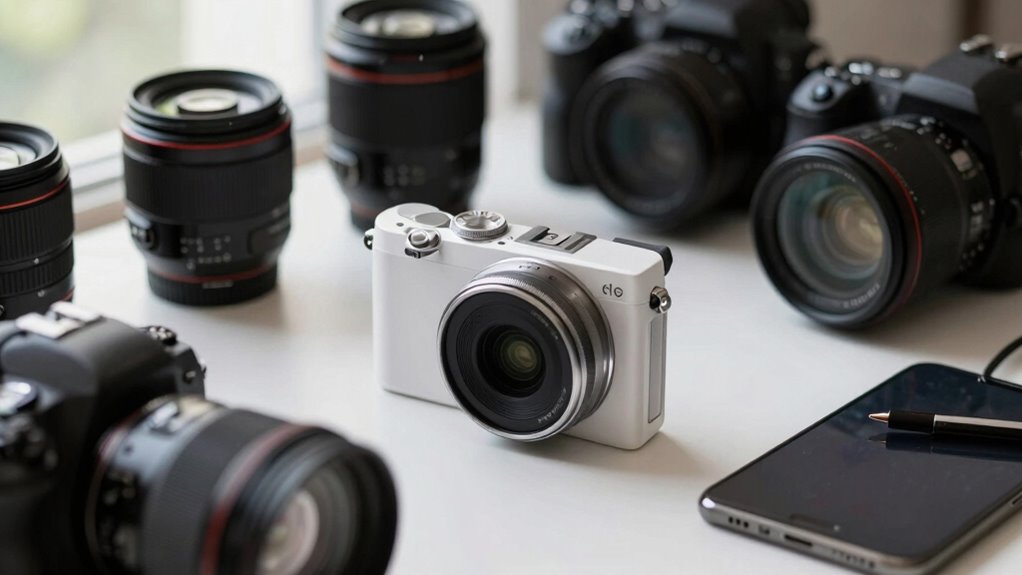

Mirrorless cameras have overtaken many DSLR workflows because they offer larger sensors for better image quality, especially in low light. They feature faster autofocus with eye-tracking and real-time updates, making capturing action and candid shots easier. Their electronic viewfinders provide instant feedback on settings, streamlining your workflow. Plus, their compact design and expanding lens ecosystem make them more versatile and portable. If you want to understand how these advantages continue to reshape photography, keep exploring further.

Get privacy and security gear delivered free — and shop member deals
- Fast, free delivery on millions of items
- Access to Prime Big Deal Days deals on October 6–7
- Prime Video, Amazon Music and more included
Key Takeaways
- Larger sensors in mirrorless cameras improve image quality while maintaining compact size, surpassing many DSLR capabilities.
- Advanced autofocus systems, including eye-tracking and on-sensor phase detection, offer faster, more reliable focusing.
- Electronic viewfinders provide real-time exposure, focus, and depth feedback, streamlining workflow and adjustments.
- Rapid sensor and lens ecosystem development enhance versatility, professional results, and overall performance.
- Technological innovations make mirrorless systems more efficient, portable, and appealing, leading industry shift from DSLRs.
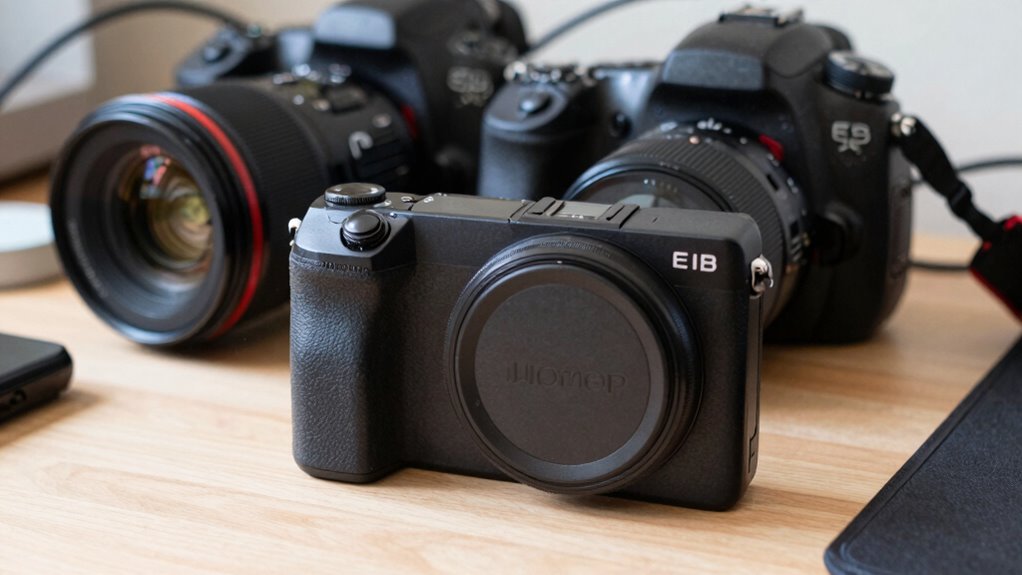
For years, DSLR cameras dominated professional workflows, but that dominance is rapidly shifting as mirrorless cameras take over. One of the main reasons for this change is the significant improvement in sensor size. Mirrorless cameras now feature larger sensors, often matching or exceeding those found in traditional DSLRs. This means you get better image quality, especially in low-light conditions, with more detail and less noise. The compact design of mirrorless systems also allows for larger sensors without making the camera bulky, giving you the advantage of high-resolution images without sacrificing portability. This shift in sensor size is vital because it directly impacts your ability to produce professional-grade photos, whether you’re shooting landscapes, portraits, or fast-moving subjects.
Another key factor driving the transition is autofocus speed. Mirrorless cameras have made remarkable strides in focusing technology. You’ll notice that their autofocus systems are faster, more accurate, and more reliable than those in older DSLRs. Thanks to advanced on-sensor phase detection and eye-tracking capabilities, these cameras lock onto your subject almost instantly, even in challenging conditions. This means you spend less time fumbling with focus and more time capturing the moment. The speed of autofocus is especially beneficial for action photography, wildlife shoots, and candid moments where every second counts. With mirrorless cameras, you often get real-time autofocus updates, which help you stay on your subject seamlessly, whether it’s a moving athlete or a fleeting expression.
Additionally, mirrorless cameras are more adaptable due to their electronic viewfinders, which provide real-time feedback on exposure, focus, and depth of field. This immediacy allows you to make quick adjustments on the fly, streamlining your workflow. They also tend to be lighter and more compact, enabling you to carry your gear for longer periods without fatigue, which is invaluable during long shoots or travel. As the technology advances, mirrorless cameras are closing the gap—if not surpassing—DSLRs in terms of battery life, durability, and customization options. Moreover, the sensor technology in mirrorless cameras continues to improve rapidly, further boosting their overall performance and making them an increasingly attractive choice for professionals. Enhanced sensor performance is also crucial for achieving consistent results across different shooting conditions. Plus, the evolving lens ecosystem for mirrorless systems is expanding, offering more versatile options for various shooting styles.
All these factors—larger sensor sizes, faster autofocus speeds, and improved ergonomic features—combine to make mirrorless cameras the new standard for many professionals. They offer a more efficient, versatile, and high-quality shooting experience, which is why they’ve overtaken so many traditional DSLR workflows and are now the preferred choice for many in the industry.
mirrorless camera with eye-tracking autofocus
As an affiliate, we earn on qualifying purchases.
As an affiliate, we earn on qualifying purchases.
Frequently Asked Questions
How Do Mirrorless Cameras Compare in Battery Life to DSLRS?
Mirrorless cameras generally have shorter battery life compared to DSLRs because they prioritize power efficiency differently. While DSLRs often have larger batteries, they also consume more power through optical viewfinders and mechanical parts. Mirrorless cameras, with their electronic viewfinders and compact design, tend to have better power efficiency, but their battery longevity usually still falls short of DSLRs. So, you’ll need extra batteries for extended shoots with mirrorless models.
Are Mirrorless Cameras Compatible With Existing DSLR Lenses?
You can absolutely use your DSLR lenses on mirrorless cameras, but it’s not always straightforward. With lens adapters, you can connect your existing lenses, but keep in mind that compatibility depends on the sensor size—full-frame or APS-C—and the adapter type. Sometimes, you might experience a slight loss in autofocus speed or functionality. Still, these adapters make your gear incredibly versatile, almost like turning a pumpkin into a carriage!
What Are the Main Cost Differences Between Mirrorless and DSLR Systems?
You’ll find that mirrorless cameras often have a higher initial cost due to advanced sensor technology, but they can be more economical long-term because of their smaller, lighter lenses and fewer moving parts. Lens adaptability varies; many mirrorless systems offer affordable adapters for existing DSLR lenses, reducing upgrade costs. Overall, the total cost depends on your gear choices, but mirrorless systems tend to be more compact and versatile, potentially saving you money over time.
How Do Autofocus Speeds Differ Between Mirrorless and DSLR Cameras?
You’ll notice that autofocus speeds are generally faster on mirrorless cameras thanks to advanced autofocus algorithms and on-sensor phase detection. Mirrorless systems leverage these algorithms to quickly identify and lock onto subjects, often surpassing DSLR autofocus, especially in live view mode. While DSLRs use dedicated phase detection sensors, mirrorless cameras integrate phase detection pixels directly onto the sensor, streamlining focusing. This results in quicker, more accurate autofocus performance in many situations.
Is There a Significant Difference in Image Quality Between the Two?
Sensor sophistication and superior image processing make mirrorless cameras produce striking, stunning images that often surpass DSLRs. You’ll notice sharper details, richer colors, and better low-light performance. While both camera types deliver high quality, the advancements in sensor technology and processing in mirrorless models mean the difference is minimal but noticeable, especially in challenging conditions. So, if you seek superb image quality, mirrorless cameras are a smart, swift choice.
compact mirrorless camera lens kit
As an affiliate, we earn on qualifying purchases.
As an affiliate, we earn on qualifying purchases.
Conclusion
So, as you’ve seen, mirrorless cameras have truly changed the game, offering a sleek, efficient alternative that’s hard to beat. They’ve streamlined workflows, reduced size and weight, and kept up with fast-paced shooting demands. If you’re considering an upgrade, it’s clear you shouldn’t throw the baby out with the bathwater—embrace the future and take advantage of these advancements. Staying adaptable is the name of the game in today’s ever-evolving photography world.
electronic viewfinder for mirrorless cameras
As an affiliate, we earn on qualifying purchases.
As an affiliate, we earn on qualifying purchases.
As an affiliate, we earn on qualifying purchases.
Halloween Picks
halloween
As an affiliate, we earn on qualifying purchases.