When searching for the best 3D scanners over $500, you’re looking at models that deliver high precision, advanced features, and reliable performance suited for professional or industrial applications. The Creality Raptor Pro stands out for its versatility and ease of use, making it a top overall choice. The Revopoint INSPIRE 2 offers excellent outdoor scanning capabilities for those working in variable environments, while the Revopoint MIRACO Plus balances high detail with all-in-one functionality for 3D printing. Buyers in this category face tradeoffs between price, detail resolution, ease of use, and scanning speed. Continue reading for a detailed breakdown to find the best fit for your specific needs.
Key Takeaways
- High-precision models like the Creality Raptor Pro excel for detailed industrial and professional use, but come with a higher price tag.
- Versatility in scanning modes and environment adaptability are key features that set premium models apart from cheaper options.
- Outdoor scanning and color accuracy remain significant differentiators among the top picks, especially for creative or inspection tasks.
- Ease of use and integration with popular software are crucial for those new to 3D scanning or working on complex projects.
- Tradeoffs often involve balancing speed, accuracy, and cost — the most feature-rich scanners tend to be more expensive but offer broader capabilities.
| Creality Raptor Pro 3D Scanner with Scan Bridge Wireless | 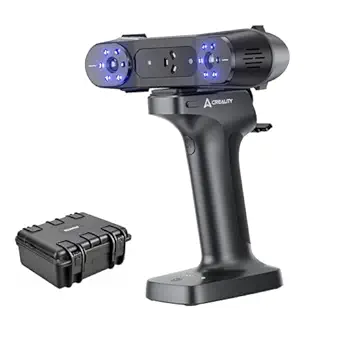 | Best Overall for High-Precision, Full-Color Scanning | Accuracy: 0.02mm | Scanning Speed: 60 FPS | Point Rate: 660,000 points/sec | VIEW LATEST PRICE | See Our Full Breakdown |
| Revopoint INSPIRE 2 3D Scanner, Outdoor Scan, for 3D Printing, Premium |  | Best for Outdoor and Challenging Surface Scans | Scanner Type: 3D Scanner | Resolution: 0.1 mm | Weight: 190 g | VIEW LATEST PRICE | See Our Full Breakdown |
| Revopoint MetroY Pro 3D Scanner, Blue Laser, 5 Modes for 3D Printing |  | Best for Versatile Precision and High-Resolution 3D Modeling | Scanner Type: 3D Scanner | Resolution: 0.05 mm | Item Weight: 450 g | VIEW LATEST PRICE | See Our Full Breakdown |
| Creality 3D Scanner CR-Scan Raptor Pro for 3D Printing, Blue Laser & NIR Handheld Scanner, 0.02mm Accuracy, 60fps, Full-Color Capture, Windows & macOS |  | Best for Large Object and Multi-Material Scanning | Measurement Accuracy: 0.02mm | Scanning Speed: 60fps laser, 30fps infrared | Laser Types: Crossed and parallel blue lasers, NIR structured light | VIEW LATEST PRICE | See Our Full Breakdown |
| Revopoint MIRACO Plus 3D Scanner, All-in-One Scan for 3D Printing |  | Best for Portable, High-Resolution 3D Capture with Versatile Formats | Photogrammetric Accuracy: 0.02 mm | Optical Accuracy: 0.05 mm | Camera Resolution: 48MP RGB | VIEW LATEST PRICE | See Our Full Breakdown |
| Revopoint MetroX Pro 3D Scanner, Blue Laser Scan, for 3D Printing, Standard |  | Best Overall for Industrial Precision and Versatility | Single-frame precision: 0.01 mm | Single-frame accuracy: 0.02 mm | Volumetric accuracy: 0.02 mm + 0.04 mm × L (m) | VIEW LATEST PRICE | See Our Full Breakdown |
| 3DMakerpro Handheld 3D Scanner for 3D Printing with High Precision and Color Capture | 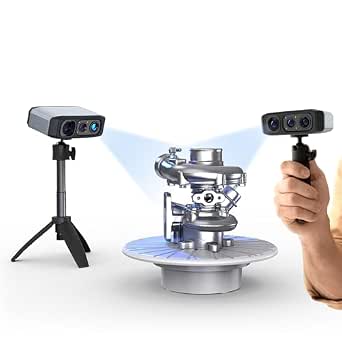 | Best for Detailed Handheld Scanning with Color | Scan depth: 100mm | Accuracy: 0.03mm | Resolution: 0.07mm | VIEW LATEST PRICE | See Our Full Breakdown |
| Revopoint POP 4 3D Scanner, AI Segmentation, for 3D Printing, Premium |  | Best for Fast, Precise Outdoor and Field Scanning | Accuracy: 0.03 mm | Frame rate: up to 105 fps | Maximum scan volume: 2x2x2 m | VIEW LATEST PRICE | See Our Full Breakdown |
| Revopoint POP3 Plus 3D Scanner, Full-Color Scan for 3D Printing and Design |  | Best for Portable, High-Fidelity Color Scanning | Accuracy: 20 microns | Scanning speed: up to 18 fps | Object size range: 20 mm to 2 m | VIEW LATEST PRICE | See Our Full Breakdown |
| Revopoint MetroY Ultra 3D Scanner, Up to 90 FPS, for 3D Printing and Industrial Inspection |  | Best for High-Speed Industrial and Quality Control Scanning | Accuracy: 0.01 mm | Scanning speed: up to 90 FPS | Laser modes: 5 including structured light | VIEW LATEST PRICE | See Our Full Breakdown |
More Details on Our Top Picks
Creality Raptor Pro 3D Scanner with Scan Bridge Wireless
The Creality Raptor Pro stands out for its exceptional accuracy of 0.02mm and rapid 60 FPS scanning speed, making it ideal for detailed, full-color models. Compared to the Revopoint INSPIRE 2, it offers more comprehensive color mapping and faster capture rates, but requires calibration and may challenge newcomers due to its complex setup. This model is best suited for professionals or experienced hobbyists who need high fidelity and color detail, though beginners might find its calibration demands and limited software integration daunting.
- Pros: Ultra-high 0.02mm accuracy, supports full-color scans, wireless connectivity enhances convenience, fast 60 FPS speed
- Cons: Calibration needed for optimal results, complex setup for novices, limited info on compatible software
Verdict: This scanner is ideal for users demanding precision and color fidelity, willing to handle a steeper learning curve.
Pros:- Exceptional 0.02mm accuracy ensures detailed captures
- Supports full-color 3D scanning for realistic models
- Wireless connectivity facilitates flexible setup and use
Cons:- Requires calibration for best results, which can be complex
- May be difficult for beginners to operate without prior experience
Best for: Professional 3D artists and advanced hobbyists needing detailed, color-rich scans
Not ideal for: Beginners or casual users who prefer plug-and-play simplicity and minimal calibration
- Accuracy:0.02mm
- Scanning Speed:60 FPS
- Point Rate:660,000 points/sec
- Color Mapping:Yes
- Range:5mm to 2000mm
- Single Capture Range:270mm x 170mm @300mm
Our verdict“Best suited for professionals who prioritize precision and color quality over ease of use.”
Revopoint INSPIRE 2 3D Scanner, Outdoor Scan, for 3D Printing, Premium
The Revopoint INSPIRE 2 excels in outdoor and complex surface environments thanks to its rugged design and high accuracy of 0.1mm. While it is more portable than bulkier models like the Creality Raptor Pro, it offers advanced AI-powered retopology and dual modes that cater to detailed modeling and VR workflows. However, software is sold separately, and it demands high-end hardware to unlock its full potential, making it less accessible for casual or less tech-savvy users. This pick makes the most sense for outdoor professionals or those working on intricate projects requiring portability and durability.
- Pros: Lightweight, durable design; High accuracy suitable for detailed outdoor scans; AI features improve post-processing efficiency; Dual scanning modes for versatility
- Cons: Additional software purchase needed; Hardware requirements are high for optimal use; Limited compatibility outside Windows and macOS
Verdict: Ideal for outdoor professionals needing rugged, precise scanning, but less suited for casual or entry-level users.
Pros:- Durable, lightweight design for outdoor use
- High accuracy of 0.1mm captures detailed textures
- AI-powered retopology simplifies complex modeling
Cons:- Software sold separately increases total cost
- Requires high-end hardware for optimal performance
- Limited platform compatibility may restrict users
Best for: Outdoor explorers and professionals working on detailed, large-scale projects
Not ideal for: Casual hobbyists or users with limited hardware capabilities, due to high system requirements
- Scanner Type:3D Scanner
- Resolution:0.1 mm
- Weight:190 g
- Connection Type:USB Type-C, Wi-Fi
- System Requirements:macOS M1 Pro/Max/Ultra, Windows Intel i7 13th Gen or AMD Ryzen 7 5800, RAM ≥ 16GB, GPU: NVIDIA GeForce RTX 3060 (8GB)
- Range:Object size from 5mm to 2000mm
Our verdict“Best for outdoor professionals needing rugged, high-accuracy scans, but less accessible for casual users.”
Revopoint MetroY Pro 3D Scanner, Blue Laser, 5 Modes for 3D Printing
The Revopoint MetroY Pro offers an impressive 0.01mm precision with five versatile scanning modes, making it suitable for reverse engineering, metrology, and 3D printing. Its wireless capabilities via Wi-Fi 6 and marker-free operation streamline workflows, outperforming less flexible scanners like the Creality Raptor Pro in specialized applications. However, high-end hardware requirements and the need for separate software purchases may limit accessibility. This device makes the most sense for users who need high accuracy and flexibility in demanding environments, especially on Windows or macOS.
- Pros: Ultra-high 0.01mm accuracy; Multiple scanning modes for diverse applications; Wireless Wi-Fi 6 connectivity; Marker-free, fast scanning speeds
- Cons: Demands powerful hardware for best results; Software sold separately; Platform restrictions limit some users
Verdict: Best for professionals and serious hobbyists requiring top precision and flexible scanning options.
Pros:- Exceptional 0.01mm accuracy for detailed models
- Multiple scan modes increase versatility
- Wireless connectivity enhances workflow efficiency
Cons:- High hardware requirements necessary for full performance
- Software purchase required separately
- Platform restrictions may limit accessibility
Best for: Engineers, reverse engineers, and advanced hobbyists focused on high-precision scans
Not ideal for: Casual users or those with limited hardware, due to high system demands and additional software costs
- Scanner Type:3D Scanner
- Resolution:0.05 mm
- Item Weight:450 g
- Connection Type:USB, Wi-Fi 6
- System Requirements:macOS M2 Pro CPU, ≥16 GB RAM; Windows i7 13th Gen or AMD Ryzen 7 5800, ≥32 GB RAM
- Number of Modes:5
Our verdict“Best for high-precision, versatile scanning in professional or demanding hobbyist contexts.”
Creality 3D Scanner CR-Scan Raptor Pro for 3D Printing, Blue Laser & NIR Handheld Scanner, 0.02mm Accuracy, 60fps, Full-Color Capture, Windows & macOS
The Creality CR-Scan Raptor Pro combines high precision of 0.02mm with fast 60fps laser scanning for large object capture, ranging from 5mm to 4 meters. Its hybrid laser and infrared technology allow powder-free scanning of reflective or transparent materials, outperforming many handheld models like the Revopoint MIRACO Plus in versatility. However, its complexity in setup and weight over 9 pounds can be drawbacks for portable use. This pick is best for industrial, medical, or large-scale creative projects where detail and speed matter, despite its heavier weight and setup complexity.
- Pros: High-precision 0.02mm accuracy; Fast scanning for large objects; Capable of scanning challenging materials without powder; Full-color texture capture
Verdict: Perfect for professionals needing detailed, large-scale, multi-material scans, willing to handle setup and weight.
Pros:- High accuracy of 0.02mm suitable for detailed large models
- Fast scanning speeds for efficiency
- Can scan reflective and transparent surfaces without powder
Cons:- Heavy weight and large size hamper portability
- Complex setup process can be a barrier for some users
Best for: Industrial, medical, and large-scale creative professionals needing high-detail, multi-material scans
Not ideal for: Casual hobbyists or those seeking a lightweight, easy-to-use scanner for small objects
- Measurement Accuracy:0.02mm
- Scanning Speed:60fps laser, 30fps infrared
- Laser Types:Crossed and parallel blue lasers, NIR structured light
- Object Size Range:5mm to 4000mm
- Color Depth:24-bit RGB
- Compatibility:Windows 10/11, macOS M1/M2/M3/M4
Our verdict“Best suited for professional environments demanding large, detailed, multi-material scans despite its weight and complexity.”
Revopoint MIRACO Plus 3D Scanner, All-in-One Scan for 3D Printing
The Revopoint MIRACO Plus offers a compelling mix of high-precision photogrammetric and optical scanning, with accuracy of 0.02mm plus 0.05mm x L(m). Its portable design, long battery life, and 6-inch AMOLED flip screen make it highly adaptable for both professional and hobbyist projects. Compared to larger scanners like the Creality CR-Scan Raptor Pro, it excels in mobility and easy setup, though its software is sold separately and it demands high-end hardware for full functionality. This scanner is particularly suited for users who need detailed, color-rich scans on the go, especially those working within their own digital workflows.
- Pros: High-precision photogrammetric and optical scanning; Portable with long battery life; Supports multiple export formats; High-resolution color capture
- Cons: Software sold separately; Only compatible with x86_64 systems; Higher cost may restrict casual users
Verdict: Ideal for professional and serious hobbyist users who value portability and high-quality, versatile scans.
Pros:- High-accuracy 0.02mm photogrammetric and optical scans
- Portable design with long battery life
- Supports a variety of export formats for versatile workflows
Cons:- Requires separate software purchase
- Limited to x86_64 system compatibility
- Higher price point may deter casual users
Best for: Professional users and hobbyists needing portable, detailed scans with flexible format support
Not ideal for: Casual users with limited hardware or those seeking an all-in-one solution with included software
- Photogrammetric Accuracy:0.02 mm
- Optical Accuracy:0.05 mm
- Camera Resolution:48MP RGB
- Processor:8-core 2.4GHz
- RAM:32GB
- Display:6-inch 2K AMOLED flip screen
- Connectivity:Wi-Fi 6, USB Type-C
Our verdict“Best for users who need a portable, high-precision scanner with broad format support and are comfortable managing software separately.”
Revopoint MetroX Pro 3D Scanner, Blue Laser Scan, for 3D Printing, Standard
The Revopoint MetroX Pro stands out for its high-precision capture capabilities, making it ideal for industrial applications where detail matters. Compared to the Revopoint POP 4, it offers superior accuracy and multiple scanning modes, including structured light and laser options, which translate into more reliable measurements for manufacturing or quality control. Its real-time streaming and automated turntable streamline workflows, but the device’s weight nearly 13 pounds can be a drawback for portable use. Additionally, its price and the need for paid software for advanced editing might deter hobbyists. This model is best suited for professionals who require detailed, industrial-grade scans and can accommodate its size and software costs.
Pros:- High-precision scanning suitable for industrial applications
- Multiple scanning modes for different surface types
- Real-time streaming and automated turntable for efficient workflow
- Color capture for realistic 3D models
Cons:- Relatively heavy at nearly 13 pounds, limiting portability
- Requires paid software for advanced editing capabilities
Best for: Industrial engineers, quality inspectors, or professionals needing detailed, high-accuracy scans for manufacturing or reverse engineering.
Not ideal for: Hobbyists or small-scale creators needing lightweight, budget-friendly solutions, due to its weight and higher price point.
- Single-frame precision:0.01 mm
- Single-frame accuracy:0.02 mm
- Volumetric accuracy:0.02 mm + 0.04 mm × L (m)
- Scanning modes:Cross-line, Parallel Lines, Full-field Blue Structured Light
- Points per second:up to 7 million
- Auto turntable:Yes
- Color capture:Yes
- Weight:12.97 pounds
Our verdict“This scanner is best for professionals prioritizing accuracy and versatile scanning modes over portability and initial cost.”
3DMakerpro Handheld 3D Scanner for 3D Printing with High Precision and Color Capture
The 3DMakerpro Handheld 3D Scanner offers a compelling mix of high accuracy (0.03mm) and true color capture, making it a strong choice for detailed modeling and printing. Unlike the Revopoint POP 4, which emphasizes portability and speed, this scanner focuses on delivering highly detailed point clouds with realistic coloration, beneficial for design professionals and hobbyists who need fidelity. Its intelligent data processing, anti-shake modules, and compatibility with Windows and MacOS simplify the user experience, but the need for compatible hardware and software setup can be a hurdle for newcomers. Its price isn’t specified, but its advanced features suggest a premium cost, making it less ideal for casual users.
Pros:- High-precision scanning with detailed point clouds
- True color restoration for realistic models
- Smart AI tracking and surface feature detection
- Compatible with both Windows and MacOS
Cons:- Requires compatible software and hardware setup
- Price not specified, potentially expensive for casual users
Best for: Designers, hobbyists, or professionals who need precise, full-color scans for detailed 3D printing and archival work.
Not ideal for: Beginners or casual users without a compatible hardware setup, due to the setup complexity and potential additional costs.
- Scan depth:100mm
- Accuracy:0.03mm
- Resolution:0.07mm
- Color support:24-bit color camera
- Compatibility:Windows 10/11, MacOS 12/13
- Item weight:3.56 pounds
Our verdict“This scanner fits users needing detailed, colored 3D models and who can handle a more complex setup process.”
Revopoint POP 4 3D Scanner, AI Segmentation, for 3D Printing, Premium
The Revopoint POP 4 offers high-precision scanning at 0.03 mm, with rapid frame rates up to 105 fps, making it an excellent choice for outdoor and industrial environments. Its AI-powered segmentation and ability to handle challenging outdoor lighting conditions distinguish it from less rugged models like the MetroX Pro. Its versatility extends to large-scale objects with a maximum scan volume of 2x2x2 meters, ideal for construction, archaeology, or large part reverse engineering. However, it relies heavily on Windows or macOS systems with high specs, and the paid software adds to the overall cost. The weight of 286 grams makes it surprisingly portable, but the setup complexity and higher price are considerations for casual users.
Pros:- High accuracy of 0.03 mm suitable for detailed modeling
- Fast scanning with 105 fps frame rate
- All-weather outdoor capability for fieldwork
- Wireless connectivity with Wi-Fi 6.0
Cons:- Requires high-spec Windows or MacOS hardware
- Paid software for advanced features
- Relatively heavy reliance on GPU performance
Best for: Field engineers, archaeologists, or construction professionals who need accurate outdoor scans in all weather conditions.
Not ideal for: Home hobbyists or small studio owners seeking simple, plug-and-play solutions, due to system requirements and cost.
- Accuracy:0.03 mm
- Frame rate:up to 105 fps
- Maximum scan volume:2x2x2 m
- Lighting conditions:Up to 100,000 lux outdoor
- Connectivity:Wi-Fi 6
- Weight:286 g
Our verdict“This scanner excels for outdoor, large-scale, and industrial scanning tasks where speed and weather resistance are priorities.”
Revopoint POP3 Plus 3D Scanner, Full-Color Scan for 3D Printing and Design
The Revopoint POP3 Plus combines portability with high-precision 3D scans of 20 microns, making it ideal for professionals and hobbyists who need quick, full-color captures. Compared to the MetroX Pro, which is more suited for industrial settings, the POP3 Plus emphasizes on-the-go use and compatibility with multiple devices, including smartphones. Its eye-safe infrared technology ensures safe operation, but its software compatibility is limited to x86_64 systems, which could exclude some users. Its lightweight design (190 grams) and fast scan speed of 18 fps add to its appeal for fieldwork or remote projects, though the premium price might be a barrier for casual users.
Pros:- High-precision, detailed scans at 20 microns
- Portable and lightweight at 190g
- Full-color scanning with infrared technology
- Wide device and file format compatibility
Cons:- Software compatibility limited to x86_64 architecture
- Requires familiarity with 3D workflows
- Premium price may be prohibitive for casual users
Best for: Travelers, field researchers, or artists needing portable, high-fidelity, color scans on the move.
Not ideal for: Users without modern x86_64 hardware or those seeking extensive software customization, due to software limitations.
- Accuracy:20 microns
- Scanning speed:up to 18 fps
- Object size range:20 mm to 2 m
- Connectivity:Wi-Fi 6, USB Type-C
- File formats:PLY, OBJ, STL, ASC, 3MF, GLTF, FBX
- Weight:190g
Our verdict“Ideal for mobile professionals who need quick, detailed, colored scans without sacrificing portability.”
Revopoint MetroY Ultra 3D Scanner, Up to 90 FPS, for 3D Printing and Industrial Inspection
The Revopoint MetroY Ultra offers stunning speed, capturing at up to 90 FPS with an accuracy as fine as 0.01 mm. Its five scanning modes, including structured light and automatic turntable, make it versatile for reverse engineering, inspection, and printing. Unlike the POP 4, which emphasizes outdoor and large-volume scanning, the MetroY Ultra focuses on precision and speed in controlled environments. Its ability to scan dark and shiny surfaces without spray sets it apart from many competitors, but the setup complexity and need for a compatible GPU can challenge new users. The $2,500+ price reflects its industrial focus, making it less suitable for casual or hobbyist applications.
Pros:- Exceptional speed with up to 90 FPS
- High accuracy at 0.01 mm
- No spray needed for difficult surfaces
- Wireless and portable with long battery life
Cons:- Requires powerful GPU for optimal performance
- Complex setup for beginners
- Higher price point for industrial features
Best for: Engineers, quality inspectors, or businesses needing rapid, precise scans for inspection and reverse engineering.
Not ideal for: Hobbyists or small studios seeking simple, affordable, or lightweight solutions, due to its industrial-grade features and cost.
- Accuracy:0.01 mm
- Scanning speed:up to 90 FPS
- Laser modes:5 including structured light
- Surface compatibility:No spray needed for dark or shiny
- Outdoor use:Yes, up to 100,000 lux
- Battery:5500 mAh, approx. 2.5 hours
Our verdict“This scanner is best for professionals demanding rapid, precise, and versatile scans in industrial or inspection settings.”

How We Picked
Our evaluation focused on performance, build quality, ease of use, scanning speed, versatility, and value for the price. We prioritized models that are designed for professional or industrial environments, where precision and reliability are critical. Each product was assessed based on its technical specifications, user interface, compatibility with software, and overall adaptability to different scanning scenarios. The ranking reflects a combination of these factors, aiming to recommend options that deliver the best balance of advanced features and practical usability for users investing over $500.Factors to Consider When Choosing Best 3D Scanners Over $500
Choosing the best 3D scanner over $500 requires understanding your specific project needs and how different features translate into real-world benefits. While high price often correlates with better accuracy or more advanced capabilities, it’s important to identify which features matter most for your workflow. Consider the environment in which you’ll scan, the level of detail required, and whether color capture or outdoor usability is essential. Additionally, think about how the scanner integrates with your existing tools and how user-friendly it is, especially if you’re new to 3D scanning. Making informed decisions about these factors helps ensure you select a device that meets your expectations without overpaying for unnecessary features.Performance and Accuracy
High accuracy is vital for professional and industrial applications. Look for scanners with precision levels below 0.05mm if detailed measurements matter. Keep in mind that increased accuracy often comes at the expense of scanning speed or ease of use, so balance these based on your project requirements. Also, consider the resolution of the resulting 3D models, especially if you need high-fidelity reproductions or intricate details.
Usability and Workflow Integration
Ease of use can significantly impact your productivity, especially if you’re new to 3D scanning. Modern scanners often include intuitive interfaces, streamlined software workflows, and compatibility with common design tools. The ability to easily transfer scans to CAD or 3D printing software reduces post-processing time. Also, look for models with clear setup procedures and reliable connectivity options like wireless or USB connections.
Versatility and Environment Suitability
Some scanners are optimized for indoor use, while others excel outdoors or in complex lighting conditions. Features like multiple scanning modes, outdoor-friendly laser sources, and color capture expand your options. If your work involves varying environments, prioritize scanners with adaptive settings or robust hardware designed for different lighting and surface conditions.
Speed and Data Processing
Scanning speed influences how quickly you can complete projects, particularly with larger or multiple objects. Faster models reduce session time but may sacrifice some detail or require more powerful processing hardware. Consider whether the scanner’s data processing capabilities match your workflow needs, especially if you handle large datasets or require real-time feedback.
Cost-Benefit Balance
While all models in this price range are a significant investment, evaluate whether the added features justify the higher cost. Sometimes, a slightly less expensive scanner offers most of the capabilities you need, with fewer bells and whistles. Carefully consider your project scope, future needs, and whether spending more now will save costs or time later.
Frequently Asked Questions
Is higher accuracy always better for 3D scanners over $500?
Higher accuracy generally provides more detailed and precise scans, which is critical for professional applications like engineering, quality inspection, or detailed artwork. However, increased accuracy can also mean longer scan times and higher costs. If your projects require only moderate detail, a slightly lower accuracy model might suffice, saving both time and money without compromising your results.
Can I use a 3D scanner over $500 outdoors?
Many high-end scanners in this range are designed to perform well outdoors, especially those with laser or structured light systems that are less affected by ambient lighting. Look for models explicitly marketed as outdoor-capable, with features like high-intensity lasers or environmental compensation. Keep in mind that outdoor scanning can introduce challenges like surface reflections and changing light conditions, so choose a model with proven outdoor performance if that’s your primary use case.
How important is color capture in a 3D scanner over $500?
Color capture adds realism and detail to 3D models, which is essential for applications like art reproduction, cultural heritage preservation, or product visualization. While not always vital for engineering or measurement tasks, models with good color fidelity can significantly enhance the visual quality of your scans. Be aware that color scanning may slightly increase scan time and processing requirements.
Should I prioritize speed or detail in my 3D scanner?
This depends on your main use case. If you need to scan large objects quickly for prototyping or inspection, prioritize speed. Conversely, if detailed surface textures and high precision matter most, focus on models with higher resolution and accuracy, even if they scan more slowly. Balancing these aspects based on your workflow ensures the best overall results.
Are handheld scanners over $500 worth the investment?
Handheld scanners in this price range often provide excellent flexibility and portability, making them suitable for scanning large, complex, or inaccessible objects. They typically offer good accuracy and can be easier to use in various environments. However, they might require more post-processing to align scans properly, and their performance can depend heavily on operator technique. For professional use, the convenience often justifies the cost, but consider your workflow and skill level before choosing a handheld device.
Conclusion
For most professionals seeking a reliable, high-precision scanner, the Creality Raptor Pro delivers comprehensive performance and user-friendly features, making it the best overall choice. Those on a tighter budget or looking for excellent value should consider models like the Revopoint MIRACO Plus, which balances cost with advanced capabilities. For users requiring top-tier detail and outdoor usability, the Revopoint INSPIRE 2 stands out. Beginners or occasional users might prefer simpler, more intuitive options, while industrial or detailed artistic projects benefit from investing in the most precise, feature-rich scanners. Carefully matching your specific needs with these options will help you select the ideal device for your 3D scanning pursuits.