TL;DR

Get privacy and security gear delivered free with Prime
- Fast, free delivery on millions of items
- Prime Video, Amazon Music and more included
- Member-only deals all year
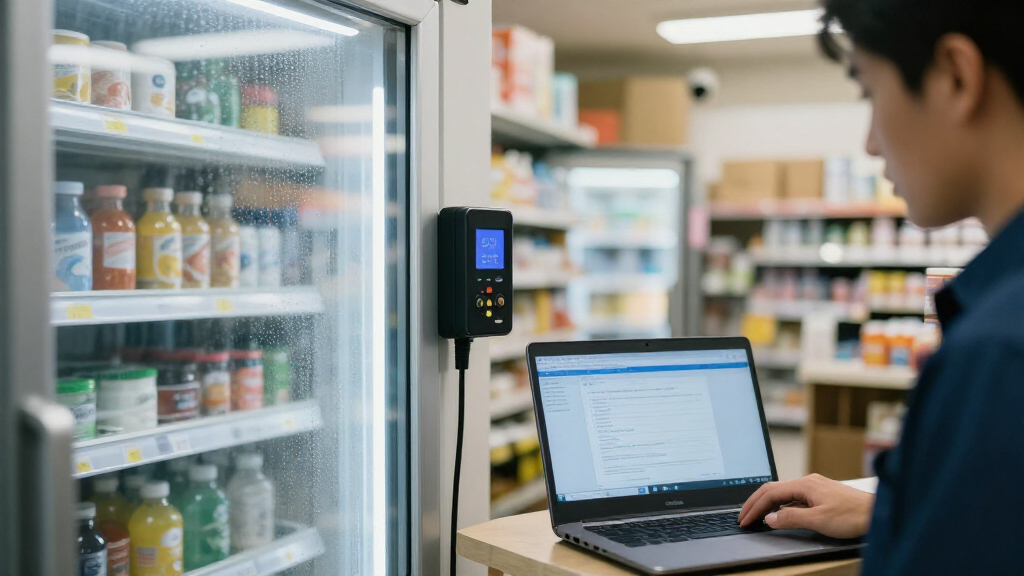
A GitHub project introduced Coldframe, a lightweight honeypot that impersonates supermarket refrigeration controllers made by Danfoss and Dixell. It records logins, requests and recognized exploit attempts while presenting fake controls and data; the project description does not provide deployment results or evidence of attacks against Coldframe itself.
Coldframe, a Python honeypot designed to pose as a supermarket refrigeration controller, was presented in a Show HN post and published on GitHub. The project offers Danfoss and Dixell device personas that record connection details, attempted passwords and requests matching specified public exploits, while serving fake dashboards and refrigeration data rather than controlling real equipment.
The repository describes Coldframe as one Python file with no dependencies beyond the standard library. Its Danfoss persona imitates an AK-SM 800A system manager, including a StoreView-style login and dashboard, XML API paths, and HTTP and HTTPS service options. The Dixell persona imitates a Copeland/Dixell XWEB EVO supervisor, including its login flow and CGI paths. The project says these details are modeled on characteristics of real devices, such as server headers, page assets and request paths.
After a visitor interacts with the decoy, Coldframe writes events as JSON lines to standard output and a log file. Its documentation says the Danfoss persona accepts certain weak or documented credentials and can return a session token for the fake dashboard. The Dixell persona similarly accepts the documented factory login described in the repository. Actions such as using fake defrost controls are logged as control events; they do not operate refrigeration equipment.
The software also labels requests that match exploit patterns listed in its documentation, including paths associated with several Danfoss and XWEB vulnerabilities. An optional Modbus TCP service can present simulated temperatures, setpoints and a defrost register, but is off by default. The repository recommends restricting exposed ports, limiting outbound connections and keeping SSH access restricted to the operator.
Monitoring Attempts Against Refrigeration Systems
Coldframe is intended to help operators or researchers observe activity directed at internet-facing industrial-style services without placing a real controller in the interaction. Its logs can capture source addresses, attempted credentials and recognizable request patterns, information that may help characterize scanning or attempted exploitation. The decoy’s fake controls also avoid making changes to actual store refrigeration systems.
The subject matters because refrigeration supervisors can sit within operational technology environments, where unauthorized control could affect equipment and business operations. The project description says attackers in 2026 broke into exposed refrigeration supervisors in Europe using default passwords and old firmware, then forced defrost cycles. That is a claim in the project’s documentation; the supplied material does not identify incidents, victims, independent reporting or evidence supporting that account.
A honeypot is not a replacement for patching, access controls or network segmentation. Coldframe’s usefulness will depend on how accurately its personas resemble devices, how safely it is deployed and whether the resulting logs are reviewed. The repository provides setup guidance, but the source material includes no independent evaluation of detection performance or operational outcomes.
Products Worth Considering

Apple iPad 11-inch with A16 Chip, 512GB, Wi-Fi 6, and Apple Pencil (USB-C) — Blue
DJI Mini 5 Pro Fly More Combo with DJI RC 2

Logitech MX Mechanical Wireless Illuminated Keyboard, Tactile Quiet, Graphite
As an affiliate, we earn on qualifying purchases.
Two Controller Personas and Their Features
The project focuses on two kinds of refrigeration supervisor: the Danfoss AK-SM 800A and the Copeland/Dixell XWEB EVO. Coldframe’s documentation says its Danfoss persona reproduces details such as an nginx server header, a StoreView page title and a self-signed certificate generated for each build. The Dixell persona is designed around the device’s login flow and CGI paths, including paths linked in the documentation to public exploit attempts.
Some closer visual or technical matches require files not included in the repository. The project says users can provide a favicon or, for the Danfoss persona, a firmware start page for private deployments, subject to having the right to use those files. Modbus is optional because the documentation says real AK-SM 800A units use it to communicate with case controllers rather than as a public-facing service.
Coldframe’s quick-start instructions show it running locally and also describe container deployment on an Ubuntu server. The repository advises exposing only the ports appropriate to the selected persona and restricting outbound traffic. These are the project’s deployment recommendations, not a guarantee that any particular installation is secure.
““A honeypot for supermarket refrigeration controllers.””
— Coldframe project documentation
Deployment Results and Threat Claims
The supplied source is the project’s GitHub documentation and a Show HN framing; it does not include independent testing, deployment data or measured detection results. It is not clear how often Coldframe has been deployed, what kinds of traffic it has recorded, or whether its emulation has been evaluated against real devices and scanners.
The project’s account of 2026 attacks on European refrigeration supervisors is not accompanied in the supplied material by named victims, incident reports or citations. That account should therefore be treated as the project’s stated rationale, not as independently verified reporting here. The documentation lists vulnerability identifiers and says matching requests can be tagged, but it does not establish that every listed exploit is detected in every variant or that a logged request represents a successful compromise.
It is also unclear what legal or operational requirements might apply to a deployment on a particular network. The repository offers security guidance, but users remain responsible for access controls, log handling and ensuring the decoy cannot reach production systems.
Testing and Deployment Are Next
The immediate next step for interested operators is to inspect the repository, run its included tests and evaluate the decoy in a controlled environment. Coldframe’s instructions describe local testing on loopback and container deployment, with separate configuration for the Danfoss or Dixell persona. No release schedule or independent validation plan is specified in the supplied source.
Any public deployment should follow the project’s stated precautions: expose only required service ports, restrict SSH to trusted addresses, limit outbound traffic and keep the honeypot isolated from real refrigeration controls. Future evidence about deployment scale, logged activity and how faithfully the personas reproduce real devices would help establish the tool’s practical value.
Key Questions
What is Coldframe?
Coldframe is a Python honeypot that imitates supermarket refrigeration supervisors. It is designed to record connections, login attempts, interactions and requests matching exploit patterns without controlling real equipment.
Which devices does it imitate?
The repository describes two personas: a Danfoss AK-SM 800A system manager and a Copeland/Dixell XWEB EVO supervisor. Each presents different pages and service paths based on the corresponding device.
Does Coldframe operate real refrigeration equipment?
No. The project describes its dashboards, case readings and controls as fake. Optional Modbus values are also presented as simulated data; the decoy is intended to log interactions rather than control equipment.
What does the project say it records?
Coldframe writes event records in JSON-lines format. The documentation says these can include connection details, attempted passwords, control events and labels for requests matching exploit patterns recognized by the software.
Has Coldframe’s effectiveness been independently verified?
Not in the supplied material. The source describes its features and includes tests and deployment instructions, but provides no independent evaluation or field results. Its account of attacks against European refrigeration supervisors is also not independently substantiated in the material provided.
Source: github.com