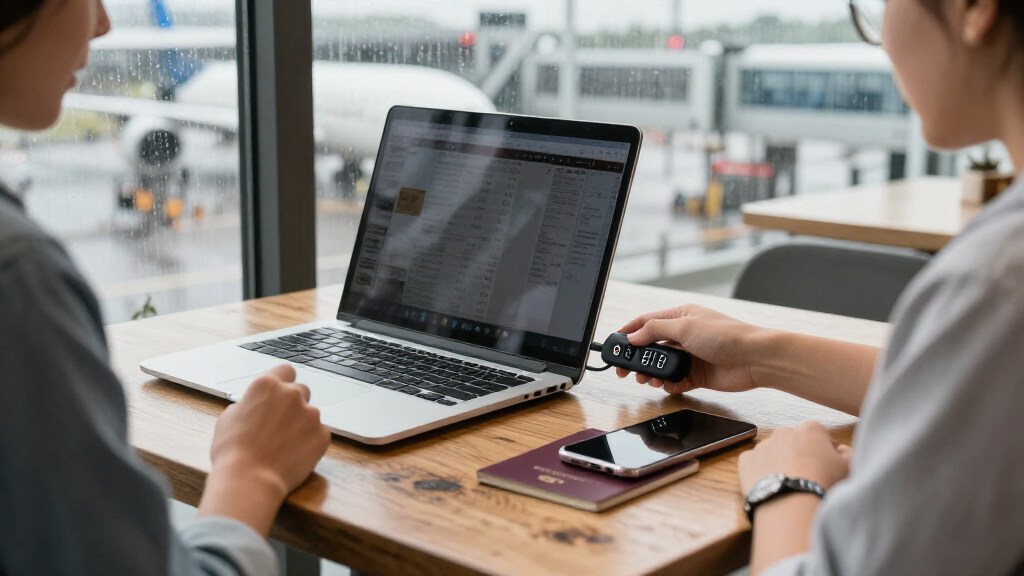
Portable password manager devices range from simple code keepers to offline hardware vaults with USB-C or Bluetooth autofill. My best overall pick is the Atlancube PasswordPocket, which pairs a stated 1,000-login capacity with Bluetooth autofill and AES-256 encryption; the QIWEILONG is a strong alternative for buyers who want USB-C and space for up to 500 accounts. For a simpler, lower-capacity option, the PIN-Master stores 150 codes without the more advanced autofill feature set. The main tradeoff is convenience and capacity versus setup demands, device compatibility, and how much you want to rely on a dedicated gadget. Read on for a comparison of all seven options and guidance on choosing one that suits your routine.

Get privacy and security gear delivered free with Prime
- Fast, free delivery on millions of items
- Prime Video, Amazon Music and more included
- Member-only deals all year
Key Takeaways
- Capacity varies widely: the PIN-Master holds 150 codes, QIWEILONG lists up to 500 accounts, and the Atlancube PasswordPocket models list 1,000 logins.
- Autofill separates the hardware vaults from simple keepers: Bluetooth autofill on the Atlancube and autofill on the QIWEILONG can reduce manual entry, but depend on device compatibility and setup.
- Connection type shapes portability: USB-C models such as Epinuo and QIWEILONG suit buyers who prefer a direct wired connection, while Bluetooth models avoid a cable during use.
- The lineup includes different carry styles: RecZone‘s EVA zippered case adds protection for storage and travel, while the stylus-equipped RecZone emphasizes on-device interaction.
- The white Atlancube is a separate listed variant, not a distinct feature tier: compare its specifications with the other PasswordPocket listing before choosing based on color or availability.


| portable password manager device | Weight | Model |
|---|---|---|
| PIN-Master Electronic Password | 2.11 ounces | — |
| Atlancube PasswordPocket Offli | 8.53 g | CP001 |
| Epinuo Type-C Offline Password | 0.317 ounces | 1029 |
| RecZone Electronic Password Sa | — | 595 |
| RecZone Password Safe Vault wi | — | 595 |
| QIWEILONG Offline Password Man | 1.13 ounces | — |
| Atlancube PasswordPocket Offli | 0.12 kg | — |
More Details on Our Top Picks
PIN-Master Electronic Password Keeper, 150 Codes
The PIN-Master is the most wallet-friendly option here: its credit-card-sized metal-alloy body is only 0.16 inches thick, so it suits someone who wants credentials physically separate from a phone or computer. Unlike the Atlancube PasswordPocket, it does not pair with a device or autofill logins; you read and use each code from its four-line display. Its 150-code capacity is modest beside the 400-account RecZone models, but 60 characters per entry leaves room for longer credentials. Access depends on a master code, and four incorrect attempts erase everything, a strong deterrent with a serious lockout risk. Choose it for pocketable, offline reference, not for quick sign-ins or a large account archive.
Pros:- Credit-card-sized metal-alloy body is easy to carry in a wallet.
- Stores up to 150 codes, each up to 60 characters.
- Four-line display provides more room to read entries than a very small single-line screen.
- Offline access avoids Bluetooth pairing and internet connectivity.
Cons:- No autofill; credentials must be read from the device and entered elsewhere.
- Four incorrect master-code entries erase stored codes.
- Capacity is lower than the 400-account RecZone devices and 1,000-login Atlancube.
Best for: People who want a slim, offline credential reference that can ride in a wallet and do not need autofill.
Not ideal for: Users with hundreds of accounts, or anyone likely to forget a master code and unable to accept the risk of erasure after four incorrect entries.
- Storage capacity:Up to 150 codes
- Maximum characters per code:60
- Display:4-line
- Material:Metal alloy
- Dimensions:3.37 x 2.13 x 0.16 inches (86 x 54 mm)
- Weight:2.11 ounces
- Access and lockout:Master code; stored codes erased after 4 incorrect entries
- Battery:1 lithium metal battery (included)
Our verdict“Pick the PIN-Master if wallet-sized offline storage matters more than autofill or high capacity.”
Atlancube PasswordPocket Offline Hardware Password Keeper with Bluetooth Auto-Fill, 1,000-Login Capacity, and AES-256 Encryption
The Atlancube PasswordPocket is the strongest fit for buyers who want a portable hardware vault that can send credentials to a phone, rather than a device they must read and type from. Its Bluetooth autofill works with compatible iOS and Android devices without an internet connection, while capacity for 1,000 logins exceeds the 400 accounts in either RecZone Password Safe. AES-256 encryption is a stated protection for stored data, but the convenience comes with pairing: anyone seeking a completely self-contained keyboard-and-screen device may prefer the RecZone Electronic Password Safe. The PasswordPocket weighs just 8.53 g, though its plastic enclosure is less substantial than the PIN-Master’s metal-alloy body. Check device compatibility and comfort with Bluetooth pairing before choosing it.
Pros:- Stores up to 1,000 account credentials.
- Bluetooth autofill supports compatible iOS and Android devices without internet access.
- AES-256 encryption protects stored information.
- Lightweight 8.53 g design is easy to carry.
Cons:- Requires Bluetooth pairing with a compatible phone or tablet.
- Plastic enclosure feels less substantial than the PIN-Master’s metal-alloy body.
- Does not offer the standalone QWERTY keyboard and screen found on the RecZone Password Safe.
Best for: Phone and tablet users who want offline credential storage with Bluetooth autofill and have compatible iOS or Android devices.
Not ideal for: Buyers who want a standalone keyboard and display, avoid Bluetooth pairing, or need more clearly stated compatibility beyond iOS and Android.
- Model:CP001
- Storage capacity:Up to 1,000 logins
- Connectivity:Bluetooth
- Encryption:AES-256
- Compatible devices:iOS and Android smartphones and tablets
- Weight:8.53 g
- Enclosure material:Plastic
- Power source:CR2032 battery
Our verdict“Choose the PasswordPocket if Bluetooth autofill and high capacity matter more than standalone operation.”
Epinuo Type-C Offline Password Keeper
The Epinuo Type-C Offline Password Keeper suits buyers who want locally stored credentials accessed by connecting the vault directly to a compatible phone, tablet, or computer. Its capacity of up to 500 entries sits between the PIN-Master’s 150 codes and Atlancube’s 1,000 logins, while alphabetical navigation and supported autofill can make a sizeable collection easier to use. Unlike the Bluetooth PasswordPocket, Epinuo uses a physical Type-C connection, which avoids pairing but ties access to a compatible port and supported sites or apps. Setup also takes extra effort: firmware must be updated before login access, and a Type-C to USB-B adapter or cable is not included for USB-B devices. It makes sense for users comfortable with that setup, not for someone seeking a ready-to-use standalone keypad.
Pros:- Stores up to 500 entries locally without cloud storage or internet access.
- Type-C connection provides direct access without Bluetooth pairing.
- Alphabetical navigation helps locate saved entries.
- Can autofill supported login fields on compatible websites and apps.
Cons:- Firmware must be updated before login setup.
- Autofill works only with supported websites and apps.
- Type-C to USB-B adapter or cable is not included for USB-B devices.
Best for: People who want local offline storage and direct Type-C access across compatible phones, tablets, and computers.
Not ideal for: Buyers who need a simple out-of-box setup, rely on USB-B connections without an adapter, or expect autofill to work on every site and app.
- Model:1029
- Connection:Type-C
- Storage:Local offline storage
- Capacity:Up to 500 account entries
- Compatibility:Laptops, smartphones, and tablets
- Weight:0.317 ounces
- Firmware setup:Update firmware before first use
- Adapter note:Type-C to USB-B adapter or cable not included
Our verdict“Choose Epinuo for local, cable-connected access if you are comfortable completing setup and checking app compatibility.”
RecZone Electronic Password Safe with Stylus
The RecZone Electronic Password Safe with Stylus is the straightforward choice for people who want to enter and retrieve credentials on the device itself. Its QWERTY keyboard and backlit LCD make it more self-contained than the Epinuo, which needs a compatible connection, or the Atlancube, which relies on Bluetooth and a phone or tablet. It holds up to 400 accounts, and built-in flash memory retains data during battery changes. Five incorrect PIN attempts trigger a 30-minute lock, rather than the PIN-Master’s erase-after-four-attempts rule; however, resetting this RecZone can permanently erase data. The plastic body is not water resistant and needs three AAA batteries. Pick this model for physical entry and offline access, not for autofill or a particularly slim carry.
Pros:- Stores login details for up to 400 accounts.
- Full QWERTY keyboard and backlit LCD support on-device entry and reading.
- Offline operation does not depend on an internet connection.
- Built-in flash memory retains data during battery changes.
Cons:- Requires three AAA batteries.
- Plastic device is not water resistant.
- Resetting the device can permanently erase credentials.
Best for: People who prefer to type and read credentials on a standalone offline device with a physical keyboard.
Not ideal for: Users who want autofill, a wallet-sized device, water resistance, or to avoid AAA battery changes.
- Model:595
- Capacity:400 accounts
- Display:Backlit LCD
- Keyboard:QWERTY
- Lockout:30-minute lock after 5 incorrect PIN attempts
- Connectivity:Not connected to the internet
- Power source:3 AAA batteries
- Dimensions and weight:3.5 x 4.88 x 1 inches; 0.23 kg
Our verdict“Choose this RecZone if you want a self-contained keyboard and display instead of connected autofill.”
RecZone Password Safe Vault with EVA Zippered Carrying Case
This RecZone bundle is aimed at buyers who want a 400-account offline vault with a case for carrying it alongside other travel essentials. The device shares the backlit LCD, full QWERTY keyboard, search function, and 30-minute lockout after five incorrect PIN attempts found on the RecZone Electronic Password Safe with Stylus. The practical difference is the included EVA zippered case and three AAA batteries; the case gives the plastic device a dedicated place in a bag, but it does not make the vault itself water resistant. Like the other RecZone, it keeps credentials on the physical device, so it cannot match the Atlancube’s Bluetooth autofill or the Epinuo’s connected access. Choose this bundle for carried, on-device reference, not streamlined phone logins.
Pros:- Stores up to 400 credentials and includes a search function.
- Backlit LCD and full QWERTY keyboard support on-device use.
- Offline operation avoids internet connectivity.
- Includes an EVA zippered case and three AAA batteries.
Cons:- Credentials must be accessed and used on the physical device rather than autofilled.
- Requires three AAA batteries.
- The plastic device is not water resistant, even with the included carrying case.
Best for: Travelers or commuters who want a standalone offline credential device and a dedicated case for carrying it.
Not ideal for: Buyers who want autofill, water resistance, or a thinner wallet-style device such as the PIN-Master.
- Model:595
- Capacity:Up to 400 accounts
- Display:Large backlit LCD
- Keyboard:Full QWERTY
- Security:30-minute lock after 5 consecutive incorrect PIN attempts
- Memory:Built-in flash memory retains passwords during battery changes
- Power:3 AAA batteries (included)
- Included components:Password safe device, EVA zippered storage case, 3 AAA batteries
Our verdict“Pick this bundle if a carrying case matters and you prefer on-device access over connected autofill.”
QIWEILONG Offline Password Manager with Auto-Fill, USB-C, and Storage for up to 500 Accounts
The QIWEILONG is a practical fit for buyers who want offline credential storage in a device they can plug directly into a compatible phone, tablet, or computer. Its USB-C connection supports autofill without relying on Bluetooth, while alphabetical navigation makes a library of up to 500 accounts easier to browse. Compared with the Atlancube PasswordPocket, it has less capacity and is limited by a wired connection, but it avoids managing a Bluetooth pairing. A travel case and USB-C adapter add flexibility for carrying and connecting it across devices. The tradeoff is that access requires a master password, and the product data says it needs a power source to display login information, so it is not a standalone, always-ready vault.
Pros:- Stores credentials locally for offline access.
- USB-C connection supports autofill on compatible phones, tablets, and computers.
- Alphabetical navigation helps locate entries among up to 500 accounts.
- Includes a travel protection case and USB-C adapter.
Cons:- Requires a master password before stored credentials can be accessed.
- Needs a power source to view login information.
- Wired USB-C use is less convenient than the Atlancube PasswordPocket’s Bluetooth connection.
Best for: People who want a compact offline keeper for a few hundred logins and mainly use devices with USB-C ports.
Not ideal for: Users who need wireless access, more than 500 stored accounts, or a password vault that can display credentials without an external power source.
- Storage:Up to 500 account entries
- Storage type:Offline, local storage
- Connection:USB-C
- Compatibility:Phones, tablets, and computers
- Weight:1.13 ounces
- Package dimensions:4.45 x 3.19 x 1.5 inches
- Included accessories:Travel protection case and USB-C adapter
Our verdict“Choose the QIWEILONG if you prefer a wired USB-C connection and need offline storage for up to 500 accounts, but skip it if wireless access or greater capacity matters more.”
Atlancube PasswordPocket Offline Hardware Password Keeper with Bluetooth Auto-Fill, 1,000-Login Capacity, AES-256 Encryption, White
The PasswordPocket is the stronger match for mobile users who want wireless autofill and room for a large credential library. It holds up to 1,000 logins and connects to iOS and Android devices over Bluetooth without needing an internet connection. Compared with the QIWEILONG, it doubles the listed account capacity and removes the need to plug into USB-C, though it depends on Bluetooth pairing and is listed for mobile platforms rather than computers. AES-256 encryption is a stated protection feature, while the 8 MB storage figure is worth noting alongside the login limit; the supplied details do not explain how that capacity relates to account data. Its plastic enclosure and CR2032 battery make it a self-contained portable option, but buyers should factor in battery upkeep.
Pros:- Stores up to 1,000 account credentials.
- Bluetooth communication works without an internet connection.
- Supports one-click autofill on iOS and Android.
- Uses AES-256 encryption.
Cons:- Requires a Bluetooth connection to communicate with devices.
- Compatibility is listed for iOS and Android, not computers.
- The listed 8 MB storage capacity is not explained alongside the 1,000-login claim.
Best for: iOS and Android users who keep hundreds of logins and want Bluetooth autofill without an internet connection.
Not ideal for: People who need wired computer compatibility, prefer not to rely on Bluetooth pairing, or want clearer detail about how the 8 MB storage capacity relates to 1,000 logins.
- Credential capacity:Up to 1,000 logins
- Storage capacity:8 MB
- Encryption:AES-256
- Connectivity:Bluetooth
- Compatible platforms:iOS and Android
- Battery:CR2032
- Weight:0.12 kg
- Enclosure material and color:Plastic, white
- Warranty:1 year manufacturer
Our verdict“Pick the PasswordPocket for higher-capacity wireless use with iOS or Android, while the QIWEILONG is a better fit if you prefer a direct USB-C connection.”
How We Picked
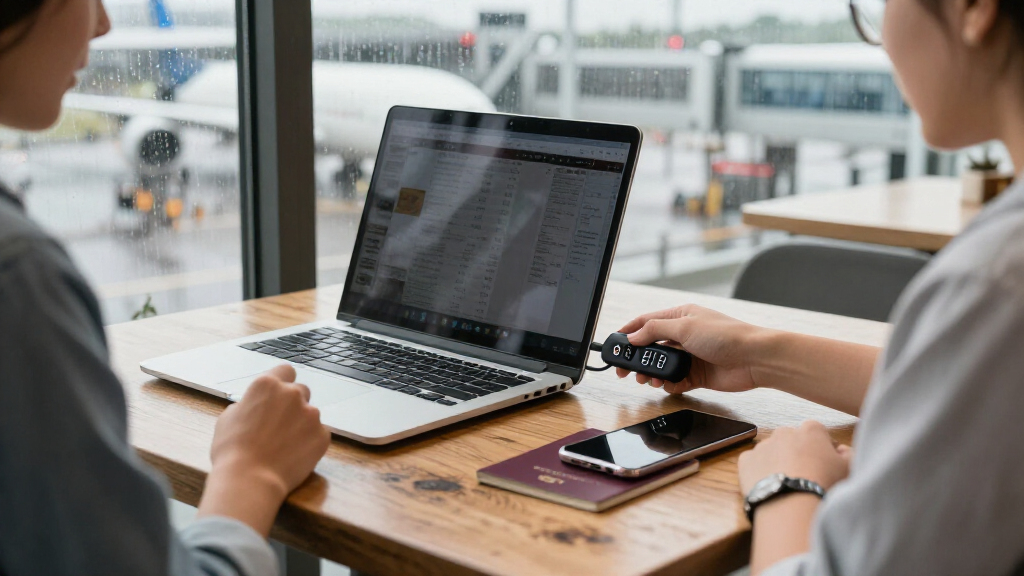
I ranked these portable password manager devices by how well their stated features serve everyday portable access: account capacity, connection and autofill options, ease of interacting with the device, and practical carry needs. I also gave weight to security claims that are clearly specified, such as the Atlancube’s stated AES-256 encryption, while treating advertised features as product claims rather than independent security verification.
The ranking favors options with a useful balance of capacity and access convenience, then accounts for narrower strengths such as USB-C use, a protective case, or a simpler code-keeping role. The two Atlancube listings appear to describe the same PasswordPocket feature set in different colors, so I treat them as variants rather than awarding the white model a separate advantage. Product details supplied for this roundup do not establish compatibility across every phone or computer, battery behavior, or long-term support; buyers should verify those points before relying on a device for critical credentials.
Factors to Consider When Choosing Portable Password Manager Devices
Choosing a dedicated password device is less about the largest number on the box and more about how it fits into your access habits. I would start with the way you connect, then weigh capacity, security practices, and what happens if the device is lost or unavailable.
Choose a connection method that fits your devices
USB-C and Bluetooth solve different portability problems. A wired device can avoid wireless pairing and may suit a laptop or phone with a compatible port, but it can be awkward if you use multiple device types or need an adapter. Bluetooth can make autofill more convenient without a cable, though pairing and operating-system support matter. Before buying, check whether the product works with your specific phone, computer, and browser rather than assuming a connector or wireless connection guarantees compatibility. A common mistake is choosing by connection label alone without checking how credentials actually move to the login screen. If you switch between work and personal devices, support across both environments may matter more than the fastest connection.
Buy capacity for your real credential list
Maximum account capacity is not the same as useful capacity. Count the logins, secure notes, or other records you plan to keep, then leave room for growth and duplicates you may retain during a cleanup. A small keeper can suit a focused set of important accounts, while a larger vault is more practical if you want to carry a broad credential collection. Do not assume every advertised slot supports the same kind of information; confirm whether the limit applies to logins alone or other record types too. Buyers can also overvalue a high capacity number while overlooking whether entry, search, and editing remain manageable. If you only need a few codes away from home, a simpler device may be easier to use than a large vault.
Treat encryption claims as one part of security
A stated encryption standard does not answer every security question. Ask how the device is unlocked, whether data is encrypted while stored and during transfer, and what protections apply after repeated incorrect attempts. Find out whether the maker documents firmware updates, recovery options, and a process for handling a lost device. A password vault also depends on the strength and uniqueness of its master credential, so a secure device cannot compensate for a weak unlock method. Avoid putting every recovery code and account secret in one place without a separate recovery plan. For sensitive work accounts, check organizational policy before storing credentials on personal hardware.
Test the autofill workflow before depending on it
Autofill can save time, but it is not universal. Login pages, apps, browsers, and operating systems handle credential entry differently, so a feature that works in one environment may not work in another. Look for clear instructions on pairing, permissions, supported platforms, and manual entry when autofill is unavailable. A practical approach is to test the device with a low-risk account before moving essential credentials. Buyers often mistake the presence of autofill for seamless operation across every login screen. If you regularly use specialized apps or locked-down work devices, prioritize a usable manual fallback.
Plan for loss, damage, and recovery
Portability makes physical protection and recovery part of the buying decision. A case can protect a device in a bag, but it does not replace a secure backup or a plan for regaining account access. Find out whether records can be exported, backed up, or restored to a replacement device, and what information is needed to do so. If there is no practical recovery path, consider keeping critical recovery codes separately in a secure location. Small devices are easy to carry and easy to misplace, so choose a routine that reduces the chance of leaving the vault behind. A protective case is most useful when it fits your travel habits, not simply because it adds bulk.
Compare the full ownership routine, not just the feature list
Maintenance and day-to-day handling affect whether a device stays useful. Check how it is powered, how often it needs charging or battery replacement, and whether the maker provides setup guidance and ongoing support. Consider how you will add new logins, update changed passwords, and remove old credentials; a large vault can become a burden if editing is cumbersome. A touchscreen or stylus may suit people who prefer on-device controls, while another user may favor direct connection or autofill. Do not choose a model solely for a feature you expect to use rarely. The best fit is the one whose upkeep you can realistically maintain as your accounts change.
Frequently Asked Questions
Can I use a portable password manager device with both my phone and computer?
Do not assume cross-device compatibility. USB-C can connect to devices with a suitable port, but software support and credential-entry behavior still vary by operating system and browser. Bluetooth models also require compatible pairing and may handle autofill differently across platforms. Check the maker’s current compatibility list for your exact devices before transferring important credentials. If you use a work computer, verify that its security policies allow the required connection or app permissions.
Is Bluetooth autofill safer or more convenient than USB-C?
Neither connection is automatically the better choice for every buyer. Bluetooth can make credential entry more convenient when pairing and autofill work with your devices, while USB-C offers a direct wired route and avoids wireless pairing. Security depends on implementation, device settings, and how the vault protects data, not just the connection type. Review the manufacturer’s documentation for pairing controls, encryption in transit, and supported platforms. If convenience is your priority, test autofill first; if you prefer a cable-based workflow, verify the port and software requirements.
Should I choose the device with the most account slots?
Choose capacity based on the records you will actually maintain. A larger limit can help if you plan to store a broad set of personal and work logins, but it does not guarantee easier organization or editing. A smaller keeper may be sufficient for a limited set of codes and can reduce the temptation to move every credential onto one physical device. Check what the manufacturer counts as an account and whether notes or recovery details use the same storage limit. Also leave room for growth rather than buying exactly to your current count.
What should I do if my portable password device is lost or damaged?
Have a recovery plan before storing essential credentials. Check whether the device supports a secure backup or export, how restoration works, and whether you need a separate master credential or recovery key. Keep critical account recovery codes somewhere secure and separate from the device, so losing one item does not lock you out of everything. If the maker does not clearly explain recovery, contact support or consult its documentation before relying on the product. A carrying case can help prevent damage, but it cannot solve data recovery after loss.
Are the two Atlancube PasswordPocket listings meaningfully different?
The supplied listings describe the same stated core features: 1,000-login capacity, Bluetooth autofill, and AES-256 encryption, with the white version identified by its color. I would compare the full current product details rather than assume the color variant has different hardware or software. Check that the supported devices, included accessories, and warranty terms match before choosing between listings. If those details are the same, base the choice on the color you prefer and the seller’s product information, not on an assumed performance difference.
Conclusion
Best overall: I would start with the Atlancube PasswordPocket for its stated 1,000-login capacity, Bluetooth autofill, and specified AES-256 encryption. Best value: the QIWEILONG is the practical pick for buyers who want USB-C, autofill, and a stated 500-account capacity without needing the Atlancube’s larger vault. Best for beginners: the PIN-Master suits someone who wants a straightforward keeper for a smaller set of codes, provided its more limited capacity fits. Best premium-style feature set: choose the Atlancube if its larger capacity and wireless autofill match your routine, after checking compatibility and recovery details. Best for specific needs: consider the RecZone model with an EVA case for protected carrying, the stylus version for on-device input, or the Epinuo Type-C option if a wired USB-C workflow is your priority. The white Atlancube listing appears to be a color variant, so I would not treat it as a separate upgrade without confirming different specifications.