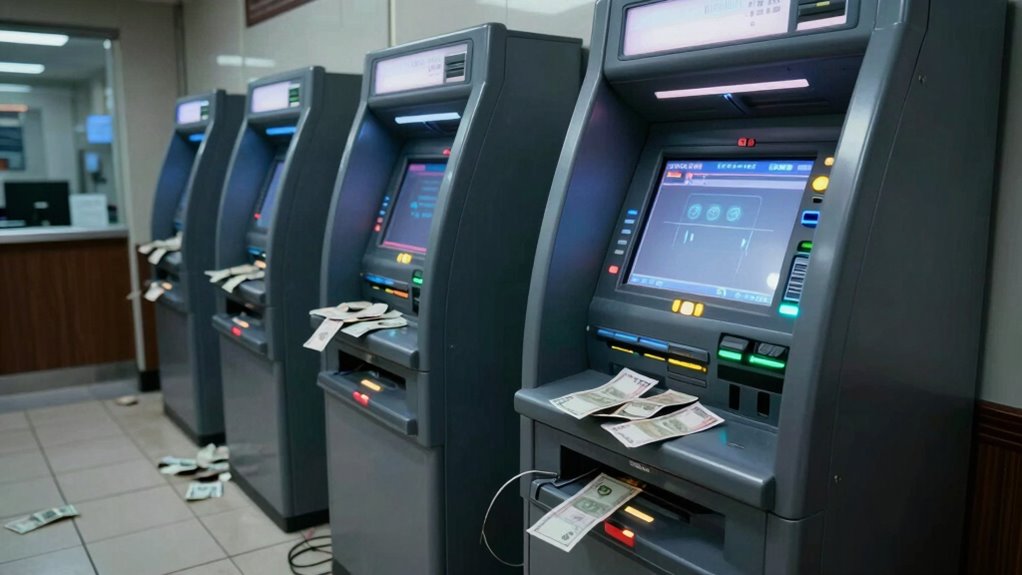

Hackers launched a worldwide jackpotting spree, manipulating ATMs to dispense cash illegally. They often gain physical access, disable alarms, and install malware or rogue devices using USB ports or internal computers. This allows them to remotely control machines and drain thousands of dollars quickly. The attacks have become more sophisticated, exposing critical security gaps. Staying secure means understanding these methods deeply—if you want to learn how these breaches happen and how to protect against them, keep going.
Key Takeaways
- Hackers remotely manipulated ATMs using malware like Ploutus to force them to dispense cash illegally.
- The attacks involved physical tampering and installing rogue devices or malware via USB or internal ports.
- These jackpotting incidents have surged worldwide, notably in Latin America and recently in the U.S. since 2018.
- Criminal gangs can steal hundreds of thousands of dollars within minutes through coordinated ATM breaches.
- Banks adopted advanced security measures to detect tampering and prevent malware installation, reducing jackpotting risks.

In recent years, a surge in ATM jackpotting attacks has exposed serious vulnerabilities in banking machines worldwide. These cyber-physical assaults exploit both hardware and software flaws, allowing criminals to force ATMs to dispense cash illegally. Unlike skimming, which targets customer data, jackpotting directly manipulates the machine’s hardware, overriding normal operations to empty cash reserves rapidly. Criminals use malware or rogue devices to take control, turning the ATM into a cash-spitting machine, often within minutes. This method results in the theft of large sums, sometimes exceeding $100,000 per machine, with the entire process completed in under ten minutes.
ATM jackpotting exploits hardware and software flaws, enabling criminals to quickly steal large sums in minutes.
The attack process typically begins with physical access. Criminals breach the ATM’s cabinet using tools or universal keys, often disabling tamper alarms in the process. Once inside, they can connect a rogue device—like a laptop or a specialized black box—disabling the cash dispenser from its controller. Malware installation is common, often through USB ports or internal computer access, enabling remote control of the machine. In some cases, attackers use a man-in-the-middle device placed between the ATM and its network, faking authorization signals and bypassing security measures. An endoscope is often employed to locate internal connections, facilitating synchronization with a laptop for control purposes. These devices are often inexpensive and widely available, making them accessible to various threat actors. Understanding the hardware vulnerabilities and how they are exploited can help in developing more effective security measures.
Malware such as Ploutus, discovered in 2013, has become a common tool in jackpotting operations. This malware bypasses security systems by allowing remote commands via SMS or external keyboards. Once installed, it can dispense 40 bills every 23 seconds until canceled or the cash runs out. It reboots the ATM’s internal computer to maintain persistence and exploits open ports like USB or Ethernet for installation. The malware operates undetected, enabling repeated thefts from the same machine. Criminal gangs have used this tactic across Central and South America for years, with the first U.S. attacks reported in January 2018. Since then, attacks have increased, spreading across numerous states and involving coordinated efforts targeting multiple ATMs simultaneously.
The impact is significant. A single machine can be drained of hundreds of thousands of dollars in minutes, leaving the ATM out of service and creating serious security and reputation risks for banks. To combat jackpotting, banks are adopting measures like alarm systems covering the entire ATM, disabling unused USB ports, rekeying with non-universal keys, and employing advanced security solutions such as CylancePROTECT and SAN Loitering technology. Monitoring for suspicious physical tampering and network anomalies has become essential. As these attacks grow more sophisticated and widespread, understanding their mechanics and implementing robust defenses remains critical to protecting banking assets and maintaining customer trust.
Top picks for "jackpott spree hacker"
Open Amazon search results for this keyword.
As an affiliate, we earn on qualifying purchases.
Frequently Asked Questions
How Do Attackers Gain Physical Access to ATMS?
You gain physical access to ATMs by breaching the cabinet using tools or universal keys, disabling tamper alarms, or using endoscopes to locate internal components. Attackers may disconnect the cash dispenser from the controller and connect rogue devices like laptops. They often exploit open USB ports or Ethernet connections to install malware, allowing them to control the machine remotely and illicitly dispense cash.
What Are the Signs an ATM Has Been Jackpotting?
You’ll notice your ATM behaving strangely if it ejects cash without a transaction, makes unusual noises, or displays error messages during operation. The screen might freeze or show signs of tampering, like loose panels or unusual cables. Additionally, if it’s accessible and you see unfamiliar devices connected internally, or if there’s unexplained activity on its network, these are clear signs of jackpotting attempts.
Can ATM Jackpotting Happen Remotely Without Physical Access?
Imagine your ATM as a guarded vault—can someone hack it remotely? Yes, they can. Attackers use malware, man-in-the-middle attacks, or remote access tools to exploit vulnerabilities without physical contact. For example, malware like Ploutus.D can be controlled via SMS or remote commands, making it possible for hackers to jackpot your ATM from miles away. This highlights the importance of cybersecurity and monitoring for remote threats.
How Often Are ATMS Targeted in Jackpotting Attacks?
You’re likely to see ATMs targeted frequently, especially in regions with high criminal activity. Criminal gangs coordinate multiple attacks, often hitting several machines in a short period. These attacks can happen weekly or even daily, depending on security measures. With the rise of sophisticated malware and physical breach techniques, the risk remains high, so you should stay vigilant and guarantee your bank’s security protocols are robust to prevent these lucrative thefts.
What Are the Latest Technological Defenses Against Jackpotting?
You can defend against jackpotting by implementing the latest security measures. Disable unused USB ports, rekey ATMs with non-universal keys, and install advanced security software like CylancePROTECT. Monitor remote connections, especially via phone hotspots, and use SAN Loitering technology to detect suspicious activity. Additionally, alarm the entire ATM, including the upper enclosure, and stay vigilant for malware or hardware tampering to prevent cyber-physical attacks.
Conclusion
As you see, these hackers have turned cash machines into open books, revealing vulnerabilities we can’t ignore. Their jackpotting spree is a wake-up call, reminding us that technology is a double-edged sword—capable of both progress and peril. If we don’t stay vigilant, our financial security could be a house of cards ready to topple with the next attack. Stay alert; the storm of cyber threats isn’t calming anytime soon.