
TL;DR
David Anthony Sanchez, 36, was sentenced to 47 months in prison after pleading guilty in a scheme that impersonated streamer N3on to obtain about $260,000 in cryptocurrency. Prosecutors said fake accounts and agreements were reinforced by an AI-generated voice recording that falsely confirmed the streamer’s participation.
David Anthony Sanchez, a 36-year-old from Port St. Lucie, Florida, was sentenced to 47 months in prison after pleading guilty to money laundering and aggravated identity theft in a scheme that used an AI-generated imitation of streamer N3on’s voice to help obtain about $260,000 in cryptocurrency. The US Department of Justice said the streamer did not participate in the deal, according to coverage by the Times of India.

Get privacy and security gear delivered free with Prime
- Fast, free delivery on millions of items
- Prime Video, Amazon Music and more included
- Member-only deals all year
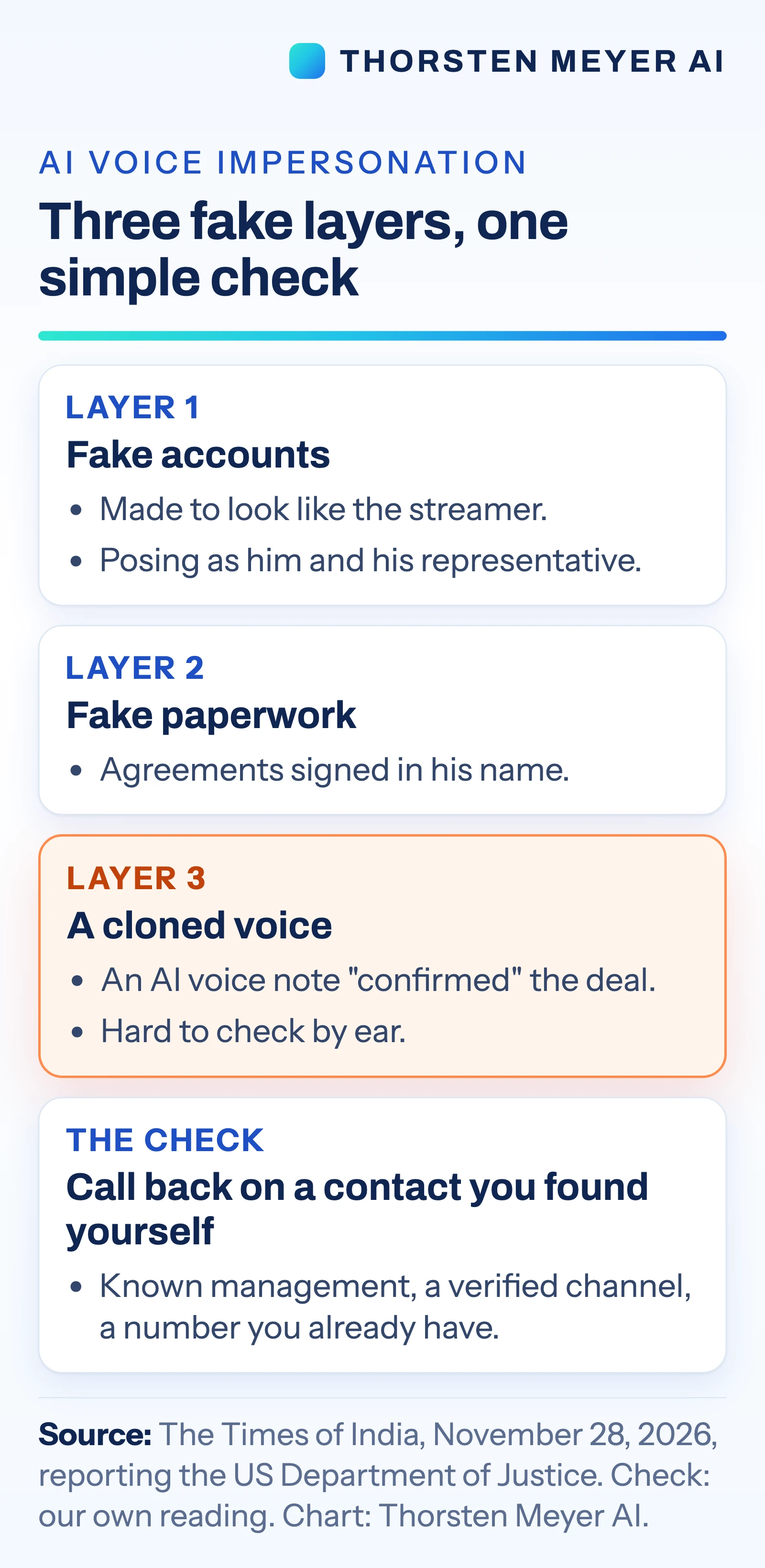
Prosecutors described a sequence of impersonation tactics. Sanchez created online accounts that appeared to belong to N3on and contacted organizers of a memecoin project while posing as the streamer and as his representative. He also used N3on’s identity to execute agreements, according to the Times of India’s account of the Justice Department announcement.
The final step was an audio recording that prosecutors said mimicked the streamer’s voice and falsely confirmed his participation. Believing the endorsement was real, the project organizers transferred about $260,000 in cryptocurrency to accounts controlled by Sanchez. The endorsement never existed.
Prosecutors said Sanchez converted a substantial portion of the cryptocurrency into US dollars through transactions intended to conceal its source and used the money for personal benefit. US District Judge Melissa Damian sentenced him in the Southern District of Florida. The court ordered restitution, but the amount was not specified in the source report.
Voice Clones in Payment Scams
The case shows how an AI voice imitation can serve as one part of a broader fraud. Prosecutors described fake accounts and agreements alongside the recording; the audio did not stand alone as proof. Each layer helped make the next appear credible to the people arranging the endorsement.
For businesses and project organizers, the practical concern is that a familiar voice, polished paperwork or a plausible online account can each be fabricated or misused. The case-specific lesson is to verify payment requests and endorsements through contact details obtained independently, such as an established management channel. Those precautions are general takeaways from the reported scheme, not instructions issued by the court.
Creators also face reputational risk when their names or voices are used without permission. Viewers may encounter similar imitations in clips or messages promoting coins and urging quick action. A voice that sounds familiar does not, by itself, establish who made a recording or whether an endorsement is genuine.
Products Worth Considering

Samsung 32-Inch Odyssey G5 (G51F) QHD 180Hz Gaming Monitor

Jackery Explorer 300 Portable Power Station, 292Wh

Kindle Paperwhite Signature Edition, 32 GB (12th Generation, 2024), Metallic Black
As an affiliate, we earn on qualifying purchases.
From Online Impersonation to Sentence
The Justice Department announced the sentence on November 24, 2026, according to the Times of India, which reported the case on November 28. Gizmodo also covered the case on November 27. The FBI’s Miami field office investigated, according to the supplied reporting.
Sanchez pleaded guilty to money laundering and aggravated identity theft, so the case ended with a guilty plea rather than a trial. The source material does not provide a detailed account of the plea agreement or identify the memecoin project. It describes the voice recording as AI-generated and says prosecutors characterized it as mimicking N3on.
“The audio “mimicked N3ON’s voice and falsely confirmed his participation.””
— US prosecutors, as quoted in the Times of India’s report
Restitution and Project Details
The reporting does not give the amount of restitution ordered, identify the memecoin project or say how much of the cryptocurrency was recovered. It also does not describe the voice-cloning method or provide technical evidence about the recording. The reported facts establish prosecutors’ account of the scheme and Sanchez’s guilty plea; they do not show how the organizers checked the recording before sending funds.
Restitution and Case Follow-Up
The court ordered Sanchez to pay restitution, but the amount and payment schedule were not specified in the supplied reporting. The Justice Department announcement and cited coverage provide no further court dates or case milestones. Any updates would need to clarify how much the victims are to receive and whether funds have been recovered.
Key Questions
Who was impersonated in the scam?
The scheme impersonated N3on, a streamer on Kick. The supplied reporting says he did not take part in the endorsement deal.
How did the scam persuade the organizers?
Prosecutors said Sanchez used accounts resembling N3on’s, agreements executed in the streamer’s identity and an AI-generated audio recording that falsely confirmed the endorsement.
How much cryptocurrency was sent?
The organizers transferred about $260,000 in cryptocurrency, according to the reported Justice Department account. The source does not state how much was recovered.
What sentence did Sanchez receive?
Sanchez was sentenced to 47 months in prison after pleading guilty to money laundering and aggravated identity theft. The court also ordered restitution, with no amount reported.
Source: Thorsten Meyer AI