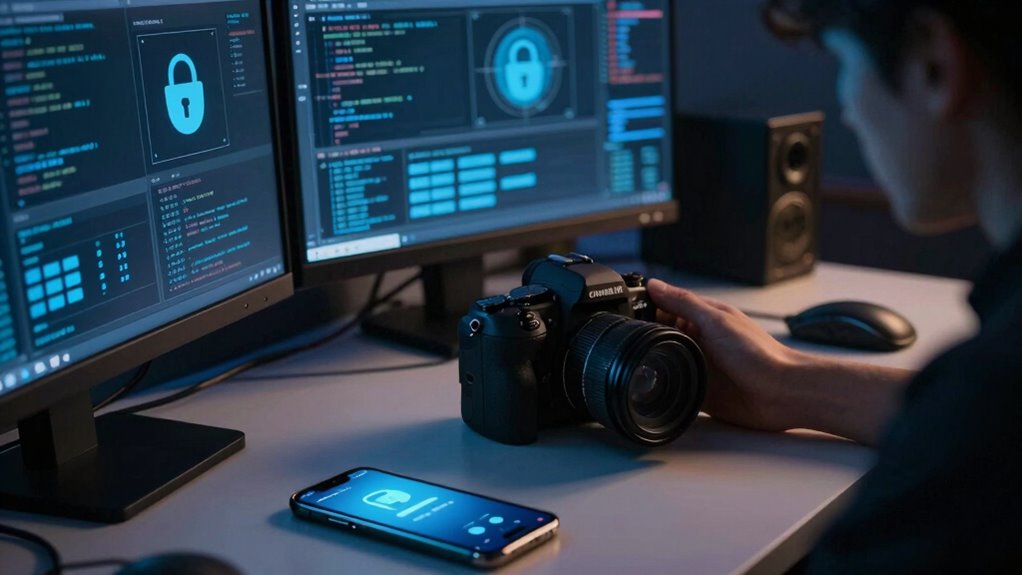

Attackers now use advanced tactics like AI-driven phishing, AI-mimicking sites, and iframe tricks to bypass 2FA. They deploy man-in-the-middle proxies, intercept credentials, and reuse stolen session tokens, making detection harder. Social engineering, SIM swapping, and exploiting weak OTP algorithms also help them succeed. To protect yourself, implement hardware security keys and adaptive MFA. Curious about how to stay one step ahead? Keep going to uncover effective defenses and strategies.
Key Takeaways
- Attackers use AI-powered phishing, iframe tricks, and fallback mechanisms to mimic legitimate sites and bypass 2FA prompts.
- AiTM attacks intercept credentials and session tokens via reverse proxies, enabling unauthorized access.
- Social engineering and SIM swapping manipulate help desks or control phone numbers to intercept SMS 2FA codes.
- Exploiting weak OTP algorithms, session hijacking, and MFA fatigue tactics facilitate unauthorized account access.
- Implementing hardware security keys, biometric authentication, risk-based adaptive MFA, and AI monitoring enhances defense.

Bypassing two-factor authentication (2FA) has become increasingly sophisticated, enabling attackers to undermine what was once considered a strong security barrier. Modern tactics involve complex techniques like phishing kits that incorporate AI and MFA bypass strategies, making it harder for users to detect malicious activity. These kits, such as BlackForce, GhostFrame, and Spiderman, mimic legitimate sites and use iframe designs to switch content seamlessly without alerting users. They also deploy fallback mechanisms with backup iframes or scripts to ensure success even if initial methods fail. Hybrid attacks, combining early stages of Salty2FA with Tycoon fallback, further complicate defenses, using multiple layers to evade detection.
Adversary-in-the-middle (AiTM) attacks represent another prevalent threat. Attackers deploy reverse proxies that sit between you and the legitimate server, intercepting credentials, session cookies, and authentication tokens during login. Tools like Tycoon 2FA and Evilproxy disguise themselves as legitimate servers, forwarding requests and capturing session data without raising suspicion. These intermediaries often bypass MFA entirely by stealing session tokens after you’ve successfully authenticated, then reusing them to access your accounts later. These interceptive methods exploit vulnerabilities in the authentication process, especially when MFA adoption remains low. Currently, WebAuthn adoption remains low, with less than 1% of MFA authentications utilizing hardware-based security keys, leaving many vulnerable to these interceptive attacks. This low adoption rate of hardware tokens highlights a significant gap in hardware-based security measures that could otherwise mitigate such threats.
SIM swapping is also a major vector. Attackers hijack your phone number to intercept SMS verification codes, which are often sent unencrypted across carrier networks. Once they control your number, they can receive 2FA codes meant for you, enabling unauthorized account access. Many victims face this despite the known vulnerabilities, as SIM swapping remains popular due to its convenience. Combined with social engineering tactics such as tricking help desks into adding unauthorized MFA devices, attackers target high-value accounts in sectors like banking, retail, and transportation, exploiting human factors more than technical flaws.
Attackers also exploit MFA fatigue, bombarding you with repeated push notifications until you approve access out of frustration. This tactic, often paired with social engineering, encourages users to approve suspicious login attempts. Weak OTP algorithms with predictable codes or poor random number generation enable brute-force attacks, especially when APIs lack rate limiting. Session hijacking, which captures authentication cookies after MFA completes, allows attackers to reuse tokens without triggering additional verification, often via reverse proxies or man-in-the-browser techniques. These methods exploit vulnerabilities across platforms, making it crucial for you to adopt robust security measures.
To defend yourself, consider using hardware security keys like YubiKey, which resist phishing and interception. Biometric authentication reduces reliance on OTPs, and risk-based adaptive MFA adjusts security requirements based on context, such as location or device. Implementing AI-driven monitoring can detect abnormal login patterns, while passwordless MFA eliminates many traditional vulnerabilities. Staying aware of these advanced tactics and employing multilayered defenses helps you stay ahead of increasingly sophisticated attackers.

VAULTEK DS5i Smart Station™ Biometric Smart Safe with Dual Wireless Phone Charger + Auto Open Drawer + WiFi Safe Management (WiFi + Biometric) (Black)
WiFi Enabled with ViSN (Vaultek Intelligent Safe Network): The ViSN platform uses WiFi technology to manage the safe...
As an affiliate, we earn on qualifying purchases.
Frequently Asked Questions
Can Biometric Authentication Completely Prevent 2FA Bypass Techniques?
Biometric authentication substantially reduces the risk of 2FA bypass, but it can’t completely prevent all techniques. Attackers can exploit vulnerabilities like biometric spoofing, deepfakes, or device malware to bypass biometric checks. You should combine biometrics with other security measures—such as hardware tokens, risk-based adaptive MFA, and AI monitoring—to strengthen your defenses. Relying solely on biometrics leaves gaps that skilled attackers might still exploit.
How Effective Are Ai-Driven Detection Systems Against Sophisticated Phishing Kits?
Imagine you’re in a sci-fi movie—AI-driven detection systems are surprisingly effective against sophisticated phishing kits. They analyze login patterns, flag anomalies, and adapt quickly to new attack methods, making it harder for attackers to succeed undetected. While no system is perfect, AI offers a powerful line of defense, catching advanced tactics like AI-generated content or hybrid attacks that traditional methods might miss. Stay vigilant and keep your defenses updated.
What Are the Best Practices for Securing Session Tokens Post-2fa?
To secure session tokens after 2FA, you should implement strict token management practices. Use short-lived tokens and rotate them frequently, preventing attackers from hijacking long-term sessions. Confirm tokens are transmitted over secure channels (HTTPS) and stored securely, like in HTTP-only, secure cookies. Also, monitor for unusual activity and invalidate tokens immediately if suspicious behavior appears. Combining these steps minimizes risk and maintains session security effectively.
Are Hardware Security Keys Foolproof Against All 2FA Bypass Methods?
Think of hardware security keys like a sturdy castle gate—strong but not invulnerable. While they considerably block many bypass methods, clever attackers can still find cracks, like exploiting device vulnerabilities or social engineering tricks. They aren’t foolproof, but they vastly improve security. To truly defend your digital kingdom, combine hardware keys with other safeguards like biometric authentication and risk-based MFA. No method is perfect, but together, they form a formidable fortress.
How Can Organizations Identify and Mitigate Hybrid Salty-Tycoon Attacks?
You can identify and mitigate hybrid Salty-Tycoon attacks by implementing behavioral analytics that flag unusual login patterns and combining this with risk-based adaptive MFA. Regularly update your security tools to detect hybrid attack signatures and monitor for anomalies like unexpected fallback mechanisms or suspicious session activities. Educate users on phishing risks, enforce strict access controls, and deploy AI-driven solutions to spot and block these sophisticated threats proactively.

RETLLAS 4.5 CuFt Heavy Duty Fireproof Biometric Home Safe – Fingerprint Access, Reinforced Steel, Dual Anti-Pry Bolts, Backlit LCD, Heat-Sealing Gasket and USB-C Power for Documents & Electronics
[Disaster-Proof Performance] – Endures 2400°F for 1 hour with zero breach. Advanced expanding seals lock out water, smoke,...
As an affiliate, we earn on qualifying purchases.
Conclusion
To stay ahead of attackers, think of your 2FA as a fortress guarding your digital world. They’re always finding new tunnels to breach, so you need to reinforce your defenses constantly. Stay vigilant, update your security measures, and never become complacent. Remember, in this digital battlefield, your best weapon is awareness. Keep your guard up and treat your 2FA like a sturdy wall—only you can keep the intruders out and protect what’s yours.

8.0 CuFt Large Fireproof Safe with Biometric Access– Reinforced Steel Body (Over 90LB), Dual Adjustable Shelves, LCD Display & Heat-Sealing Fire Gasket for Home Security
[2400°F Fortress Fire & Flood Defense] - Survive the worst. Rated to endure 2400°F for 60 minutes, this...
As an affiliate, we earn on qualifying purchases.
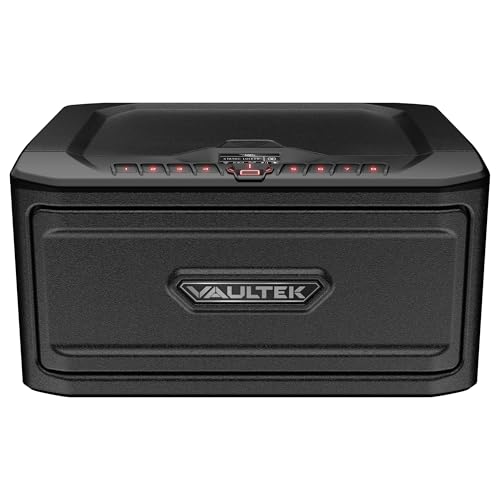
VAULTEK MR Series Dual Layer Smart Handgun Safe Multiple Pistol Storage Smart Safe with Biometric Scanner, Live Alerts, and Auto-Open Door (Biometric + WiFi)
High capacity interior with dual layer storage featuring a pull out shelf and large storage space for securing...
As an affiliate, we earn on qualifying purchases.