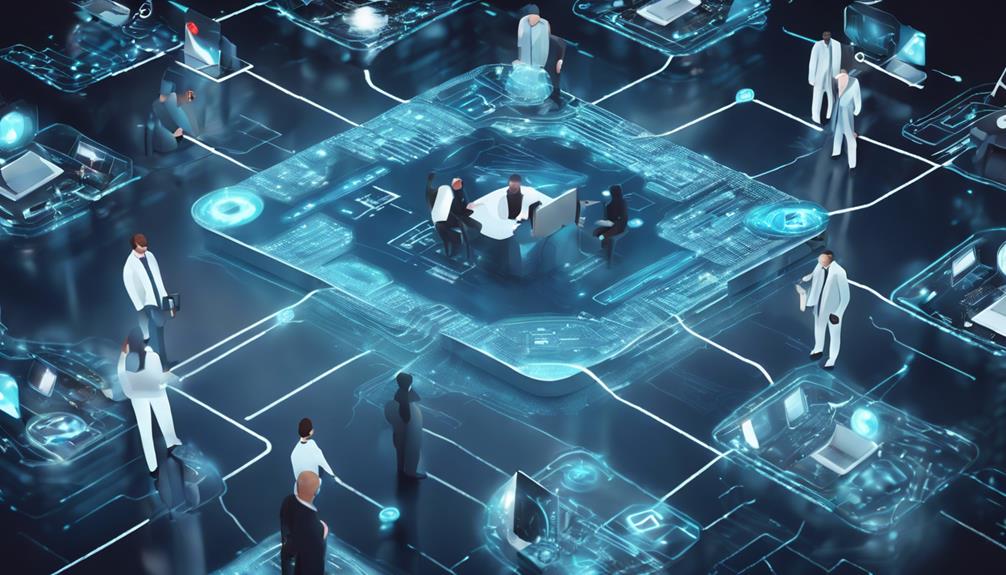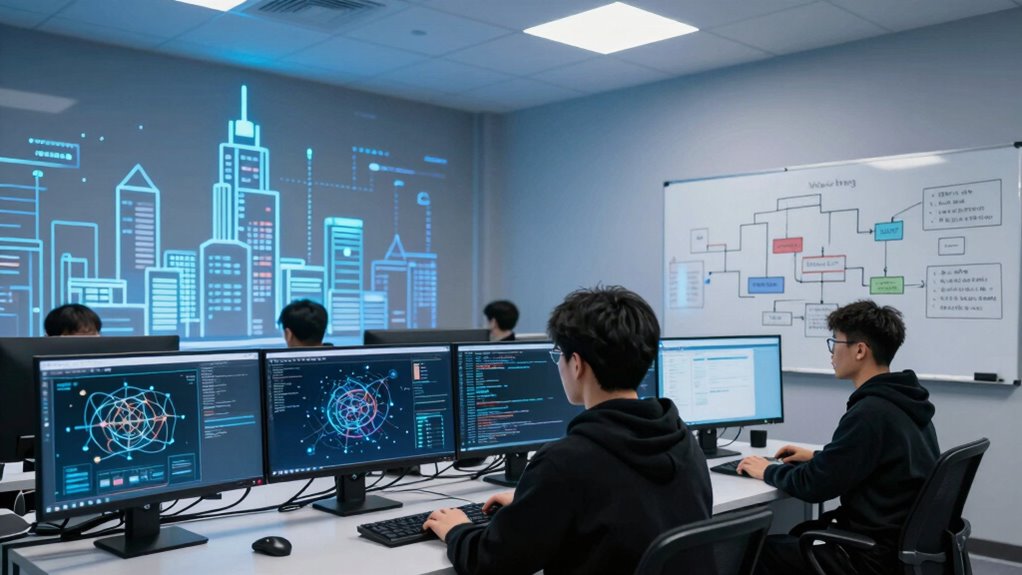

Adversary simulation is growing beyond red teams because organizations see the need for continuous, realistic testing of their defenses against ever-changing cyber threats. Unlike traditional methods, it uses automated, AI-driven tools to mimic real attacker tactics, helping you find security gaps normal tests might miss. This approach provides a deeper, ongoing view of your security posture and prepares you for emerging risks. Keep exploring to discover how this shift can keep your defenses ahead of the curve.

Get privacy and security gear delivered free with Prime
- Fast, free delivery on millions of items
- Prime Video, Amazon Music and more included
- Member-only deals all year
Key Takeaways
- Adversary simulation offers dynamic, realistic attack scenarios that adapt to evolving threats, surpassing traditional red team limitations.
- It leverages automation and AI for continuous, scalable assessments, enabling proactive security improvements.
- Broader threat modeling and TTP mimicry provide deeper insights into attacker behaviors and security gaps.
- It enhances incident response and detection capabilities through more comprehensive, lifecycle-based testing.
- Growing cyber threats demand more adaptive, ongoing testing methods beyond static red team exercises.
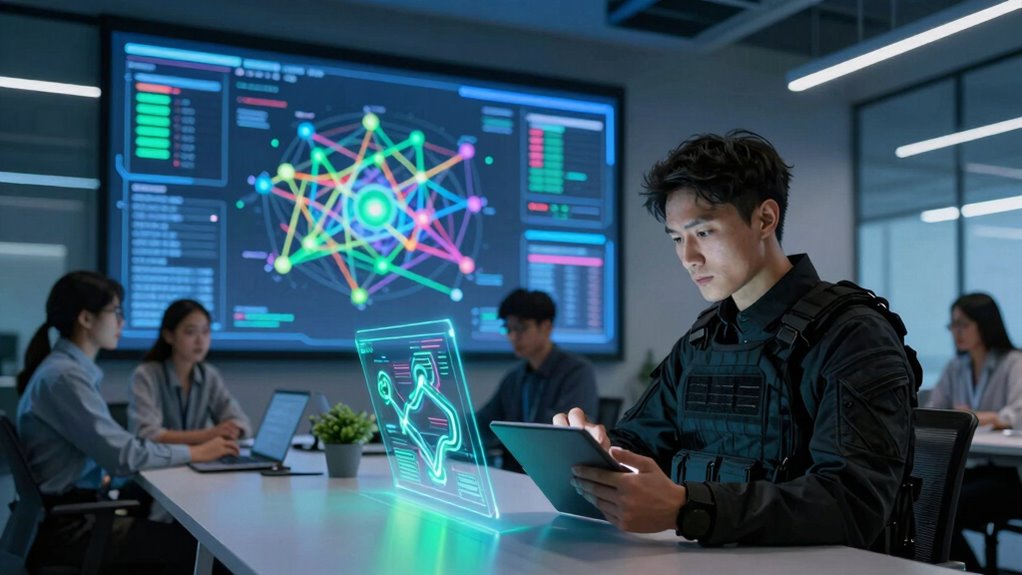
As cyber threats become increasingly sophisticated, organizations are turning to adversary simulation to bolster their security defenses. No longer is it enough to rely solely on traditional methods like penetration testing or static security measures. Instead, organizations are adopting adversary simulation as a proactive approach to identify vulnerabilities, test defenses, and anticipate attacker behaviors in a controlled environment. This shift is driven by the realization that real-world attackers don’t follow predictable patterns, and static assessments can miss evolving tactics. By simulating adversaries, you can create dynamic scenarios that reveal how your defenses hold up under realistic attack conditions.
Adversary simulation proactively reveals vulnerabilities and tests defenses against evolving, realistic attack scenarios.
One reason adversary simulation is expanding beyond red teams is its ability to incorporate threat modeling into the process. Threat modeling helps you understand potential attack vectors and the motivations behind different threat actors. When you simulate adversaries, you’re essentially bringing threat models to life, testing how well your organization can detect, respond to, and mitigate simulated attacks. This approach allows you to uncover gaps in your security posture that traditional tests might overlook. It also provides a *thorough* view of your risks, enabling you to prioritize defenses where they’re needed most.
Unlike traditional penetration testing, which often focuses on finding specific vulnerabilities, adversary simulation offers a broader perspective. It mimics the tactics, techniques, and procedures (TTPs) of actual threat actors, giving your security team a realistic experience of an attack. This helps you refine your incident response plans and improve detection capabilities. As adversary simulation becomes more accessible and sophisticated, organizations realize that it’s not just about testing for weaknesses but about understanding the entire attack lifecycle. This *holistic* view allows you to develop more resilient defenses and stay ahead of emerging threats. Additionally, the integration of automated tools enhances the speed and accuracy of these simulations, making ongoing assessments more feasible.
Furthermore, the growth of automation and AI has made adversary simulation more scalable and adaptable. You can now run continuous simulations that evolve with the threat landscape, providing ongoing insights into your security posture. This ongoing process helps you identify new vulnerabilities as they emerge and ensures your defenses are always aligned with current threat models. A key enabler of this evolution is the integration of automated tools that can replicate complex attack behaviors and adapt to changing conditions, making adversary simulation a more comprehensive security strategy. As these technologies advance, they also enable organizations to conduct realistic simulations more frequently and with greater depth.
In *summary*, organizations are recognizing that adversary simulation’s value lies in its ability to emulate real-world threats, incorporate threat modeling, and provide actionable insights. As cyber threats continue to grow in complexity, this approach helps you stay one step ahead, strengthening your defenses in ways traditional methods cannot match.
cybersecurity penetration testing tools
As an affiliate, we earn on qualifying purchases.
As an affiliate, we earn on qualifying purchases.
Frequently Asked Questions
How Does Adversary Simulation Differ From Traditional Penetration Testing?
Adversary simulation differs from traditional penetration testing by going beyond one-off assessments to mimic real-world attacker behaviors continuously. You actively engage in threat modeling, anticipating how adversaries might exploit vulnerabilities. Unlike penetration testing, which is often limited in scope and time, adversary simulation provides ongoing, dynamic testing that helps you identify weaknesses, improve defenses, and better prepare for evolving threats.
What Industries Are Adopting Adversary Simulation Beyond Cybersecurity?
Think of adversary simulation as a versatile tool sprouting roots across industries. You’ll see sectors like manufacturing and logistics adopting it to test supply chain weaknesses, ensuring resilience. Even in physical security, organizations use it to identify vulnerabilities in buildings or access controls. This approach helps you anticipate real-world threats beyond just cybersecurity, making your defenses more thorough and adaptive in a changing threat landscape.
How Cost-Effective Is Adversary Simulation Compared to Other Security Measures?
Adversary simulation is highly cost-effective compared to many traditional security measures. Its cost comparison shows that it maximizes your budget efficiency by identifying vulnerabilities early, reducing potential breach costs, and avoiding expensive, broad-spectrum defenses. Instead of investing heavily in reactive measures, you get targeted insights that improve security posture efficiently. This proactive approach ensures your security investments deliver better value, making adversary simulation a smart choice for organizations aiming for maximum budget utilization.
What Skills Are Required to Implement Adversary Simulation Programs?
You need strong threat modeling, technical expertise, and ongoing skill development to implement adversary simulation programs. You should master attack techniques, understand vulnerabilities, and stay updated with evolving threats. Communication skills are essential for explaining findings clearly, while problem-solving abilities help adapt scenarios. By developing these skills, you can effectively simulate adversaries, improve defenses, and guarantee your security measures stay ahead of emerging cyber threats.
How Does Adversary Simulation Enhance Organizational Threat Awareness?
Adversary simulation enhances your organization’s threat awareness by immersing you in realistic scenarios that mimic real-world attacks. This hands-on approach sharpens your threat perception, helping you identify vulnerabilities and gaps in your defenses. By actively experiencing simulated threats, you develop a deeper understanding of attacker tactics, enabling you to improve your security measures proactively. Ultimately, it prepares your team to respond more effectively to actual cyber threats.
As an affiliate, we earn on qualifying purchases.
Conclusion
As adversary simulation expands beyond red teams, you’ll find it becomes more integrated, more proactive, and more essential. It pushes your defenses forward, anticipates threats before they strike, and trains your team to respond swiftly. It transforms your security from reactive to resilient, from isolated to interconnected. Embrace this growth, expand your capabilities, and stay ahead of evolving threats—because in the world of cybersecurity, staying prepared means staying protected.
AI-driven security assessment tools
As an affiliate, we earn on qualifying purchases.
As an affiliate, we earn on qualifying purchases.
threat modeling cybersecurity kit
As an affiliate, we earn on qualifying purchases.
As an affiliate, we earn on qualifying purchases.
Halloween Picks
halloween
As an affiliate, we earn on qualifying purchases.