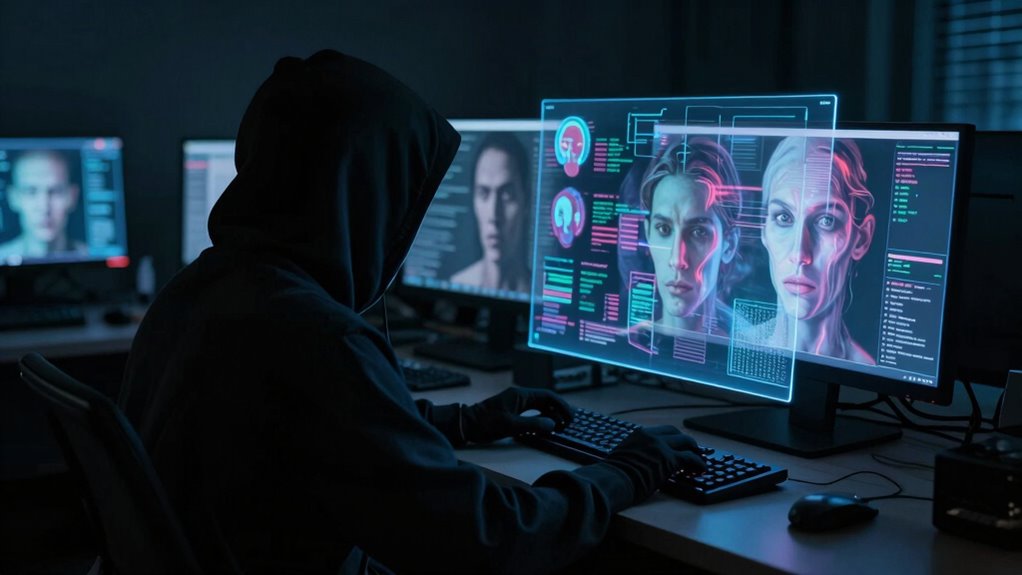

Deepfake technology has become a potent weapon for cybercriminals, allowing them to create hyper-realistic images, videos, and audio that can be used for scams, disinformation, and impersonation. With easy access and low costs, criminals exploit AI tools to bypass security systems and deceive targets. As deepfakes improve in realism, detecting these fakes gets harder. Staying informed about these risks helps you understand how this tech is transforming cyber threats—if you keep exploring, you’ll learn more.
Key Takeaways
- Deepfake technology enables cybercriminals to create realistic fake videos, voices, and images for fraud and impersonation.
- The accessibility and low cost of deepfake tools facilitate widespread malicious use by attackers.
- Deepfakes are used in scams, disinformation campaigns, and biometric evasion to bypass security measures.
- Advances in AI make deepfakes increasingly convincing, complicating detection and verification efforts.
- The evolving sophistication of deepfakes poses significant challenges to digital security and requires new protective strategies.
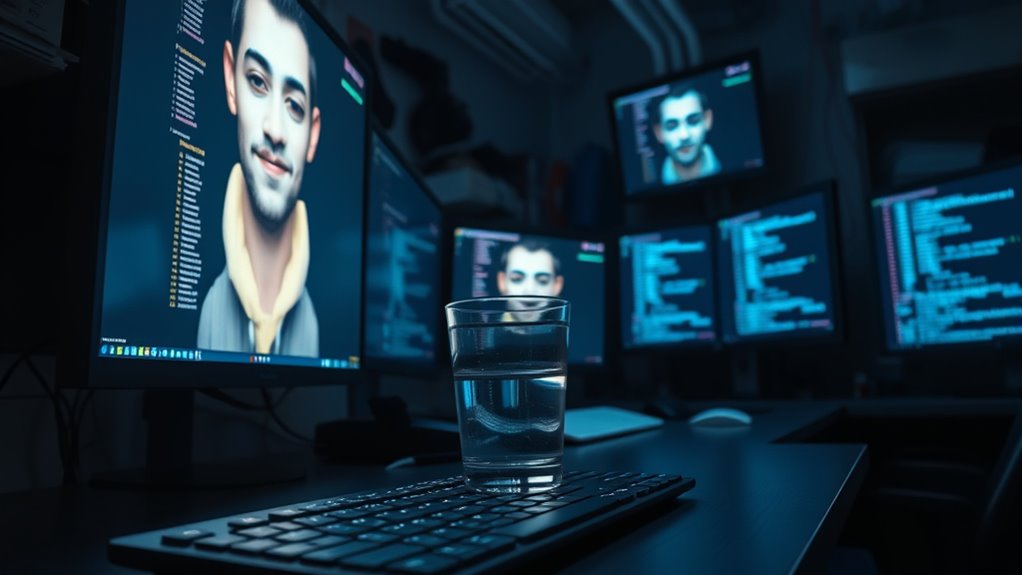
Have you ever wondered how realistic synthetic media has become? Today, deepfake technology allows for the creation of highly convincing images, videos, and audio that mimic real people’s faces, voices, and movements. These synthetic media are generated using deep neural networks, primarily through Generative Adversarial Networks (GANs) and autoencoders. GANs work by pitting a generator against a discriminator, continuously refining fake content until it appears indistinguishable from reality. This process involves training AI models on extensive data such as faces, voices, and expressions, enabling them to produce impersonations and face swaps that are remarkably convincing. As a result, deepfakes have evolved from entertainment tools into powerful instruments for malicious purposes.
Creating a deepfake isn’t complicated or expensive anymore. With open-source programs and free applications readily available, anyone with minimal technical skills can produce sophisticated fakes. The average cost to generate a deepfake is just around $1.33, making it accessible for cybercriminals and malicious actors. These tools rely on vast amounts of raw data—faces, voices, videos—that are used to train AI models, which then generate hyper-realistic media. The realism is so high that even trained detection algorithms sometimes struggle to distinguish fakes from genuine content, especially as algorithms improve to correct previous defects. Advances in AI have significantly accelerated the development and sophistication of these tools, increasing their potential impact. Moreover, the rapid growth of machine learning techniques has contributed to making deepfakes more convincing and harder to detect.
Deepfake creation is now cheap and accessible, with open-source tools enabling anyone to produce hyper-realistic fakes.
Deepfake technology is now a significant tool in cybercrime. It enables fraud, disinformation, biometric evasion, and impersonation. For example, deepfake audio has been used in scams like the 2024 Baltimore principal incident, where voice impersonation tricked individuals into revealing sensitive information. Cybercriminals also use face swaps and virtual cameras to bypass liveness detection, making verification systems vulnerable. Attempts to bypass security measures with deepfakes surged over 700% in 2023 alone, and attempts to deceive verification systems increased by over 3,000% in 2024. These attacks happen frequently—every five minutes, somewhere in the world, a deepfake attack occurs.
The impact of deepfakes extends beyond individual scams. They facilitate misinformation campaigns, manipulate politics, and incite violence. Non-consensual porn and revenge material are also created using deepfake technology, threatening personal privacy and safety. Targeting sectors like finance, legal services, and social media, malicious actors exploit deepfakes to commit fraud and damage reputations. Detection remains a challenge because these synthetic media can be hyper-realistic, and AI is continually improving to correct flaws. As deepfake technology becomes more accessible and sophisticated, it’s clear that it’s not just a tool for entertainment but a weapon in cybercriminals’ arsenal—one that’s shaping the future of digital security threats.
Top picks for "deepfake technology weapon"
Open Amazon search results for this keyword.
As an affiliate, we earn on qualifying purchases.
Frequently Asked Questions
How Quickly Can Deepfake Technology Be Detected and Countered?
You can often detect deepfakes quickly if you’re trained or use advanced AI detection tools, which analyze inconsistencies like unnatural movements or irregular pixel patterns. However, cybercriminals constantly improve their techniques, making detection more challenging. Staying vigilant, updating detection software regularly, and educating yourself about common deepfake signs can help you identify and counter deepfakes faster, often within minutes or hours of exposure.
What Are the Legal Consequences for Creating Malicious Deepfakes?
You might think creating malicious deepfakes is harmless, but the legal consequences are serious. Laws across many regions now classify malicious deepfake creation as fraud, defamation, or cybercrime, leading to hefty fines and even prison time. Authorities are cracking down, and victims can pursue civil lawsuits. So, if you’re considering it, know that the risks far outweigh any short-term gains—legal action is likely to follow.
How Vulnerable Are Biometric Security Systems to Deepfake Attacks?
Biometric security systems are highly vulnerable to deepfake attacks, especially with the 704% rise in face swap attacks on ID verification systems. Cybercriminals use advanced deepfakes to bypass liveness detection and impersonate users, making it easier to commit fraud. You should be aware that these systems can be fooled more easily as deepfake technology advances, so it’s essential to implement additional layers of security and continuously update detection methods.
Can Deepfakes Be Used Ethically in Legitimate Industries?
Deepfakes can be used ethically in legitimate industries, and 31% of leaders underestimate their potential risks. When used responsibly, they enhance entertainment, education, and training by creating realistic simulations or personalized content. For example, in healthcare, deepfakes can help visualize procedures or reconstruct lost voices ethically. If managed carefully, they offer innovative solutions, but you must weigh benefits against risks to guarantee they serve societal good rather than harm.
What Steps Are Organizations Taking to Prevent Deepfake-Related Fraud?
You should implement advanced AI-driven detection tools that analyze deepfake signatures and inconsistencies. Educate your team on recognizing suspicious content, and establish strict verification processes for sensitive transactions. Regularly update security protocols to stay ahead of evolving deepfake techniques. Collaborate with cybersecurity experts and leverage multi-factor authentication. These proactive measures help you reduce the risk of falling victim to deepfake-related fraud, protecting your organization’s assets and reputation effectively.
Conclusion
You should be aware that experts estimate over 96% of deepfakes are used for malicious purposes, making them a powerful tool for cybercriminals. As this technology becomes more advanced and accessible, staying vigilant is essential. Always verify sources and remain cautious of suspicious content. By understanding the risks and adopting security measures, you can better protect yourself from falling victim to deepfake deception in this rapidly evolving digital landscape.