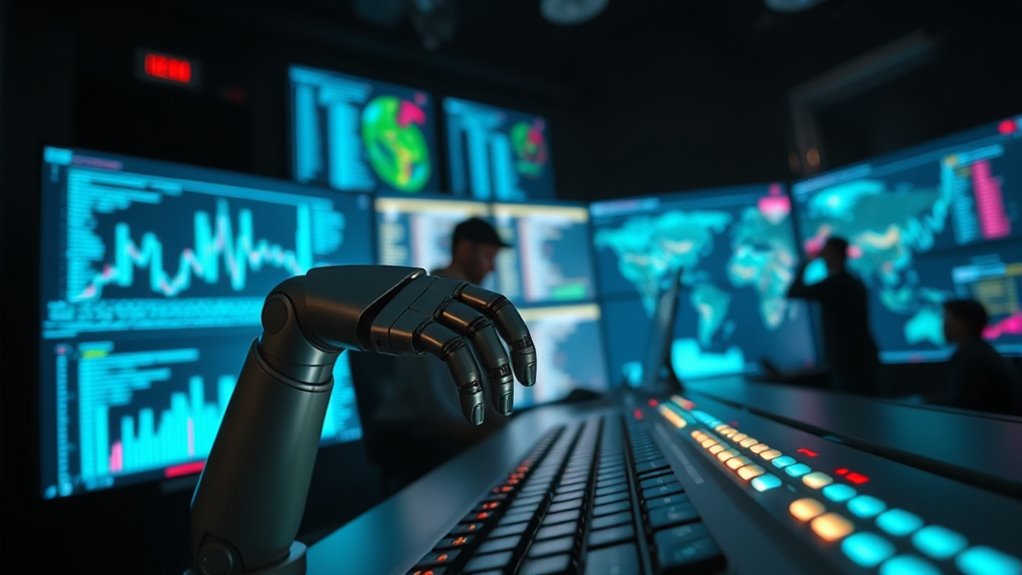

With machine learning in cyber defense, algorithms can quickly adapt to evolving threats, outsmarting hackers. They analyze vast amounts of data to spot malicious activities and recognize subtle patterns from adversarial attacks. This continuous learning process improves detection accuracy over time while automating alerts for prompt responses. However, these algorithms face challenges, like being targets for manipulation. Discover how ongoing advancements in machine learning shape the future of cybersecurity and enhance defense strategies against cybercriminals.
Key Takeaways
- Machine learning algorithms enhance threat detection by adapting in real-time to evolving cyberattack patterns.
- Adversarial attacks exploit system vulnerabilities, but machine learning can recognize deceptive patterns to identify threats early.
- Continuous learning from user behavior allows machine learning to detect unusual activities and potential data breaches effectively.
- Regular retraining of machine learning models is crucial to maintain robustness against manipulation by malicious actors.
- The integration of dynamic machine learning solutions provides a strategic advantage over traditional cybersecurity methods, improving overall defense.

How can machine learning transform the landscape of cyber defense? By harnessing the power of algorithms, you can markedly enhance your organization’s ability to detect and respond to threats. Cybersecurity is constantly evolving, and traditional methods often struggle to keep pace with sophisticated attacks. Machine learning, however, offers dynamic solutions that adapt to new threats in real-time, making it an essential tool for defending against cybercriminals.
One of the most pressing challenges in cybersecurity is the rise of adversarial attacks. These are cunning strategies that hackers use to exploit systems by subtly manipulating data, making it appear legitimate while hiding malicious intent. With machine learning, you can train algorithms to recognize patterns and anomalies within vast datasets, identifying potential adversarial attacks before they can cause harm. The more data your algorithms analyze, the more adept they become at spotting these deceptive tactics, enabling you to stay one step ahead of attackers.
Moreover, machine learning enhances your data privacy efforts. In a world where data breaches are alarmingly common, safeguarding sensitive information is paramount. Algorithms can automatically classify and manage data, ensuring that personal and confidential information is protected from unauthorized access. By continuously learning from user behavior and access patterns, machine learning algorithms can detect unusual activities that may indicate a breach, triggering alerts and allowing for prompt responses. Incorporating vetted product recommendations can further bolster your defenses by ensuring that only the most reliable tools are used in your cybersecurity efforts.
Yet, while machine learning offers incredible potential, it’s not without its challenges. As you integrate these technologies, you must remain vigilant against adversarial attacks specifically aimed at manipulating machine learning models themselves. Hackers might attempt to feed misleading data into your systems, undermining the accuracy of your defenses. To combat this, you’ll need to implement robust validation techniques and continuously retrain your algorithms with fresh data to enhance resilience.

Lenovo V-Series V15 Business Laptop, 15.6" FHD Display, AMD Ryzen 7 7730U, 40GB RAM, 1TB SSD, Numeric Keypad, HDMI, RJ45, Webcam, Wi-Fi, Windows 11 Pro, Black
[High Speed RAM And Enormous Space] 40GB high-bandwidth RAM to smoothly run multiple applications and browser tabs all...
As an affiliate, we earn on qualifying purchases.
Frequently Asked Questions
How Do Hackers Adapt to Machine Learning Defenses?
Hackers adapt to machine learning defenses by employing tactics like adversarial attacks and data poisoning. They manipulate input data to confuse algorithms, making them less effective. You’ll see them introduce subtle alterations that lead to misclassifications or inject false data to skew the model’s learning process. By constantly evolving their techniques, they exploit vulnerabilities, forcing defenders to stay one step ahead and continuously improve their machine learning systems.
Are There Ethical Concerns With Using Machine Learning in Cyber Defense?
Yes, there are ethical concerns with using machine learning in cyber defense. You’re facing privacy concerns as algorithms analyze vast amounts of data, potentially infringing on individual rights. You’re also grappling with bias mitigation since biased training data can lead to unfair treatment of certain groups. Balancing security with ethical standards is vital; ensuring transparency and accountability in your systems can help address these issues while safeguarding both data and privacy.
What Are the Limitations of Machine Learning in Cybersecurity?
Machine learning in cybersecurity has its limitations. You might encounter model bias, where algorithms reflect existing prejudices in the data, potentially leading to misguided decisions. Data scarcity can also be an issue; without sufficient quality data, your models struggle to learn effectively. Moreover, adapting to evolving threats is challenging, as static models may fail to recognize new attack patterns. It’s essential to understand these constraints when relying on machine learning for security solutions.
How Does Machine Learning Impact Response Times to Cyber Threats?
Machine learning markedly speeds up response times to cyber threats. For instance, when an organization uses automated threat detection systems, they can identify and neutralize threats in real time. Imagine a scenario where a network faces a ransomware attack; with machine learning algorithms analyzing traffic patterns, they can swiftly detect anomalies and trigger immediate countermeasures, reducing potential damage. This proactive approach enhances overall security posture and guarantees quicker recovery from incidents.
Can Machine Learning Predict Future Hacking Techniques Effectively?
Yes, machine learning can predict future hacking techniques effectively, especially when algorithms are robust and trained on diverse data sets. You’ll find that predictive accuracy improves as models learn from past attacks and adapt over time. By analyzing patterns and anomalies, these algorithms can identify emerging threats before they become widespread. However, it’s vital to continually update and refine these models to stay ahead of ever-evolving hacking strategies.

Lenovo ThinkBook 15 Business Laptop (15.6" FHD Anti-Glare, 16GB RAM, 512GB SSD, AMD Ryzen 7 5825U (> Intel i7-1255U)) Fingerprint, 1080p Webcam, Military Grade, Ethernet, Wi-Fi, Win 11 Pro w/Copilot
INTRODUCING THE THINKBOOK 15 GEN 4 - the perfect commercial laptop that is both budget-friendly and MIL-SPEC tested...
As an affiliate, we earn on qualifying purchases.
Conclusion
In the battle between algorithms and hackers, machine learning stands as a powerful ally. It adapts to new threats, identifies patterns in chaos, and learns from each encounter. As hackers grow more sophisticated, your defenses must too—embracing innovation, staying vigilant, and evolving strategies. With every challenge, machine learning refines its approach, enhancing your cyber resilience. Together, you can outsmart cybercriminals, secure your assets, and protect your future. Embrace the power of machine learning in your cyber defense strategy.

Lenovo ThinkBook 16 G7 Business Laptop, 16” FHD+, AMD Ryzen 7 7735HS, 32GB DDR5, 1TB NVMe, WiFi 6E + BT, Backlit KB, Fingerprint Reader, HD Webcam, Win 11 Pro
Lenovo ThinkBook 16 Gen 7 laptop powered by AMD Ryzen 7 7735HS processor (3.20 GHz up to 4.75...
As an affiliate, we earn on qualifying purchases.

Lenovo 16" FHD+ Business Laptop: High-Performance for Programming, Data Analysis & Video Editing, Intel Core i7-13700H, 64GB RAM, 2TB PCIe SSD, Windows 11 Pro, Fingerprint & Backlit Keyboard (Gray)
【Powerful 13th Gen Intel Core i7 Performance】Equipped with the 13th Generation Intel Core i7-13700H processor, featuring a hybrid...
As an affiliate, we earn on qualifying purchases.